

Astronstone Tests Prototype Reusable Rocket Catching Arms
The new launch startup is also moving forward with testing its reusable launch vehicle.

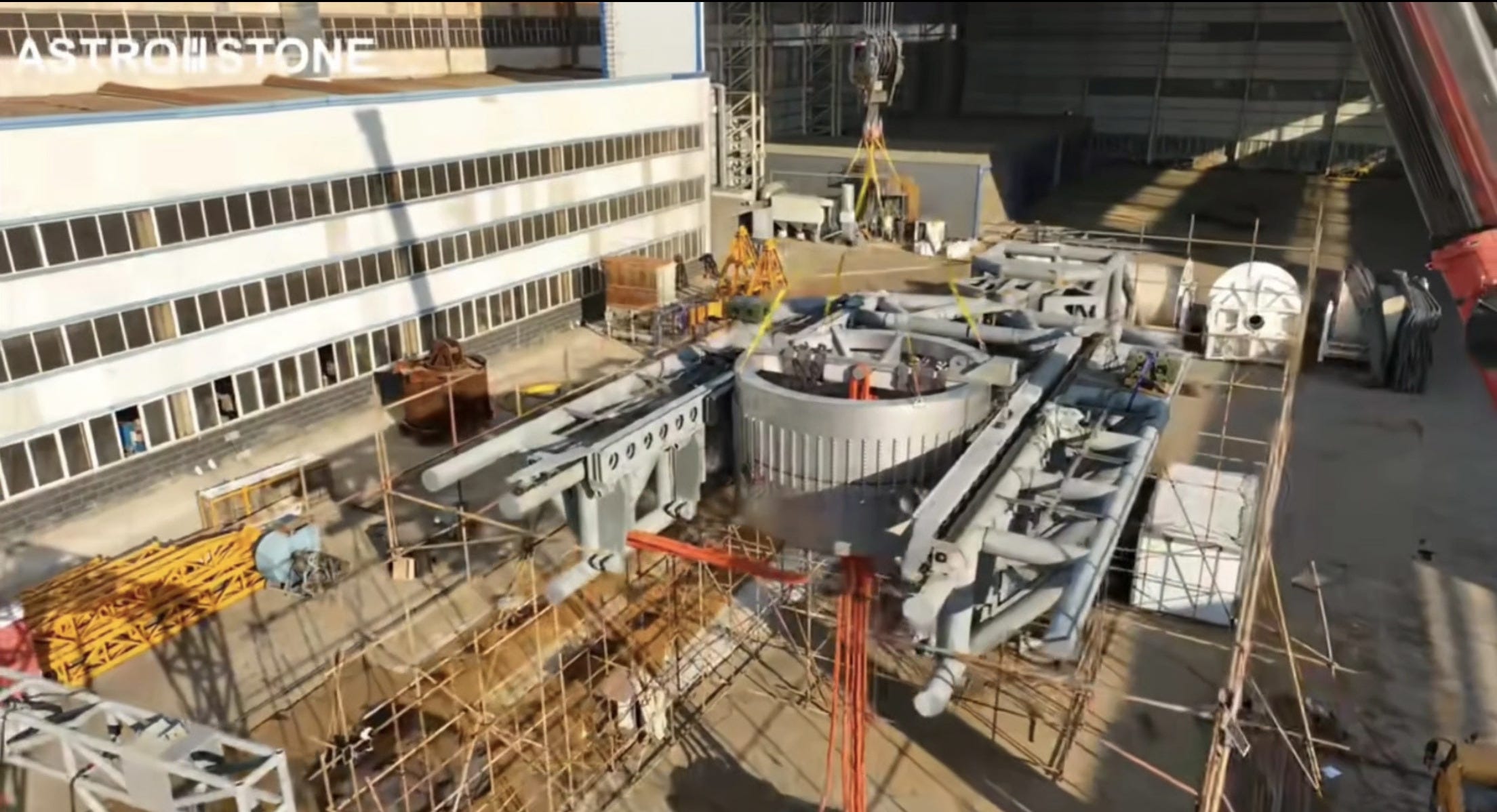
Astronstone (宇石空间), also known as Beijing Uishi Space Technology Co Ltd (北京宇石空间航天科技有限公司), shared on December 15th that they have completed their first set of tests with a prototype version of their first-stage booster catch tower arms.
Testing of the arms was said to have taken seventy-eight days, with the two halves equipped with over a thousand sensors to measure structural stresses and movement of the catching systems with a dummy top section of a first-stage. In order to simulate a booster being caught, more than one hundred tons of force was applied to the arms. While that force was applied, extra measurements for vibrations were collected.
Astronstone also stated, but did not detail how, that a simulated catch in high winds with a landing deviation. In footage shared, the prototype arms do not move and are supported by additional structures and cranes.
Despite that, Astronstone says that the prototype catch arms successfully met their testing criteria and will allow for further testing. Once necessary development tests are complete, the company will build catch towers downrange from their partially reusable rockets’ launch site, for recovery and reuse.
The launch vehicle that is planned to be caught via a catch tower is known as AS-1, with a reusable first-stage and expendable second-stage. AS-1 will be 70 meters tall, 4.2 meters in diameter, and made of stainless steel and burn liquid methane and liquid oxygen, with nine engines on the first-stage generating 700 tons of thrust. For payload capacity, the Astronstone is aiming to have AS-1 deliver 15,700 kilograms into orbit when expended or 10,000 kilograms when reused.
At the moment, AS-1’s debut flight is planned to take place between late 2026 and early 2027, but Astronstone’s founders, Tang Wen (唐文), Tian Jichao (田继超), and Zhu Xinwen (朱新文), have previously said that they are in no rush to reach the market. The first few flights of AS-1 are set be for adjusting the launch vehicle’s design based on real flight data, to improve cost effectiveness and flight rate.
A similar reusable rocket with tower catches being pursued is Leap (跃迁一号) from Cosmoleap (大航跃迁).
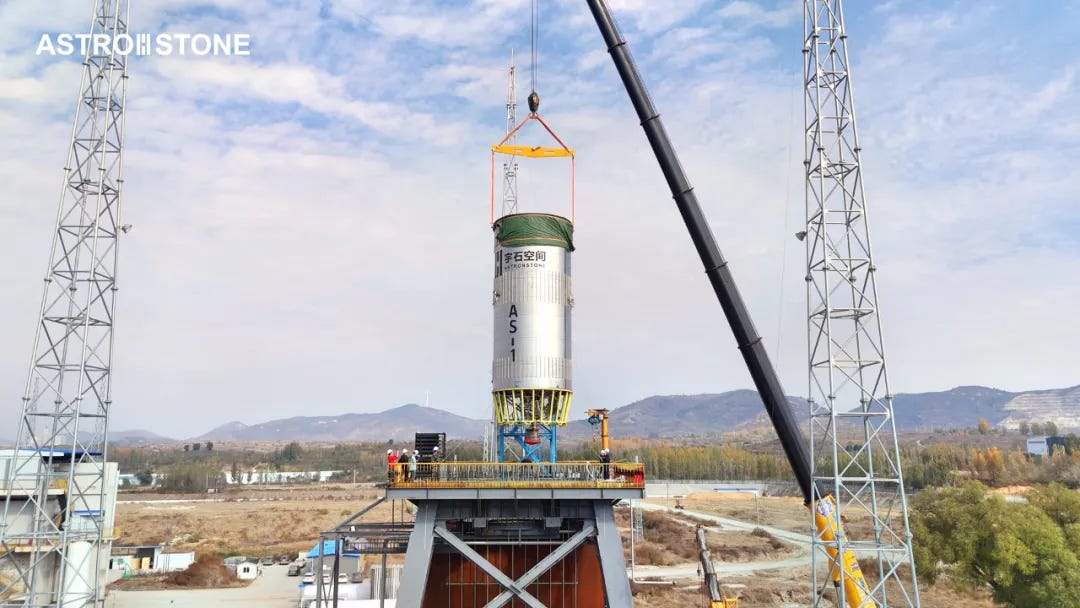
Around a week before the catch tower arms news, Astronstone quietly shared that AS-1’s second-stage had arrived for its first static fire, using the same test stand as Deep Blue Aerospace. That static fire is yet to take place, originally being set for September. Production of the stage was completed in October, with it being equipped with a liquid methane and liquid oxygen burning Longyun (龙云) engine, capable of producing 80 tons of thrust, from Jiuzhou Yunjian (九州云箭).
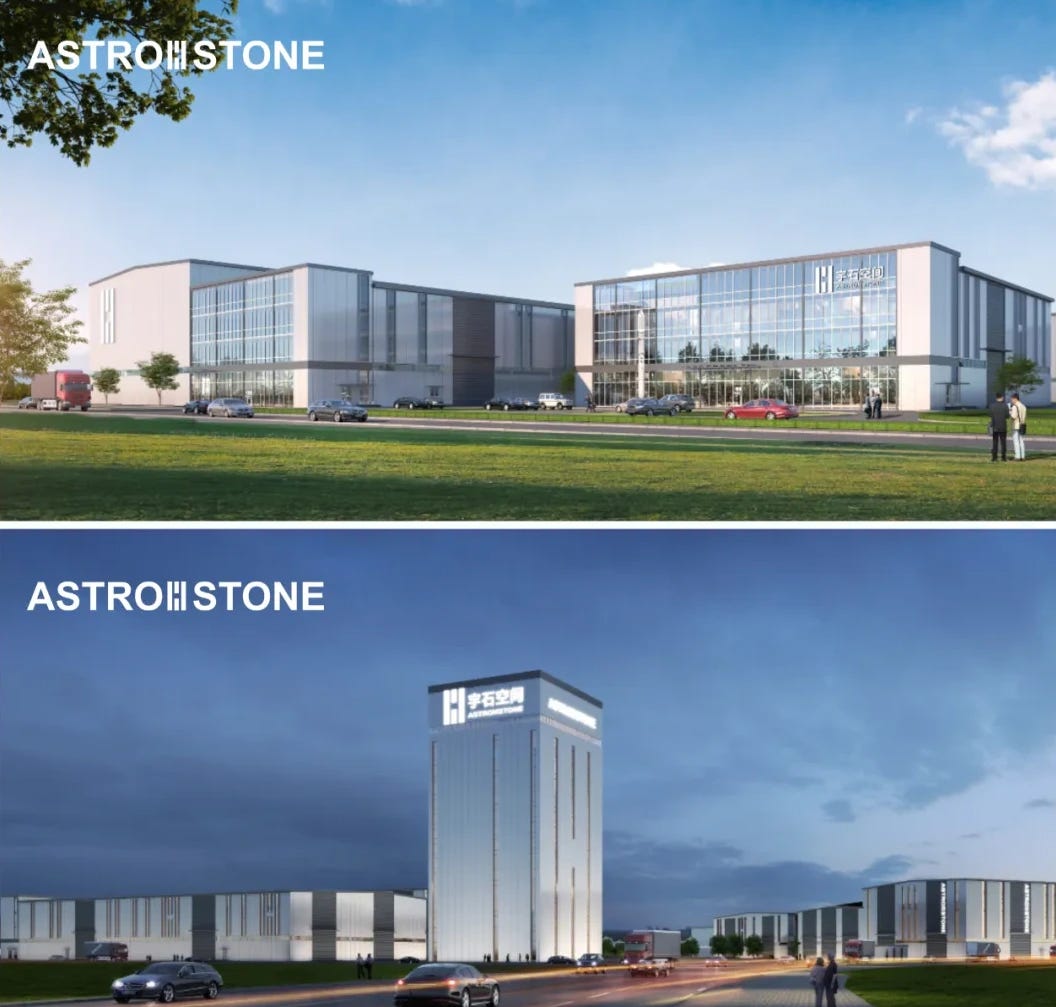
Manufacturing of the second-stage, and a yet-to-be-seen first-stage, took place in the same 15,000 square meter facility that produced the company’s first production test tank, which has since grown to employ 120 people. Sometime in the coming years, Astronstone plans to move into a 54,000 square meter production facility in Zhuzhou (株洲市), Hunan (湖南) province, to manufacture, assemble, and test eight AS-1 launch vehicles per year.
News of those two items was shared in a company financing update on December 11th, where Astronstone shared that they have completed their Pre-A funding round and raised above 100 million Yuan (14.2 million United States Dollars, as of December 16th). This round was led by Cornerstone Capital (基石资本), with Xingxiang Capital (兴湘资本), Tuofeng Venture Capital (拓丰创投), and Yinying Capital (银盈资本).
That brings the total amount raised for Astronstone to almost 300 million Yuan (42.6 million United States Dollars). An over 100 million Yuan angel+ funding round was provided in May, after their first angel round of ‘tens of millions’ of Yuan in March.