


The start of July has seen two massive funding rounds being completed in China’s space sector, both for satellite manufacturing entities that possess unique capabilities when judged against their peers.
In the larger of the two, commercial Earth imaging firm Changguang Satellite Technology Co Ltd (长光卫星技术股份有限公司), commonly known as CGSTL, announced on July 4th that it has received about 5 billion Yuan (735.84 million United States Dollars, as of July 6th) in fresh equity financing from several investors. Providing that were the government-linked China Orient Asset Management (中国东方资产管理), Shenzhen Capital Group (深创投), Chengtong Fund (诚通基金), Changfa Group (长发集团), as well as Lushi Investment (陆石投资) and Haitong Innovation (海通创新).
Ahead of that round, CGSTL gained 100 million Yuan (14.7 million United States Dollars) in additional capital from one of its existing investors in late June. April also saw a strategic investment of 500 million Yuan (73.57 million United States Dollars) from the municipal government of Changchun (长春市), located in Jilin (吉林) province where CGSTL is based, to start the process of this funding round1.
All of that capital will be used to improve the technical remote sensing capabilities, something the company is significantly dedicated to, and applications of the Jilin-1 (吉林一号) Earth imaging constellation, which has had 161 satellites launched2, with the latest addition on June 15th. Part of the capabilities the funding will enable is the development of upgraded sensors to image Earth with greater centimeter-level resolutions, moving towards the lower double digits. Manufacturing capacity to produce 200 satellites per year was also mentioned, with CGSTL expected to still be pursuing having 300 operational ones in orbit.
Not mentioned but expected to have been financed is research into sensors for non-Earth imaging and their mass production of them. CGSTL demonstrated its ability to intentionally image other spacecraft using unmodified hardware in October 2025, so far the first and only outside of state-owned enterprises, then launched the first set of satellites with the hardware to do so in April via a dedicated Kinetica-1.
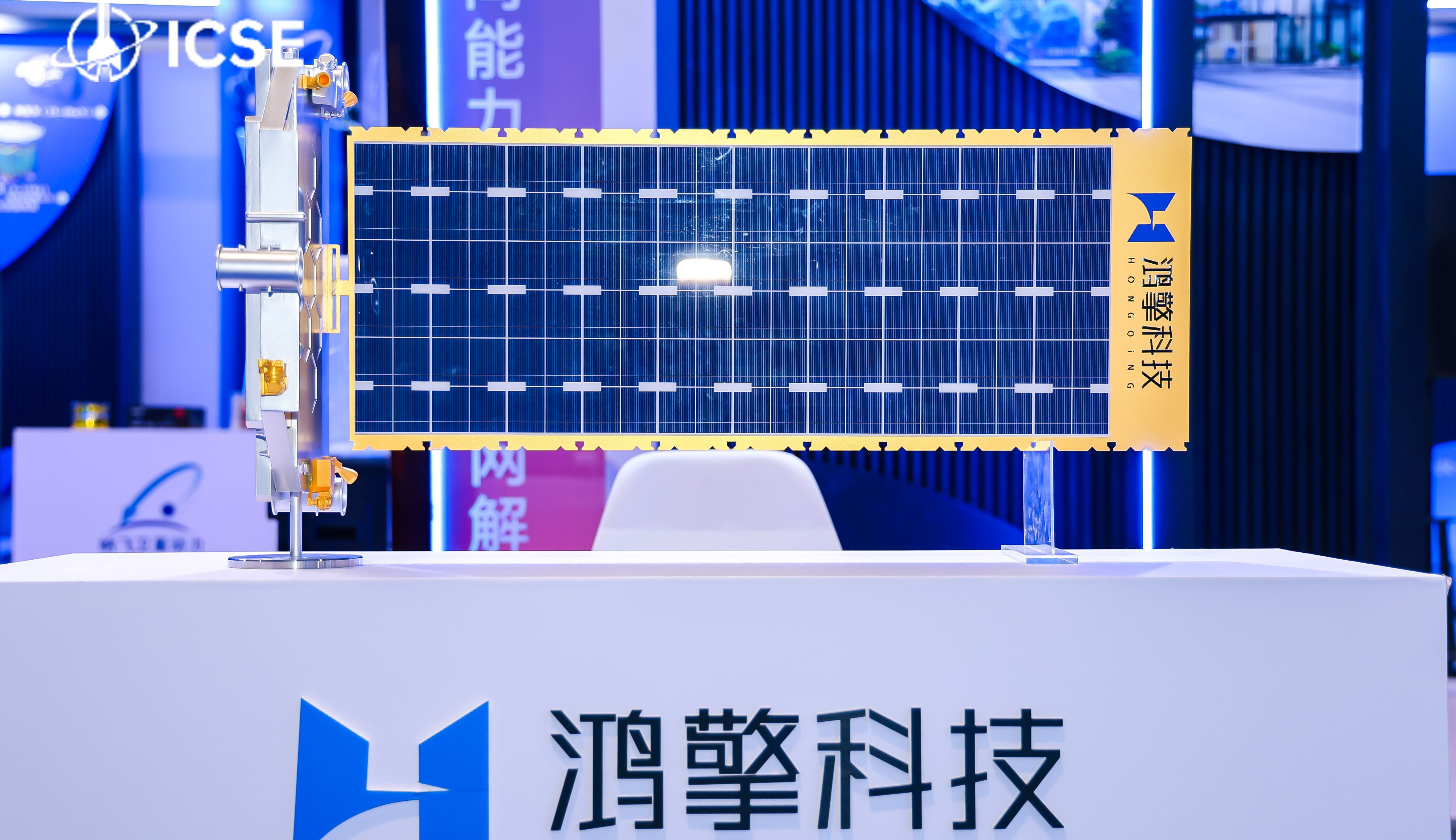
Meanwhile, a few days earlier on July 2nd, satellite maker Hongqing Technology (鸿擎科技), an affiliated company of LandSpace3 of Zhuque launch vehicles, completed its ‘Pre-B’ funding round, raising 1.3 billion Yuan (191.28 million United States Dollars) from a mixture of venture capital firms, private and government-linked, municipal funding vehicles, and smaller financial institutions. That capital brings the company’s total amount raised to 2.5 billion Yuan (367.85 million United States Dollars).
As for what that money will be put towards, Hongqing’s announcement shared:
“As a leading provider of satellite constellation ecosystem solutions in China, [we have] focused deeply on the satellite internet sector. Addressing the construction and operational needs of constellation operators, the company continues to develop comprehensive, one-stop solutions covering satellite research and development and manufacturing, satellite integration and testing, mass production and delivery, and constellation deployment services.”
If there are any problems with this translation please reach out and correct me.
Like CGSTL, Hongqing Technology will devote portions of the capital to expanding production efforts, which they have automated in part, to over 100 per year for its flat-packed connectivity, direct-to-cell-capable satellites. Those satellites are still being proven, but the company has confidence from other space-based connectivity efforts.
In the near future, it’s possible the company may gain a contract for the Shanghai-supported Qianfan (千帆), the state-backed GuoWang (国网), or go ahead with LandSpace’s own Honghu-3 (鸿鹄-3) connectivity mega-constellation.
While their latest funding round was underway, Hongqing Technology hosted delegations from the Communist Party of China at its Xiong’an New Area (雄安新区) satellite production facility. Those included leading officials from Beijing (北京), Tianjin (天津), Hebei (河北) province, and Wang Xiaohong (王小洪) of the seven-person Secretariat of the Communist Party to understand the present situation in the commercial space sector and align policy in support of it.
As such, the 500 million Yuan is part of the 5 billion Yuan round, and not a separate capital raise, but it is notable for happening many weeks before.
Although 190 satellites have supposedly been linked to the Jilin-1 constellation.
Done via significant holdings of each other’s ownership shares.