

China's First Asteroid Deflection Test Mission to Begin in Late 2027
Two spacecraft will be launched towards an asteroid in deep space to understand the basics of a planetary defence system.

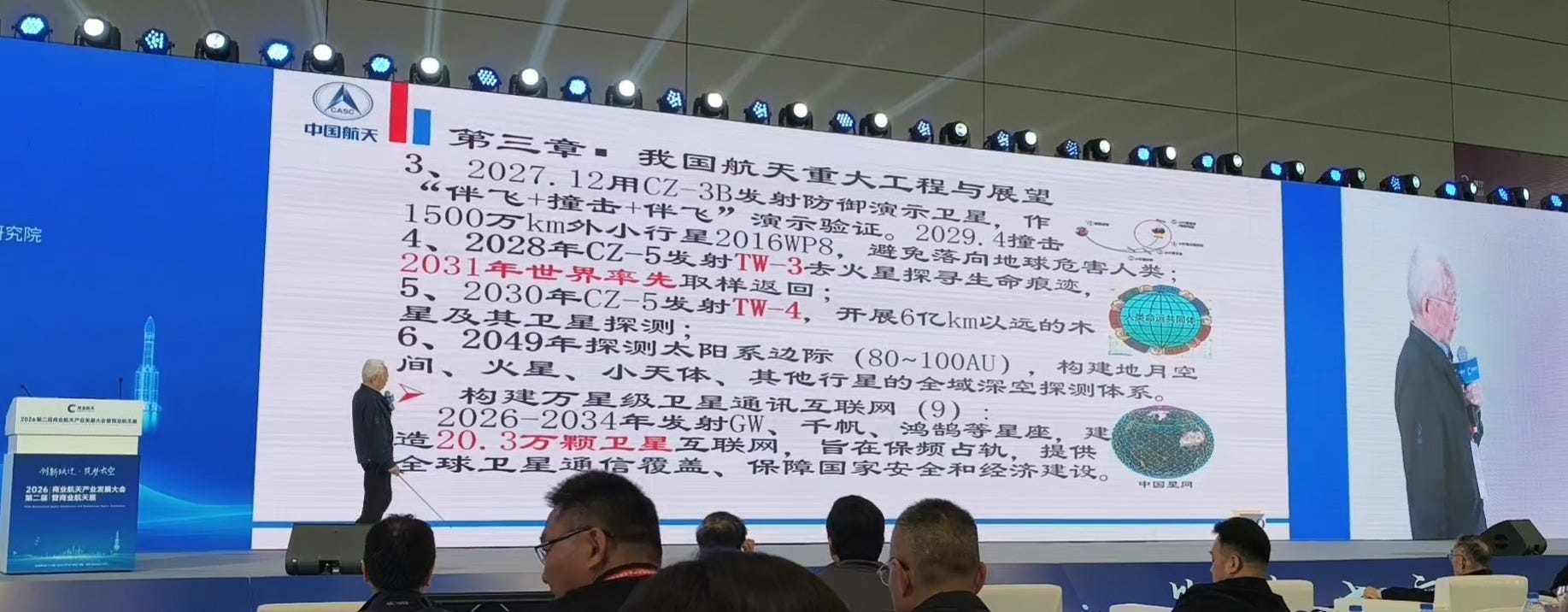
Long Lehao (龙乐豪), a veteran of China’s space industry1, recently delivered a presentation at the 2026 Second Commercial Space Industry Development Conference & Commercial Space Exhibition (2026第二届商业航天产业发展大会暨商业航天展) in Shenzhen (深圳市), Guangdong (广东) province, where he provided an update to China’s asteroid deflection test mission.
That mission, pending a name via public solicitation, is currently scheduled to be launched atop of a Long March 3B/E out of the Xichang Satellite Launch Center in December 2027, with two satellites being thrown into deep space. The first satellite, an observer, will arrive at the target asteroid in early 2029, via a Venus flyby, to characterize it, while the impactor spacecraft should arrive in April 2029 to slam into the target at a speed of around ten kilometers per second.
Alongside the launch date, Long Lehao revelead the the deflection test mission is now targeting asteroid 2016 WP8, which passes across Earth’s orbit on a 13.3 degree inclination and completes a lap around the sun every 341 days. The size of 2016 WP8 is unknown but it has a magnitude of 23.9, meaning it may be no larger than forty meters across.
Targets for the deflection test have changed a few times. Originally, the lower inclination 2020 PN1, no larger than seventy meters, would have been hit. A year later, the almost Mars-reaching 2019 VL5 was a potential target, with its about forty-meter size. And the previous target was the Venus-crossing 2015 XF261, up to around thirty meters across.2
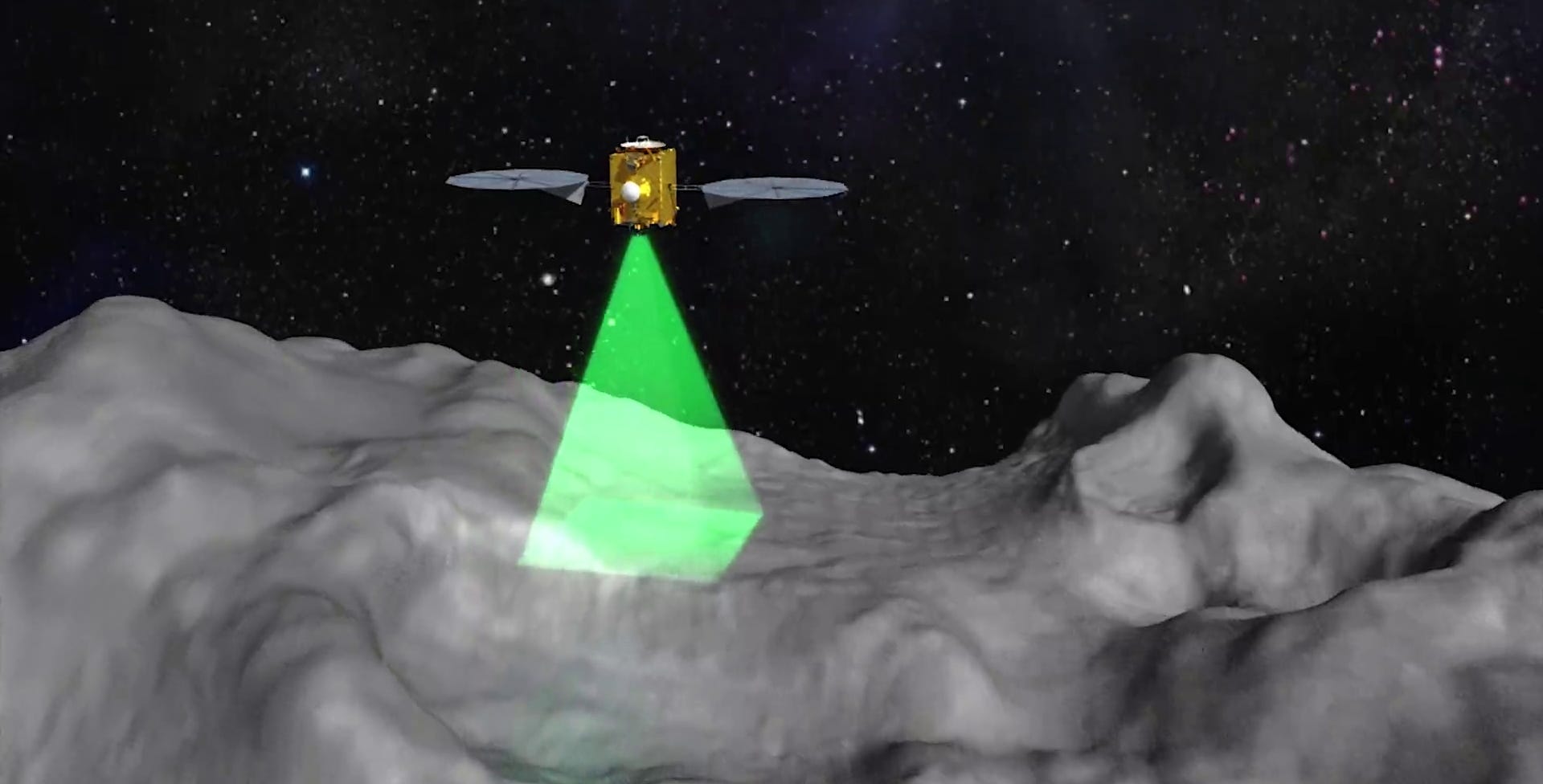
In an update to the mission six months ago, Wu Weiren (吴伟仁), the Chief Designer of China's highly successful Lunar Exploration Program, said that the aims of the deflection test are:
“Upon impact, the aim is to generate a significant kinetic energy in order to alter the asteroid’s orbit. We plan to achieve an orbital deflection of about three to five centimeters.”
Designs of the two spacecraft are yet to be revealed, but work on the mission has been under study and development since 2022. The Tianwen-2 (天问二号) asteroid sample return mission is likely to inform aspects of the deflection test, as it will provide an understanding of how to approach and survey asteroids.
At the Two Sessions (两会) this year, China’s policymakers approved of a near-earth asteroid defence program via the 15th Five-Year Plan. In September 2025, Wu Weiren unveiled initial plans for a planetary defence system that would redirect or destroy hazardous asteroids. Within five years, systems for increasing the capacity of near-Earth object monitoring, cataloguing, early warning, and response should be established, with international partners encouraged to join and collaboratively work on Earth defence efforts.
To date, NASA’s Double Asteroid Redirection Test (DART) in 2021-2022 is the only successful proving that throwing spacecraft into asteroids at great speed is a viable means of altering their orbits, having slowed Dimorphos’ orbit by 33 minutes.
Also of Space-Based Solar Power support fame.
For previous targets, please see Space News’ reporting:
Great coverage as always.