

Geespace Constellation Backbone of New Open-Source Connectivity Ecosystem
With sixty-four satellites currently in orbit, the Future Mobility Constellations’ uses are set to be expanded via new terminals and an ecosystem centered around it.

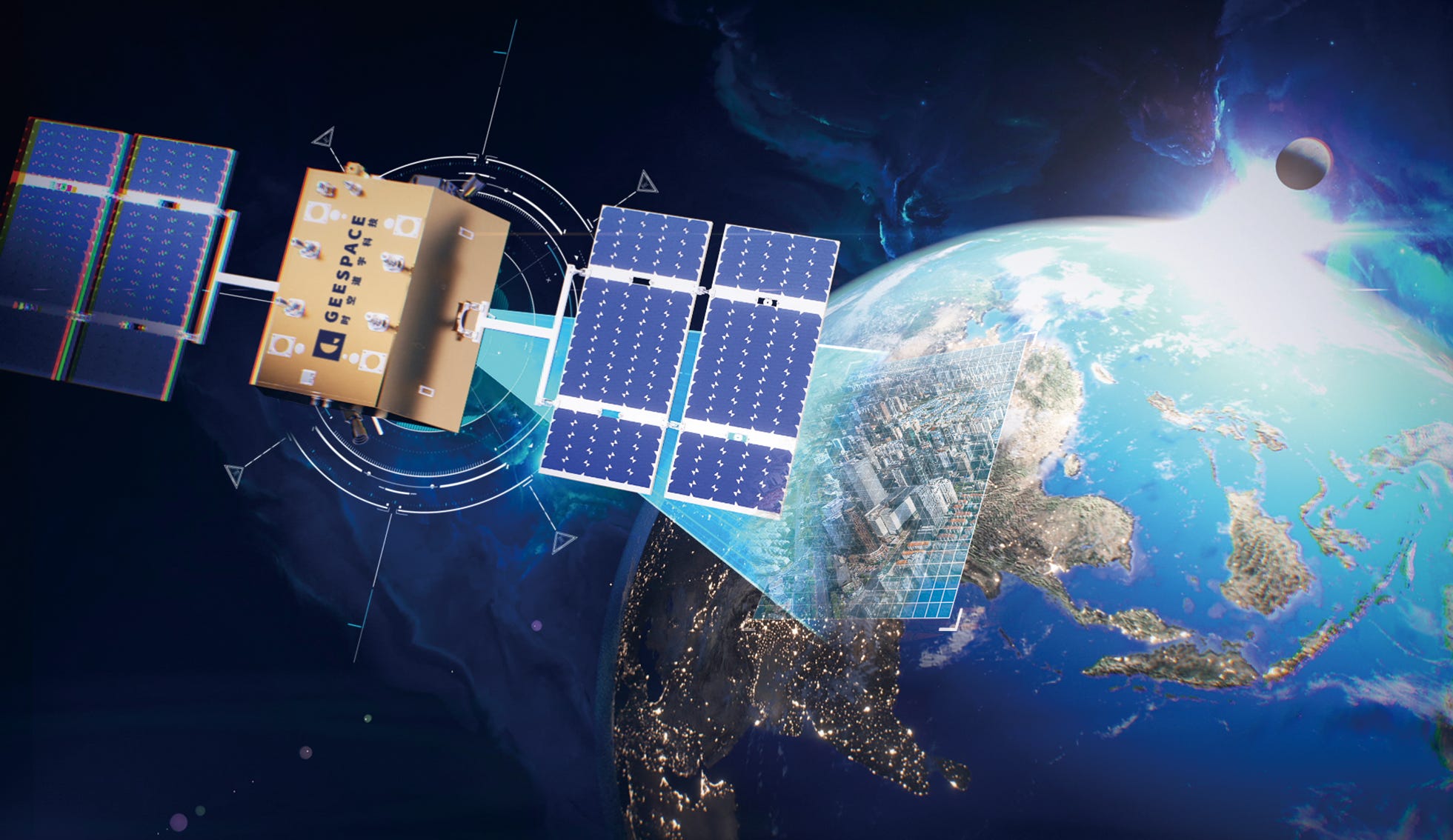
While at the 2026 Mobile World Congress in Shanghai (上海市), which ran from June 24th to 26th, automaker Geely’s (吉利汽车) space subsidiary Geespace, operator of the 64-satellite Future Mobility Constellation, announced that its connectivity satellites are being opened up to support an open-source ecosystem of users, with many enterprises already onboard.
According to a press release published at the end of the congress’s first day, Geepsace proudly shared that dozens of enterprises, some commercial and others state-linked, across industries including logistics, communications, agriculture, aquaculture, livestock, and other space firms have agreed to work with or expressed interest in the ecosystem. Some notable participants present for the ecosystem announcement were:
China Information and Communication Technology Group (中国信息通信科技集团), a state-owned enterprise that is focused on telecommunications equipment and satellite connectivity infrastructures.
China Tower (中国铁塔), a joint venture between China’s three state-owned mobile broadband providers that operates the majority of the nation’s cell towers.
Charoen Pokphand Group (正大集团), a Thailand-headquartered conglomerate with broad operations across agriculture, food, and related retail throughout Asia.
Beijing Zhixin Semiconductor Technology Co Ltd (北京智芯半导体科技有限公司), a state-owned chip manufacturer that produces those used in Internet-of-Things connectivity applications.
China Communications Standards Association (中国通信标准化协会), under the Ministry of Industry and Information Technology (中华人民共和国工业和信息化部), that manages communication standards in China.
In support of the ecosystem, four connectivity terminals were spoken as being available, without showing off designs. Two terminals of separate, but undisclosed, specifications are said to be designed for use in regions that lack traditional connectivity, and as such are expected to function over a few different frequency bands. Another terminal is supposedly compatible with standardized shipping containers in order to allow their owners to track them and monitor surrounding conditions. Lastly, there is a minituarized terminal that can be placed on an animal’s collar to track the location and activities of herds of livestock.
The creation of the Future Mobility Constellation-backed ecosystem appears to have gone well, as toward the end of the congress, over two hundred enterprises were stated to be partners for it. Alongside that, over 100 million Yuan (14.7 million United States Dollars, as of July 10th) in contracts for entities focused on construction, national energy production, smart agriculture and aquaculture, and the low-altitude economy1 were announced to have been signed under the new ecosystem.
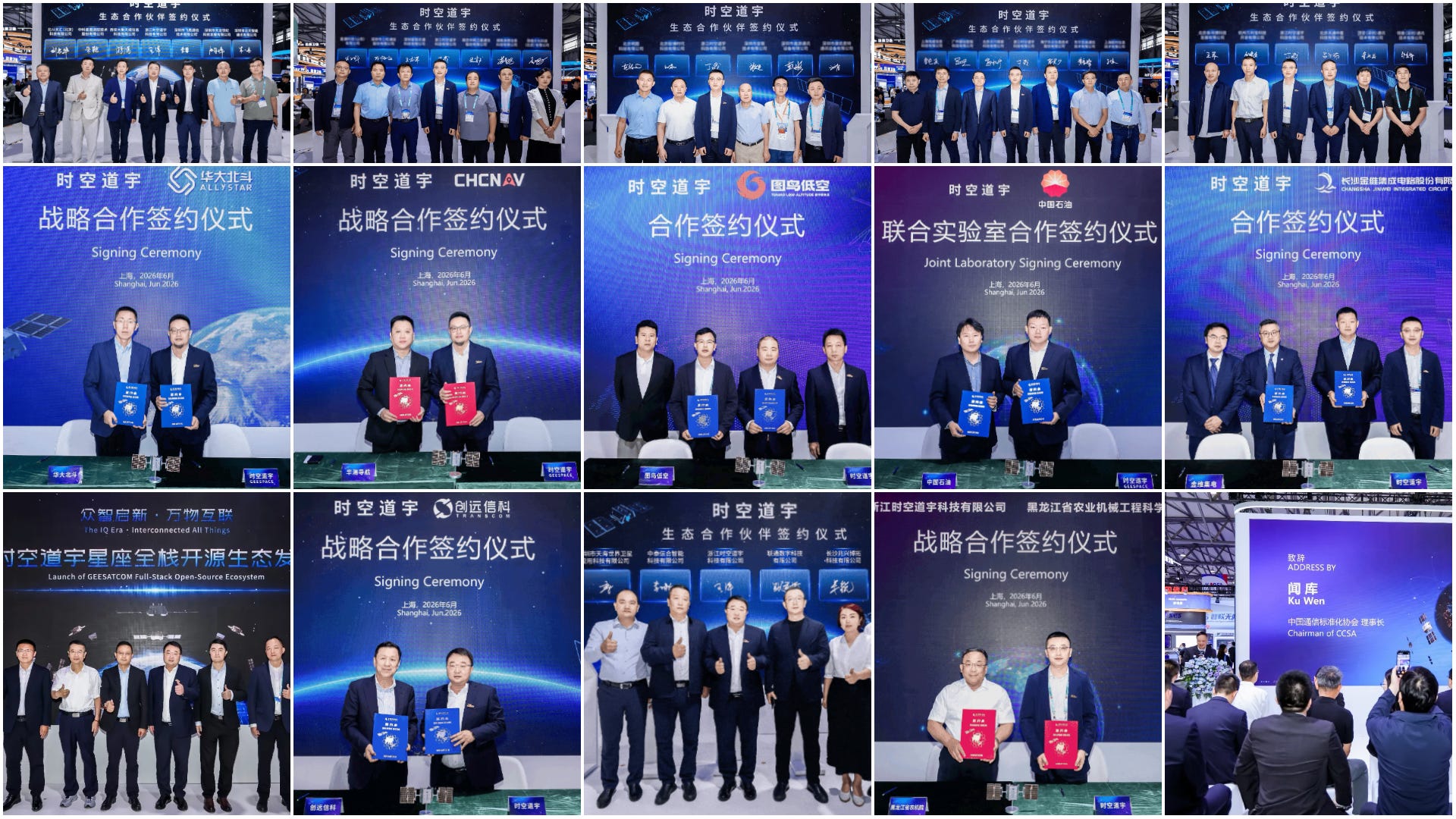
Partners of the ecosystem are expected, according to Geespace, to explore ways to utilize connectivity services across their respective industries as well as working on their own terminals, and selling those, if they can refine an underserved niche use. This is hoped to enable the mass adoption of space-based connectivity services, specifically via Geespace’s constellation.
As mentioned at the start, the Future Mobility Constellation currently consists of 64 satellites, all in low Earth orbit and launched between 2022 and 2025. The constellation was initially launched to guide cars autonomously for the many brands owned by Geely, but it has broadened efforts into providing communication, connectivity, and positioning services globally. Capacity for those services will be continually expanded, as Geespace has plans for up to 6,012 satellites.
Prior to the creation of the ecosystem, users of the constellation are mostly entities within China using intelligent connected vehicles, low-altitude mobility services, emergency communications, and others from previously noted industries. Emergency services during major China-hosted sporting events have reportedly been equipped with Future Mobility connectivity terminals.
Beyond China, Geespace has inked international agreements with Bangladesh’s Systems & Services, Saudi Arabia’s Advanced Telecommunications Solutions and Services, Malaysia’s Altel Group Sendirian Berhad, Kazakhstan’s SATLAS, Argentina’s Orbith, and Morocco’s Soremar Group, among others, to make use of the constellation’s services.
Services making use of the airspace below 1,000 meters, either for the delivery of consumer products or for novel human transportation.