

GuoWang Becomes China's Largest Constellation for Second Time With Wenchang Mission [Long March 8A Y5]
Meanwhile, the Long March 8A completes its fifth flight in its debut year.

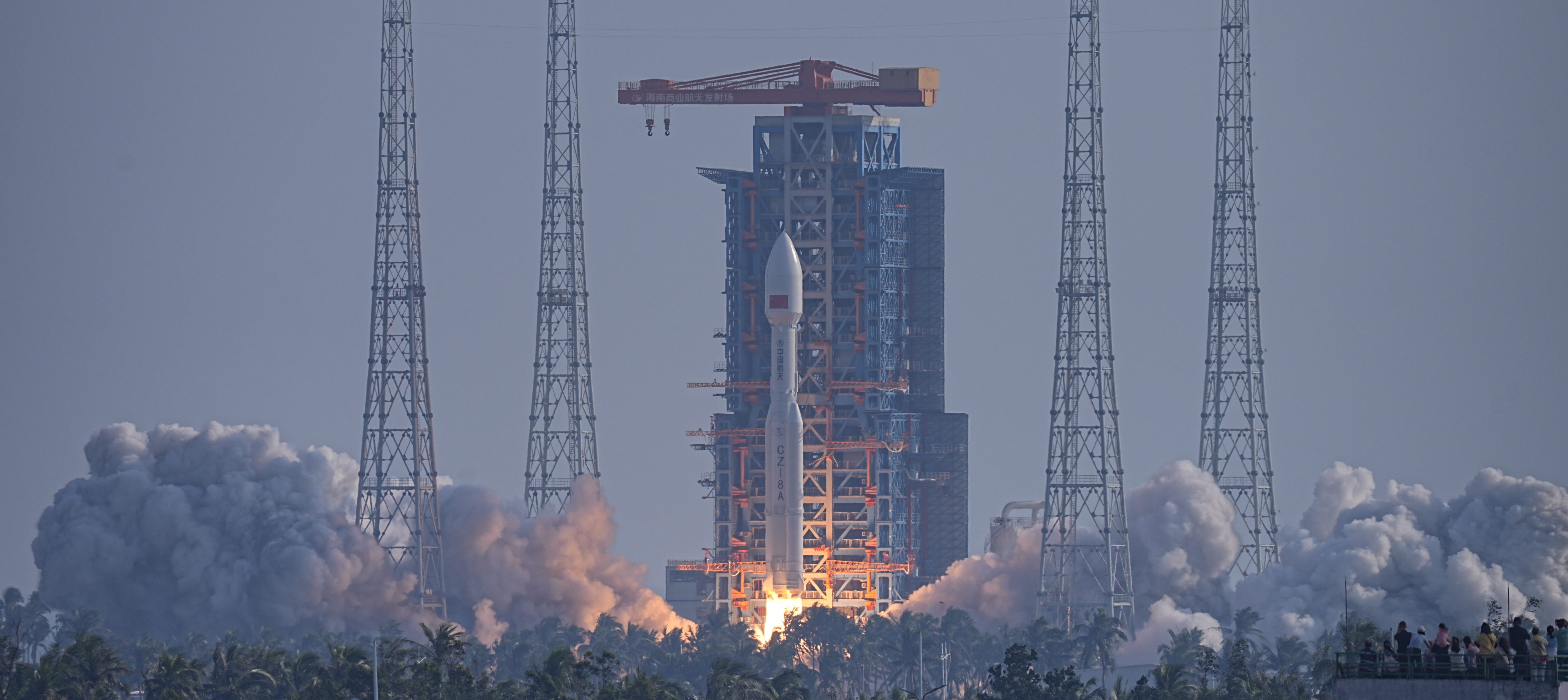
From Commercial Launch Pad 1 at the Wenchang Commercial Space Launch Site, a Long March 8A lifted off at 15:53 pm China Standard Time (07:53 am Universal Coordinated Time) on December 6th, flying into low Earth orbit with a group of satellites.
Riding atop of the Long March 8A today was the fourteenth group of satellites for the GuoWang constellation, with nine being placed into orbit1. The China Academy of Space Technology says that they contributed to the spacecraft making up the group.
With this group’s deployment today, GuoWang has 113 satellites in space, surpassing the Shanghai-backed Qianfan (千帆) mega-constellation, for a second time, with its 108 satellites in orbit. This was enabled by hardware issues with Qianfan’s satellites throughout much of the year, with a return to deployments in October. Both constellations are aiming to provide space-based connectivity.
The GuoWang (国网) constellation is operated by China Satellite Network Group, a state-owned enterprise, and wholly backed by the Chinese government. By the 2030s, up to 13,000 satellites could be in orbit, providing worldwide internet services; however, China-focused services will be the immediate priority.
Two different satellite variants are believed to be in use for the GuoWang constellation, a larger version used on vehicles like the Long March 5B, while smaller ones are used when launched atop rockets such as the Long March 6A or Long March 12. An electric propulsion system is likely in use due to a planned operational orbit above 1000 kilometers, as it would be the most efficient means of deorbiting each spacecraft once they reach the end of their operational lives after several years.
Back in February, the Long March 8A flew its debut mission carrying its first set of GuoWang satellites. That was followed by a second mission several months later in July, before a third flight a month later in August, then a two-month gap for a fourth launch in October, and now two months later, the Long March 8A flew its fifth mission to date. So far, the only payload delivered by the rocket has been GuoWang spacecraft. Plans will eventually have the Long March 8 series flying fifty times per year.
In its post-launch blog post, the China Academy of Launch Vehicle Technology shared that they have achieved the start of high-density launch missions with the Long March 8A, with teams preparing for further missions in 2026 on a nearly monthly cadence. It was added that as the rocket performs more missions, further optimizations and improvements to the rocket will be implemented. An upgraded version of the YF-75DA engine used on the second-stage is already planned to be used to improve payload delivery and for debris mitigation.
This mission was the 5th launch of a Long March 8A vehicle, the 9th launch of the Long March 8 series, and the 612th launch of the Long March launch vehicle series. This was also the 80th launch from China in 2025.
Liftoff footage via 海南商发 on WeChat.
Livestream replay via ThatSpaceDogeGuy on YouTube.
Check out the previous Long March 8A launch
600th Long March Mission Delivers More GuoWang Satellites! [Long March 8A Y4]
![600th Long March Mission Delivers More GuoWang Satellites! [Long March 8A Y4]](https://substackcdn.com/image/fetch/$s_!BQtR!,w_1300,h_650,c_fill,f_webp,q_auto:good,fl_progressive:steep,g_auto/https%3A%2F%2Fsubstack-post-media.s3.amazonaws.com%2Fpublic%2Fimages%2F16115c82-4861-4363-bfd7-11a38d3dbd01_3675x1832.jpeg)
A Long March 8A lifted off from Commercial Launch Pad 1 at the Wenchang Commercial Space Launch Site at 09:33 am China Standard Time (01:33 am Universal Coordinated Time) on October 16th, heading for low Earth orbit with a group of satellites.
What is the Long March 8A?
This section is for those less familiar with China’s Long March series of launch vehicles.
The Long March 8A is an improved and more cost-efficient upgrade of the Long March 8 and the future workhorse of its developer, the China Academy of Launch Vehicle Technology. The vehicle utilizes a two-and-a-half-stage design and is fuelled by rocket-grade kerosene and liquid oxygen in its first-stage and boosters along with liquid hydrogen and liquid oxygen in the second-stage.
The payload capacity of the launch vehicle is currently as follows:
9,800 kilograms to low Earth orbit
7,000 kilograms to a 700-kilometer sun-synchronous orbit
6,800 kilograms to a 900-kilometer sun-synchronous orbit
3,500 kilograms to geostationary transfer orbit
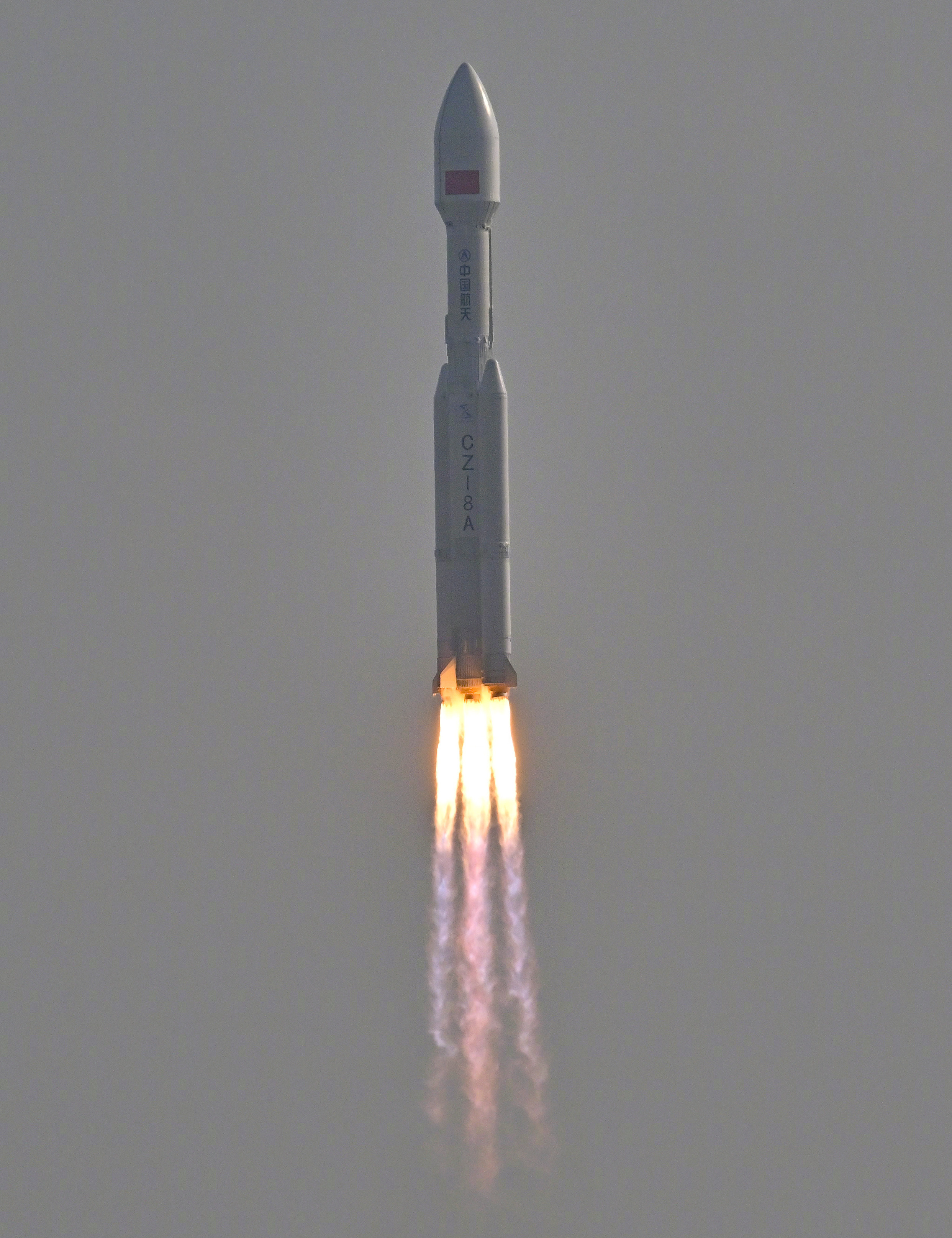
The Long March 8A’s boosters and first-stage are powered by YF-100 engines, with two engines on the first stage and one on each of the two boosters, generating a combined thrust of 490 tons at liftoff. The second-stage is equipped with two YF-75DA engines, which produce 20 tons of thrust.
On the launchpad, the core alone Long March 8A stands at 50.5 meters tall and weighs 371,000 kilograms when fully fuelled. The first and second-stage have a diameter of 3.35 meters, the two boosters have a diameter of 2.25 meters, while the fairing has a diameter of 4.2 or 5.2 meters.
Currently, the Long March 8A is flown from the Wenchang Space Launch Site and the Wenchang Commercial Space Launch Site, both on the east coast of Hainan province.


Every Long March 8A mission for GuoWang has carried nine satellites.
China at this time direly needs reusable rockets , after the failed booster landing of Zhueque-3 , now all eyes on CALT's Long March 12A . I am pretty much confident that CALT might be able to succeed in landing the booster . Without the reusable rockets , China's dream of creating a mega-constellation of the likes of Guowang will be far from reality because then it will take many many years to construct such a constellation whereas SpaceX after deploying more than 6000 sattelites is planning to create two more mega-constellations which means there will come a time when LEO will get saturated .