

Guowang Direct-to-Device Test Satellites Delivered From Xichang [Long March 2D Y119]
Four more test satellites are in orbit to prove upgrades and new technologies for connectivity constellations.

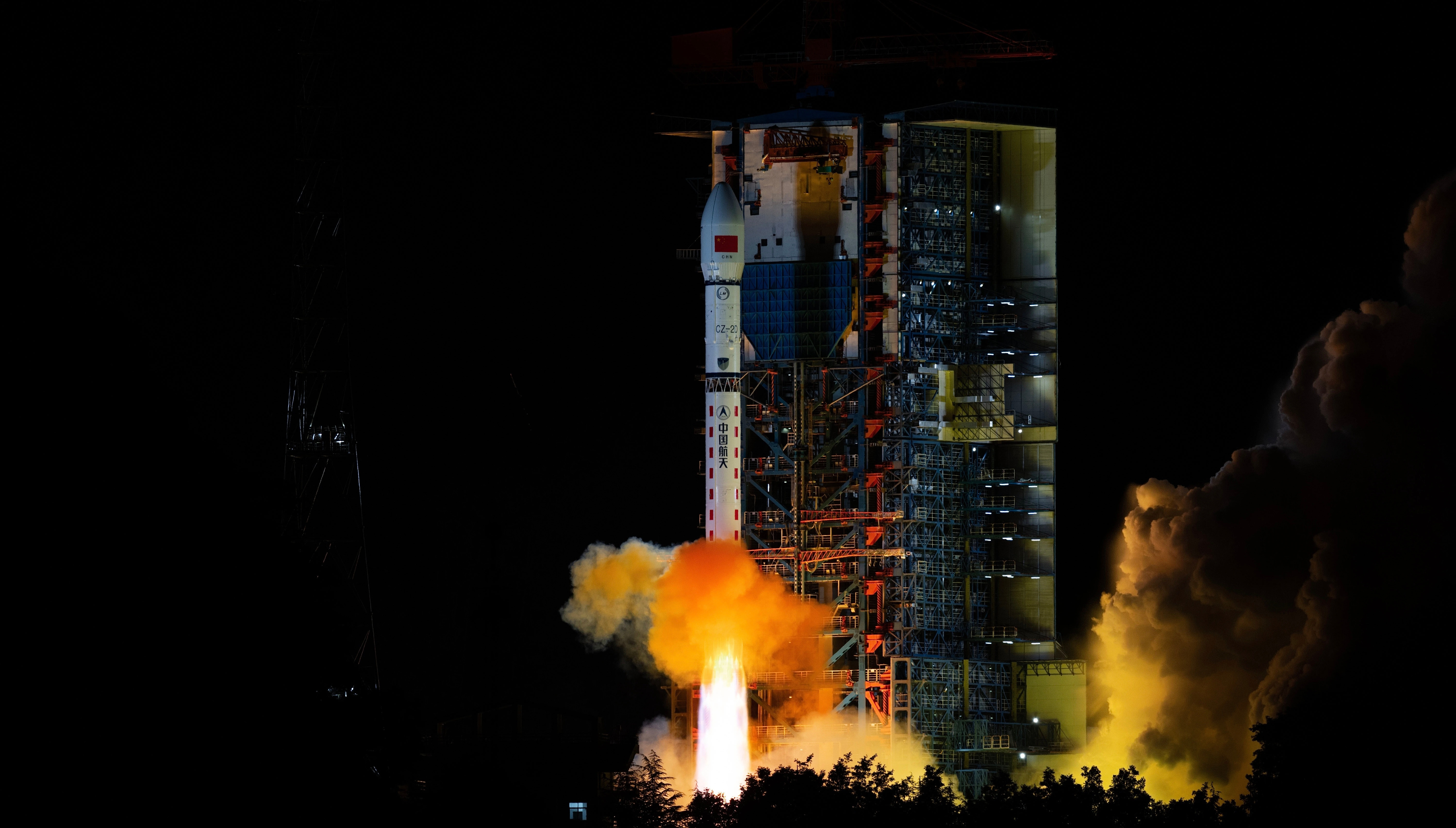
A Long March 2D lifted off Launch Complex 3 the Xichang Satellite Launch Center at 02:07 am China Standard Time on May 31st (18:07 pm Universal Coordinated Time on May 31st), heading for low Earth orbit with a handful of test satellites.
While the number of them was not announced, four Weixing Hulianwang Jishu Shiyan (卫星互联网技术试验卫星), translating to Satellite Internet Technology Experimental Satellite, were onboard based on the near-exact overlapping of hazard zones1 with the previous launch of them via a Long March 2D. Development of one of the satellites has been claimed by China Aerospace Science and Technology Corporation Commercial Satellite Co Ltd (中国航天科技集团商业卫星有限公司), and another by the Space Engineering General Department of the Second Academy of China Aerospace Science and Industry Corporation (航天科工二院空间工程总体部)2.
Breakthroughs made with the satellites will be applied to the state-backed GuoWang (国网) mega-constellation. Items being trialled by the satellites include direct-to-device services and coordination between terrestrial and orbital networks.
Today’s launch brings the total number of test satellites launched up to thirty-three, with nine deployed so far this year. Designs of test satellites are not known, but they are probably similar to operational GuoWang spacecraft, which have limited details confirmed.
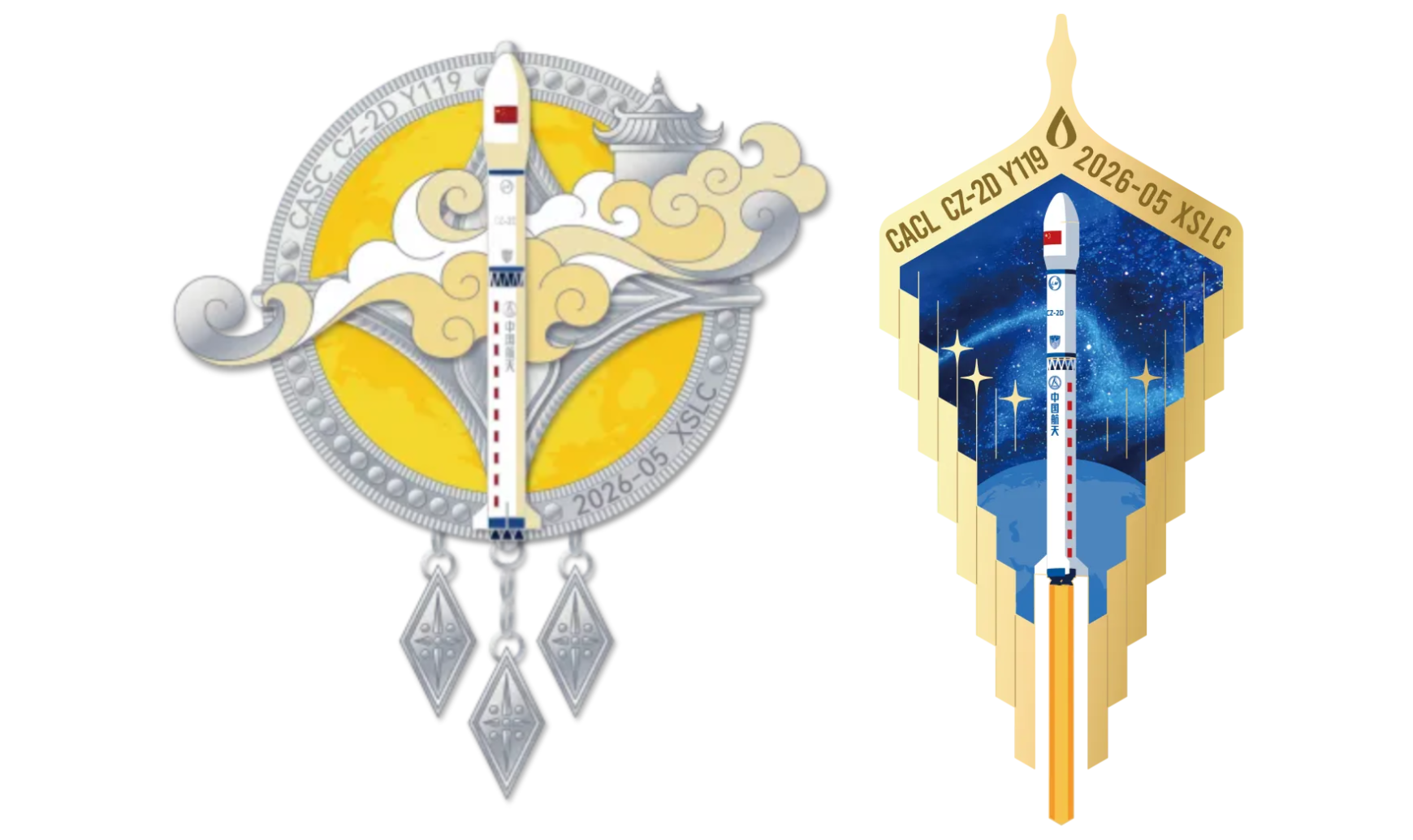
For this Long March 2D mission, the China Aerospace Science and Technology Commercial Launch Vehicle Group (中国航天科技集团商业火箭有限公司) procured the launch on behalf of the customer, then managed the next steps as a ‘one-stop shop’ for the service.
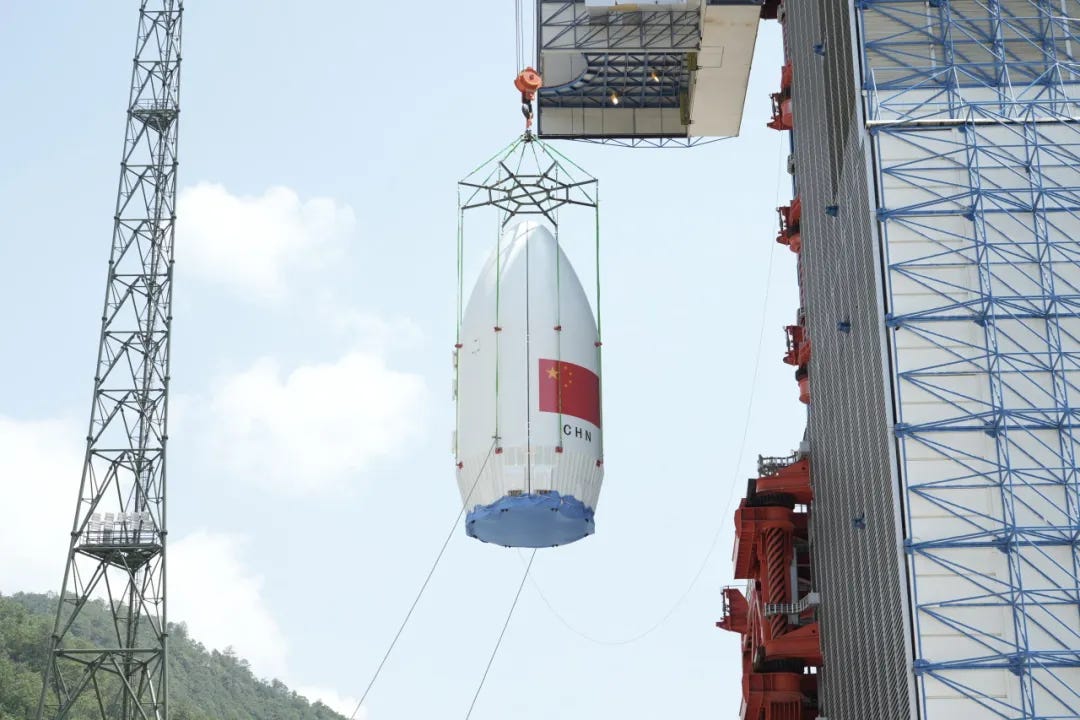
This launch also had a new 4.2-meter-diameter composite fairing in use for a third time atop of the Long March 2D, undergoing further real-world optimizations. According to the Shanghai Academy of Spaceflight Technology, those were in preparation processes and testing ahead of integrating payloads.
Launch vehicle pre-flight adaptations for Xichang’s rainy season, which began in recent days, were implemented as well to deal with forecasted humidity.
Today’s launch was the 105th mission for the Long March 2D, the 267th Long March vehicle from the Shanghai Academy of Spaceflight Technology, and the 646th launch of the Long March launch vehicle series. This was also the 34th launch from China in 2026.
Liftoff footage via 我们的太空 on WeChat.
Xichang Mission Delivers Four More Constellation Test Satellites [Long March 2D Y109]
![Xichang Mission Delivers Four More Constellation Test Satellites [Long March 2D Y109]](https://substackcdn.com/image/fetch/$s_!HB2O!,w_1300,h_650,c_fill,f_webp,q_auto:good,fl_progressive:steep,g_auto/https%3A%2F%2Fsubstack-post-media.s3.amazonaws.com%2Fpublic%2Fimages%2F52d2bb18-7b1a-4b02-82d6-210e7178b510_1720x880.jpeg)
At Launch Complex 3 from the Xichang Satellite Launch Center, a Long March 2D lifted off at 14:35 pm China Standard Time (06:35…
What is the Long March 2D?
This section is for those less familiar with China’s Long March series of launch vehicles.
The Long March 2D is also one of the oldest launch vehicles from China, performing missions regularly to low Earth and sun-synchronous orbits by the Shanghai Academy of Spaceflight Technology, as a two-stage version of the Long March 4 vehicles. The two stages of the launch vehicle both burn Dinitrogen Tetroxide and Unsymmetrical Dimethylhydrazine.
The payload capacity of the launch vehicle is currently as follows:
3,500 kilograms to low Earth orbit
1,300 kilograms to a sun-synchronous orbit
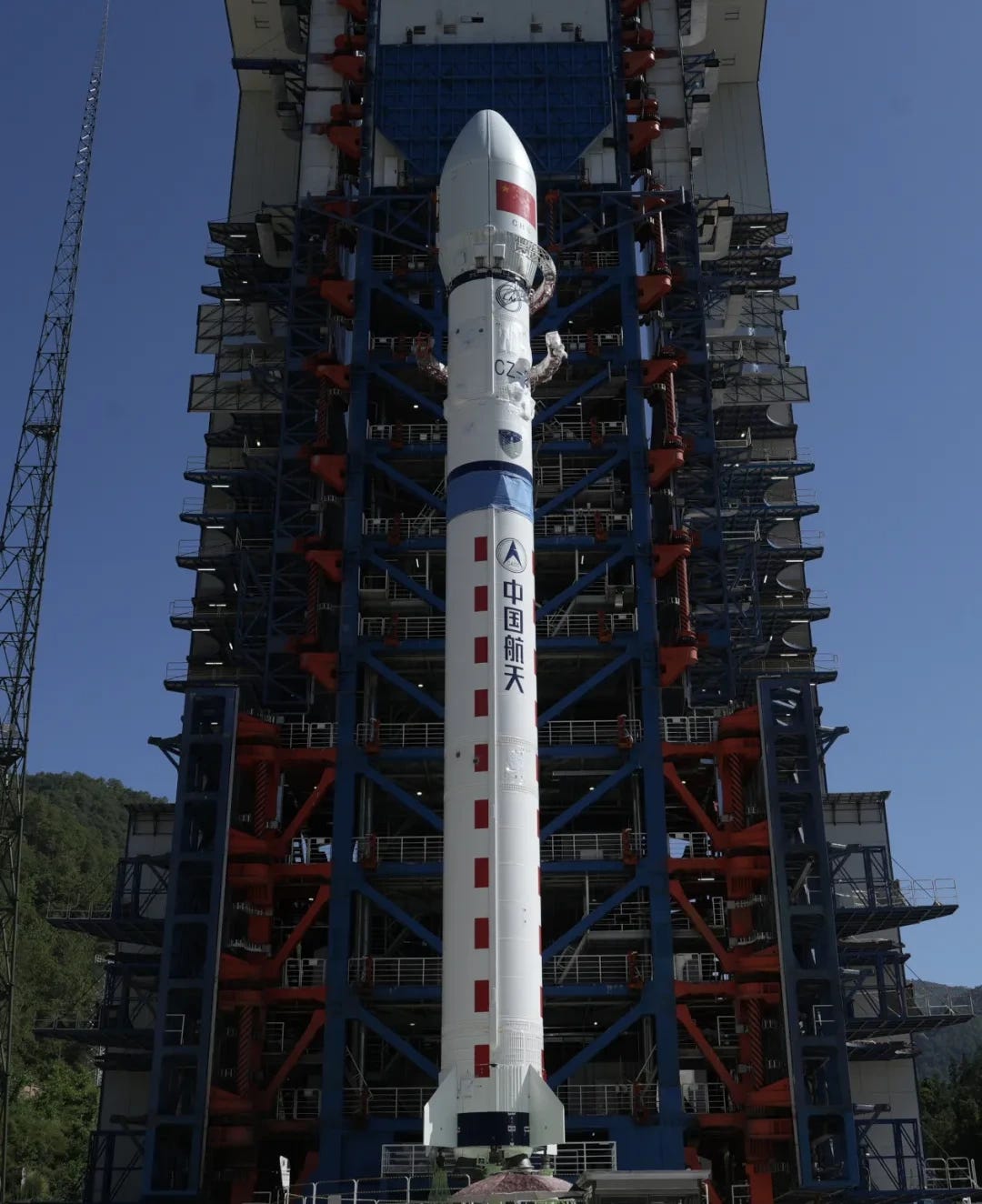
The first-stage is powered by four YF-21C engines, which generate 302 tons of thrust burning Dinitrogen Tetroxide and Unsymmetrical Dimethylhydrazine. The second-stage is powered by a single YF-22C engine and four YF-23C verniers that generate 80 tons of thrust while also burning Dinitrogen Tetroxide and Unsymmetrical Dimethylhydrazine.
On the launch pad, the Long March 2D is 41.05 meters tall and weighs 232,250 kilograms when fully fuelled. The first and second stages have a diameter of 3.35 meters, with the fairing having a diameter of either 3.35, 3.8, 4, or 4.2 meters.
So far, the Long March 2D has flown from all three inland launch sites, the Jiuquan Satellite Launch Center, the Taiyuan Satellite Launch Center, and the Xichang Satellite Launch Center.
Visualizations of them are available here:
It is owned by the China Aerospace Science and Industry Corporation, a defense giant that supported the establishment of ExPace and its Kuaizhou launch vehicles.