

Iran Allegedly Using Chinese Satellite Images, Surprising U.S. Space Force
The Financial Times alleges that a Chinese firm sold a remote sensing satellite to Iran in 2024, now used to image targets across the Middle East.

Almost seven weeks ago, the United States and Israel launched strikes against Iran to start another Middle Eastern war, coming after earlier joint efforts in June 2025. Two weeks into the conflict, the U.S. declared that it had achieved ‘space superiority’, taking out Iran’s domestic orbiting assets and capabilities to support them. However, that hasn’t stopped Iran from obtaining information from space.
According to a report from the Financial Times on April 15th, China-based Earth Eye Co (沐美星空), full business name Beijing Mumei Starry Sky Technology Co Ltd (北京沐美星空科技有限公司), reached an agreement with Iran’s Islamic Revolutionary Guard Corps’ Aerospace Force to use a satellite and ground stations owned by Emposat (航天驭星), a Chinese satellite tracking, telemetry, and control company. Both enterprises operate within China’s commercial space sector.
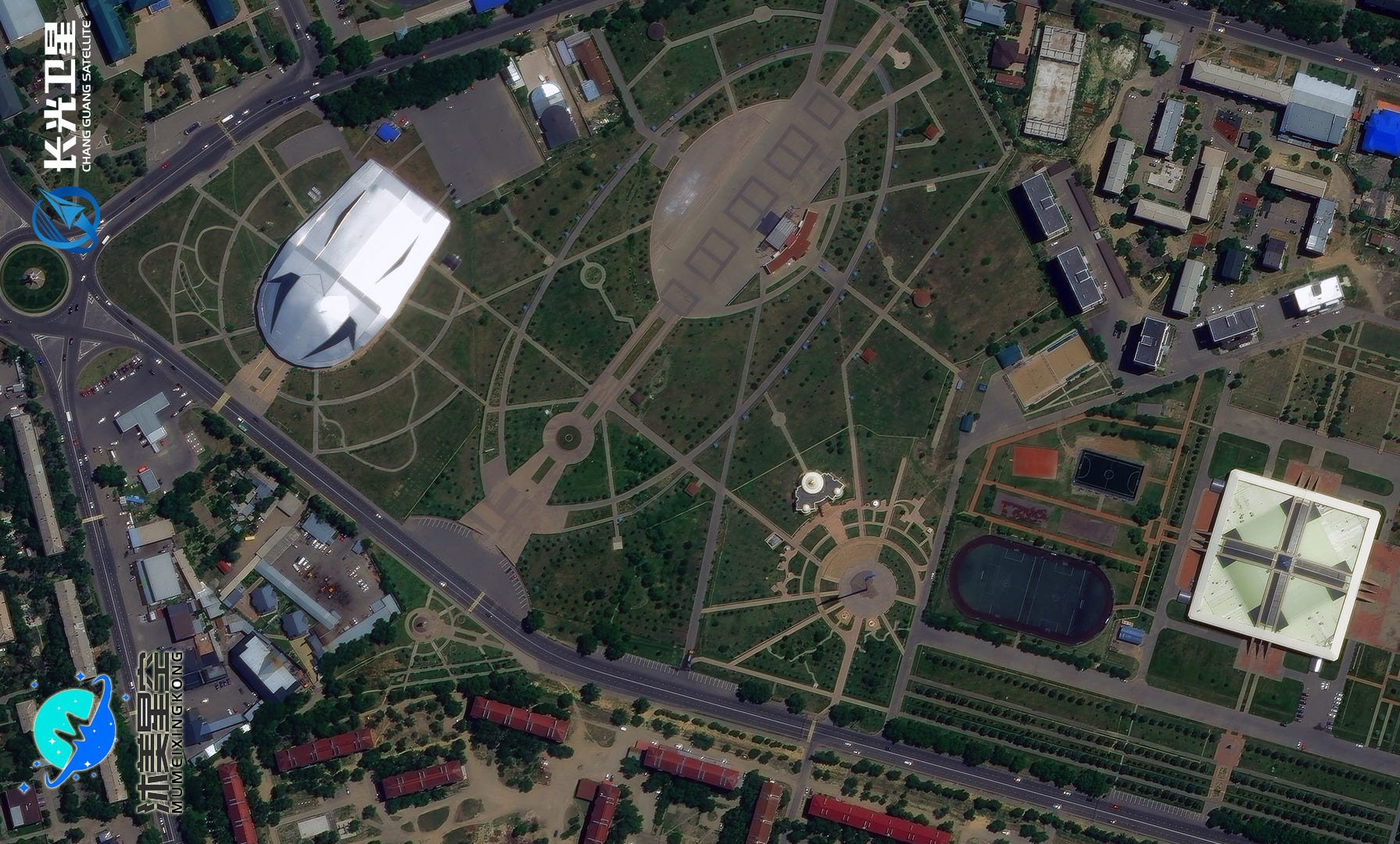
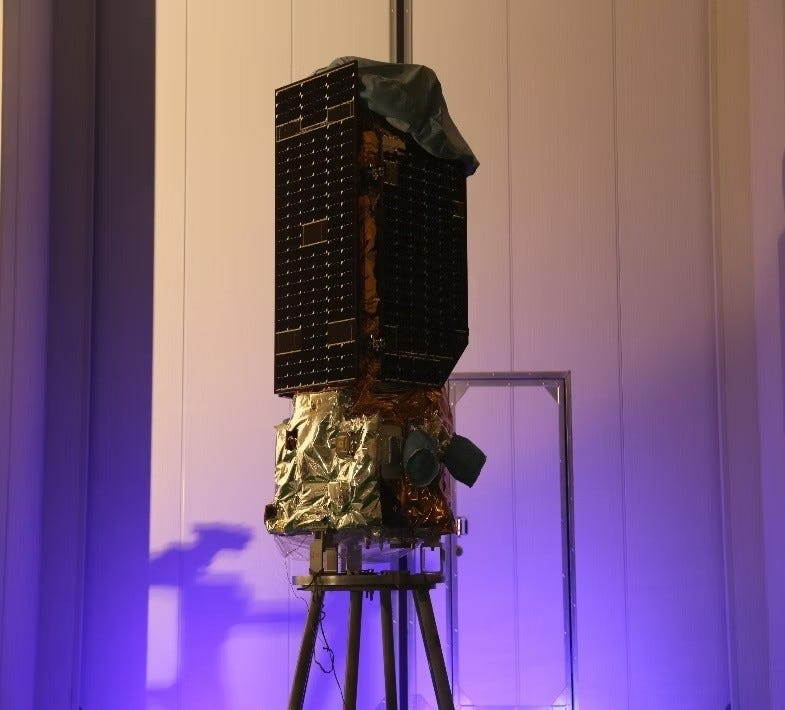
The satellite used by the Guard Corps is claimed to be TEE-01B (地球之眼1号卫星), a 112-kilogram remote sensing satellite with a resolution of 52 centimeters in panchromatic mode or 208 centimeters in multispectral mode per pixel in a 14.8-kilometer swath image, launched in June 2024 by Galactic Energy’s Ceres-1. Access to TEE-01B was said to have come via an on-orbit delivery agreement, a service the company does offer to hand over a satellite once its systems a verfied to be healthy.
The total paid by the Guard Corps to Earth Eye Co as part of the agreement to use TEE-01B and Emposat ground stations was stated to be around 250 million Yuan (36.66 million United States Dollars, as of April 15th), an impressive bounty for just one tiny spacecraft. That deal was closed in September 2024, almost eighteen months before the current conflight began.
As for what TEE-01B is up to for its Iranian operators, the Financial Times stated it has been imaging military sites across the Middle East that house or support U.S. and Israeli forces, per leaked information obtained by the outlet, as well as industrial infrastructure. Those images are then used to analyze struck locations with before and after photographs.
As for why the Guard Corps would obtain a Chinese-made satellite that communicates through non-Iranian ground stations, a former CIA analyst told the outlet:
“Iran’s satellite ground stations, which were hit in 2025 and 2026, can be hit very easily by missiles from a thousand miles away. You can’t just hit a Chinese ground station located in another country.”
That is in addition to more direct support from Russian forces.
What the Financial Times missed in its reporting is that TEE-01B was produced by Changguang Satellite Technology Co Ltd (长光卫星技术股份有限公司), of the Jilin-1 (吉林一号) Earth imaging constellation, for Earth Eye Co to do what they wanted with it. Changguang Satellite Technology themselves have already come under fire from the U.S., having been sanctioned in 2023 for allegedly selling imagery to Russia’s Wagner Group and then to Yemen’s Houthis in 2025.
Following the Financial Times’ piece, Reuters reported that China’s Ministry of Foreign Affairs (中华人民共和国外交部) and embassy in Washington D.C. denied any state links to the claimed activity.
Since this latest conflict in the Middle East began, U.S. Earth imaging firms like Planet Labs and Vantor (formerly Maxar) have indefinitely halted their publishing of imagery of the region due to pressures from the American government, likely to hide the extent of damage from retaliatory strikes. That pressure did not stop intelligence firms, like those of the Shanghai-based MizarVision (觅熵), from buying imagery from other Western entities and then publishing that imagery. Meanwhile STAR.VISION Aerospace (地卫二空间技术) utilized the halt in imagery to make its regular Middle Eastern imagery free to subscribers of its services.
Iran’s use of imagery from Earth Eye Co and others has surprised the U.S. Space Force, making the American military at large adjust how it operates now knowing that they can be seen anytime and anywhere. As quoted by Defense One, Head of U.S. Space Command General Stephen Whiting told press at Colorado’s Space Symposium conference:
“Every country, just about today, can somehow access space imagery, which then gives them an insight on what’s going on in the battlefield … We have to recognize that the rest of the world can now see the entire planet transparently and almost 24/7.”
General Whiting’s comments come almost two months after Lieutenant General Gregory Gagnon, head of the U.S. Space Force’s Combat Forces Command, outlined that America is looking into attacking Chinese spacecraft, specifically citing a so-called threat from remote sensing satellites.
Jack identifies something important here: even after the United States and Israel have degraded a significant part of Iran’s domestic space and ground-support infrastructure, Iran may still be able to obtain battlefield-relevant remote sensing capability through China’s commercial space ecosystem. In modern warfare, space-based information capability no longer depends entirely on a country building a fully sovereign system from scratch. As long as a state can plug into global commercial remote-sensing networks, it may still preserve a meaningful degree of battlefield awareness.
That is the reality the U.S. Space Force is being forced to adapt to. More and more countries can now access near-round-the-clock global imagery, and the operational transparency of U.S. military movements is rising. After the escalation of conflict in the Middle East, some American remote-sensing firms stopped publicly releasing imagery of the relevant areas. But that did not prevent Chinese or other non-U.S. channels from continuing to provide image services. In other words, the ability to “see” in future wars is becoming increasingly commoditized, networked, and internationalized. It is no longer something monopolized entirely by state militaries. Commercial space has become a new kind of infrastructure in geopolitical conflict, and whoever can embed themselves into this transnational commercial space network can retain a degree of informational resilience even after being hit.
My only reservation is that Jack slightly overstates what commercial remote sensing can do, almost as if Chinese commercial remote sensing has become powerful enough to let Iran “replace” a U.S.-level space ISR architecture. That goes too far. Even at 0.5-meter-class resolution, commercial optical remote sensing can significantly improve target identification, facility-change detection, battle damage assessment, and pre-strike preparation. But it is still far from an integrated military ISR network that is persistent, real-time, wide-area, all-weather, and resilient under interference. What it really does is upgrade a state from “cannot see clearly, cannot see enough, cannot see consistently” to “can see more clearly, more frequently, and at several critical moments.” It does not turn Iran into a mature space military power overnight.
On top of Jack’s analysis, I would add several points.
First, how far has Chinese commercial remote sensing actually developed, and is it really strong enough to reshape the information structure of a localized battlefield? Over the past decade, China’s commercial remote-sensing sector has moved from scattered experimentation to system-level expansion. Since social capital was formally allowed to enter the sector in 2014, the number of Chinese commercial space and remote-sensing companies, the scale of financing, and the number of planned and deployed constellations have all risen rapidly. At present, at least 12 Chinese commercial remote-sensing companies are developing or deploying 14 commercial Earth-observation constellations, ranging in size from 4 satellites to 300. Objectively speaking, Chinese commercial remote sensing is already one of the most important forces in the global first tier, especially in constellation expansion, low-cost deployment, commercial operations, and dual-use integration. But it still has not fully surpassed the United States in the most advanced areas: persistent surveillance, all-weather multi-source fusion, global commercial brand dominance, a fully developed data ecosystem, and high-value international monetization.
Second, if Washington has already been sanctioning this sector for years, why has it still failed to truly cut the chain? There are several reasons.
The first is that U.S. sanctions primarily hit companies’ access to finance, legal channels, and international business networks, not the physical space assets themselves. A remote-sensing satellite already in orbit does not become useless simply because it has been placed on an OFAC list. As long as it can still fly, image, and transmit, the capability still exists. Sanctions can raise the cost of financing, insurance, international partnerships, dollar settlement, and cross-border transactions, but they cannot physically eliminate a satellite the way one can destroy a missile launcher.
The second is that China’s remote-sensing industry is not just a collection of isolated companies. It is the product of interaction among multiple ministries, multiple layers of government, state-owned enterprises, research institutes, and financial capital. Its commercial space expansion was gradually institutionalized after 2014, and then further accelerated by central policy support in the 2025–2027 period. For this kind of system-level industry, single-point sanctions can certainly inflict damage, but they are very unlikely to deliver a one-shot kill.
The third is that remote sensing is a classic dual-use industry. The same satellite, the same ground network, and often the same algorithms can be used to provide imagery for agriculture, mining, disaster monitoring, ports and shipping, or urban planning — and also for target analysis in conflict zones. The United States can sanction specific transactions or specific companies, but it is much harder to destroy the entire global commercial high-resolution remote-sensing industry as such, because doing so would also hit a wide range of legitimate civilian and commercial applications.
The fourth is that the United States is dealing with a decentralized, distributed, cross-company, and cross-regional commercial space ecosystem. Even if Washington targets Chang Guang, that does not mean all Chinese commercial remote-sensing capability disappears. Even if it constrains one company’s ability to release imagery publicly, that does not mean overseas customers can no longer find substitutes. Multiple Chinese companies and multiple constellations are now expanding in parallel, and newer Chinese policy initiatives explicitly emphasize opening infrastructure and national programs to commercial actors. That means any serious U.S. effort to suppress Chinese commercial remote sensing is becoming less like sanctioning a single firm and more like trying to contain an entire industrial ecosystem over the long term.