

LandSpace Recovers China’s Second Rocket Booster, Deploys Demo Satellite [Zhuque-3 Y2]
China’s space sector has landed another rocket booster, this time on solid ground and with a different launch vehicle.

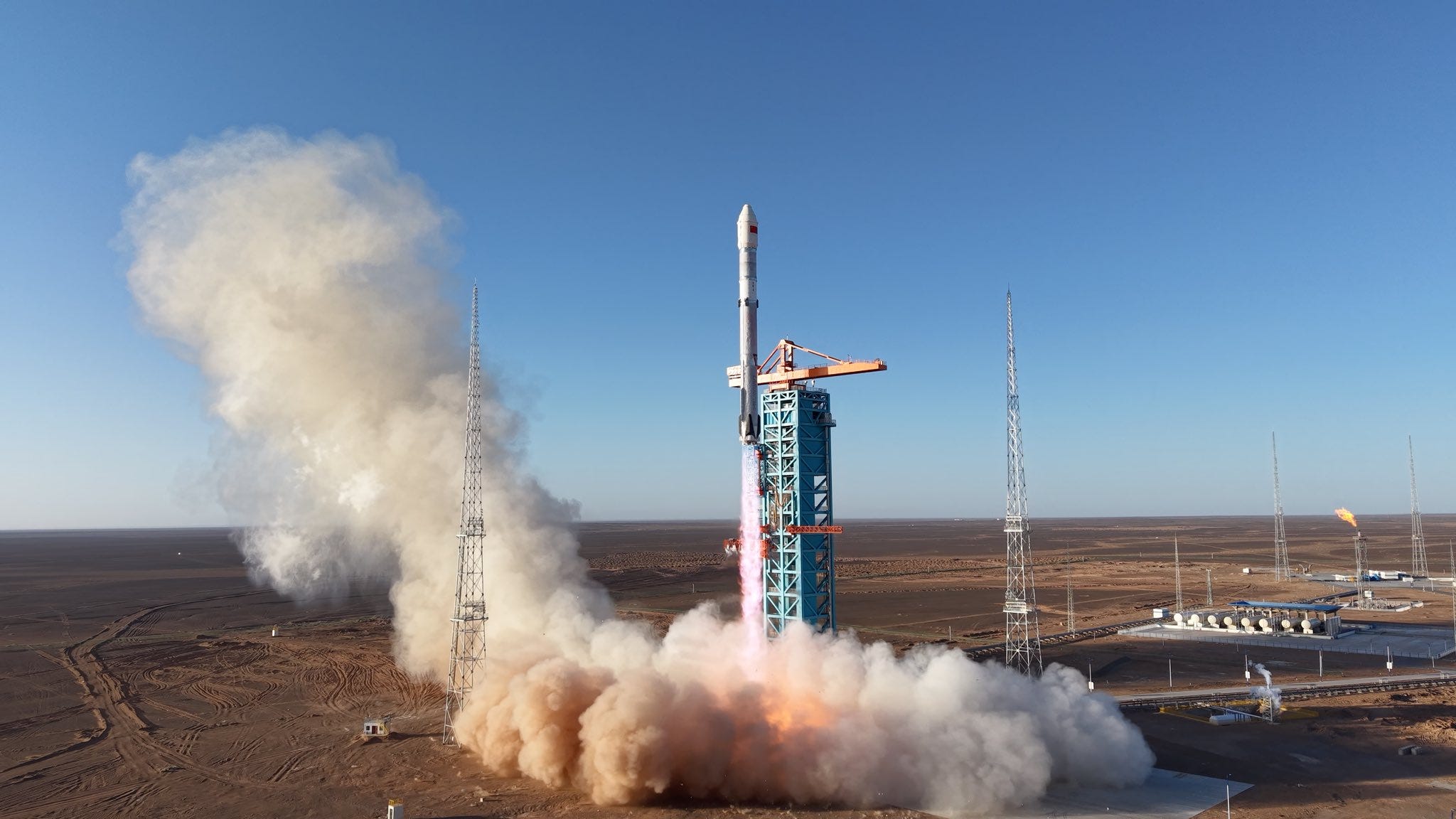
Soaring once again from Launch Area 96B at the Jiuquan Satellite Launch Center, LandSpace’s Zhuque-3 lifted off at 07:35 am China Standard Time on August 19th (23:35 pm Universal Coordinated Time on August 18th), heading for low Earth orbit in its second mission.
Under the power of nine TQ-12A engines, the launch vehicle quickly disappeared into a clear sky, reaching the upper atmosphere in minutes. Up there, the first and second stages separated as planned, allowing the latter to take over flight towards orbit. Following separation, the booster began its descent towards its dedicated downrange landing pad in Minqin County (民勤县), Gansu (甘肃) province.
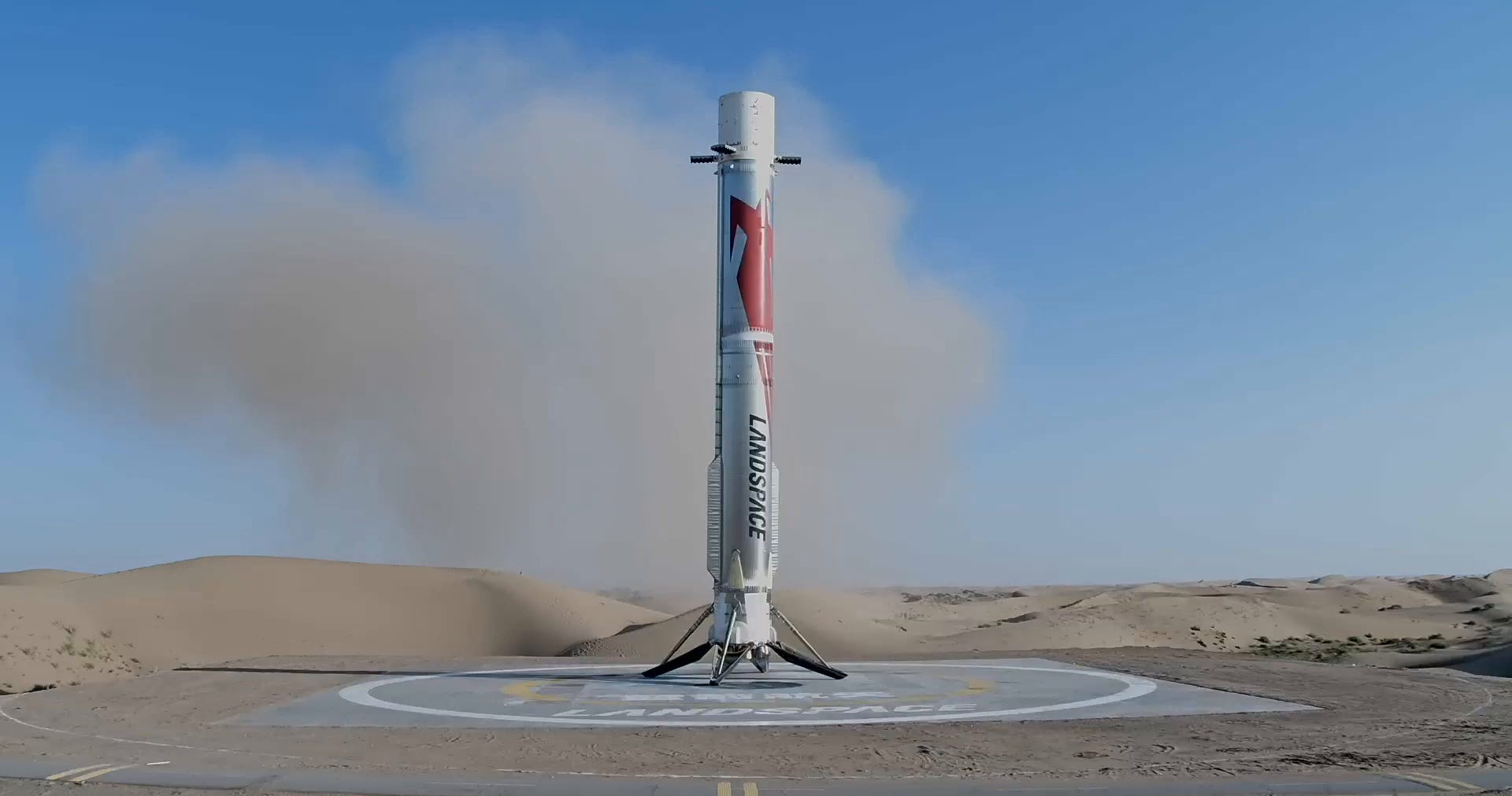
Unpowered descent went as expected, with the four grid fins actively maintaining the flight’s course. A couple dozens seconds ahead of repeating the first flight’s hard touchdown, a single TQ-12A engine ignited, followed by four more. The five engines momentarily decelerated the booster at great speed, before dropping down to three, and then just one. That single engine remained active for several seconds, gently guiding the first-stage to a soft touchdown!
With the soft landing downrange, LandSpace is the first Chinese launch enterprise to recover a launch vehicle’s first-stage booster on land, and the second entity in China to capture a flown booster of an orbital rocket. The nation’s first was with the Long March 10B at sea in July.
As for the second-stage, it successfully achieved orbit with the Honghu-03 (鸿鹄03星) flat-packed satellite from Hongqing Technology (鸿擎科技), a LandSpace-affiliated spacecraft manufacturer. The satellite will trial its unfoldable thermal radiator, sizeable solar panels, electric propulsion system, and a 100-gigabit optical laser link ahead of mass production for connectivity constellations. Additionally, it demonstrated LandSpace’s custom pyrotechnic-free stacked satellite separation system.
In a post-launch blog post, LandSpace shared that, in comparison to the first mission of Zhuque-3, the booster’s engine ignition systems and processes have been improved, the descent path was refined to reduce stress, and the thermal protection material at the base of the first-stage was upgraded. Allow of those allowed it to land downrange successfully.
Zhuque-3’s fairing also had some adjustments made to allow for the incorporation of insulating foam tiles to be placed on the outside, used to keep payloads inside at their desired temperature. Like those used on many older Long March launch vehicles, the tiles fall away harmlessly at liftoff.

As a booster is now on the ground for the first time, LandSpace will quickly ship it off for inspections to determine what improvements can be made and how soon it can fly again. Company officials shared earlier in the year that the first booster recovered would be the candidate for the first reflight. That mission may carry Qianfan (千帆) connectivity satellites too, as Zhuque-3 has proven its ability to reach orbit twice.
Ahead of the vehicle’s second launch, it underwent a lengthy static-fire campaign through June, firing up at the end of the month. It was originally expected that the second Zhuque-3 mission would occur in July, but LandSpace opted to forgo earlier launch opportunities to swap out components and extensively check systems ahead of flying. Weather at the landing site also delayed the mission.
Today’s mission was the 2nd for the partially reusable Zhuque-3, and LandSpace’s 10th orbital launch attempt in the company’s history. This was also the 59th launch from China in 2026.
Liftoff video via 大漠问天, landing footage via LandSpace on WeChat.
Check out LandSpace’s previous launches
LandSpace Successfully Debuts Zhuque-3, Falls Barely Short of Landing [Zhuque-3 Y1]
![LandSpace Successfully Debuts Zhuque-3, Falls Barely Short of Landing [Zhuque-3 Y1]](https://substackcdn.com/image/fetch/$s_!-2gF!,w_280,h_280,c_fill,f_webp,q_auto:good,fl_progressive:steep,g_auto/https%3A%2F%2Fsubstack-post-media.s3.amazonaws.com%2Fpublic%2Fimages%2F557d4b08-e395-4dd2-a022-c504e8608737_3840x2160.jpeg)
From Launch Area 96B at the Jiuquan Satellite Launch Center, LandSpace’s Zhuque-3 blasted off at 12:00 pm China Standard Time (04:00 am Universal Coordinated Time) on December 3rd, heading for low Earth orbit with ‘dummy payloads’ acti…
LandSpace Delivers Experimental Connectivity Satellites Into Orbit [Zhuque-2E Y6]
![LandSpace Delivers Experimental Connectivity Satellites Into Orbit [Zhuque-2E Y6]](https://substackcdn.com/image/fetch/$s_!lIZ6!,w_280,h_280,c_fill,f_webp,q_auto:good,fl_progressive:steep,g_auto/https%3A%2F%2Fsubstack-post-media.s3.amazonaws.com%2Fpublic%2Fimages%2F427a4b23-87a0-4d26-9f3f-d628ee8efe63_3840x1988.jpeg)
On June 9th at 16:23 China Standard Time (08:23 Universal Coordinated Time), LandSpace’s Zhuque-2E departed from Launch Area 96A at the Jiuquan Satellite Launch Center, heading into low Earth orbit with two experimental connectivity satellit…
What is Zhuque-3?
This section is for those less familiar with China’s various commercial launch vehicles.
Zhuque-3 is LandSpace’s two-stage partially reusable launch vehicle that flying from the Jiuquan Satellite Launch Center. Zhuque-3 burns liquid methane and liquid oxygen propellants in its engines on both stages, which are built out of stainless steel.
For Zhuque-3’s debut flight and a few afterwards, a ‘block one’ version of the rocket is said to be able to lift:
11,800 kilograms to low Earth orbit when expended
8,000 kilograms to low Earth orbit with a first-stage landing downrange.
LandSpace claims that Zhuque-3 ‘block two’ will be able to:
21,300 kilograms to low Earth orbit when expended
18,300 kilograms to low Earth orbit with a first-stage landing downrange
12,500 kilograms to low Earth orbit with a return to launch site landing.
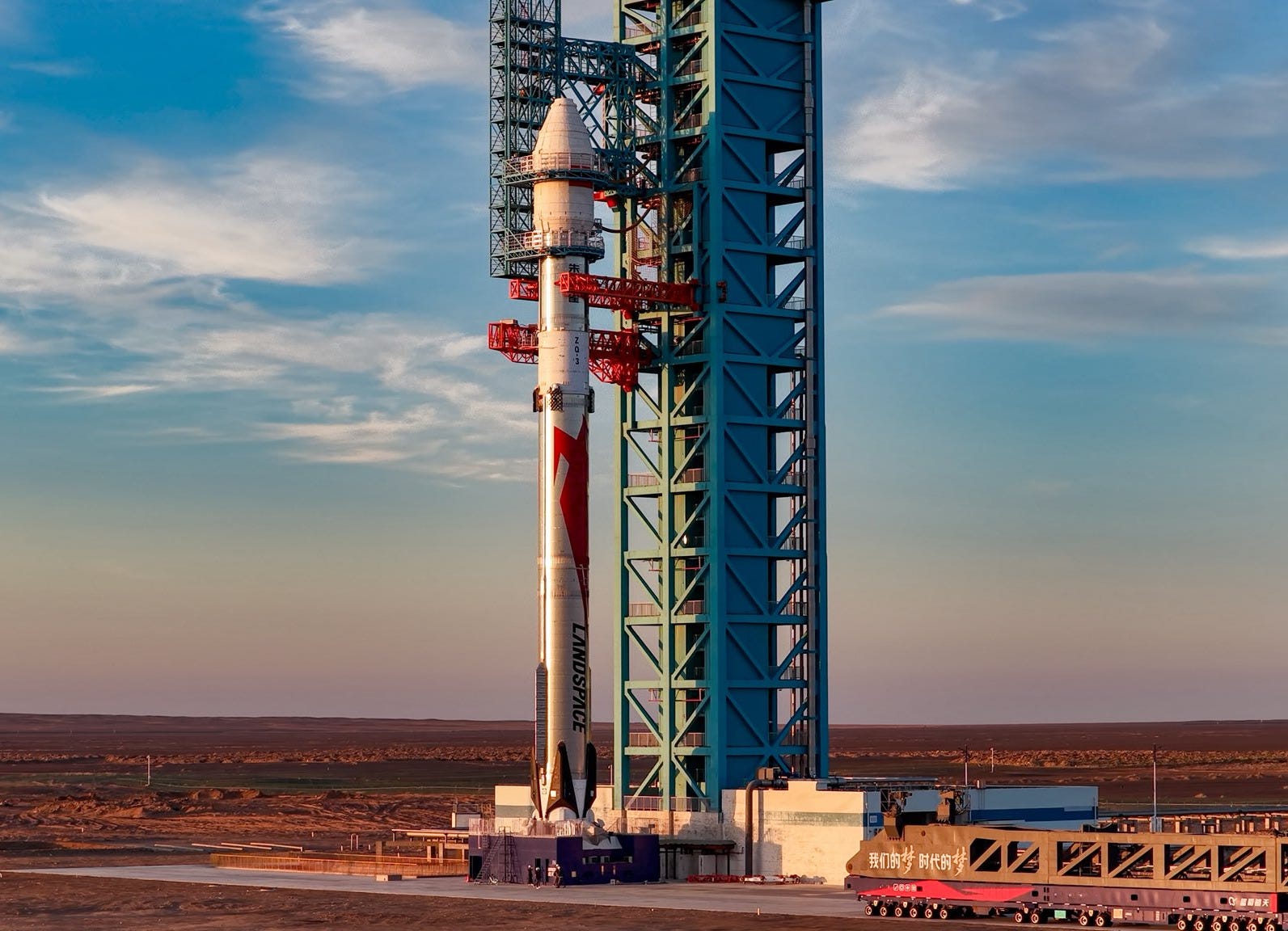
The first-stage of Zhuque-3 is powered by nine TQ-12B engines, although initially using the TQ-12A, generating an approximate combined 900 tons of thrust (750 tons with TQ-12A) while burning liquid methane and liquid oxygen. LandSpace is also looking to fly each first-stage twenty times, with the potential to certify them for more flights. The second-stage of Zhuque-3 is powered by one TQ-15B generating a believed 100 tons of thrust while also burning liquid methane and liquid oxygen.
To facilitate reuse of the first-stage, three engines light during re-entry followed by one being lit again for landing on a drone ship or landing pad. For boost-back burns, the booster turns around in-flight after separation and relights one engine.
The boosters and second stage have a diameter of 4.5 meters. The fairing is 5.2 meters in diameter and split into two halves. The total height of Zhuque-3 is currently planned to be 76.6 meters, in its ‘block two’ form, with it having a fully fuelled mass of approximately 660,000 kilograms. A ‘block one’ vehicle stands 66 meters tall and weighs 570,000 kilograms loaded with propellant.


So the beginning of the end of SpaceX reusable rockets has just started because now China will massivley outproduce SpaceX and BlueOrigin in reusable rockets and world will have NO choice but to buy efficient , optimized and cheaper reusable rockets from Chinese rocket manunfacturers.