

Maritime Navigation Duo Launched From Jiuquan [Kuaizhou-1A Flight-31]
ExPace has deployed the first of two satellites for a new constellation focused on maritime navigation services.

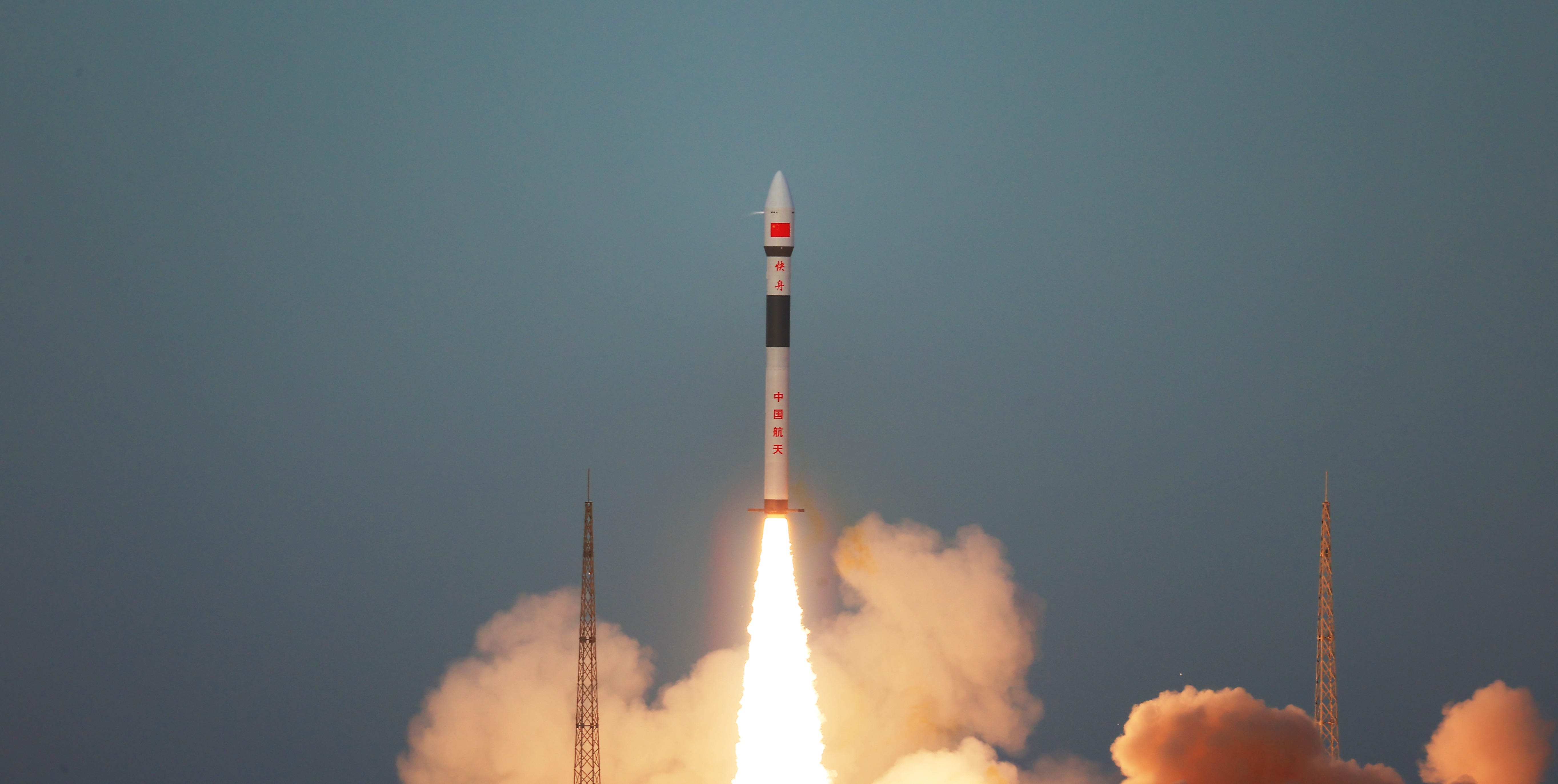
Out of the Jiuquan Satellite Launch Center, ExPace’s Kuaizhou-1A lifted off at 17:00 pm China Standard Time (09:00 am Universal Coordinated Time) on December 5th to head for sun-synchronous orbit, carrying two satellites.
Riding into orbit were VDES-A and VDES-B (VDES卫星A星B星) from the Innovation Academy for Microsatellites, Chinese Academy of Sciences (中国科学院微小卫星创新研究院). Both satellites, as their names suggest, host Very High Frequency (VHF) Data Exchange System (VDES) payloads as well as laser communication terminals for improving communications between maritime vessels, as part of a plan from the International Organization for Marine Aids to Navigation for improving ship traffic management as well as search and rescue efforts.
The Microsatellite Academy says that VDES-A and VDES-B are part of a planned VDES constellation in low Earth orbit, with the first two satellites set to prove the foundations of it. The China Maritime Safety Administration (中华人民共和国海事局) is collaborating with the China Transport Telecommunications and Information Center (中国交通通信信息中心) and Shanghai Spacesail Technologies Co Ltd (上海垣信卫星科技有限公司), known for the Qianfan (千帆) constellation, to establish the constellation.
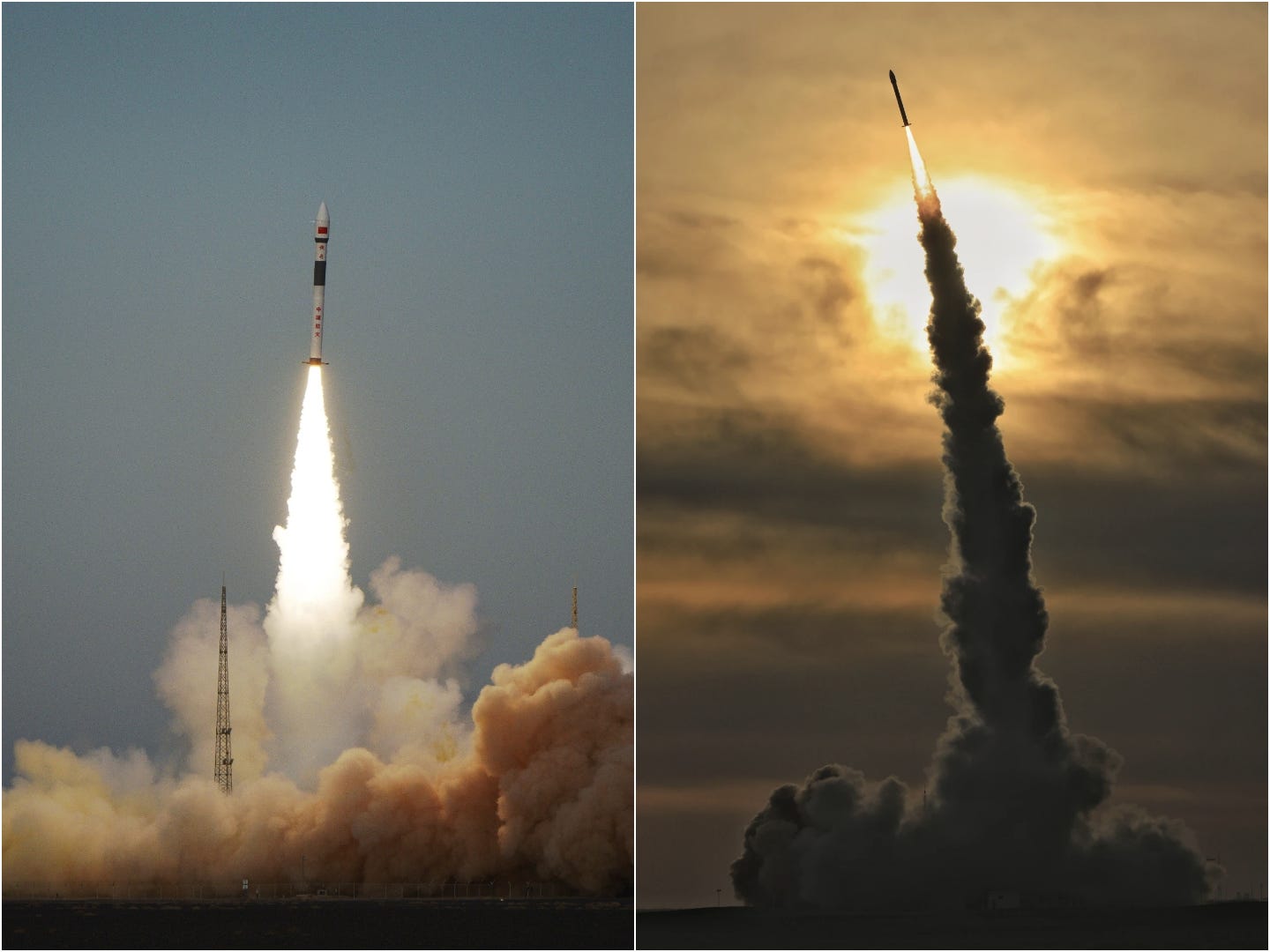
This launch of Kuaizhou-1A added another successful flight of the upgraded ‘Pro’ variant to ExPace’s record, which has delivered payloads for the Chinese Academy of Sciences and Pakistan. It was also the first since the Sichuan Provincial Science and Technology Innovation Investment Co Ltd (四川省科技创新投资有限责任公司) bought a majority share in ExPace from the former majority shareholder, China Aerospace Science and Industry Corporation, a state-owned space and defence contractor.
Today’s launch was the 31st Kuaizhou-1A mission, and the 37th launch of the Kuaizhou series. This was also the 79th launch from China in 2025.
Liftoff video via 大漠问天 on WeChat and 航天五线谱 on Weibo.
Check out the previous Kuaizhou launch
Pakistani Satellite Soars From Xichang! [Kuaizhou-1A Flight-30]
![Pakistani Satellite Soars From Xichang! [Kuaizhou-1A Flight-30]](https://substackcdn.com/image/fetch/$s_!tMOO!,w_1300,h_650,c_fill,f_webp,q_auto:good,fl_progressive:steep,g_auto/https%3A%2F%2Fsubstack-post-media.s3.amazonaws.com%2Fpublic%2Fimages%2F6d5a43d9-4684-41da-a6f7-29ddd74c45d5_5046x2667.jpeg)
From the Xichang Satellite Launch Center, ExPace’s Kuaizhou-1A ‘Pro’ blasted off at 10:00 am China Standard Time (02:00 am Universal Coordinated Time) on July 31st, heading into low Earth orbit with an international satellite, a first for the rocket.
What is Kuaizhou-1A?
This section is for those less familiar with China’s various commercial launch vehicles.
The Kuaizhou-1A is one of the first commercial launch vehicles from China, having been developed by the China Aerospace Science and Industry Corporation (CASIC) and now manufactured by ExPace. The first three stages of the vehicle burn an unspecified solid propellant with a liquid-fuelled fourth-stage for orbital insertion.
The payload capacity of the launch vehicle is currently as follows:
450 kilograms to low Earth orbit
360 kilograms to a 500-kilometer sun-synchronous orbit
300 kilograms to a 700-kilometer sun-synchronous orbit
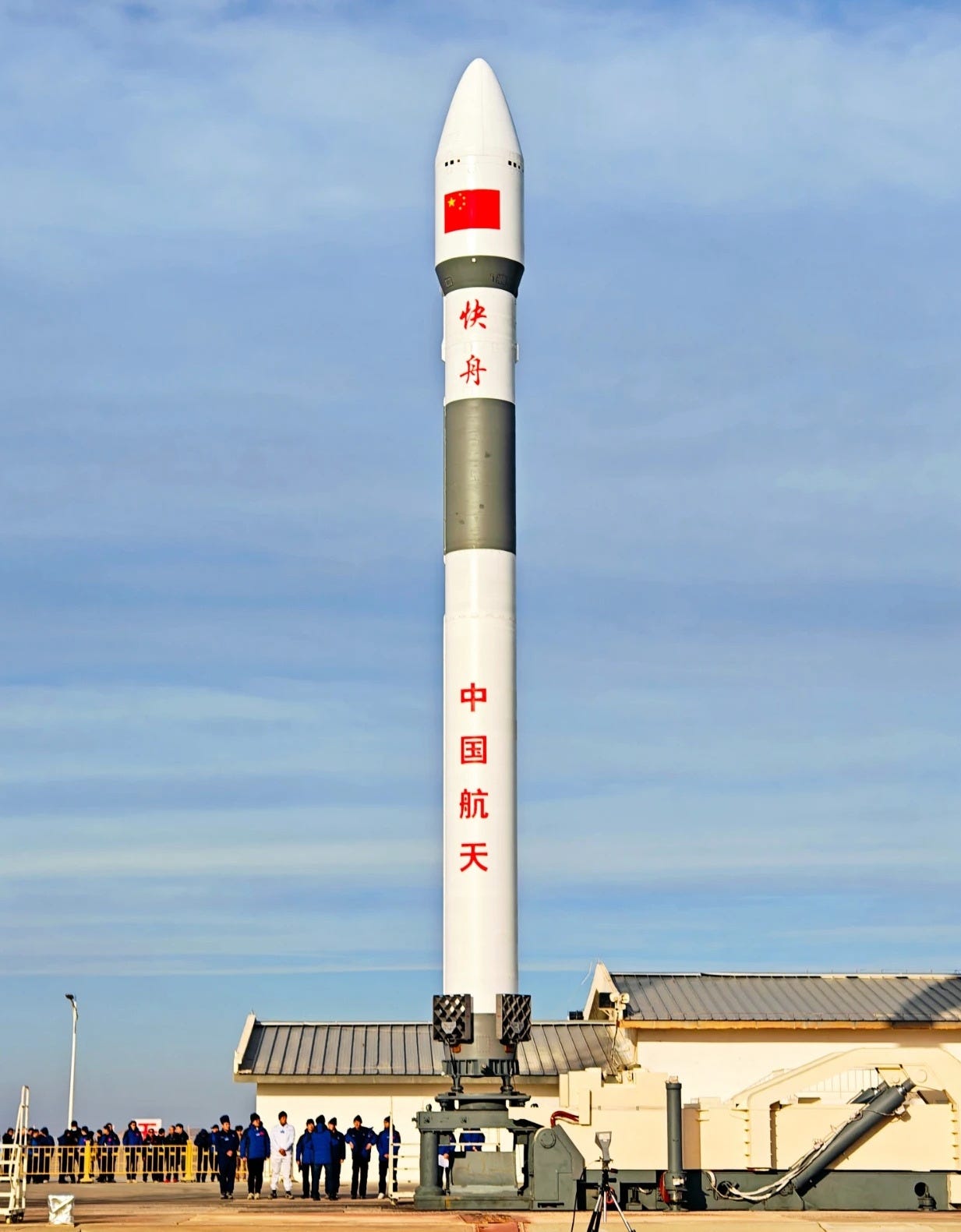
On the launch pad, Kuaizhou-1A is believed to be 19.8 meters tall. Details about the vehicle are scarce but the fairing’s diameter is stated to be 1.8 meters. Four grid fins and various attitude control thrusters on the fourth-stage help control the vehicle during flight.
So far the Kuaizhou-1A has flown from all three inland launch sites, the Jiuquan Satellite Launch Center, the Taiyuan Satellite Launch Center, and the Xichang Satellite Launch Center.

