

Mengzhou Abort Plans, Lanyue Lander Systems Detailed in New Papers
Details about the spacecraft for China's crewed lunar landing missions have been shared thanks to newly released academic papers.

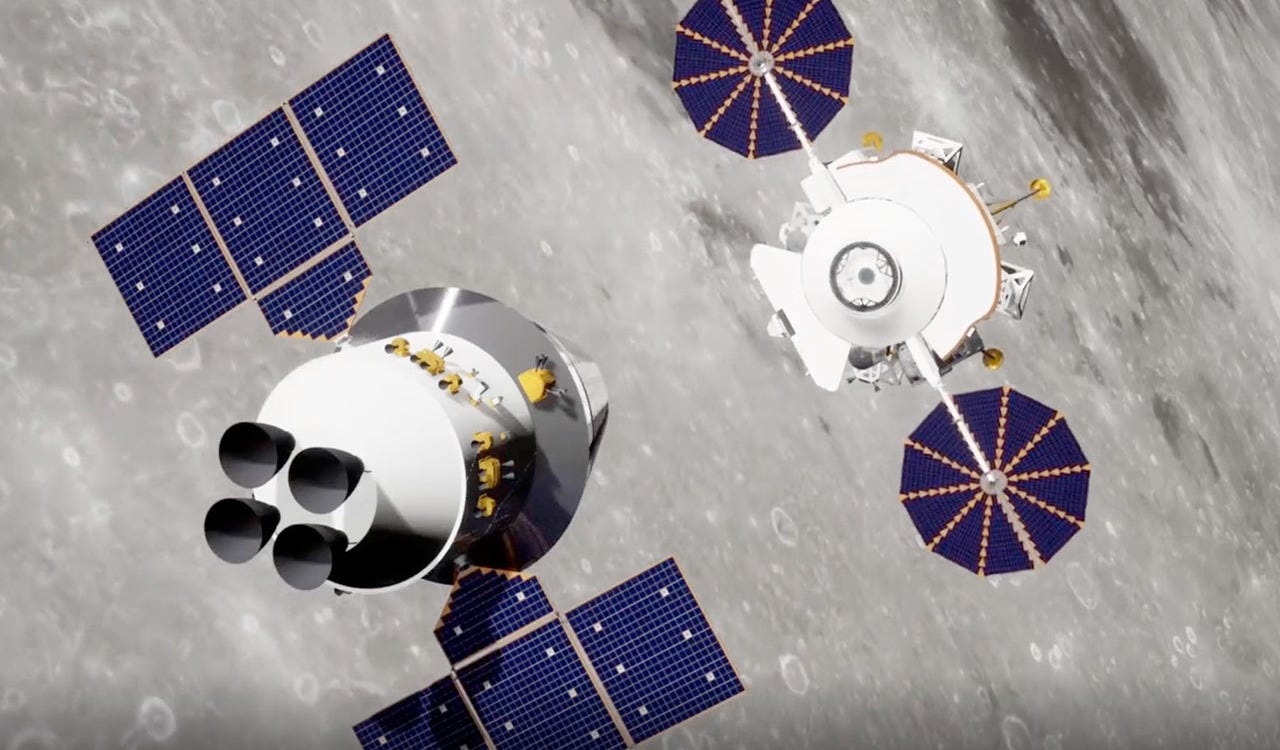
Recently, the journal Chinese Space Science and Technology (中国空间科学技术) had its second issue of 2026 published. This issue was dedicated to China’s crewed lunar landing missions, with fourteen papers taking up its one hundred and fifty pages. Those papers detailed some specifics for the Lanyue (揽月) lunar lander and the Mengzhou (梦舟) crew capsule for the first time.1
Putting Lanyue on the Moon
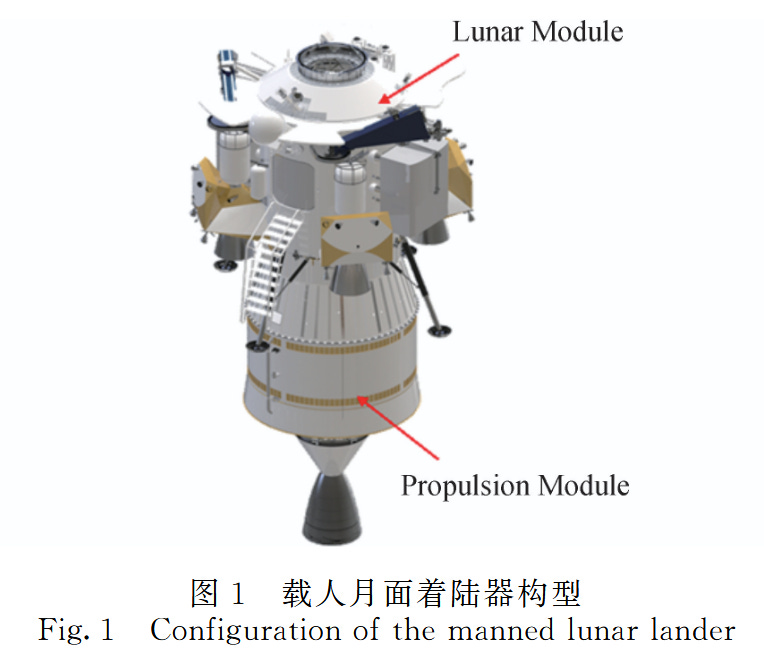
As is obvious, landing on the Moon via Lanyue is a key part of the crewed lunar landing mission. One of the papers details the lander module’s monomethylhydrazine and nitrogen tetroxide burning propulsion system, powered by four YF-36 engines2. Propellant for that system, about 6,000 kilograms, is stored in a common-dome tank at the bottom of the lander3, beneath where taikonauts are, and exposed to heat from the four landing engines. To deal with the heat, protective thermal materials will be present to both passively and actively cool it down. One such way to reduce heat is to reduce the thrust level of the four engines, which, as the paper states, is viable thanks to a high consistency of performance at different levels.
Lanyue’s engines, over its two-module design, are the core of bringing the vehicle and its passengers to and from the surface, with a combined impulse of 5,100 meters per second, as detailed in another paper. For its missions, a propulsion module, powered by the monomethylhydrazine and nitrogen tetroxide burning YF-58-1 engine4, brings the 26,000 kilograms spacecraft into lunar orbit, and after taikonauts board, an initial descent orbit, then a final path towards the surface. Those burns, at least three5, use up the propulsion module with the lunar module and its four engines taking over for a soft landing6. Following a few days on the surface, those engines reignite to bring Lanyue back into lunar orbit and to rendezvous with Mengzhou within several hours7. Should the propulsion module’s engine fail, Lanyue remains in orbit and aborts landing attempts. If a YF-36 fails on the lunar module, the engine opposite also shuts down to retain symmetrical thrust, resulting in an abort to orbit, delayed touchdown, or longer than planned flight back into orbit8.
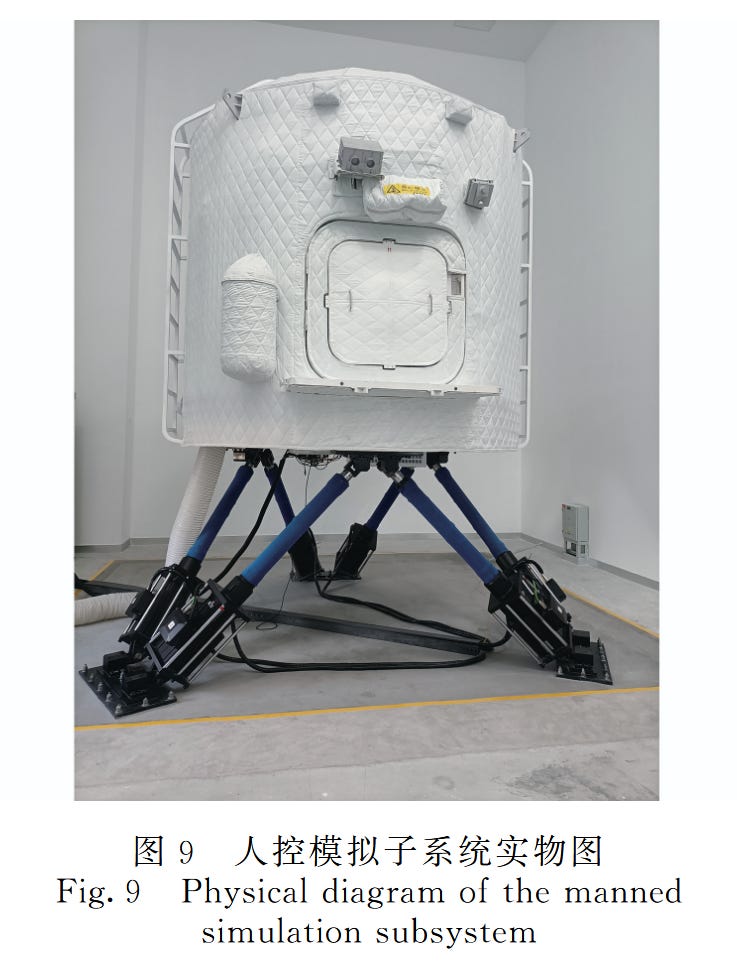
To guide Lanyue to the surface, several sensors are part of its guidance systems. Those include an inertial measurement unit, star trackers, optical navigation sensors, a microwave radar for determining range and velocity, and a laser hazard avoidance sensor. Those are said to have been improved upon systems flown on previous Chang’e lunar landers and Tianwen-1 Mars lander9 through greater autonomous control and redundancy. In simulations, Lanyue’s guidance systems have an accuracy of within 100 meters for flying towards a safe target. Simulations have also been conducted at an extraterrestrial gravity simulator in Huailai County (怀来县), flying around the fifty by thirty-five by forty-two meter space with hardware location errors of under one meter. Taikonauts are undergoing training in a Lanyue simulator as well, which will refine landing software and predictions too.
Guidance and other systems across Lanyue are connected by redundant optical cabling for high-speed understanding by the landers’ computers, using a Time-Triggered Ethernet standard. For sending and receiving information from Lanyue, the lander has a 100 megabit high-speed upload-download channel and a low-speed 2 kilobit upload, 64 kilobit download channel, with a latency of six milliseconds for both.
Keeping taikonauts safe in Mengzhou
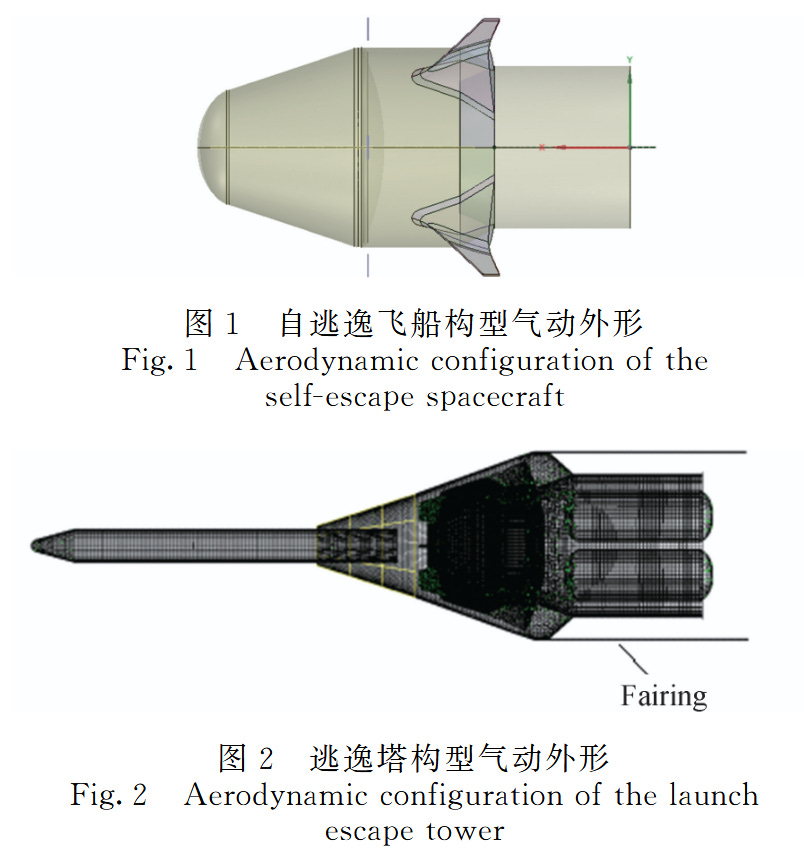
Several of the papers published for Mengzhou focused on the crew capsules’ abort systems and methods from liftoff to lunar orbit, designed to keep taikonauts safe throughout their mission. Regarding the choice of a launch escape tower instead of an integrated system10, it was said to be due to pressures and vibrations that would have required greater structural strength for the service module. An integrated design was the worse of the two, while the tower allows for the service module to be concealed in a fairing and allowing for a more desirable aerodynamic shape. That shape can be easily broken up in the event of an issue requiring an escape during or before ascent atop a launch vehicle, thanks to eight explosive bolts attaching the capsule to its service module, with six bolts holding the escape tower to the capsule. Those bolts can fail to fire, but analysis says that the chance of that happening is low, and any that do will break not long after due to structural stress limits.
Of course, some abort scenarios won’t happen while a launch vehicle is present. Should a major issue occur after trans-lunar injection, Mengzhou’s main engines won’t be fired up, and the spacecraft will fly around the Moon and fall back to Earth. However, should a significant problem occur in lunar orbit, from not long after orbit insertion to several days after, the spacecraft’s engines will fire up, either all four or just two, depending on the problem, to bring Mengzhou and its crew home. Depending on the problem, Earth return trajectories can have the spacecraft back on Earth in between two to five days, with unplanned landing site locations determined by where the Moon is in its orbit. Some mission abort scenarios won’t require a return to Earth, depending on what fails. For example, should Lanyue have an issue arise prior to descent orbit insertion, a longer lunar orbit mission conducting experiments and observing the Moon’s surface can take place using crew supplies intended for surface exploration.
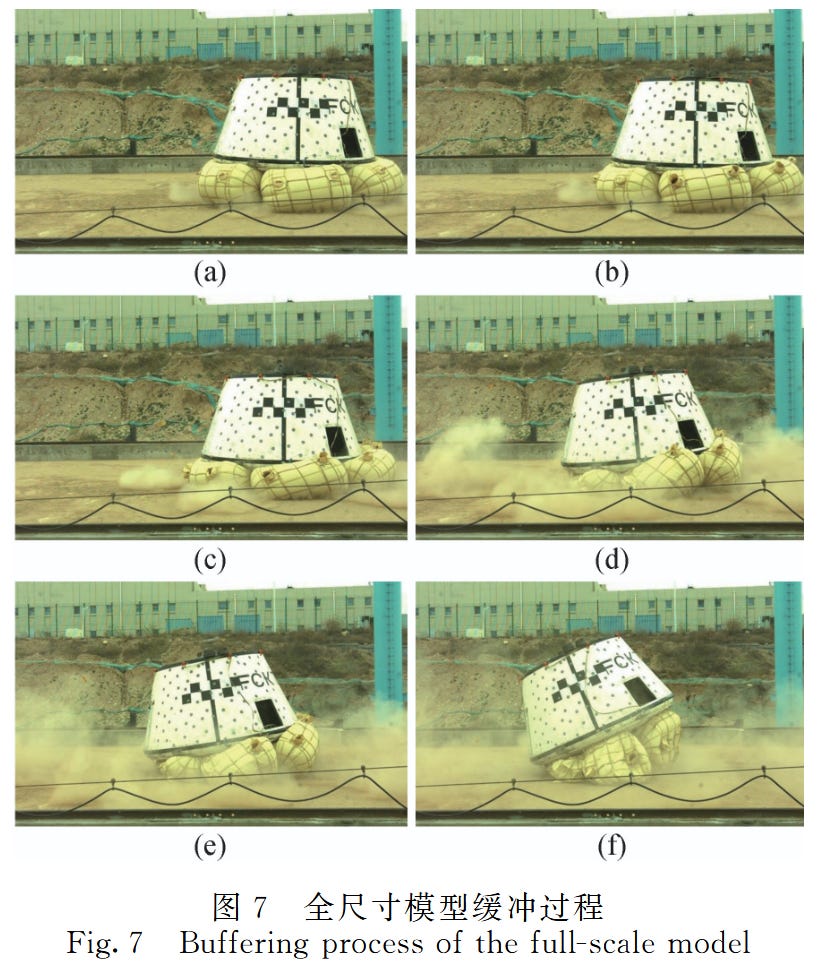
After coming through Earth’s atmosphere to end a mission, either after an abort or nominally, Mengzhou will touchdown softly on land on top of six airbags11, putting its 6,000 kilograms mass on them, having jettisoned the heatshield. Mengzhou can safely land upright or on its side, like Shenzhou’s reentry module, but its airbags can ensure it remains upright by controlling the deflation of airbags as long as the horizontal velocity is not too high.
To end with Mengzhou’s in-space guidance systems, one of the papers details that it has incorporated learnings and upgrades from the experiences of flying Shenzhou missions, as well as the lunar orbit dockings of the Chang’e 5 and Chang’e 6 orbiters and sample launch systems. During docking, the spacecraft utilizes laser and fiber optic gyroscopes to determine its own speed and orientation, microwave radar and lidar for determining a target’s range, as well as the BeiDou network for understanding its location (just in low Earth orbit). In addition, deep learning model analysis has been incorporated to determine fine adjustments to Mengzhou’s trajectory for flight to and from the Moon.
If you can read Chinese, I encourage you to read all of the papers. They are highly informative and too detailed to include everything shared.
Two other papers, training lunar rover guidance and a sunlight reflector, are not covered here due to their uniqueness.
Generating ~764 kilograms of thrust each. Keep in mind the Moon has 1/6th the gravity of Earth.
Pressurized by two helium tanks on the side of the lander.
Producing 8 tons of thrust.
Possible orbit corrections may take place after lunar orbit insertion and after Mengzhou is sent on a trans lunar trajectory.
The step-by-step landing process is as follows:
Separations of Lanyue and Mengzhou in lunar orbit.
Propulsion module places Lanyue onto descent orbit.
Attitude control systems prepare Lanyue for the main landing phase.
Propulsion module lights for the main landing phase.
After using all of the propulsion modules’ propellant, Lanyue’s four YF-36 engines ignite to continue the main landing phase.
Lanyue, now just the lunar module, adjusts its attitude to refine descent.
Lanyue performs obstacle avoidance while continuing to descend.
Lanyue hovers around its target site to confirm no obstacles are present. Taikonauts can intervene with manual control from here onward.
Lanyue continues vertical descent and eliminates horizontal velocity.
Lanyue touches down on the Moon.
Stated to have been determined by consumables for taikonauts, 25 kilograms per day with 200 kilograms of consumables allocated in initial missions.
Including one lower in altitude than planned that Mengzhou can reach.
Like its YF-36 engine too.
Like SpaceX’s Crew Dragon or Boeing’s Starliner.
At a desired speed of under 8 meters per second vertically and 15 meters per second horizontally.