

Mysterious Shiyan Research Satellite Launched From Cloudy Jiuquan [Long March 2C/YZ-1S]
Stated to be for space environment research, Shiyan-33 was boosted into its target orbit by an additional stage to start its mission.

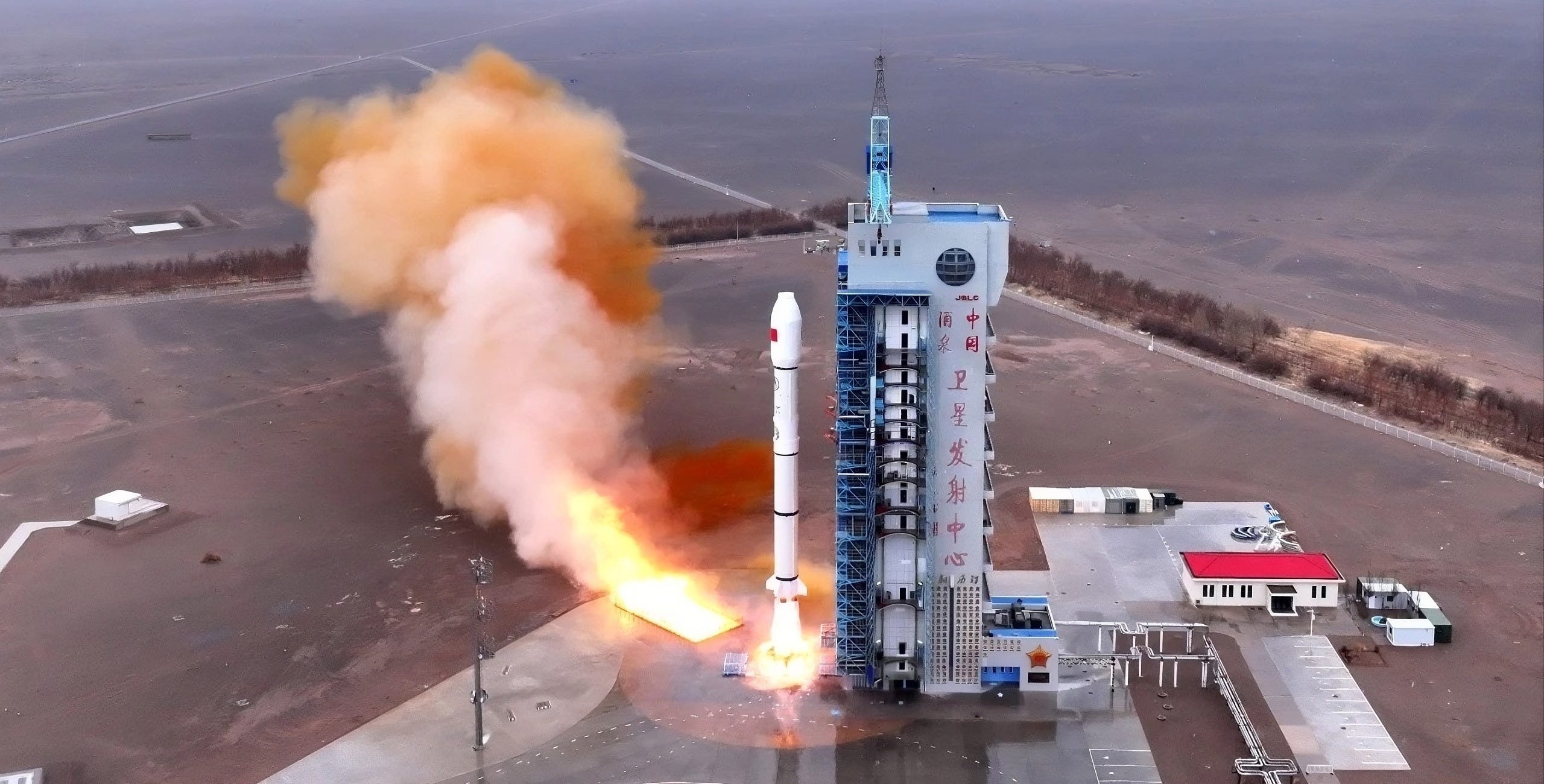
On March 27th at 12:11 pm China Standard Time (04:11 am Universal Coordinated Time), a Long March 2C lifted off from Launch Site 94 at the Jiuquan Satellite Launch Center, coated in low-lying clouds, carrying a single payload toward sun-synchronous orbit.
Shiyan-33 (试验三十三号卫星) was announced to be the satellite delivered into orbit, described as being tasked with space environment research and related scientific experiments. No enterprise has claimed to have developed the satellite.
With its brief tasked purpose, Shiyan-33 may be similar to May 2024’s Shiyan-23 (试验二十三号卫)1, July 2025’s Shiyan-28B-01 (试验二十八号B星01星)2, August 2025’s Shiyan-28B-02 (试验二十八号B星02星)3, and September 2025’s Shiyan-29 (试验二十九号)4, due to the simiarly stated task and requirement of an additional stage for fine-tuned orbital adjustments. A difference from those four satellites and today’s is a change from ‘monitoring’ to ‘research ’ with regard to ‘space environment’.
The Shiyan (试验) satellite designation is used for technology development spacecraft, and the name literally translates to test or experiment. Shijian (实践), meaning practice, is a similar designation for more mature technology tests.
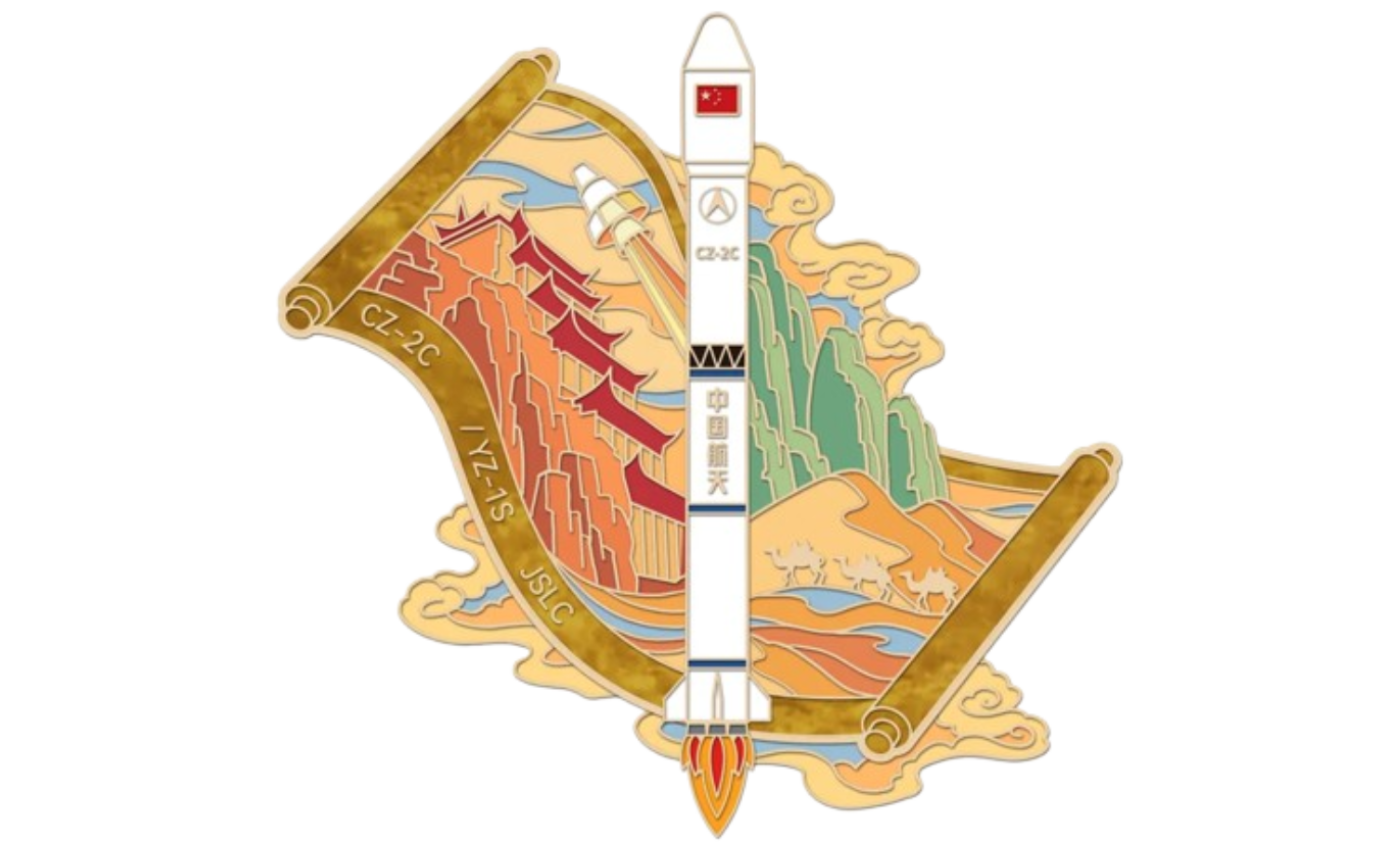
Assisting in the delivery of Shiyan-33 today was the Yuanzheng-1S (远征一号S) upper-stage, for the optional boost stage series’ 35th flight to date. Yuanzheng (远征) stages are used to bring payloads into higher or multiple orbits across much of the Long March fleet, like the Long March 2 launchers, Long March 3A family, and Long March 5 series.
In a post-launch blog-post, the China Academy of Launch Vehicle Technology was light on comments other than saying that the Long March 2C launch vehicle will conduct high-frequency missions this year. The vehicle has so far flown twice this year, delivering satellites for Algeria, with this launch being the first after a month-long pause of all Chinese launches.
Today’s launch was the 87th launch of the Long March 2C, and the 635th launch of the Long March launch vehicle series. This was also the 17th launch from China in 2026.
Liftoff video via 大漠问天 on WeChat.
Check out the previous Long March 2C launch
Second Algerian Remote Sensing Spacecraft Deployed Into Orbit [Long March 2C]
![Second Algerian Remote Sensing Spacecraft Deployed Into Orbit [Long March 2C]](https://substackcdn.com/image/fetch/$s_!2x7i!,w_1300,h_650,c_fill,f_webp,q_auto:good,fl_progressive:steep,g_auto/https%3A%2F%2Fsubstack-post-media.s3.amazonaws.com%2Fpublic%2Fimages%2F379b9dcd-7939-4eec-95b0-47221cd62e4a_2000x1099.jpeg)
From Launch Site 94 at the Jiuquan Satellite Launch Center, a Long March 2C blasted off at 12:01 pm China Standard Time (04:01 am Universal Coordinated Time) on January 31st, once again heading into sun-synchronous orbit for an i…
What is the Long March 2C?
This section is for those less familiar with China’s Long March series of launch vehicles.
The Long March 2C is one of the oldest launch vehicles from China performing missions regularly to low Earth and sun-synchronous orbits by the China Academy of Launch Vehicle Technology. The two stages of the launch vehicle both burn Dinitrogen Tetroxide and Unsymmetrical Dimethylhydrazine.
The payload capacity of the launch vehicle is currently as follows:
3,850 kilograms to low Earth orbit
1,900 kilograms to a sun-synchronous orbit
1,250 kilograms to a geostationary transfer orbit
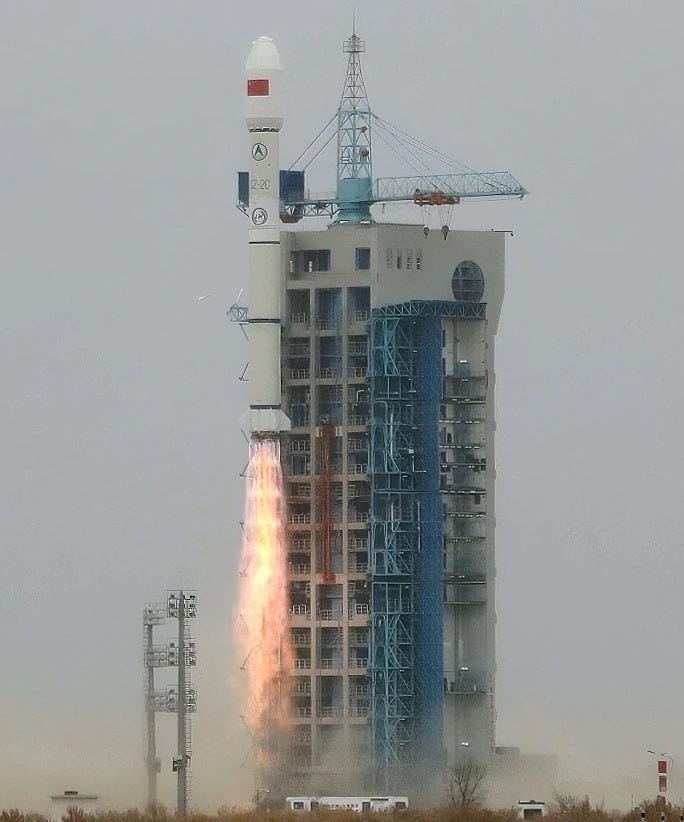
The first-stage is powered by four YF-21C engines, which generate 302 tons of thrust burning Dinitrogen Tetroxide and Unsymmetrical Dimethylhydrazine. The second-stage is powered by a single YF-22E engine and four YF-23C verniers that generate 80 tons of thrust while also burning Dinitrogen Tetroxide and Unsymmetrical Dimethylhydrazine.
On the launch pad, the Long March 2C is 42 meters tall and weighs 233,000 kilograms when fully fuelled. The first and second stages have a diameter of 3.35 meters, with the fairing having a diameter of either 3.35 or 4.2 meters.
So far the Long March 2C has flown from all three inland launch sites, the Jiuquan Satellite Launch Center, the Taiyuan Satellite Launch Center, and the Xichang Satellite Launch Center.
In a roughly 600-kilometer sun-synchronous orbit.
In an approximately 800-kilometer low Earth orbit.
In an about 28.7-degree inclination geosynchronous orbit.
Mysterious is not a good word because these types of launches are launched by all major sspace angencies routinely like CNSA , ROSCOSMOS and NASA . Therefore , I would suggest you to please rename it to "Classified" as obviously no one would be able to know the details of some of those launches.