Nayuta Space Is Actually Building Bellyflopping Rocket Boosters
Critically for the development of the radical first-stage recovery scheme, funding rounds have been completed as well.

Several days ago on April 24th, Nayuta Space (千亿航天) shared that they have completed a few funding rounds, their ‘Pre-A1’ to ‘Pre-A3’, to raise an undisclosed amount of capital to support the development of their partially reusable Black Bird-R (玄鸟-R) launch vehicle. Those funding rounds come almost fourteen months after an initial ‘Pre-A’ round at the start of 2025 and following occasional financing since.
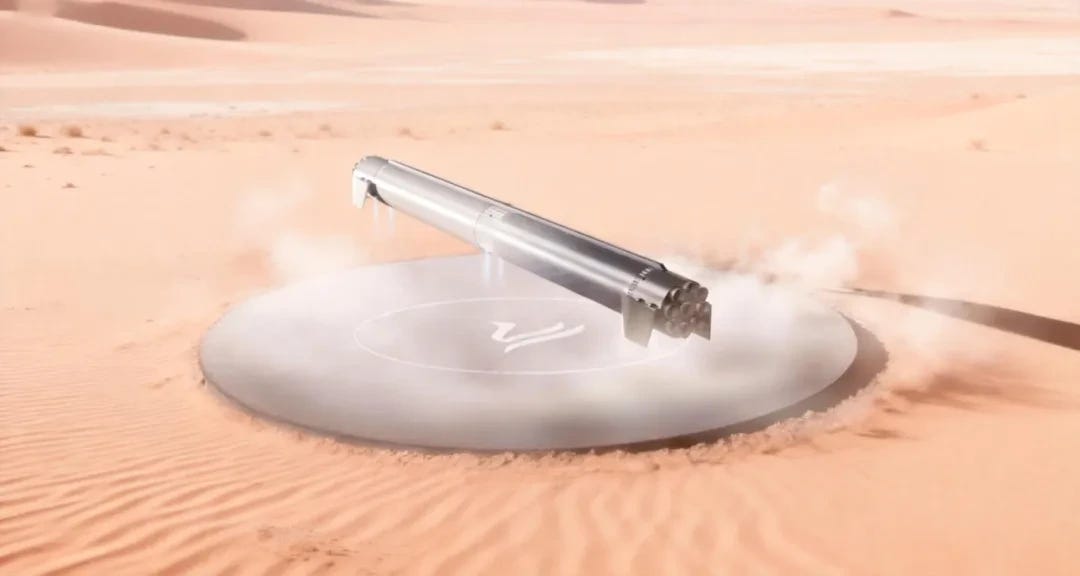
With new capital, Nayuta Space plans to perform a static fire campaign with the vehicle’s second-stage, igniting a currently unknown third-party developed liquid methane and liquid oxygen engine, invest in wind tunnel tests to understand the aerodynamic profile of Black Bird-R, and perform tests of the launch vehicle’s first-stage ‘bellyflop’ landing profile.
In August 2025, the company announced a radical change in first-stage booster recovery plans, having descent after separation occur unpowered under the control of four aerodynamic surfaces before a main landing burn by the power of three engines, before swapping to six small thrusters to ‘bellyflop’ for final touchdown on the side of the propellant tanks and the ends of the four control surfaces. Nayuta Space believes that recovery scheme, compared to those of conventional upright landings, will increase payload margins and save costs.
As part of the development of that scheme, Black Bird-R’s pathfinder has been completed in recent weeks and equipped with four movable aerodynamic control surfaces on the first-stage to imitate those of a launch vehicle. Those surfaces have undergone some early movement tests with to demonstrate the following:
Pitch control by moving the forward and aft surfaces at different rates.
Yaw control by independently moving the left and right surfaces.
Roll control by doing the same way as yaw control.
Refined control by moving the surfaces into regimes from those in line with the first-stage body during minimally guided descent to fully downwards for a landing.
To accelerate the development of Black Bird-R, Nayuta Space has signed a cooperation agreement for producing the launch vehicles electrial systems, alongside placing a significant order for cabling that will be installed across the vehicle for data and power.
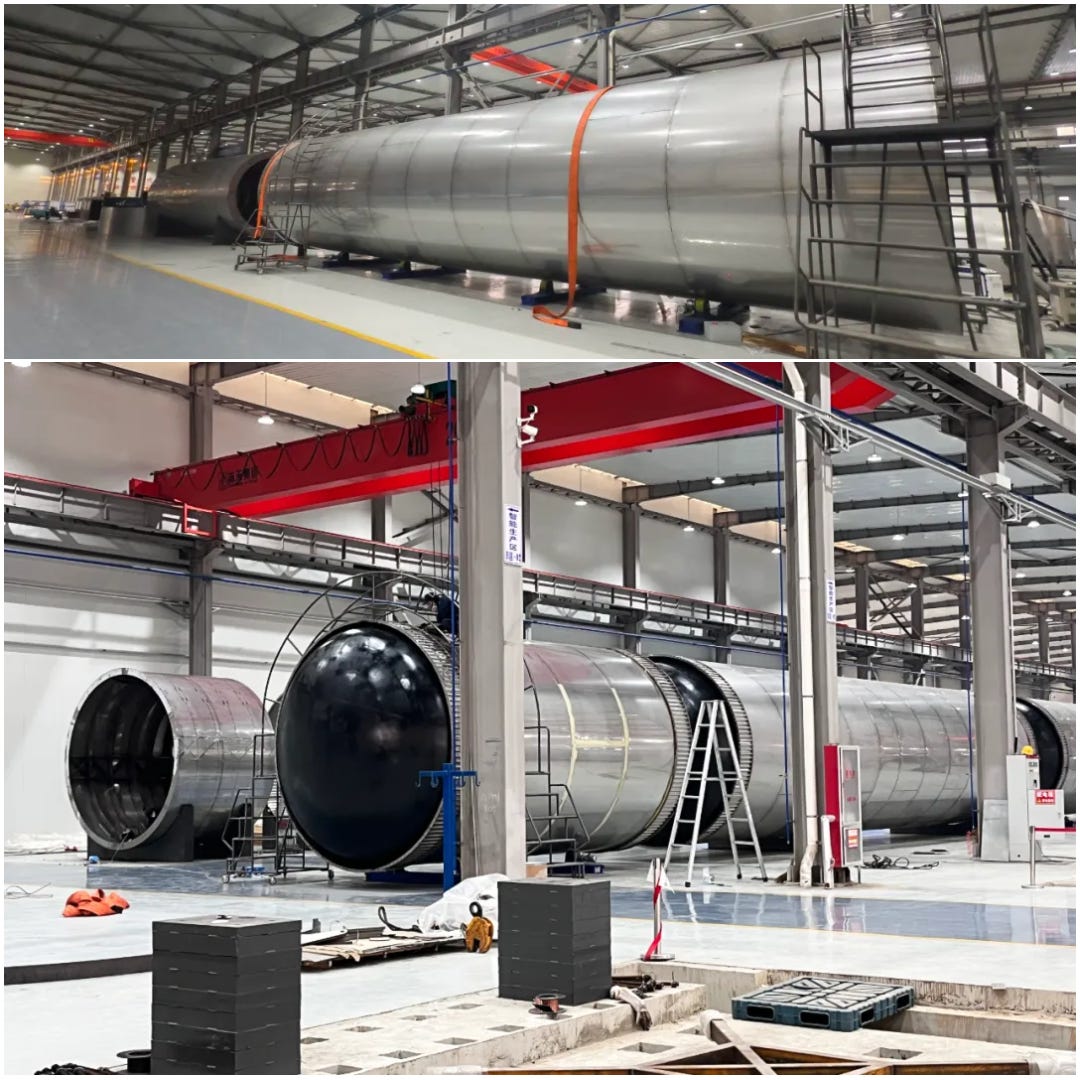
Production efforts for Black Bird-R, ahead of tests during the remainder of the year, have been underway since October 2025. In the first week of this year the company showed off a segment of the launch vehicle’s pathfinder, then towards the end of January revealing several propellant tanks and structures for a test vehicle.
At the moment, Nayuta Space has not mentioned when Black Bird-R will perform its first flight. So far, they have only signalled that 2026 is when several enabling tests will be completed.
The Black Bird-R launch vehicle is planned to be about 70 meters tall, 3.8 meters in diameter, utilizing a 5.2-meter diameter fairing, and burning liquid methane and liquid oxygen in two stages once complete. The reusable first-stage is set to be powered by thirteen engines, each generating 70 tons of thrust, while the second-stage has one vacuum-optimized engine, generating around 80 tons of thrust. Nayuta Space is also exploring a reusable second-stage for the launch vehicle, likely with a similar landing scheme.