

New Cartography Satellite Launched via Final Jiuquan Mission of 2025 [Long March 4B Y69]
The Tianhui series has gained another spacecraft to expand cartography and census capabilities.

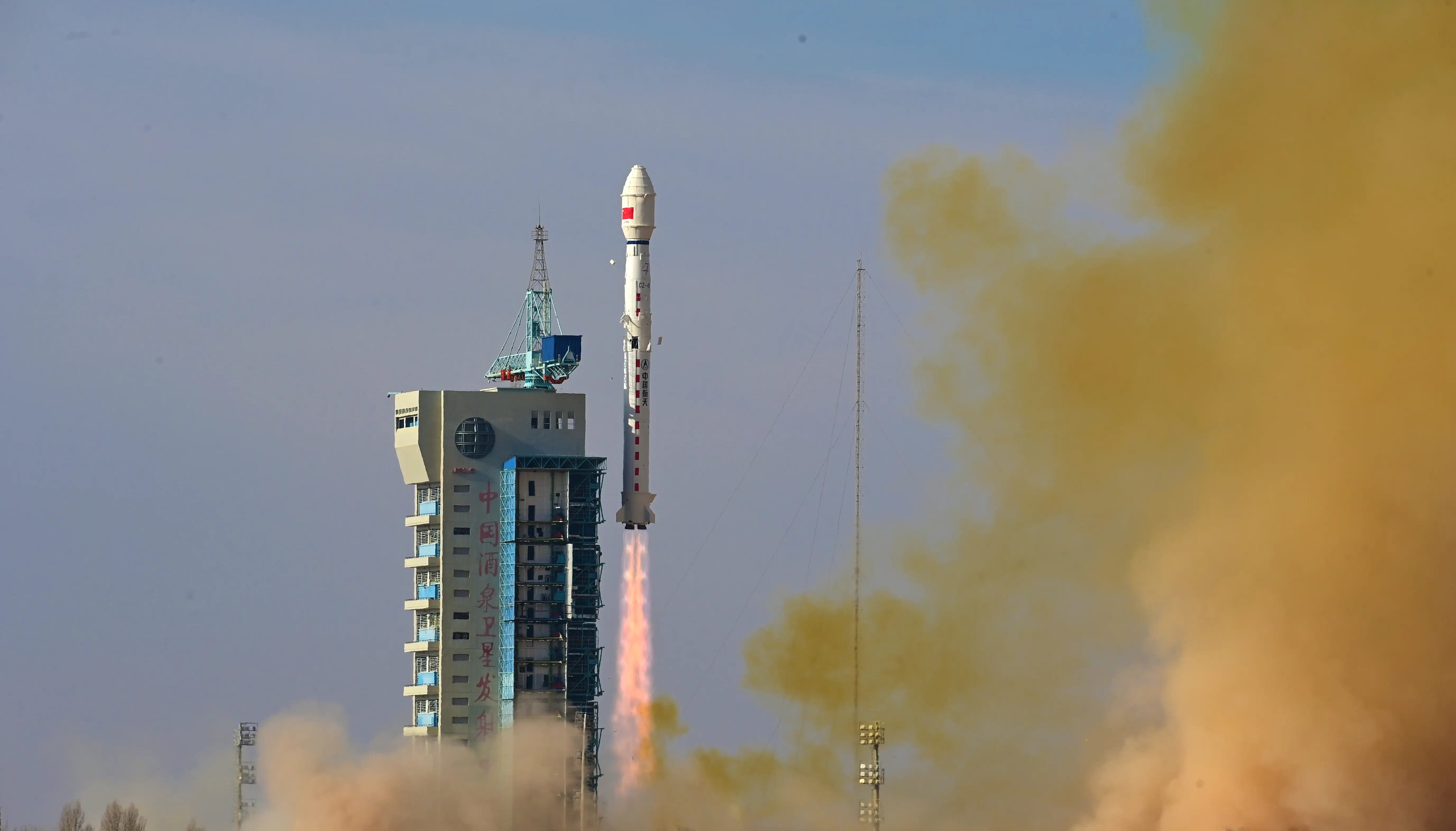
A Long March 4B lifted off from Launch Site 94 at the Jiuquan Satellite Launch Center at 12:12 pm China Standard Time (04:12 am Universal Coordinated Time) on December 30th, heading toward a sun-synchronous orbit with a single spacecraft.
Being lofted into orbit was the Tianhui-7 (天绘七号) satellite, made by the China Academy of Space Technology, for the academy’s last spacecraft being placed into orbit in 2025. Tianhui-7’s imaging system is stated to be of a new design, but specific details were not shared.
Once past its commissioning process, the satellite will reportedly be used for cartography, land and resources census, as well as supporting experimental research. Users of the Tianhui series’ capabilities include the People’s Liberation Army and, in previous years, China’s Center for Earth Operation and Digital Earth in collaboration with Brazil’s Instituto Nacional de Pesquisas Espaciais (National Institute for Space Research).
Tianhui-7 is the seventeenth spacecraft in the Tianhui (天绘) series and the first launch in eighteen months, after regular deployments between 2019 and 2021 followed by more across 2023 and 2024. Other spacecraft of the series have been launched since 2010 to expand or replace capabilities. For example, the Tianhui-2 satellite twin sets have X-band imaging capabilities, a change from Tianhui-1’s optical imaging systems (launched between 2010 and 2021).

Following the successful conclusion of the launch mission, the Shanghai Academy of Spaceflight Technology shared that during the preparation process at Jiuquan, the launch site dropped to its lowest temperature this year. To deal with the temperature (like other missions this month), insulating materials were applied to the launch vehicle’s engine section, interstage, and fairing, along with warm air provided from the launch service tower into critical areas (already under insulative material).
Today’s launch was the 56th mission for the Long March 4B, the 116th launch for the Long March 4 series, the 256th Long March vehicle launch from the Shanghai Academy of Spaceflight Technology, and the 622nd launch of the Long March launch vehicle series. This was also the 92nd launch from China in 2025.
Liftoff footage via 大漠问天 and 我们的太空 on WeChat.
Check out the previous Long March 4B launch
Replacement Mapping Satellite Delivered From Winter Taiyuan [Long March 4B Y61]
![Replacement Mapping Satellite Delivered From Winter Taiyuan [Long March 4B Y61]](https://substackcdn.com/image/fetch/$s_!2e4N!,w_1300,h_650,c_fill,f_webp,q_auto:good,fl_progressive:steep,g_auto/https%3A%2F%2Fsubstack-post-media.s3.amazonaws.com%2Fpublic%2Fimages%2F2e1d3574-0686-4edb-a2db-4550b092e450_8028x4868.jpeg)
Off of Launch Complex 9 at the Taiyuan Satellite Launch Center, a Long March 4B lifted off at 11:17 am China Standard Time (03:17 am Universal Coordinated Time) on December 16th, carrying a single satellite into polar orbit.
What is the Long March 4B?
This section is for those less familiar with China’s Long March series of launch vehicles.
The Long March 4B is an older generation low Earth and sun-synchronous orbit workhorse of the Shanghai Academy of Spaceflight Technology. All three stages of the rocket burn Dinitrogen Tetroxide and Unsymmetrical Dimethylhydrazine, with no engine restart capability.
The payload capacity of the launch vehicle is currently as follows:
4,200 kilograms to low Earth orbit
2,800 kilograms to a sun-synchronous orbit
1,500 kilograms to a geostationary transfer orbit
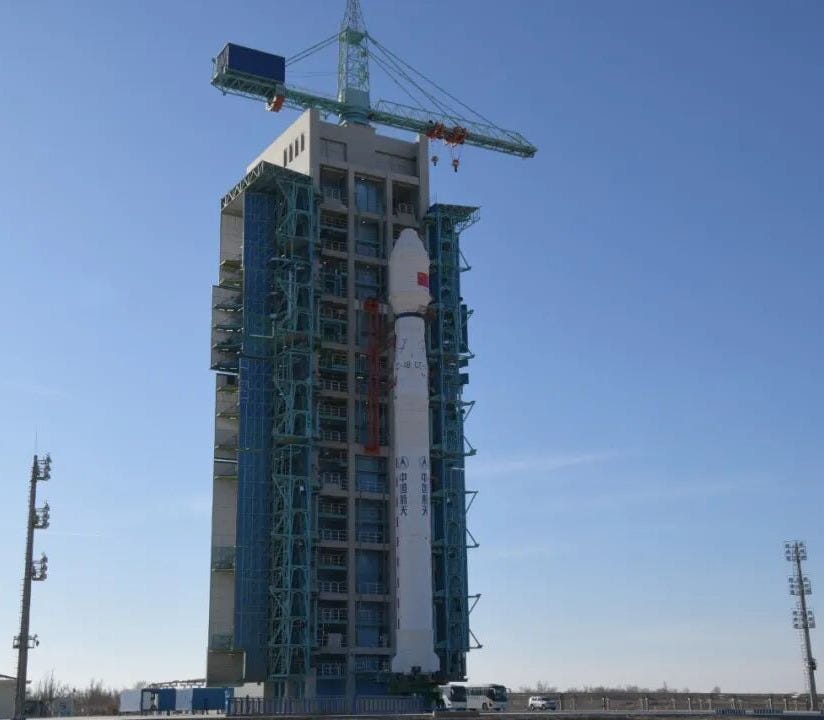
The first-stage is powered by four YF-21C engines, which generate 302 tons of thrust burning Dinitrogen Tetroxide and Unsymmetrical Dimethylhydrazine. The second-stage is powered by a single YF-22C engine and four YF-23C verniers that generate 80 tons of thrust while also burning Dinitrogen Tetroxide and Unsymmetrical Dimethylhydrazine. The third-stage is propelled by two YF-40 engines that provide 10 tons of thrust by once again burning Dinitrogen Tetroxide and Unsymmetrical Dimethylhydrazine.
On the launch pad, the Long March 4B is 44.1 meters tall and weighs 249,200 kilograms when fully fuelled. The first and second-stage have a diameter of 3.35 meters, while the third-stage has a diameter of 2.9 meters, and a fairing diameter of either 3.8 or 4.2 meters.
So far, the Long March 4B has flown from all three inland launch sites, the Jiuquan Satellite Launch Center, the Taiyuan Satellite Launch Center, and the Xichang Satellite Launch Center.


