

New Commercial Cargo Spacecraft Reaches Orbit for Yearlong Mission [Kuaizhou-11 Y8]
AZSpace has begun its first yearlong flight in Earth orbit via the first Kuaizhou-11 flight in eighteen months.

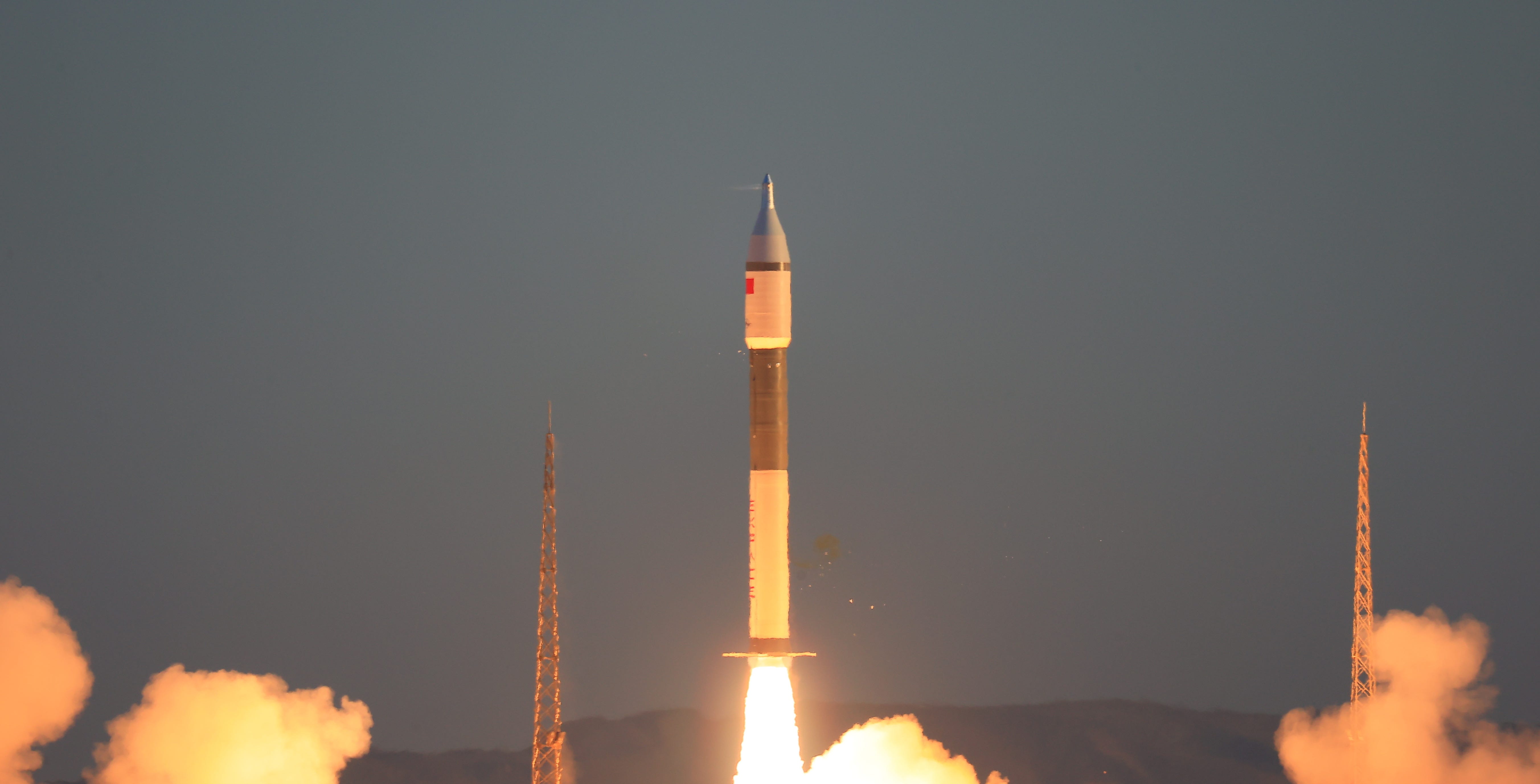
ExPace’s Kuaizhou-11 launch vehicle blasted off at 09:08 am China Standard Time (01:08 am Universal Coordinated Time) on December 13th from Launch Site 95 at the Jiuquan Satellite Launch Center, carrying two spacecraft into low Earth orbit.
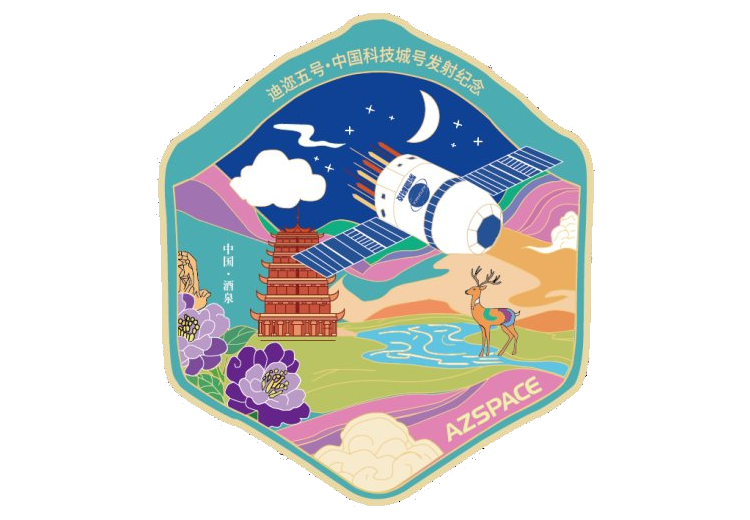
The primary customer for this launch was AZSpace (紫微科技) with its small Dear-5 (迪迩五号) commercial cargo spacecraft, in its B300 spacecraft line, for its first yearlong mission in low Earth orbit while hosting various items. Those items are hosted within a 1.8-cubic-meter space with power provided by two solar wings with three panels each.
Items onboard Dear-5 for its mission include experiments related to microgravity, space materials, space medicines, space life sciences, and other technology verifications. Based on materials shared by AZSpace, one of those experiments is utilizing in-space plant growth for scientific study.
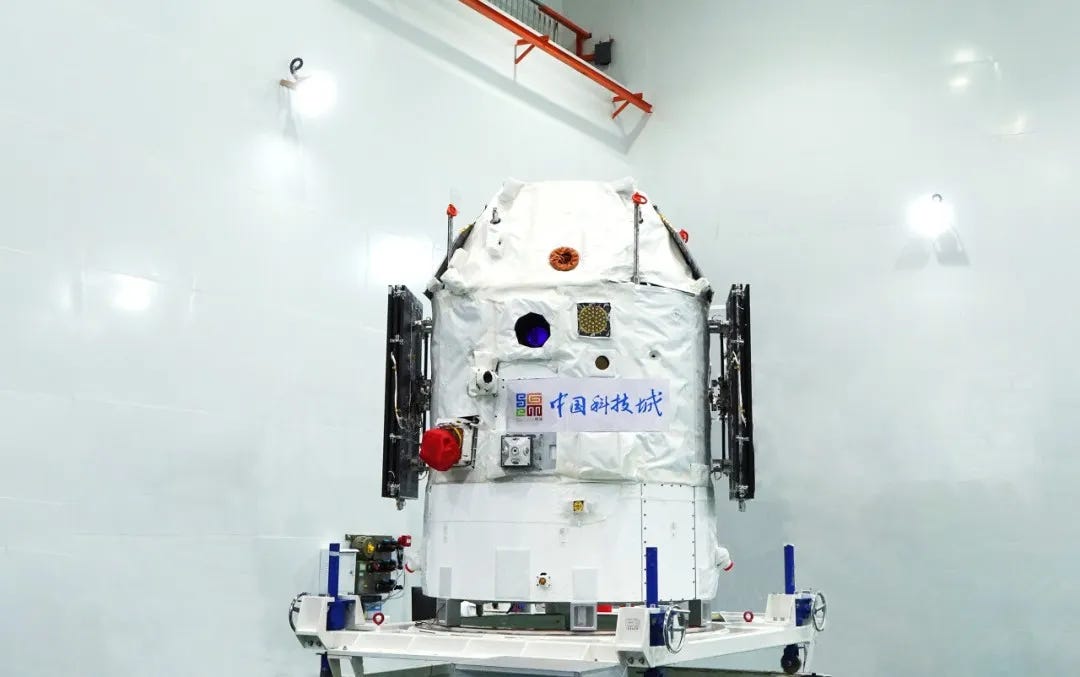
AZSpace’s Dear-5 mission is also the first time a non-government space enterprise is flying a cargo spacecraft to host payloads for microgravity study. The company has plans to develop spacecraft like the Fanhui Shi Weixing (返回式卫星) recoverable satellites, which tested a new version via Shijian-19 (实践十九号) in October 2024.
Riding alongside the small cargo spacecraft was Hope-5 Phase-II (希望五号二期卫星), developed by DFH Satellite Co., Ltd. (航天东方红卫星有限公司) under the China Academy of Space Technology. This satellite is said to be pioneering low-cost, lightweight solutions for remote sensing spacecraft while conducting technology verification of remote sensing imaging equipment in complex illumination conditions.
In a post-launch blog post, ExPace briefly noted that Kuaizhou-11 flew with a 2.65-meter diameter fairing for the first time. The wider fairing option has been available to customers since the rocket’s debut, but no payloads have been wide enough to require it until now. While not mentioned by the company, this was the first time Kuaizhou-11 had been flown in eighteen months, it carried four satellites back in May 2024.
Today’s launch was the 4th Kuaizhou-11 mission, and the 38th launch of the Kuaizhou series. This was also the 86th launch from China in 2025.
Liftoff video via 大漠问天 and 我们的太空 on WeChat.
Check out the previous Kuaizhou launch
Maritime Navigation Duo Launched From Jiuquan [Kuaizhou-1A Flight-31]
![Maritime Navigation Duo Launched From Jiuquan [Kuaizhou-1A Flight-31]](https://substackcdn.com/image/fetch/$s_!zkkm!,w_1300,h_650,c_fill,f_webp,q_auto:good,fl_progressive:steep,g_auto/https%3A%2F%2Fsubstack-post-media.s3.amazonaws.com%2Fpublic%2Fimages%2F279d1d66-18dc-49bb-8f56-5b31f6b08ed0_5454x2746.jpeg)
Out of the Jiuquan Satellite Launch Center, ExPace’s Kuaizhou-1A lifted off at 17:00 pm China Standard Time (09:00 am Universal Coordinated Time) on December 5th to head for sun-synchronous orbit, carrying two satellites.
What is Kuaizhou-11?
This section is for those less familiar with China’s various commercial launch vehicles.
Kuaizhou-11 is a larger commercial launch vehicle from China, developed by the China Aerospace Science and Industry Corporation and manufactured by ExPace. The vehicle consists of three 2.2-meter-diameter solid-fueled stages, burning an unspecified solid propellant with a liquid-fuelled fourth-stage for orbital insertion. There are also options of a 2.2-meter inline fairing and a wider 2.65-meter-diameter fairing.
The payload capacity of the launch vehicle is currently as follows:
1,500 kilograms to low Earth orbit
1,000 kilograms to a sun-synchronous orbit
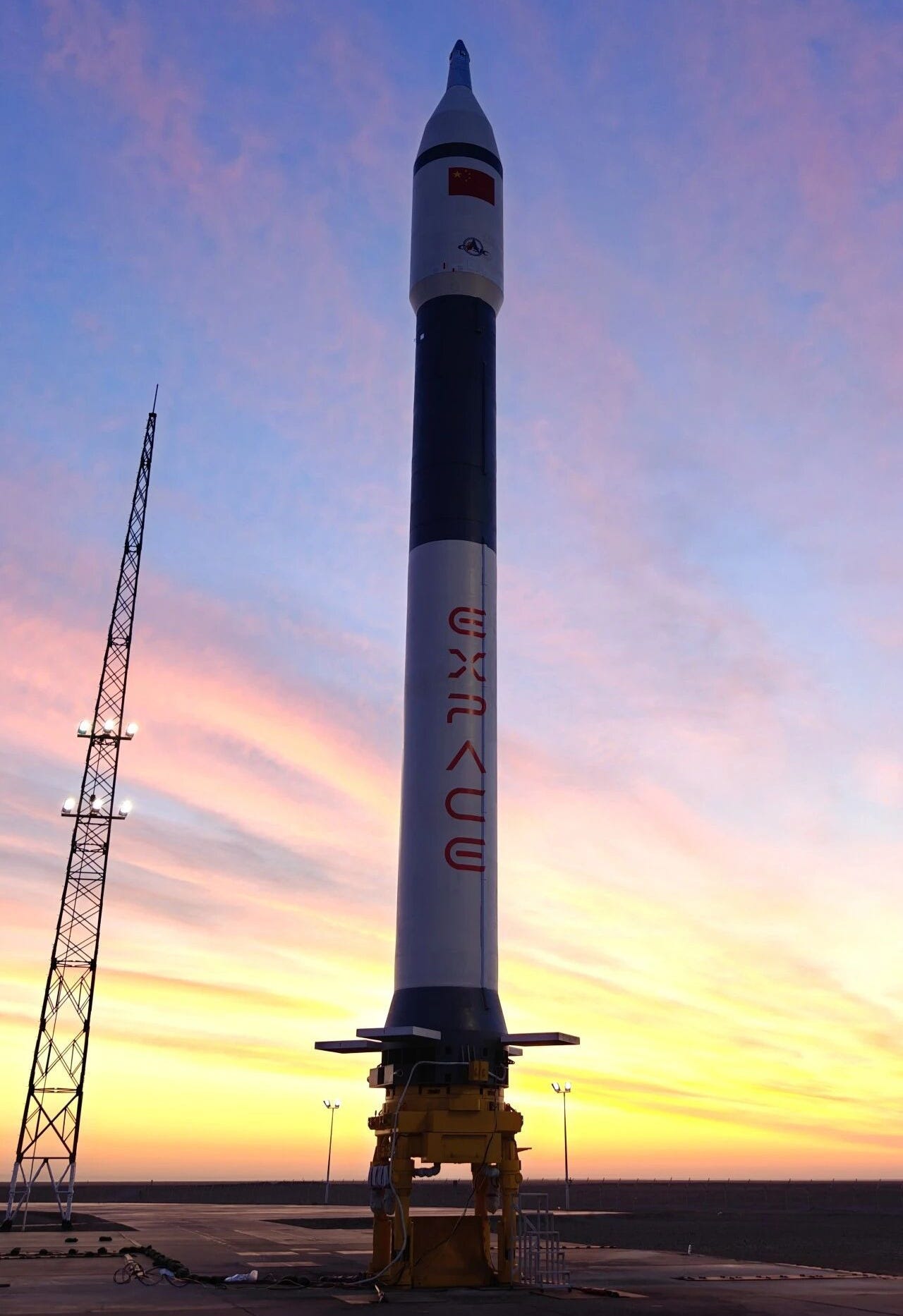
On the launch pad, Kuaizhou-11 is 25 meters tall with a fairing diameter of 2.2 meters. Once prepared to fly, the rocket weighs around 78,000 kilograms. The first-stage features four grid fins for flight control low in the atmosphere, while thrusters at the top maintain control afterward.
So far, the Kuaizhou-11 has only flown from the Jiuquan Satellite Launch Center.