

New Pakistani Remote Sensing Satellite Launched From Taiyuan [Long March 6 Y15]
PRSC-EO3 is the fifth satellite from Pakistan launched atop of a Chinese launch vehicle in the past eighteen months, all improving monitoring of Earth below.

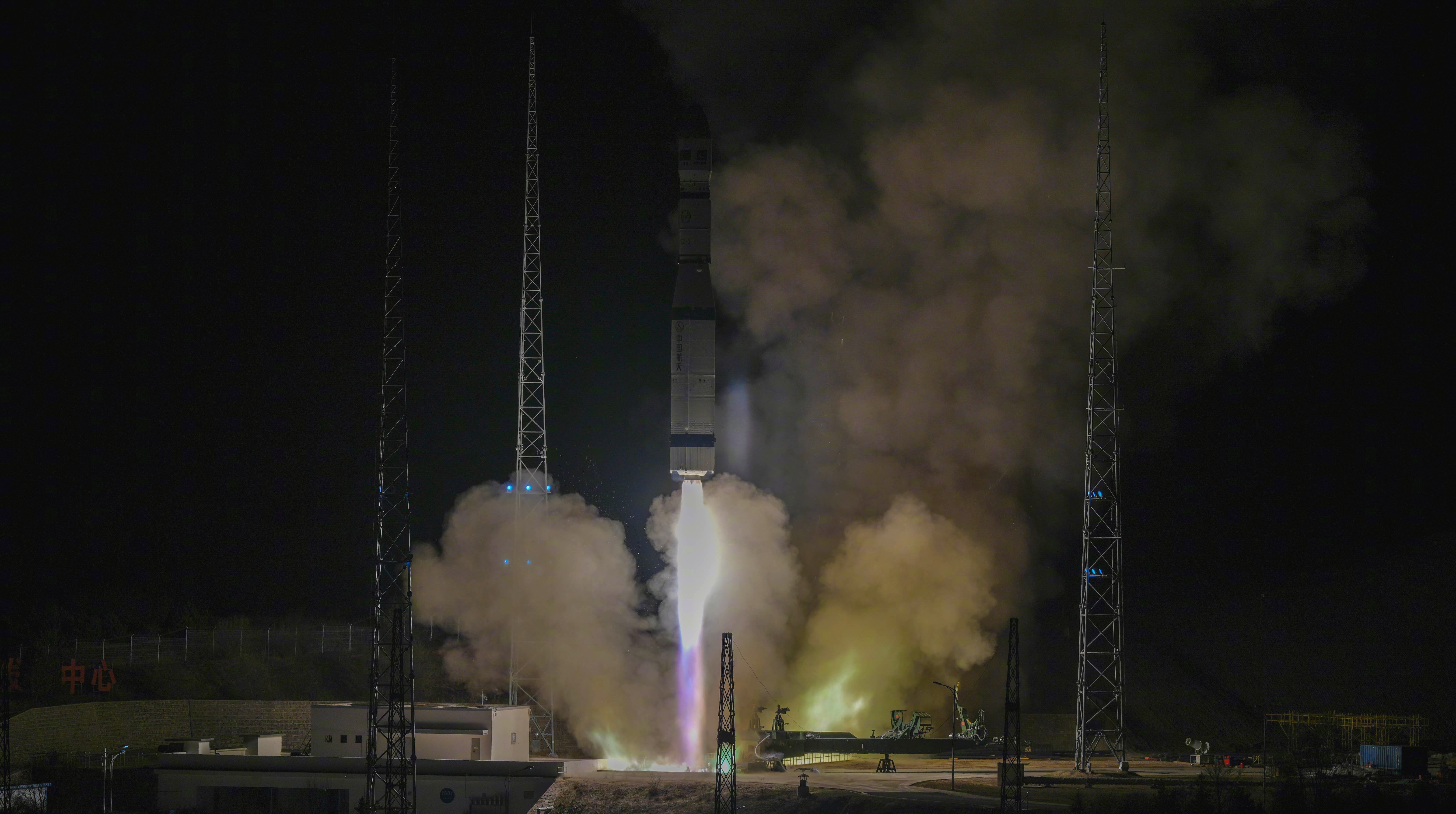
A Long March 6 steadily rose off of Launch Complex 16 at the Taiyuan Satellite Launch Center on April 25th at 20:15 pm China Standard Time (12:15 pm Universal Coordinated Time), heading for low Earth orbit on behalf of an international customer.
That international customer was, somewhat expectedly, Pakistan with the PRSC-EO3 remote sensing satellite, supported by the China Academy of Space Technology. The satellite is equipped with a high-resolution optical instrument to perform its tasks.
Previously, China’s commercial and state-run launch vehicles have delivered other earth observation and remote sensing satellites for Pakistan, including PRSC-EO1 in January 2025, PRSC-EO2 in February, PRSC-S1 in July 2025, and PRSC-HS1 in October 2025. Working together, the five satellites will improve mapping of the country, natural disaster monitoring and planning, agricultural support services, as well as the planning of urban developments.
This year will also see a Pakistani astronaut visiting the Tiangong Space Station for about a week.

Once PRSC-EO3 was released into space, the Shanghai Academy of Spaceflight Technology shared via a post-launch blog post that launch preparations took place on a compressed schedule while maintaining mandated quality controls. Compressed schedules were deemed needed after Pakistan was said to have bought this launch around six months ago, coming one year and three weeks after the Long March 6’s previous flight.
Interestingly, the Shanghai Academy felt it relevant to list all of the Long March 6’s launch missions and some development milestones to date, starting in July 2008. That alone would not be interesting if rumours of the launch vehicle’s retirement had not been circulating for the past several months, which were not confirmed or denied.
Today’s launch was the 15th mission for the Long March 6, the 265th Long March vehicle from the Shanghai Academy of Spaceflight Technology, and the 640th launch of the Long March launch vehicle series. This was also the 26th launch from China in 2026.
Liftoff footage via 我们的太空 on WeChat.
Check out the previous Long March 6 launch
Orbital Surveying Fleet Grows [Long March 6 Y14]
![Orbital Surveying Fleet Grows [Long March 6 Y14]](https://substackcdn.com/image/fetch/$s_!yoki!,w_1300,h_650,c_fill,f_webp,q_auto:good,fl_progressive:steep,g_auto/https%3A%2F%2Fsubstack-post-media.s3.amazonaws.com%2Fpublic%2Fimages%2Fd9eb7548-324c-48e2-8bf1-ff34f2c7ab7e_3854x2115.jpeg)
A Long March 6 lifted off from Launch Complex 16 at the Taiyuan Satellite Launch Center, at 10:12 am China Standard Time (02:12 am Universal Coordinated Time) on April 3rd. Today’s launch had a single satellite delivered to low Earth orbit.
What is the Long March 6?
This section is for those less familiar with China’s Long March series of launch vehicles.
The Long March 6 was the first ‘green-propellant’ Long March launch vehicle with it being developed by the Shanghai Academy of Spaceflight Technology. The first two stages of the vehicle burn rocket-grade kerosene and liquid oxygen, with the third-stage burning Dinitrogen Tetroxide and Unsymmetrical Dimethylhydrazine.
The payload capacity of the launch vehicle is currently as follows:
1,080 kilograms into a 700-kilometer sun-synchronous orbit
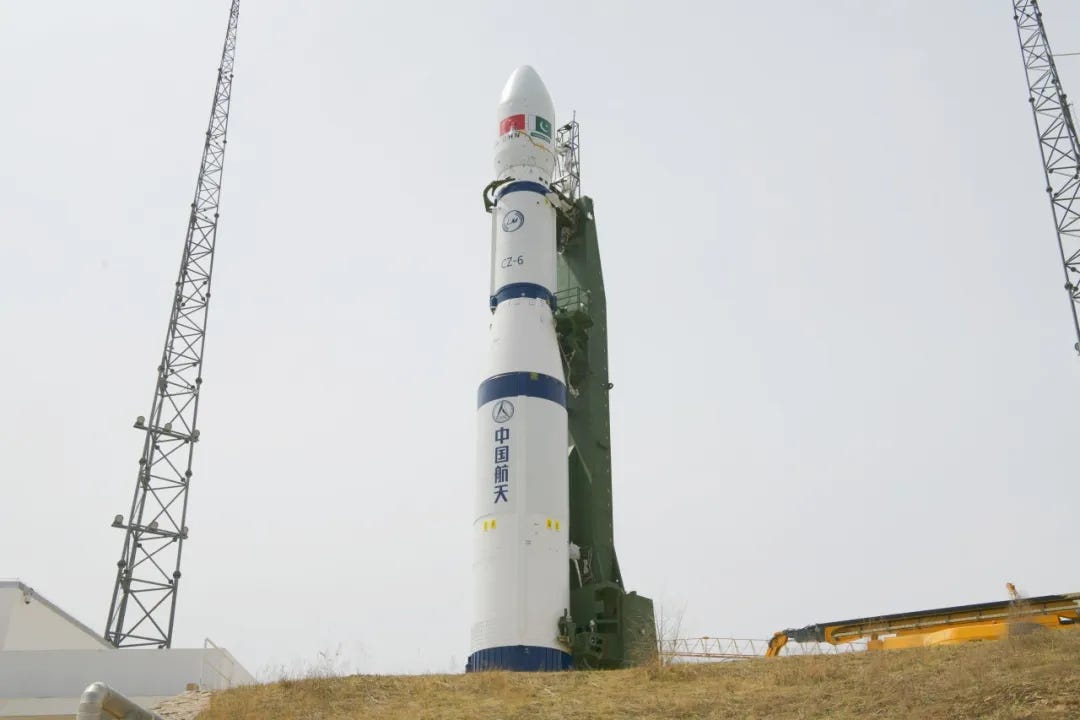
The first-stage is powered by a YF-100 engine producing 122 tons of thrust and fuelled by rocket-grade kerosene and liquid oxygen. The second-stage is powered by a YF-115 generating 18 tons of thrust while also burning rocket-grade kerosene and liquid oxygen. The third-stage is powered by a YF-50E engine generating 0.66 tons of thrust burning Dinitrogen Tetroxide and Unsymmetrical Dimethylhydrazine.
On the launchpad, the Long March 6 is believed to be 29 meters tall and weighs 103,000 kilograms when fully fuelled. The first-stage has a diameter of 3.35 meters, with a second-stage diameter of 2.25 meters, and a fairing diameter of 2.6 meters.
So far every Long March 6 has launched from the Taiyuan Satellite Launch Center, in the north of Shanxi province.
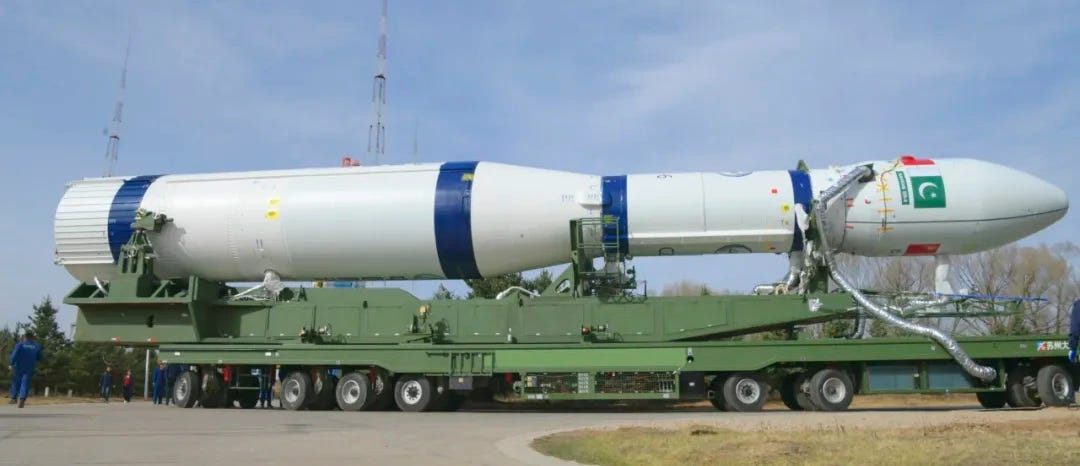
The speed at which Pakistan is expanding its remote sensing fleet—five satellites in just 18 months—is remarkable. As an aerospace engineer, I see this not just as individual launches, but as the rapid establishment of a persistent monitoring constellation. PRSC-EO3 will clearly be a cornerstone for high-resolution optical data, significantly enhancing their regional situational awareness.
Their patches are cool, wish I had some way to get them.