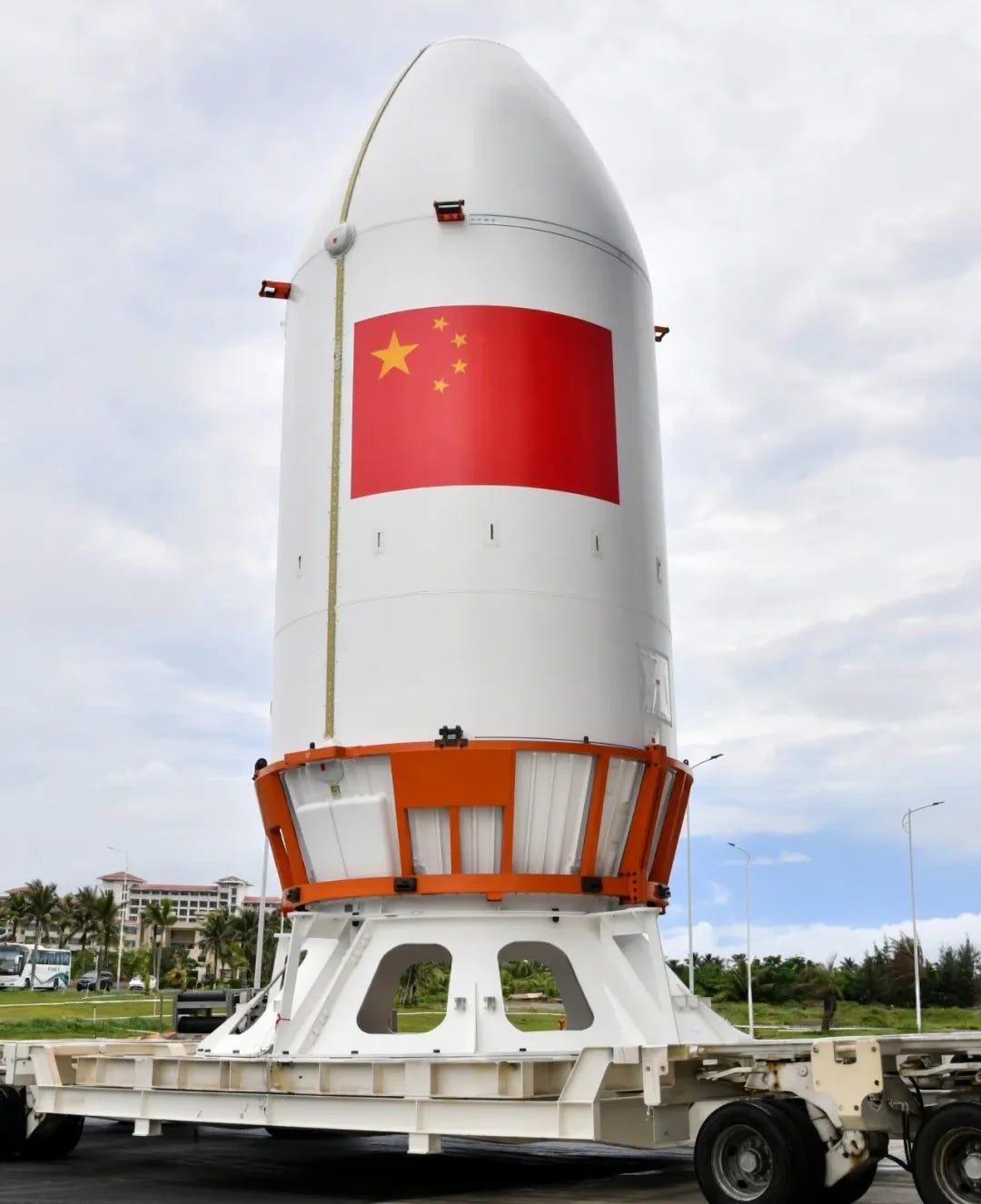
New TJSW Communications Satellite Lofted Towards Geostationary Space [Long March 7A Y12]
China's latest communications testing satellite is headed for geostationary space following a doubling of its series last year.

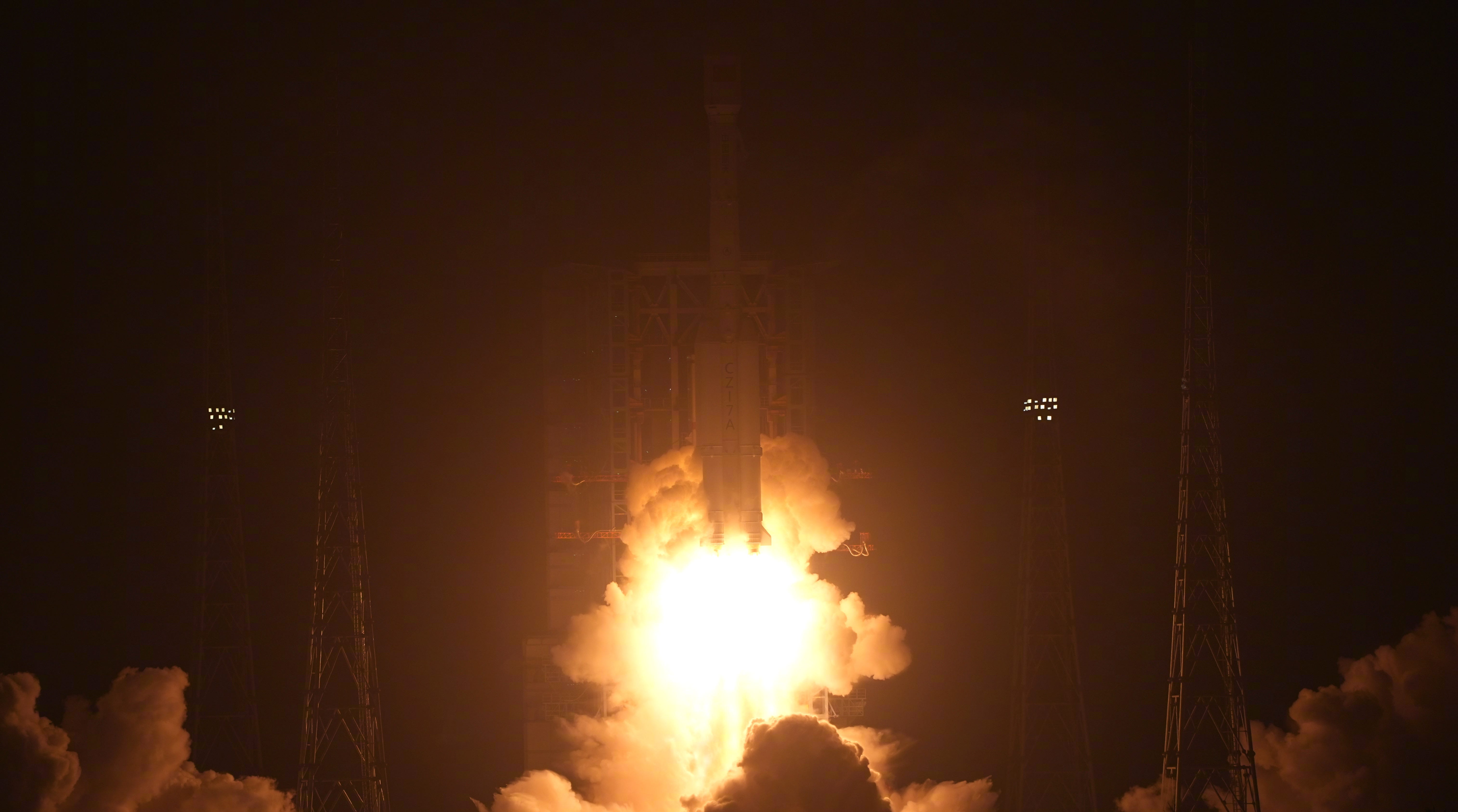
A Long March 7A lifted off from Launch Complex 201 at the Wenchang Space Launch Site at 00:16 am China Standard Time on May 27th (16:16 pm Universal Coordinated Time on May 26th), sending a single satellite towards geostationary space.
Being launched today was the TJSW-24 (通信技术试验卫星二十四号) spacecraft, developed by the Shanghai Academy of Spaceflight Technology. Like others in its series, TJSW-24 is tasked with verifying multi-band, high-throughput communications technologies for radio, television, and data transmission.
TJSW-24 is the first satellite of its series to be launched in just over six months. A doubling of the TJSW fleet occurred in 2025 with nine satellites being delivered towards geostationary space, residing in space over central Africa to the eastern edge of the Pacific.

This Long March 7A mission was the first to be prepared in a new dual-bay vehicle assembly building, which had work begun at the start of 2025, and prepared atop of a second Long March 7 series mobile launch platform, according to the China Academy of Launch Vehicle Technology. With the new building and platform, testing equipment for the launch vehicle in Wenchang has also doubled, allowing for a greater launch cadence.
In 2025 the Long March 7 series flew six times, this year the Launch Vehicle Academy is hoping to perform twelve missions, with two so far with today’s and Tianzhou-10. The China Aerospace Science and Technology Corporation also expects the Long March 7A to meet the demands of satellites looking for a ride into geostationary space.
Today’s mission was the 15th launch of a Long March 7A vehicle, the 26th launch of the Long March 7 series, and the 645th launch of the Long March launch vehicle series. This was also the 33rd launch from China in 2026.
Liftoff video via ThatSpaceDogeGuy on YouTube.
Launch livestream via ThatSpaceDogeGuy on YouTube.
China Concludes Global Launches in 2025 With New Shijian Duo [Long March 7A Y7]
![China Concludes Global Launches in 2025 With New Shijian Duo [Long March 7A Y7]](https://substackcdn.com/image/fetch/$s_!RWlT!,w_1300,h_650,c_fill,f_webp,q_auto:good,fl_progressive:steep,g_auto/https%3A%2F%2Fsubstack-post-media.s3.amazonaws.com%2Fpublic%2Fimages%2F7e49472c-3117-4edf-8029-3ad11db7d91a_3746x2082.jpeg)
For the final launch in 2025 worldwide, a Long March 7A lifted off from Launch Complex 201 at the Wenchang Space Launch Site on December 31st at 06:40 am China Standard Time (December 30th at 22:40 pm Universal Coordinated Time),…
What is the Long March 7A?
This section is for those less familiar with China’s Long March series of launch vehicles.
The Long March 7A is the new-generation workhorse for beyond low Earth orbit missions, and was developed by the China Academy of Launch Vehicle Technology. This vehicle utilizes a three-and-a-half-stage design and is fuelled by rocket-grade kerosene and liquid oxygen in its boosters, first, and second stages long with liquid hydrogen and liquid oxygen in the third-stage.
The payload capacity of the launch vehicle is currently as follows:
8,000+ kilograms to a medium Earth transfer orbit
7,000 kilograms to geostationary transfer orbit
5,500 kilograms to a 700-kilometer sun-synchronous orbit
5,000 kilograms to a trans-lunar trajectory
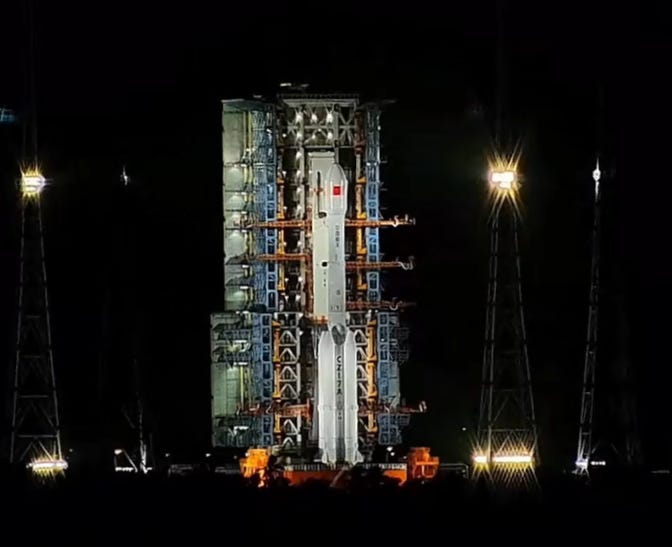
The Long March 7A’s first stage is equipped with two YF-100 engines that produce 245 tons of thrust using rocket-grade kerosene and liquid oxygen, complemented by four boosters, each with a YF-100 engine generating 122 tons of thrust, resulting in a combined thrust of approximately 733 tons. The second stage is powered by four YF-115 engines, which together generate 72 tons of thrust using the same fuel combination. The third stage of the Long March 7A features two YF-75 engines, providing 17 tons of thrust by burning liquid hydrogen and liquid oxygen.
On the launchpad, the Long March 7A stands at 60.13 meters tall and weighs 573,000 kilograms when fully fuelled. The first and second-stage have a diameter of 3.35 meters, the four boosters are 2.25 meters in diameter, and the third-stage has a diameter of 3 meters, while the fairing has a diameter of 4.2 meters.
So far the Long March 7A has only flown from the Wenchang Space Launch Site, on the east coast of Hainan province.