

Orbital Refueling Test, AI Earth Observation Demo Satellites Delivered by Rideshare Launch [Kuaizhou-11 Y7]
Eight satellites were placed into orbit by ExPace as part of a multi-customer mission, with most focused on Earth observation.

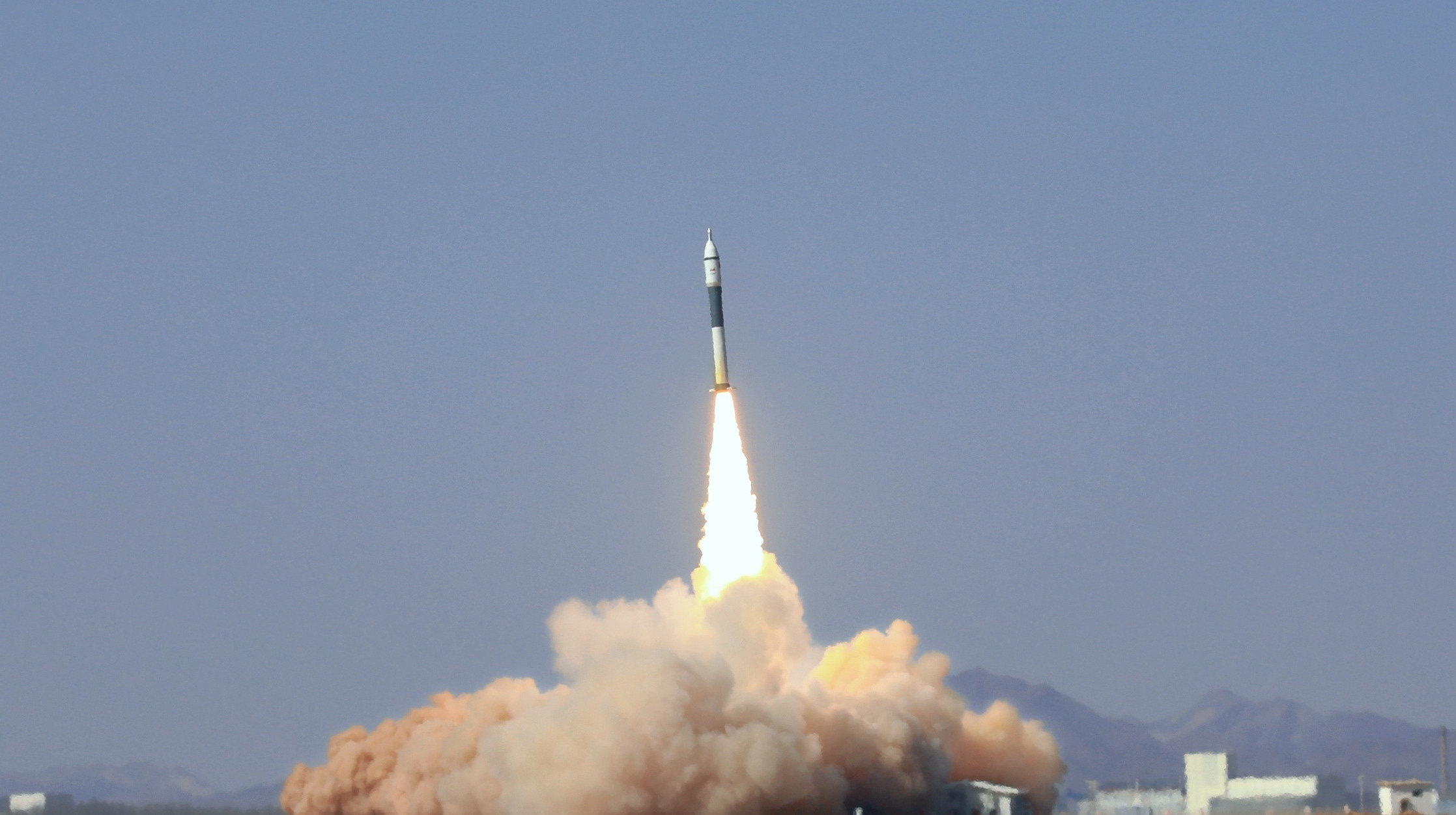
From the Jiuquan Satellite Launch Center’s Launch Site 95, ExPace’s Kuaizhou-11 soared skyward at 12:12 pm China Standard Time (04:12 am Universal Coordinated Time) on March 16th, carrying eight customer satellites towards a sun-synchronous orbit as part of a rideshare flight.
Weitong-1-01 (微瞳一号01星), a ‘nano’ remote sensing satellite, was stated to be the first in an intriguing series of Earth observation spacecraft from Xingzhong Space Jiaxing Technology Co Ltd (星众空间(嘉兴)科技股份有限公司). Onboard the satellite is a ‘real-time’ AI model used to process and analyze collected images, being tested with the satellite. If successful, the company plans to deploy a constellation of satellites using the model for imaging items of interest, with their example being disaster prevention and preparation.
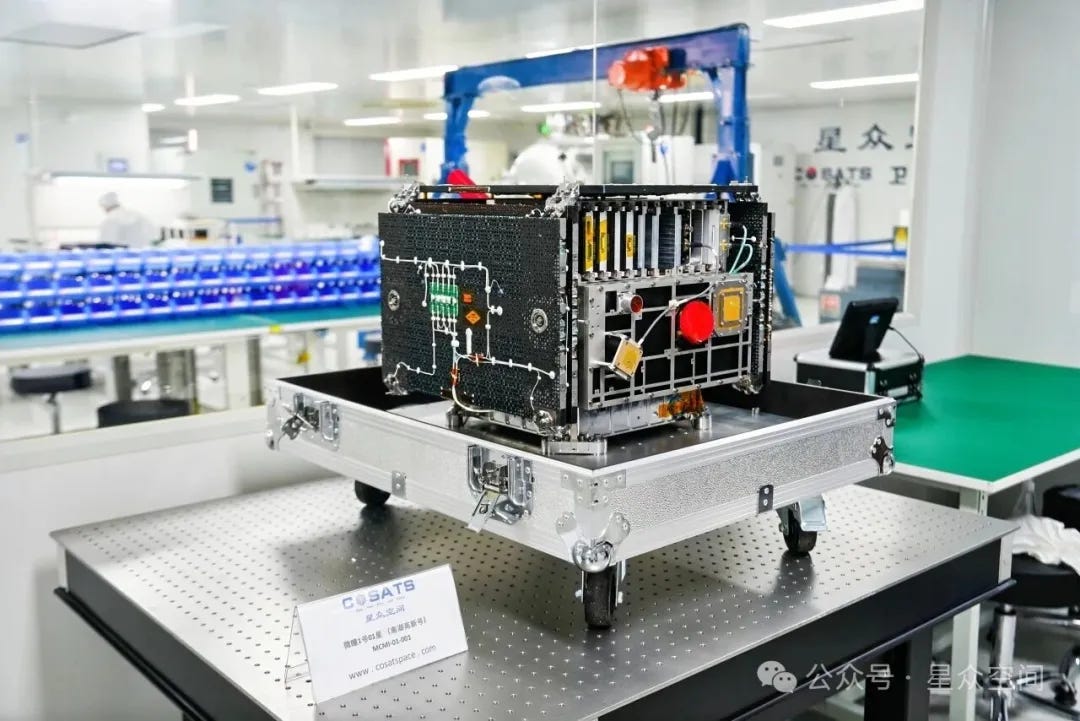
Another interesting spacecraft, Yuxing-3-06 (驭星三号06星), Hunan University of Science and Technology-2 (湖科大二号卫星), or Xiyuan-0 (西垣0号), was launched for the Hunan University of Science and Technology (湖南科技大学) to perform demonstrate an accelerated orbital decay experiment via the use of drag spheres. The spacecraft is also demonstrating a robotic arm eventually intended for refueling other satellites in orbit, something only proven by China’s state-owned enterprises globally. Refueling arm tests of Yuxing-3-06 are being supported by Suzhou Sanyuan Aerospace Technology Co Ltd (苏州三垣航天科技有限公司), a subsidiary of Emposat (航天驭星), having revealed plans to do so in September 2024.


Meanwhile, Zhejiang Xingmu Tanyu Technology Co Ltd (浙江星目探宇科技有限公司) had the similarly named Yuxing-3-05 (驭星三号05星) onboard. Yuxing-3-05 is equipped with optical cameras and new image processing hardware to enhance imagery collected as part of a technology demonstration effort.
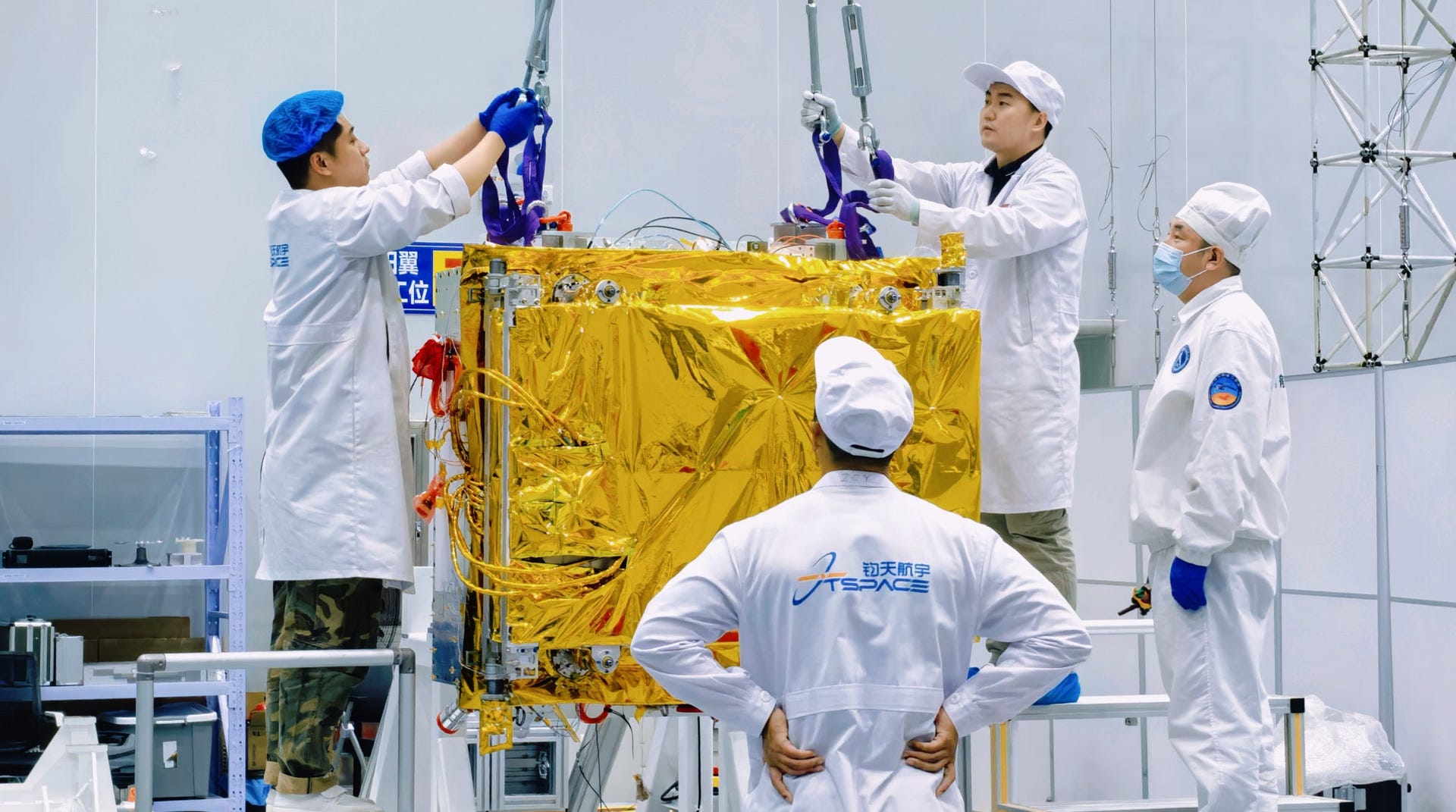
For Beijing Juntian Aerospace Technology Co Ltd (北京钧天航宇技术有限公司) was the Juntian-1-04A (将钧天一号04A卫星) X-band synthetic aperture radar satellite, said to be the company’s first. Once imaging systems are tested, the satellite is set to support services for urban planning, monitoring of hazards like landslides near bridges and roads, and monitoring conservation efforts.
Huantian Wisdom Technology Co Ltd (环天智慧科技股份有限公司) had a trio of satellites onboard with Dongpo-11, Dongpo-12, Dongpo-16 (东坡11, 12, 16卫星). The three satellites are part of a ‘high-precision’ remote sensing constellation that provides all-day, any-weather imaging services.
Finally, the remote sensing-dedicated Xiguang-1-06 (西光壹号06星), from Xi’an Zhongke Xiguang Aerospace Technology Co Ltd (西安中科西光航天科技有限公司), is another Earth imaging tasked spacecraft, differentiating itself with hyperspectral capabilities, which will be used for land surveying, forest management, environment monitoring, and disaster planning.
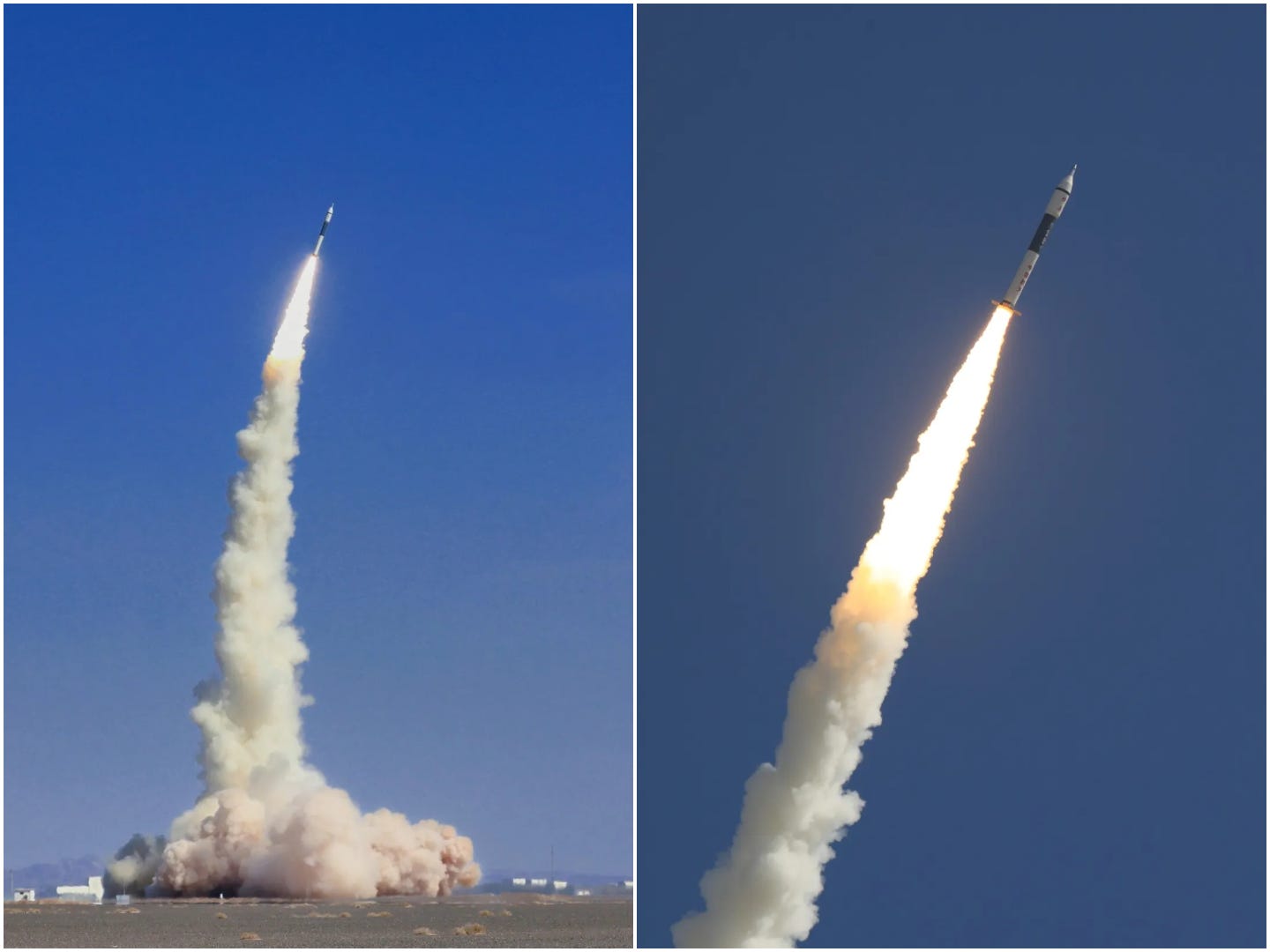
After the successful conclusion of all four stages of Kuaizhou-11 flight, ExPace stated that the launch vehicle has proven itself to be a reliable, low-cost, and quick-to-prepare solution for customers. Alongside that, like its previous flight just over three months ago, Kuaizhou-11 flew with a 2.65-meter diameter fairing again, used for wider or asymmetrically shaped payloads.
Today’s launch was the 5th Kuaizhou-11 mission, and the 39th launch of the Kuaizhou series. This was also the 14th launch from China in 2026.
Liftoff video via 大漠问天 on WeChat.
Check out the previous Kuaizhou launch
New Commercial Cargo Spacecraft Reaches Orbit for Yearlong Mission [Kuaizhou-11 Y8]
![New Commercial Cargo Spacecraft Reaches Orbit for Yearlong Mission [Kuaizhou-11 Y8]](https://substackcdn.com/image/fetch/$s_!n-TJ!,w_1300,h_650,c_fill,f_webp,q_auto:good,fl_progressive:steep,g_auto/https%3A%2F%2Fsubstack-post-media.s3.amazonaws.com%2Fpublic%2Fimages%2Ff7f2a247-d7e0-4e68-83ee-cb819af701ca_5409x2755.jpeg)
ExPace’s Kuaizhou-11 launch vehicle blasted off at 09:08 am China Standard Time (01:08 am Universal Coordinated Time) on December 13th from Launch Site 95 at the Jiuquan Satellite Launch Center, carrying two spacecraft into low Ea…
What is Kuaizhou-11?
This section is for those less familiar with China’s various commercial launch vehicles.
Kuaizhou-11 is a larger commercial launch vehicle from China, developed by the China Aerospace Science and Industry Corporation and manufactured by ExPace. The vehicle consists of three 2.2-meter-diameter solid-fueled stages, burning an unspecified solid propellant with a liquid-fuelled fourth-stage for orbital insertion. There are also options of a 2.2-meter inline fairing and a wider 2.65-meter-diameter fairing.
The payload capacity of the launch vehicle is currently as follows:
1,500 kilograms to low Earth orbit
1,000 kilograms to a sun-synchronous orbit
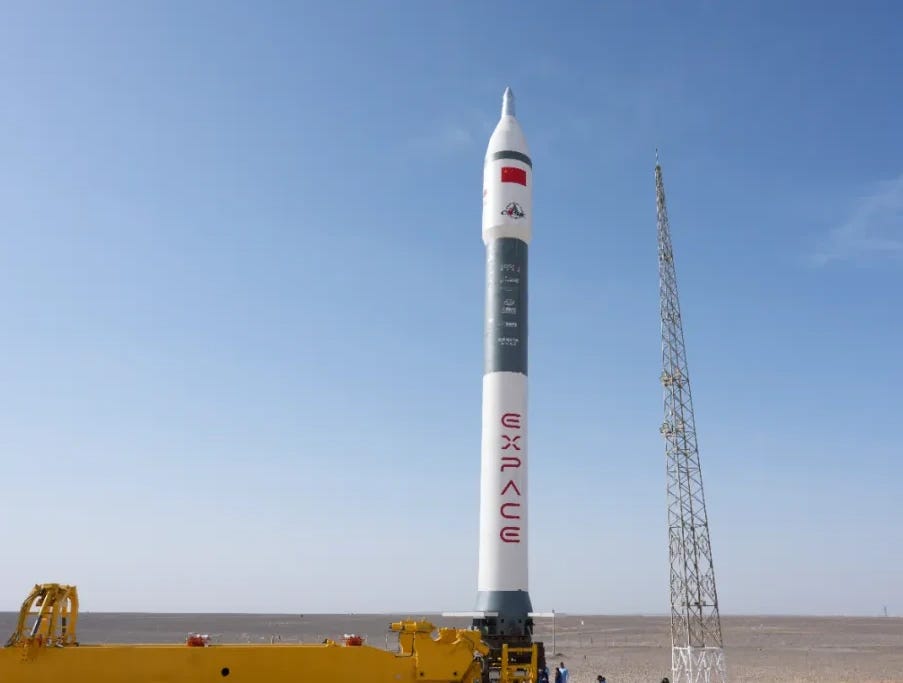
On the launch pad, Kuaizhou-11 is 25 meters tall with a fairing diameter of 2.2 meters. Once prepared to fly, the rocket weighs around 78,000 kilograms. The first-stage features four grid fins for flight control low in the atmosphere, while thrusters at the top maintain control afterward.
So far, the Kuaizhou-11 has only flown from the Jiuquan Satellite Launch Center.
Great read.