

Recovered Long March 10B Booster Returns to Dry Land
Days after travelling to the edge of space and back, along with some time at sea, the first-stage has arrived in Sanya aboard ‘Linghangzhe’.

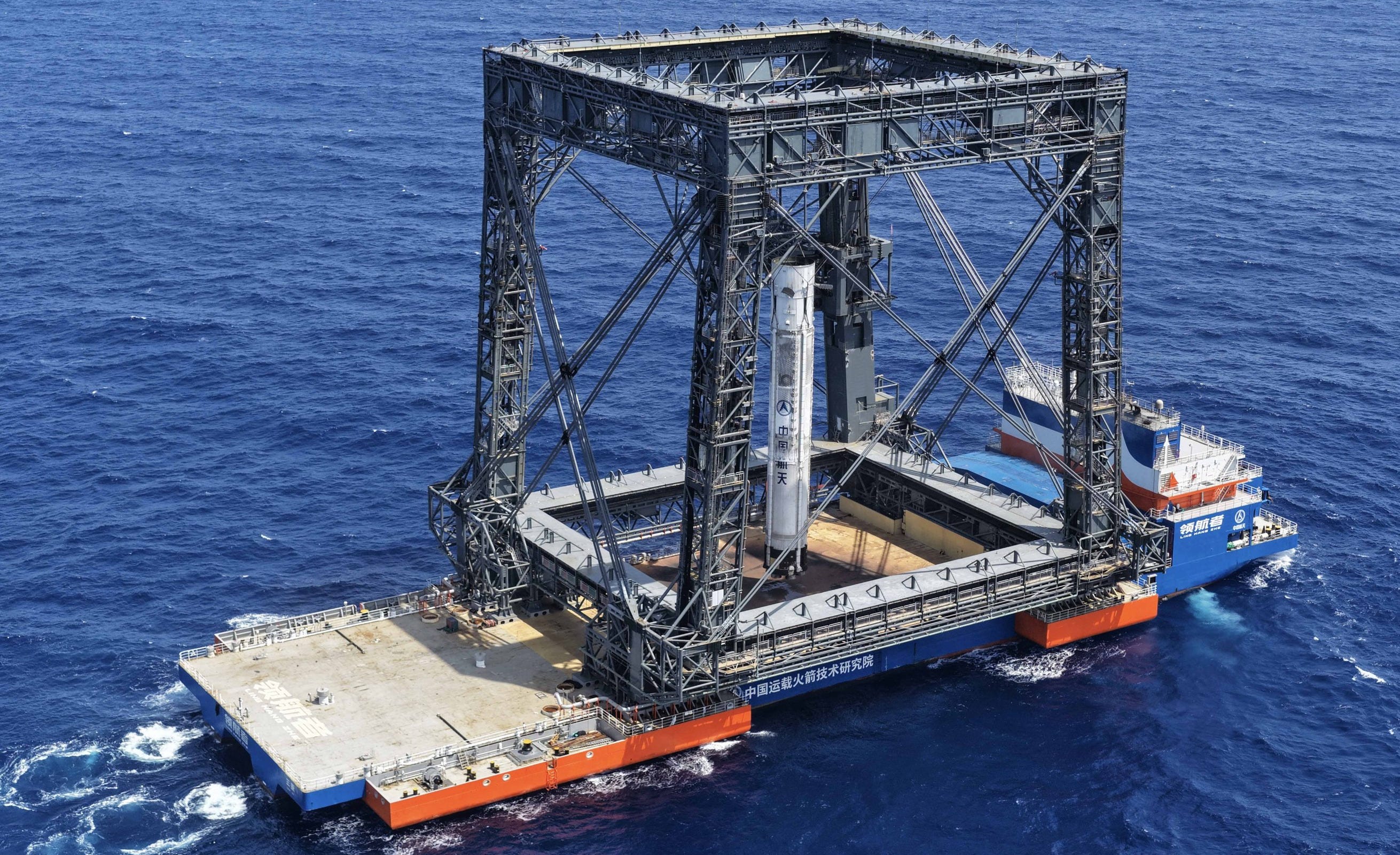
Five days ago, China recovered its first rocket booster with the debut flight of the Long March 10B, seeing a liftoff from the Wenchang Commercial Space Launch Site and a catch minutes later on board the drone ship ‘Linghangzhe (领航者)’ via a set of tensioned steel wires in the South China Sea.
Not long after being caught, and before recovery teams boarded the ship, the first-stage booster was passivated, removing remaining energetic propellants1. Around the same time, a set of thicker cables in the lower half of the ships’ catch structure was deployed to stop the booster from swinging on its catch hooks, which was induced by high waves.
Once recovery teams were on board ‘Linghangzhe’, the booster was secured for transport, being bolted to a stabilization rig to prevent unwanted movement. That rig appears to attach into the upper part of the engine section, where the Long March 10B is secured in its final moments ahead of liftoff.2
Over the course of four days, being delayed by a storm, ‘Linghangzhe’ was towed back towards Hainan (海南) province at a steady pace, sailing with smaller support ships carrying personnel and journalists. On the morning of July 15th, the drone ship with the recovered booster was brought into its ‘home port’ in Sanya (三亚市), marking the end of recovery operations for this flight.

In the coming days, the Long March 10B’s booster will be removed from ‘Linghangzhe’ and secured aboard a different vessel, lying horizontally, to make its way up to the China Academy of Launch Vehicle Technology’s Tianjin (天津) facilities for thorough inspections and studying, so engineers can understand what hardware fared well and what needs to be improved. As previously announced, teams will then prepare the booster for a second launch towards the end of the year.
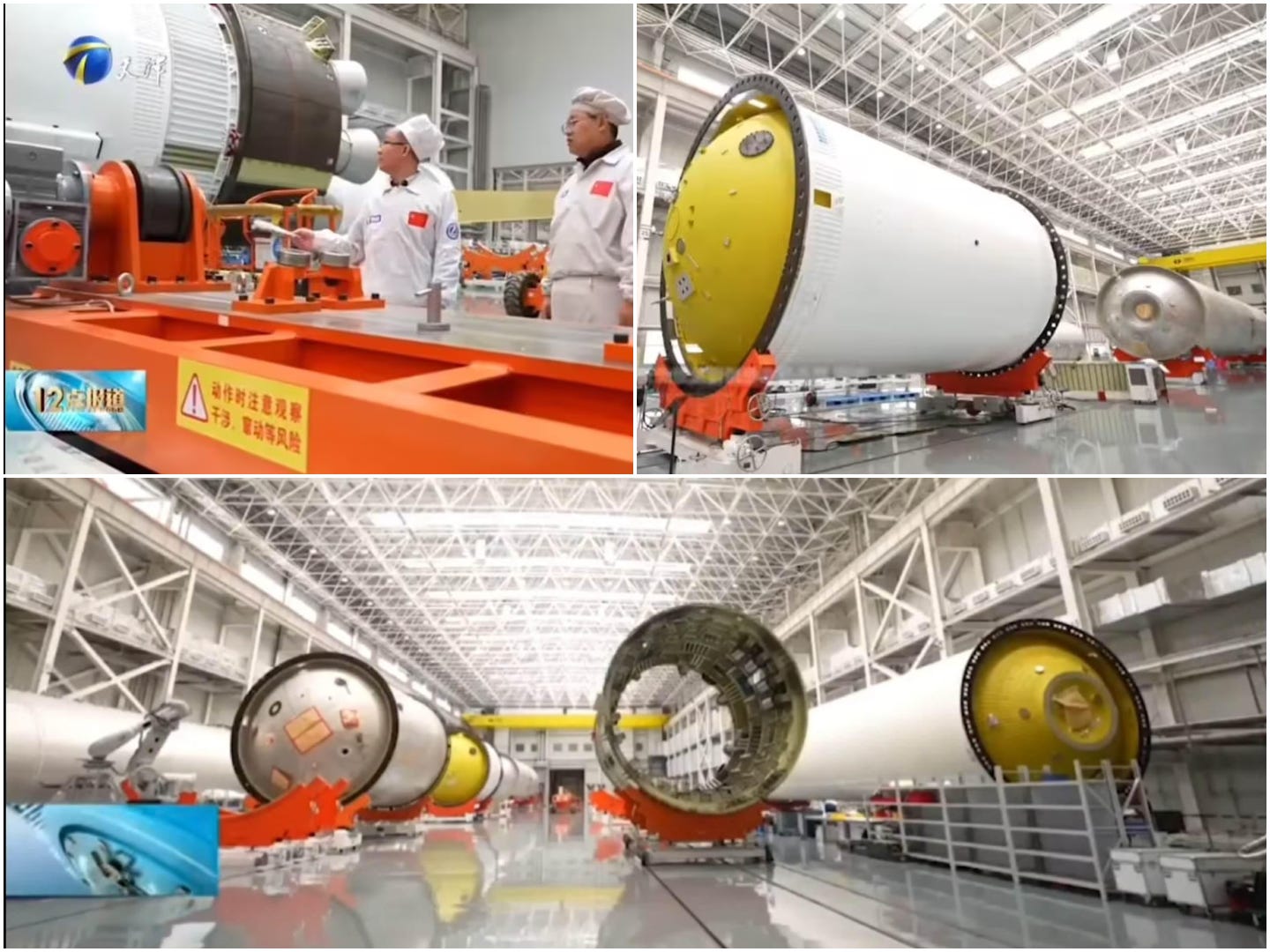
In Tianjin, hardware for two new boosters are well into production, as shown off to local media, with one having its engines mounted and the other awaiting its. Those boosters will be shared with the Long March 10A launch vehicle, as they are almost entirely identical except for the attachment mechanisms to the second-stage. According to officials, new boosters for both the Long March 10A and Long March 10B will make their first flights with the former before being transferred to the latter.
The Long March 10A is yet to make its debut flight, likely with the Mengzhou-1 mission, but it is expected that the first-stage booster will perform a recovery attempt. A second launch may also occur this year too. Those are alongside the hoped-for second mission of the Long March 10B, reusing the recently recovered booster, to prove that the 5-meter-diameter boosters can be flown and caught repeatedly. It is possible that before the year’s end ‘Linghangzhe’ may perform three more catches.
Part of this was said to have been performed during descent, with the venting of propellants for small attitude control thrusters, resulting in the smoke coming from the top.
SpaceX has a similar system used when Falcon 9 is transported back to shore, known as ‘Octagrabber’.