

Saudi, Chinese Space Officials Hold Cooperation Discussions
Leaders of the two space agencies, plus the leading state-owned enterprise, met on July 13th to consider areas of joint work in space and the transfer of technology on Earth.

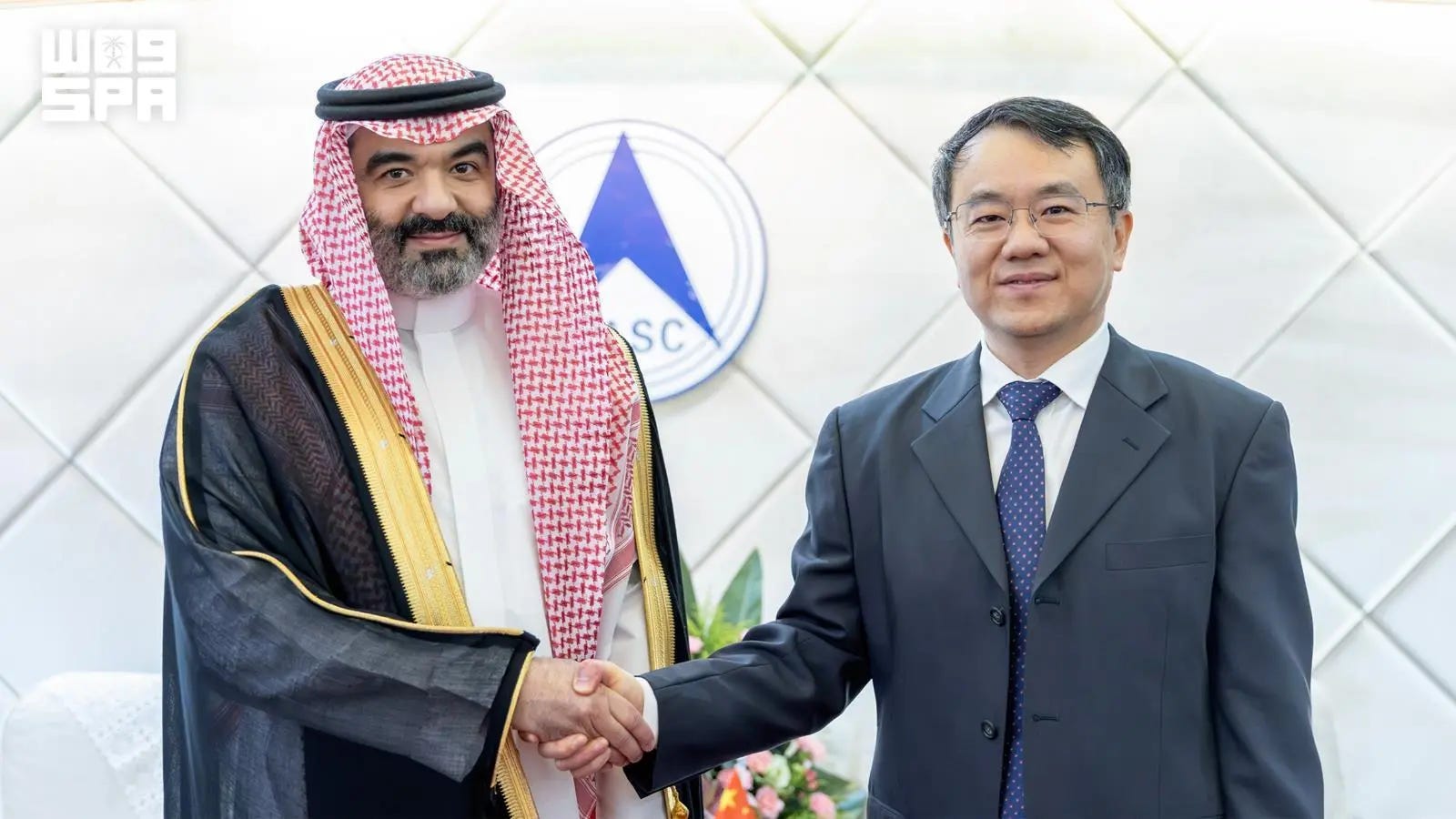
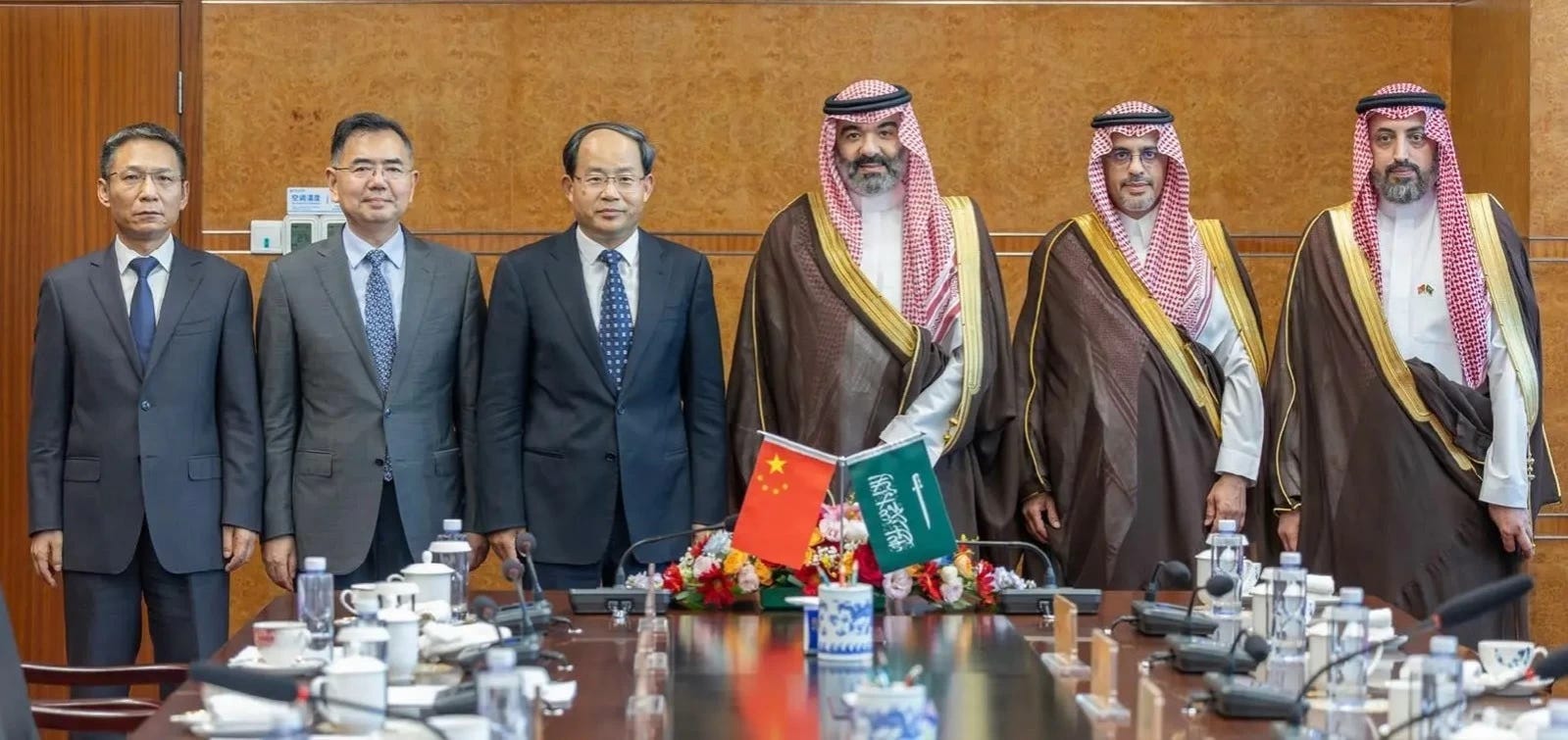
On the sidelines of meetings about artificial intelligence and other technological innovations, Chairman of the Saudi Space Agency Abdullah Alswaha1 met with officials at the China Aerospace Science and Technology Corporation, the nation’s dominant state-owned space contractor, and the China National Space Administration, who manage the nation’s civil space activities.
Discussions about various aspects of space technology and activities took place on July 13th, with the Saudi delegation talking with the China Aerospace Science and Technology Corporation’s President Zhou Jie (周劼) and Chief Accountant Chen Lin (陈林), as well as the China National Space Administration’s Administrator Shan Zhongde (单忠德), for his second meeting with another space agency chief, and Chief Engineer Li Guoping (李国平).
In its brief announcement about the meeting, the China National Space Administration wrote:
“The two sides held in-depth discussions on the China-Saudi Arabia Space Cooperation Agreement and cooperation in areas such as deep-space exploration, space debris, and communications satellites, and reached broad consensus.”
If there are any problems with this translation please reach out and correct me.
Meanwhile, the Saudi Press Agency omitted mentioning the meeting with the China National Space Administration, instead focusing on one with the China Aerospace Science and Technology Corporation, sharing:
“Alswaha met with [President]2 of China Aerospace Science and Technology Corporation Zhou Jie to strengthen cooperation in localizing space technologies, developing national capabilities in satellite manufacturing, and advancing knowledge transfer, supporting the growth of the Kingdom’s space sector.”
Overall, space was mentioned only briefly in the Saudi announcements, with greater emphasis on meetings for artificial intelligence and the digital economy.
Eight years ago in 2018, China launched two Saudi remote sensing satellites into low Earth orbit via a Long March 2D mission, serving as the anchor customer for a rideshare of twelve total satellites. The country has also contributed to the Chang’e 4 mission, launched December 2018, by providing a camera to one of its secondary satellites that was in lunar orbit until July 2019.
As of a June meeting in Bengaluru, Saudi Arabia is under consideration to be added to the BRICS group’s remote sensing satellite constellation to both add to and receive data from it. Currently the constellation has data gathered by China, Russia, Brazil, and India.
Also the Minister of Communications and Information Technology.
Saudi sources have chosen to call Zhou Jie’s position as Chairman; on English sites his position is President, while Chinese ones label him as Director.