

Shanghai Academy Debuts Reusable Rocket, Fails Landing Attempt [Long March 12A Y1]
China’s second reusable launch vehicle’s first outing has come to a similar end on Earth while reaching orbit.

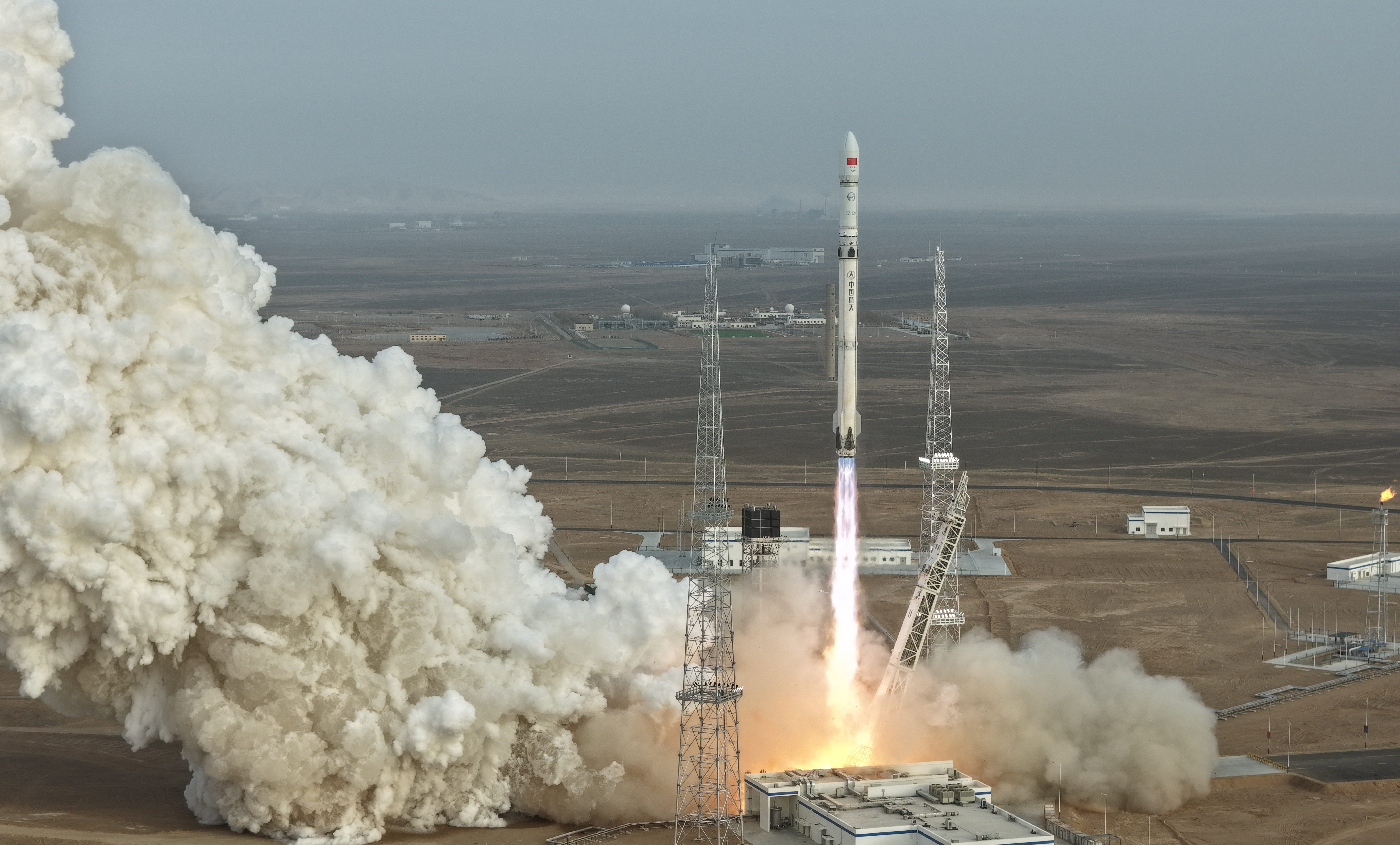
For the first time at the Jiuquan Satellite Launch Center, a Long March 12A lifted off at 10:00 am China Standard Time (02:00 am Universal Coordinated Time) on December 23rd, carrying no reported satellites1 while flying into low Earth orbit.
Ascent from the desert launch site was nominal, as the seven engines burned as planned to carry the rocket with a clean purple plume throughout first-stage flight, resulting in separation of the second-stage a few minutes later. After separation, the second-stage used its single engine to enter orbit several minutes later.
While the second-stage was heading for orbit, the first-stage was heading for Minqin County (民勤县), in Gansu (甘肃) province, where a landing pad was built downrange. For that, the Long March 12A’s booster passed its atmospheric reentry burn in one piece, albeit rather toasty. Following that, problems began to appear during the landing burn; three engines were meant to ignite, but only two engines ignited and the other failed, resulting in a high-speed impact with the ground around five kilometers away from the landing pad (a similar failure to LandSpace’s Zhuque-3 Y1 mission but less accurate in relation to its target).
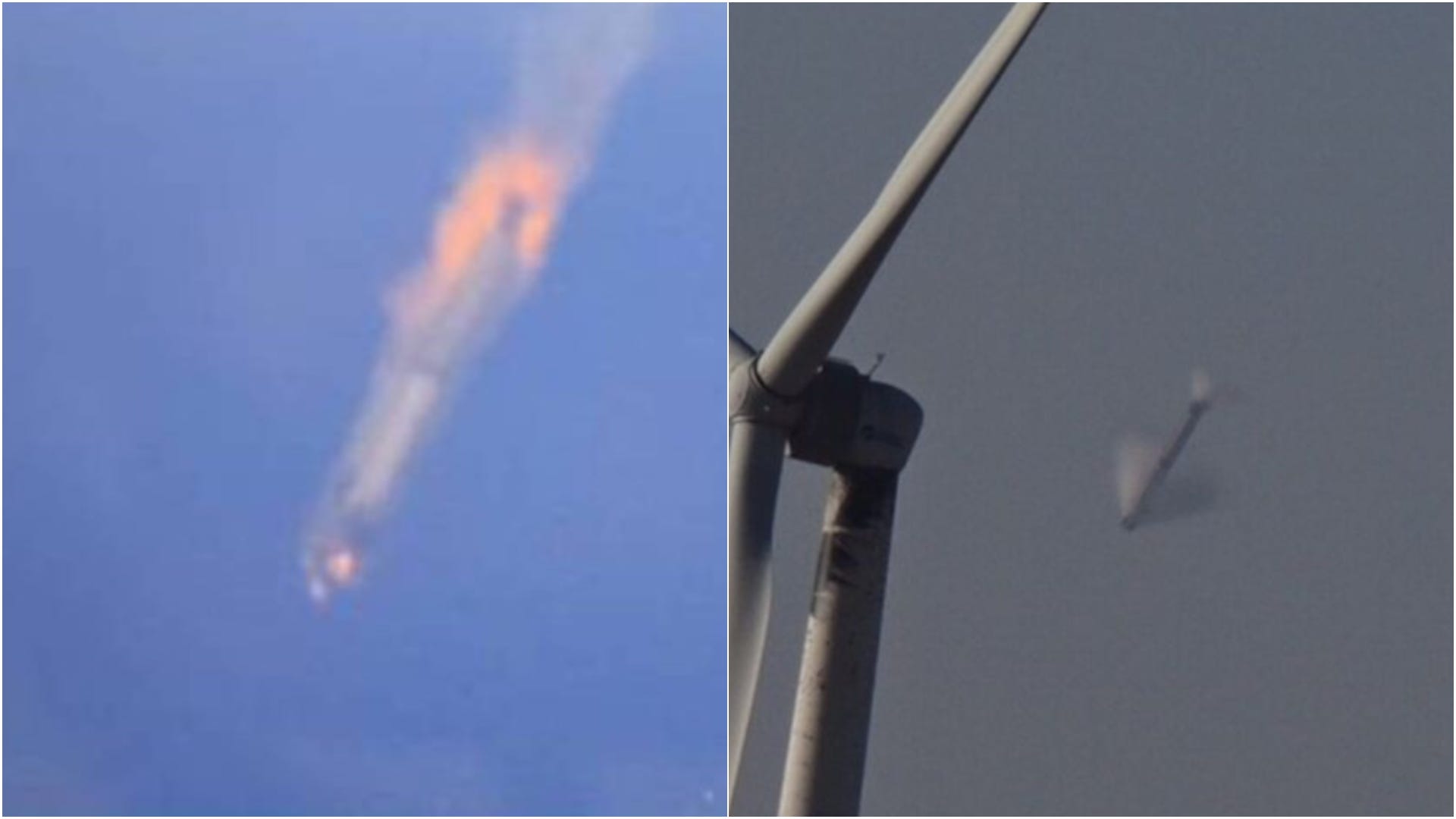
In post-flight news, the landing attempt was labeled as a basic success. In addition, it was noted that key engineering data for reusable launch vehicles was collected during the flight, to inform technology verification and future optimizations, while a landing failure analysis will take place ahead of a second Long March 12A mission.
The Shanghai Academy of Spaceflight Technology, the Long March 12A’s developer and operator, has yet to comment on this launch. Failed missions are usually announced by Chinese media, with no press releases from the launch provider. The Shanghai Academy may be treating the failed landing as a failed mission, based on a launch site slogan2.
In the many months leading up to today’s flight, the Shanghai Academy of Spaceflight Technology conducted two hop tests to demonstrate necessary technologies and to refine flight software. Back in June 2024, an approximately 12-kilometer hop took place at Jiuquan, showcasing adequate thrust control for a soft touchdown. Then, at the start of the year in January, a roughly 75-kilometer flight took place offshore from Haiyang (海阳市), Shandong (山东) province, to prove grid fin-controlled descent and a stable engine restart in-flight. Sadly, that test resulted in a splashdown at greater-than-planned speeds due to software errors, but the Shanghai Academy gathered enough relevant data to push ahead with confidence.
As for why the Long March 12A flew its debut mission from a new launch pad at Jiuquan instead of its four-times-proven one at the Wenchang Commercial Space Launch Site, a social media representative of Hainan International Commercial Aerospace Launch Co Ltd (海南国际商业航天发射有限公司)3 explained on Douyin (抖音) that:
“Its mission is not about how far it flies, but how to ‘go home’ steadily. Its goal … vertical recovery of the first-stage rocket [is its] biggest mission, the biggest challenge. At Jiuquan, there is a vast Gobi Desert. When the first-stage returns, [it is] the most ideal and safest ‘parking lot’. And Wenchang is surrounded by the ocean. [First-stage landing] requires extreme precision; solid land gives the engineer’s ‘peace of mind’4.”
The Long March 12A’s debut flight also provided the first use of Jiuzhou Yunjian’s (九州云箭) Longyun (龙云) engine and the Academy of Aerospace Liquid Propulsion Technology’s (航天推进技术研究院) YF-209 engine in an orbital flight. Both engines use a gas-generator cycle to burn liquid methane and liquid oxygen propellant to generate around 80 tons of thrust, having undergone extensive development and test campaigns in recent years.
Today’s launch was the 1st for the partially reusable Long March 12A, the 5th launch of the Shanghai Academy of Spaceflight Technology’s Long March 12 series, the 255th Long March vehicle launch from the Shanghai Academy of Spaceflight Technology, and the 619th launch of the Long March launch vehicle series. This was also the 89th launch from China in 2025.
Liftoff footage via China航天 and 卡尔达瓦里希, landing site footage via 萌虎鲸.
Check out the previous Long March 12 series launch
Sunrise Launch Delivers More GuoWang Satellites [Long March 12 Y4]
![Sunrise Launch Delivers More GuoWang Satellites [Long March 12 Y4]](https://substackcdn.com/image/fetch/$s_!7OLj!,w_1300,h_650,c_fill,f_webp,q_auto:good,fl_progressive:steep,g_auto/https%3A%2F%2Fsubstack-post-media.s3.amazonaws.com%2Fpublic%2Fimages%2F37d057f9-16db-443f-b324-e8dd1ffeddc7_4305x2373.jpeg)
With sunrise over Commercial Launch Pad 2 at the Wenchang Commercial Space Launch Site, a Long March 12 lifted off at 07:00 am China Standard Time on December 12th (23:00 pm Universal Coordinated Time on December 11…
What is the Long March 12A?
This section is for those less familiar with China’s Long March series of launch vehicles.
The Long March 12A is a two-stage partially reusable launch vehicle developed by the Shanghai Academy of Spaceflight Technology, to launch from the Jiuquan Satellite Launch Center and the Wenchang Commercial Space Launch Site. Both stages burn liquid methane and liquid oxygen to carry payloads into space.
The Long March 12A’s payload capacity is currently as follows:
Up to 12,000 kilograms to a 200-kilometer low Earth orbit.
Up to 7,300 kilograms to a 700-kilometer sun-synchronous orbit.
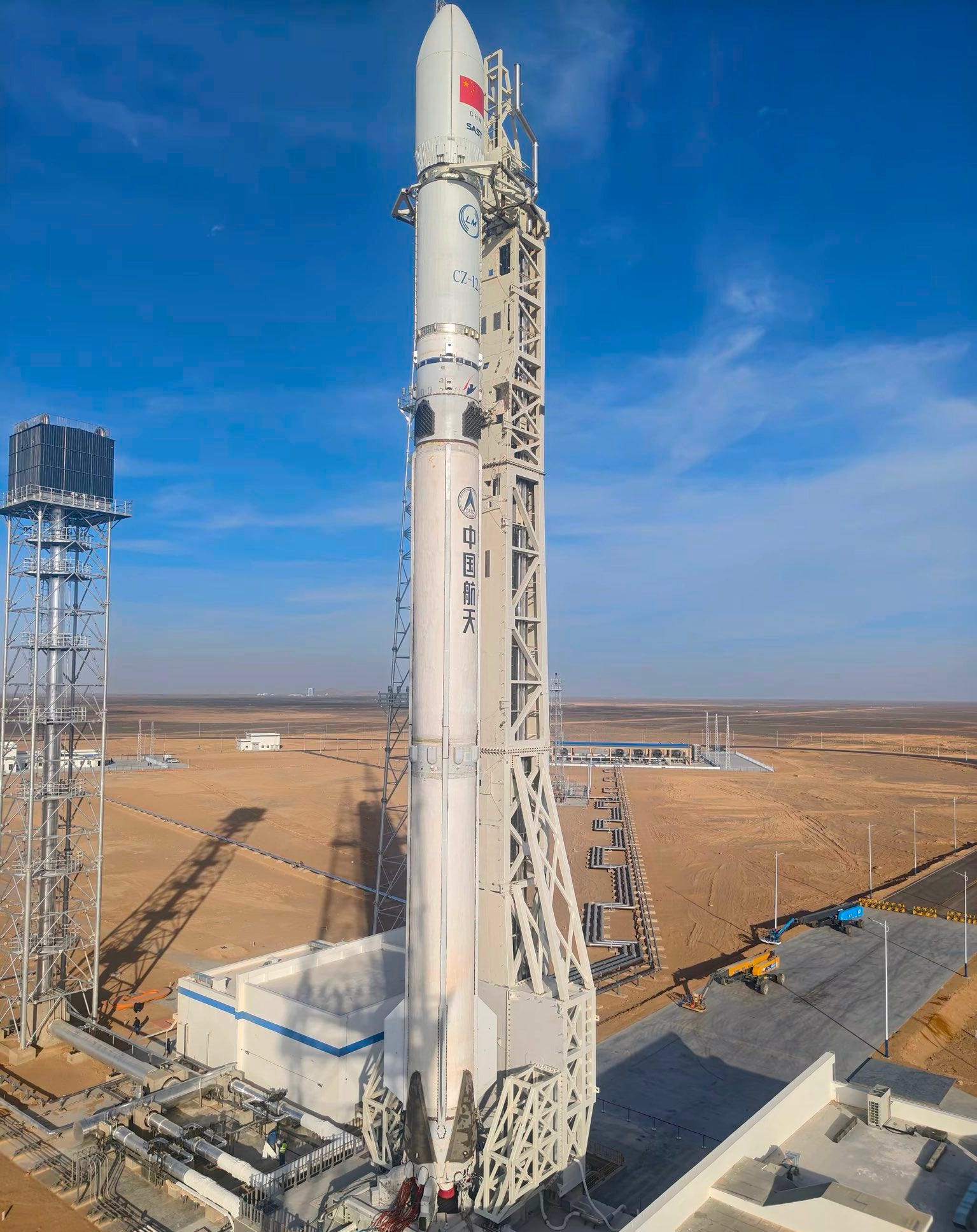
The first-stage of the Long March 12A is powered by seven Longyun (龙云) from Jiuzhou Yunjian (九州云箭), each generating 80 tons of thrust for a combined 560 tons of thrust. The second-stage is powered by a single vacuum-optimized YF-209V engine, which generates 80 tons of thrust to reach orbit.
For reuse of the first-stage booster, it will land vertically on a landing pad or drone ship by relighting between one and three of its engines, then deploying four landing legs. Unpowered descent of the first-stage will be guided by four grid fins on the interstage stage.
On the launch pad, the Long March 12A stands 70.4 meters tall, while both stages are 3.8 meters in diameter, with fairing options of 4.2 or 5.2 meters wide. The launch vehicle masses around 437,000 kilograms once fully fuelled.
Object(s) from the launch will be catalogued several hours after launch by ground-based observers, from national and international organizations.
At the launch pad, there was a slogan poster stating:
“Bravely climb to the peak, first flight must succeed; build the platform, launch the new era.”
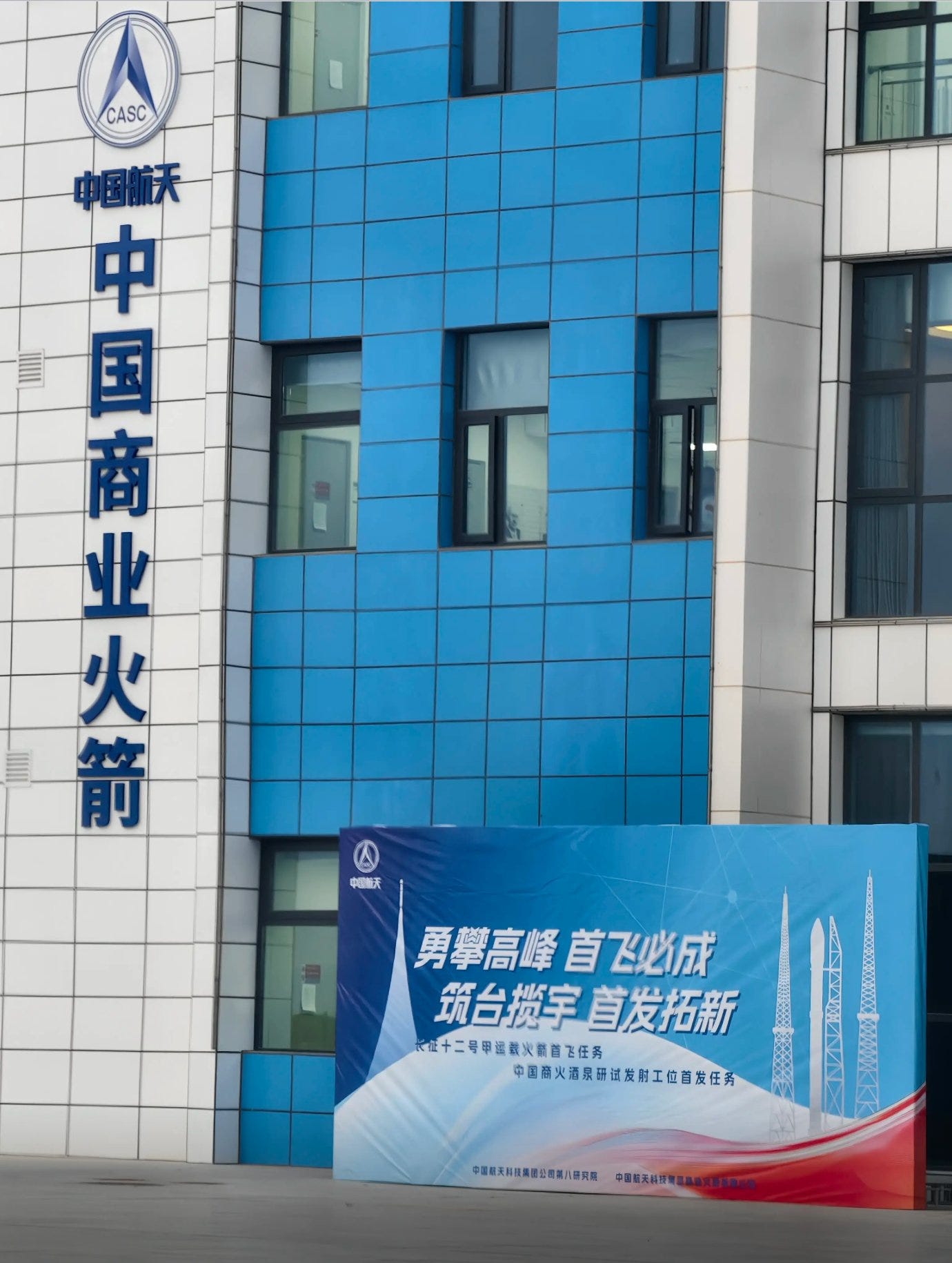
Operator of the Wenchang Commercial Space Launch Site.
For a first-stage landing for a Wenchang-based launch, a first-stage would either have to perform a more complicated and energy-expensive return-to-launch-site profile or aim for a floating platform that would be station-keeping in the ocean. Those floating platforms increase costs and require much greater maintenance, resulting in periods of unavailability, than a landing pad downrange from an inland launch site.
No problem , even if it gets failed in 5 more attempts , still CALT should continue testing it because reusable boosters are the key and China direly needs them . Reusable booster technology is hard to master at first but after having mastered this technology, the cost of launching payloads to LEO would be more cheaper and China's dream of constructing megaconstellation in LEO would come true.
As a technical note , I noticed that both Zhuque -3 and Long March 12A booster speed were too fast to control during landing , so it means that thrusters on the boosters were not being fired at the right altitude and booster were not able to maintain their speed . If the speed of the booster during landing will be too fast then the very material or structure that holds the booster would definitely get disintegrated during the reentry and that was what we noticed in both the flights. Therefore , Chinese engineers and scientists should diligently work on how to keep thrusters firing during the landing , to make the booster steady and controlled during landing. It is also recommended to closely watch the landing of the SpaceX boosters and there are hundreds of video available for Falcon 9 booster landing which could give Chinese scientists and engineers a lot of intuition and valuable insights on the booster landing dynamics.
So , fact of the matter is , NEVER STOP TRYING and learn from SpaceX which failed so many times before mastering this reusable booster technology.