

Shenzhou-20 Crew Respond to Questions on Space Debris Strike, 204-Day Mission Onboard Tiangong
Chen Dong, Wang Jie, and Chen Zhongrui have been back on Earth for two months and recently met the press for the first time since landing.

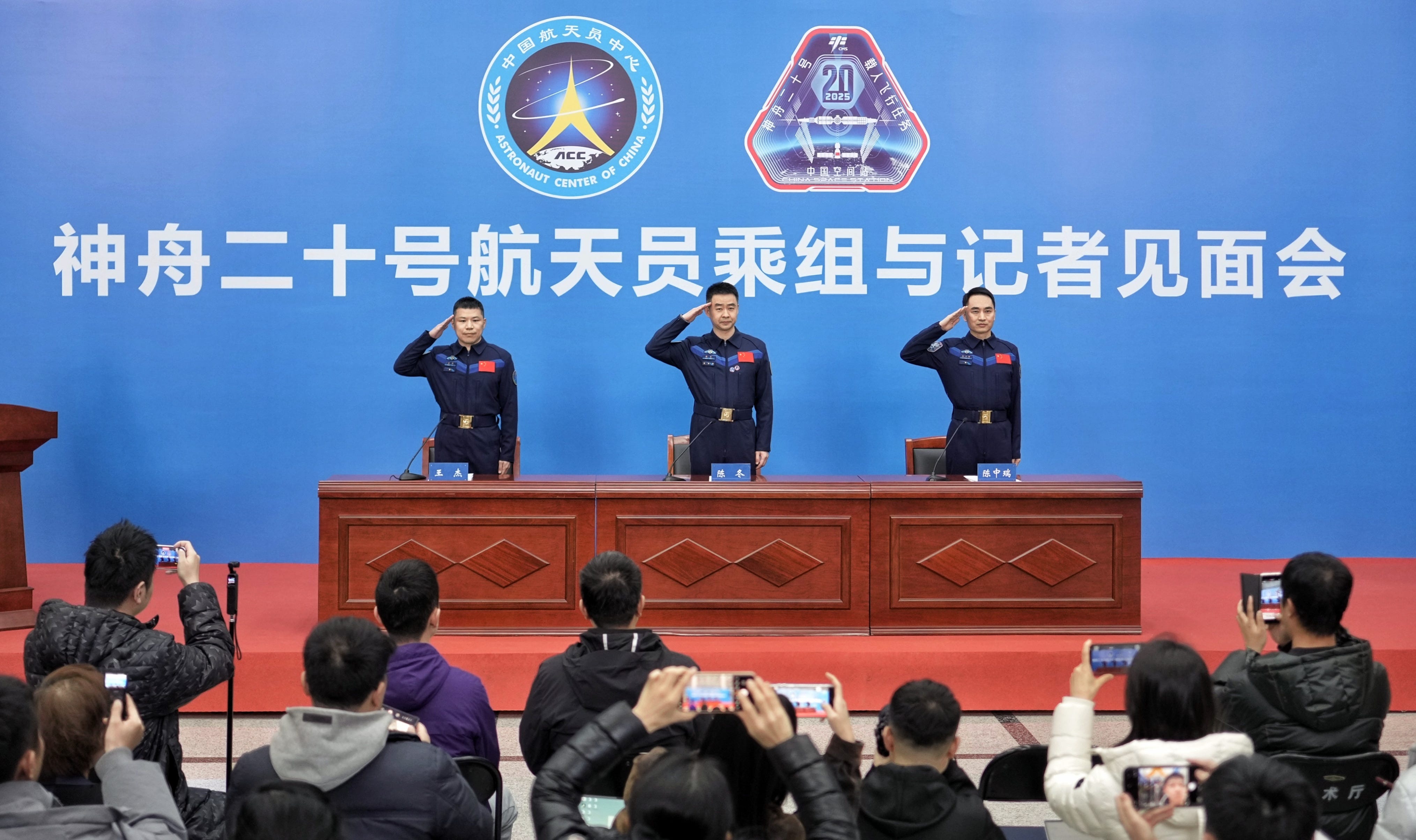
Chen Dong (陈冬)1, Chen Zhongrui (陈中瑞)2, and Wang Jie (王杰)3 of the Shenzhou-20 mission to the Tiangong Space Station return to Earth on November 14th, following a 204-day stay in orbit. Their mission was the longest unplanned stay onboard the station, following a debris strike to their spacecraft (which returned January 19th) and a swap to Shenzhou-21’s, resulting in China’s first ‘emergency response’ launch with the Shenzhou-22 spacecraft.
Since returning to Earth over two months ago, the three taikonauts have had their mental and physical health monitored as they readjust to the planet and gravity. In the coming weeks, they will complete post-mission health checks and re-enter selection for future missions to Tiangong or to the Moon.
As part of the post mission process, the Shenzhou-20 trio met the press on January 16th, to discuss their time on Tiangong, spacewalks outside the station, and the discovery of the debris strike to their spacecraft.
An English transcript of the crew meeting the press has not been released, but a Chinese-language one has. As such, I’ve prepared an unofficial translation of the press conference, and it is provided below. Any errors present are my own, if you find any problems with this translation please reach out and correct me. If you are looking to reference any part of the transcript, please refer to the one posted by the China Manned Space Agency.
Transcript of Shenzhou-20 Trio Meeting the Press
Reporters: Commander Chen Dong, the Shenzhou-20 return capsule window was hit by space debris and cracked. How did you discover this danger? After the mission was postponed, as commander, how did you relieve crew pressure and quickly coordinate with ground control to activate the emergency plan? What were Chen Zhongrui and Wang Jie’s feelings? Please share your perspectives.
Chen Dong: First, on behalf of the crew, I want to thank the people of the country for their concern, especially after everyone learned about the return capsule window crack and worried about our safety. Every bit of attention and every blessing has been a powerful motivation for us to overcome difficulties and complete our mission. Today, we take this opportunity to express our sincere gratitude to all friends who care about and support China’s manned space program. Thank you all!
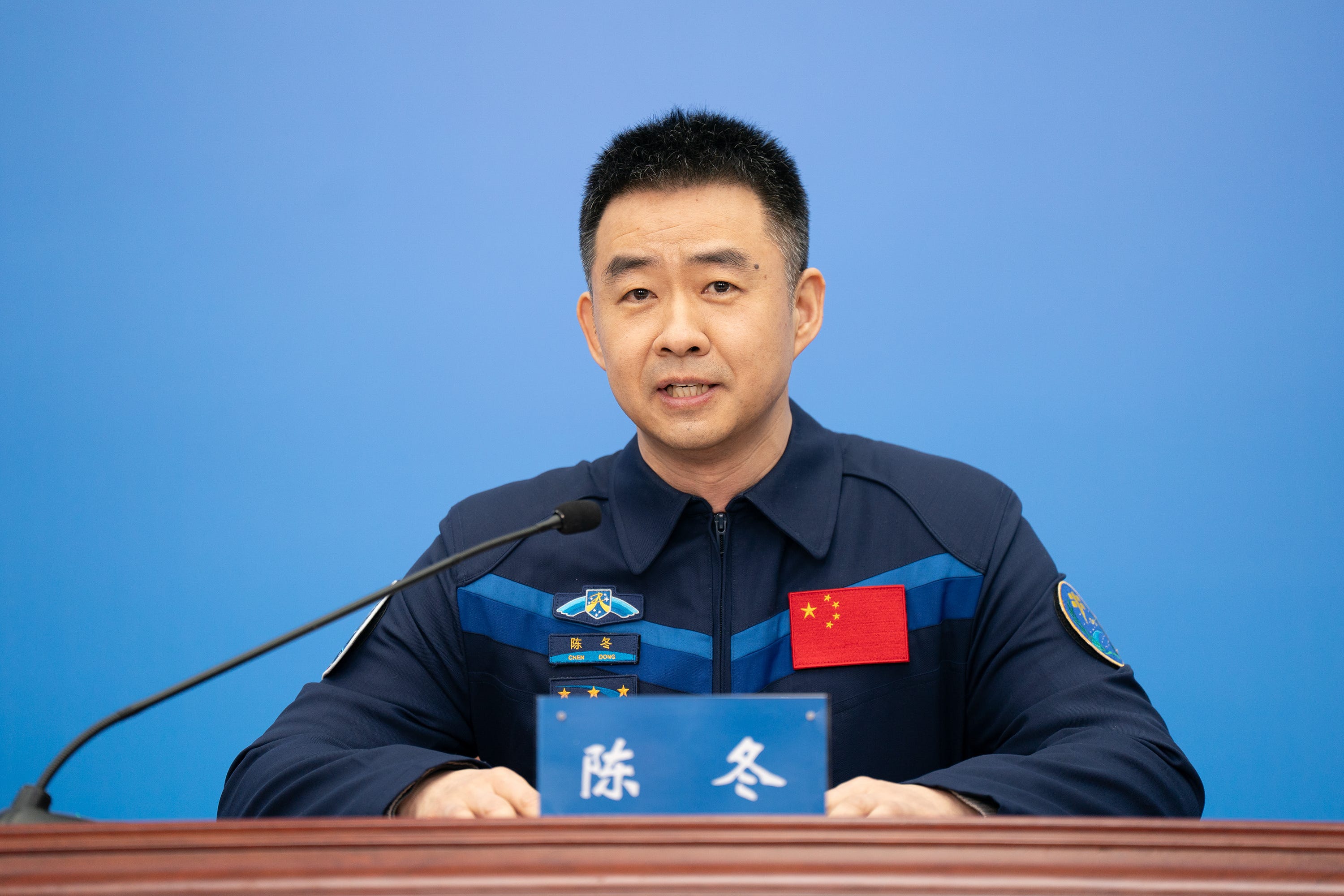
During our final pre-return inspection and confirmation work, we discovered a triangular crack on the window. We immediately took photos and transmitted the data to ground control. Based on visual observation, I made a preliminary judgment: the crack appeared in the outermost glass layer and had penetrated through, but would not affect the safety of our continued on-orbit stay. Subsequently, all six taikonauts from both crews carefully observed and discussed the window’s condition, fully cooperating with ground control for verification.
When we received notice of the postponed return, the ground team promptly briefed us on the situation and asked us to prepare for various scenarios. Both crews quickly unified our thinking around “two beliefs”: First, trust the ground team; they would consider every possibility and exhaust every method to develop the most secure and safe return plan for us. Second, trust ourselves; we are well-trained taikonauts with the ability to handle various unexpected malfunctions. At that time, what we needed to do was quickly respond to the emergency plan and methodically complete all pre-return preparations according to ground instructions.
Chen Zhongrui: Space has both the romance of stars and seas, and hidden severe tests for humanity. The space environment is extremely harsh, and manned spaceflight constantly faces various risks and challenges. Upon discovering the return capsule window anomaly just before return, the crew immediately remained alert and reported to ground control. After expert assessment, mission control decided that the Shenzhou-20 spacecraft's return posed safety hazards and decided to postpone the return and activate the emergency plan.
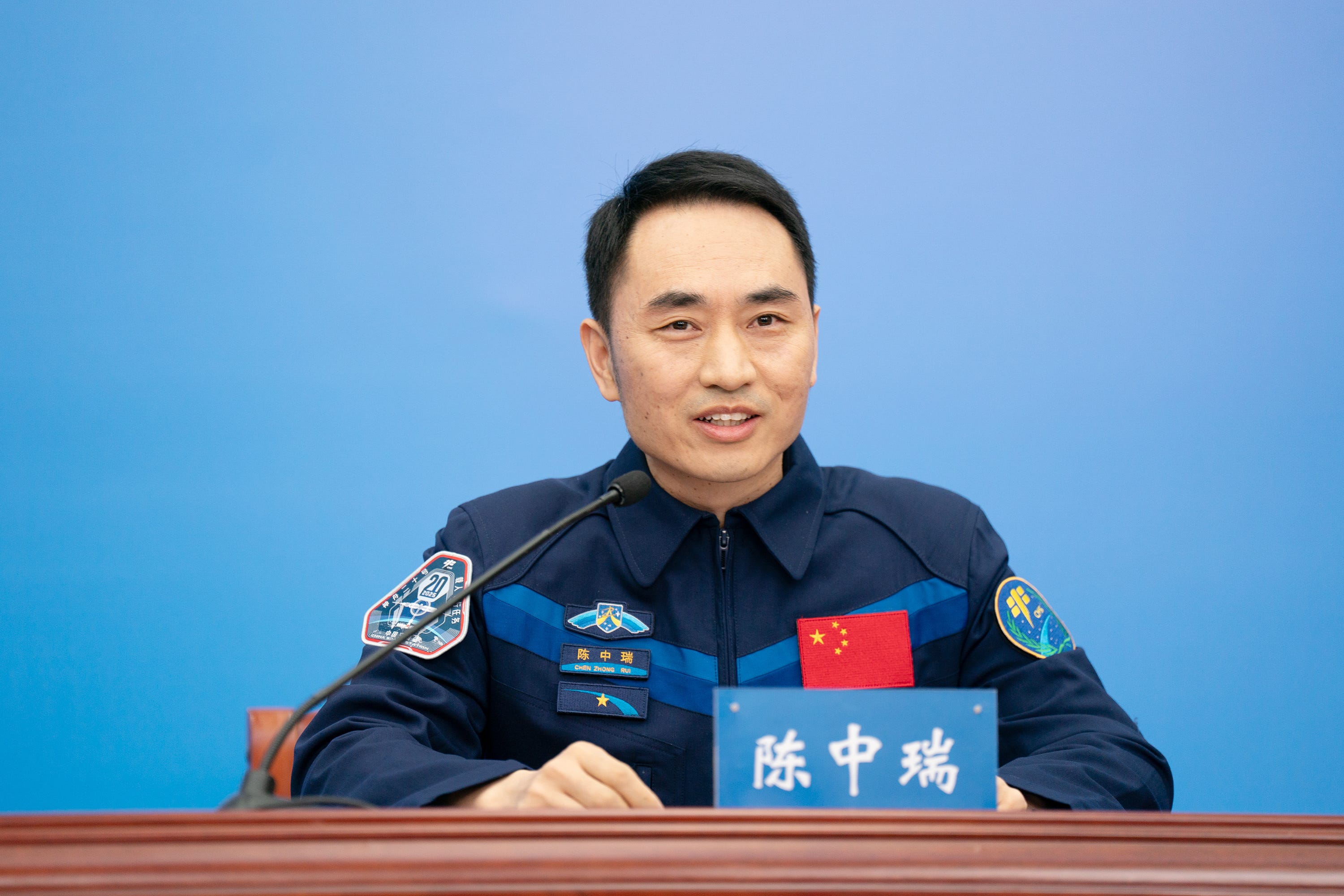
When we learned this news, after discussion and unifying our thinking, and with timely communication from the ground team, everyone’s emotions quickly calmed down. This was because on the ground, we had undergone solid emergency situation response training and were mentally and psychologically prepared. More importantly, we had confidence. Behind us is our powerful motherland, our team is the excellence-pursuing Chinese manned space team, and our crew is the united Shenzhou-20 collective. I firmly believed that our country has the strength, our team has the capability, and we ourselves have the confidence to overcome all difficulties and return safely to Earth.
Ultimately, from discovering the problem to our crew’s safe return, and then to the successful launch and docking of Shenzhou-22, only about 20 days passed. “Safe and efficient”. This is the perfect answer that China’s manned space program submitted to the motherland and the people.
Steel is forged through fire. On the journey to pursue our space dreams, I will continue to strive, fearless of difficulties and pressing forward. The road to questioning the heavens is long and arduous, but I firmly believe: Chinese space will fulfill its mission!
Wang Jie: The moment we discovered the danger, I felt briefly tense, but quickly calmed down and immediately threw myself into window status verification and cabin safety inspection work according to my assigned duties. This emergency made me truly appreciate that the taikonaut profession requires both directly facing unknown risks in space and relying on solid technical skills, thorough training, and team collaboration to overcome all challenges.
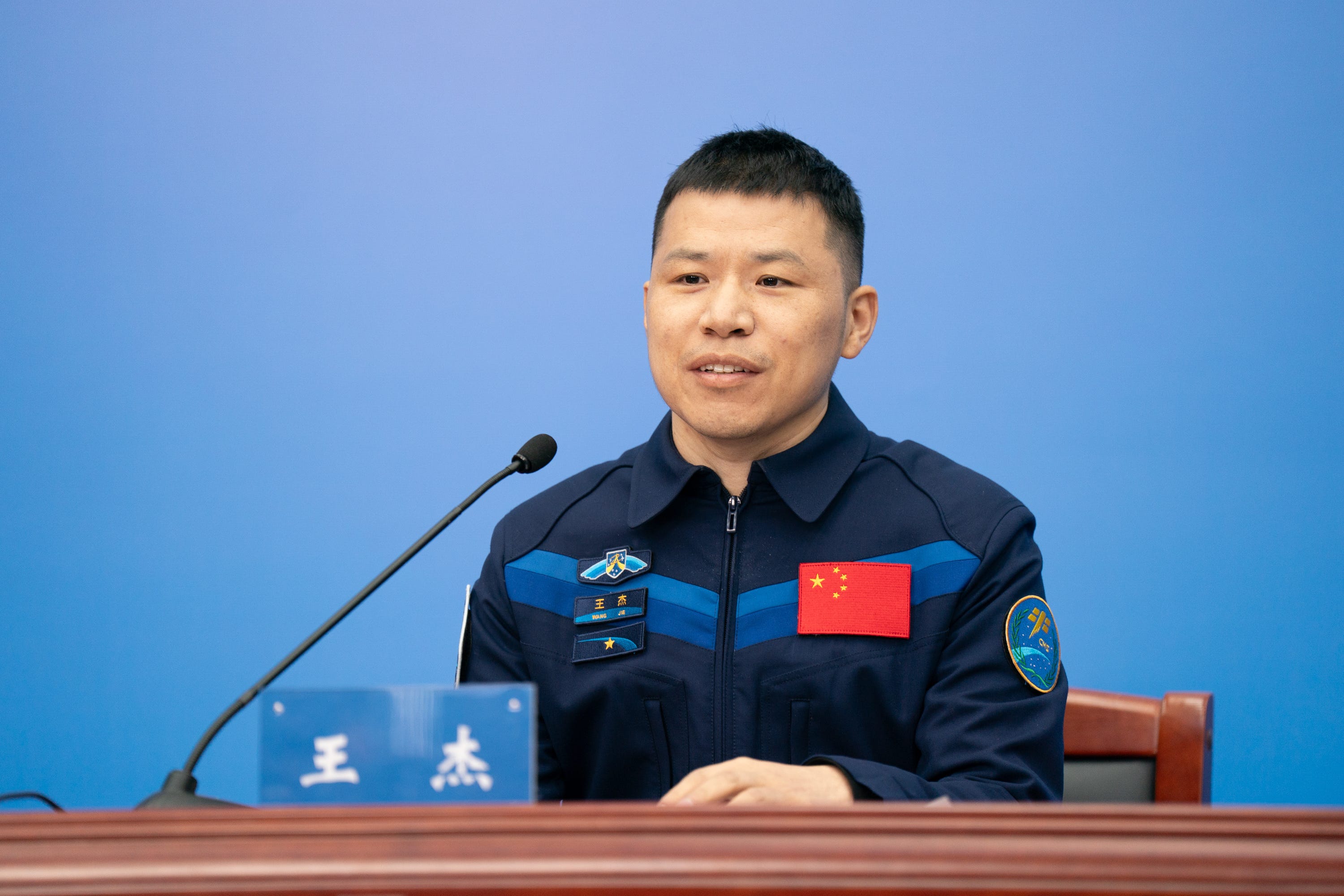
The six of us teammates fought side by side and successfully completed the “crew handover” mission, which made me deeply feel the team’s powerful strength and gave me more awe and love for this profession. We always believed that the ground team would develop the most scientific and efficient response plan and the most secure and reliable return plan to fully protect our safety. This unexpected window crack ultimately became precious testimony to the concerted efforts of both our crews and all ground space personnel to protect our safety together.
Reporters: Chen Dong, you have cumulatively conducted 6 extravehicular activities, making you currently the Chinese taikonaut who has performed the most spacewalks. What are your feelings about performing multiple spacewalks?
Chen Dong: In the three missions I’ve executed, the first had no scheduled spacewalks, while the latter two missions included a cumulative six spacewalks, each carrying different tasks. The first three spacewalks were during the space station construction period, with the main task being to install various equipment and conduct related verification work to contribute to the station’s completion. The latter three were during the station’s operational period, with the core task being to install space debris shields, which is very important for ensuring the safe and stable on-orbit operation of our space home.
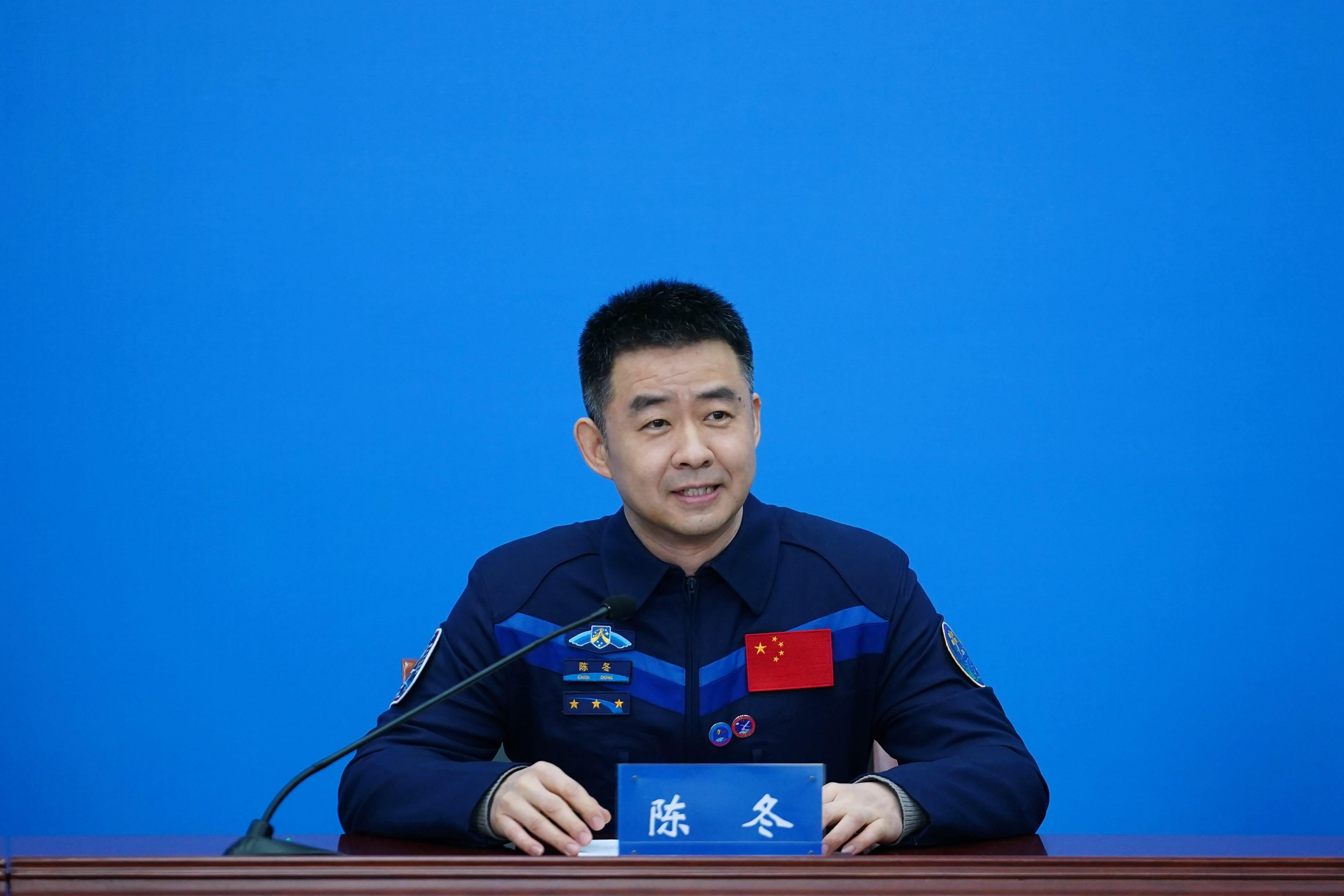
Currently, space debris poses an increasingly serious threat to the space station. Once debris hits important pipelines and cables, the consequences would be unimaginable. Just like the damage debris caused to the return capsule window this time, ultimately activating the emergency plan had a significant impact. This has further made us realize that installing “protective armor” for our space home is absolutely necessary. Actually, the overall engineering team has long been highly attentive to this issue, progressively installing various protective shields starting from the Shenzhou-18 mission. We also hope that subsequent crews can continue these efforts and soon dress our space home in complete “protective clothing and safety armor” to ensure the station’s safety.
Overall, I’ve participated in 7 spacewalk-related missions. The first 6 involved going outside in an EVA suit, while the 7th was providing support from inside the cabin, coordinating with my two teammates to complete the spacewalk; an equally impressive experience. Although my body didn’t go outside, my mind and eyes followed my two teammates throughout, not daring to relax for a moment. This gave me a real appreciation for how hard the ground personnel supporting us in front of screens work; their minds constantly running through spacewalk procedures, their eyes closely watching our operational movements, their mouths accurately issuing various commands, sitting for hours at a time. Even when their eyes hurt and their backs ache, they must persist, only able to use the restroom when the space station is out of communication coverage. It’s precisely this wholehearted support from the ground team that enables every spacewalk mission to be completed successfully. ”Unity between heaven and earth” is vividly demonstrated at these moments. Here, I want to express my most sincere thanks to them!
Reporters: Chen Zhongrui, as the first taikonaut from the third batch to experience a 204-day ultra-long stay on your first spaceflight, what difficulties and challenges did you encounter? What comprehensive qualities do you think taikonauts need to possess to handle increasingly complex space missions?
Chen Zhongrui: Achieving a 204-day ultra-long stay on my first spaceflight. During this journey there were difficulties and challenges, but more importantly, growth and gains.
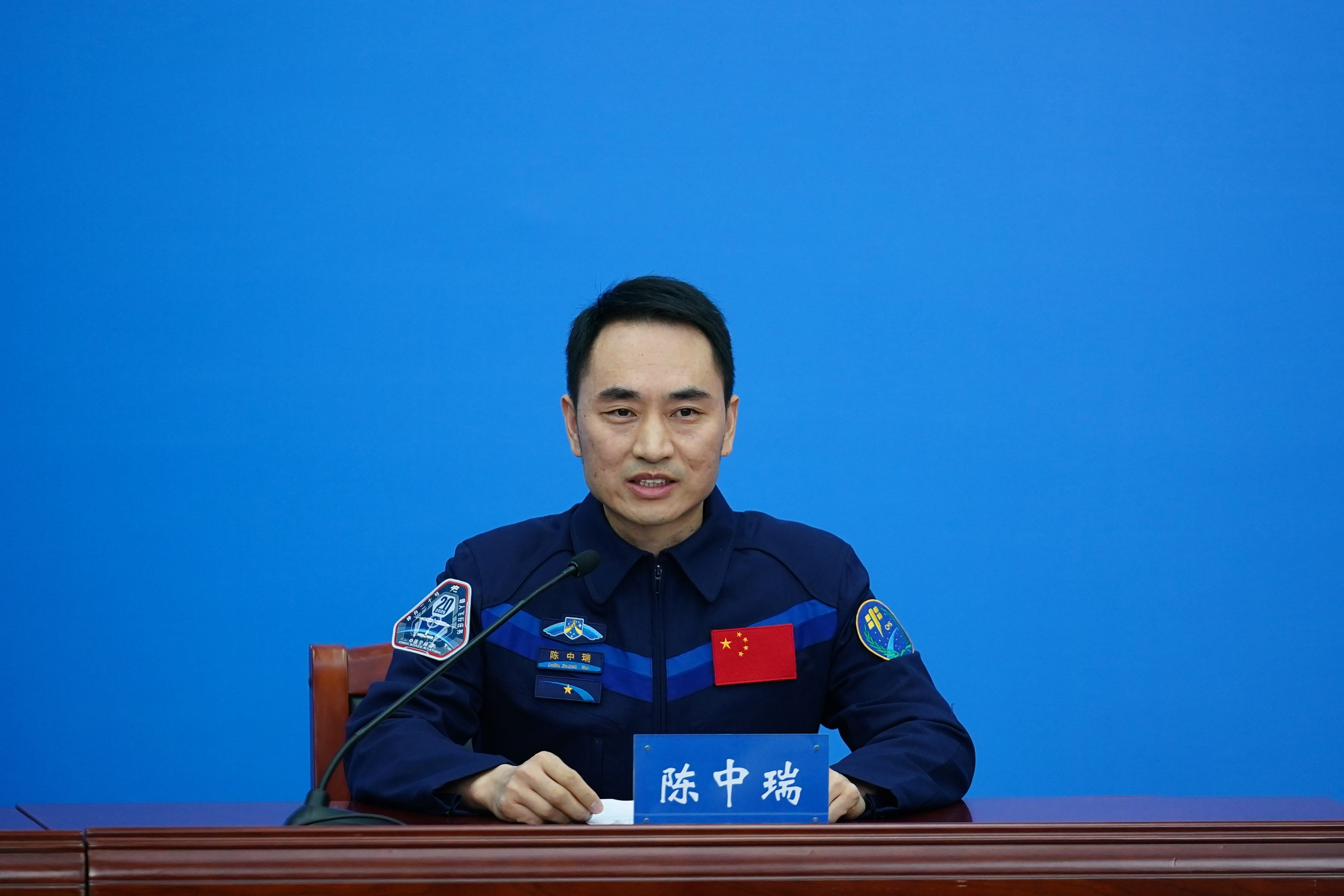
During this mission, our crew worked together with unified hearts, integrated with ground control, and completed 4 spacewalks, multiple payload transfers in and out of the cabin, and numerous scientific experiments. The workload was full and the mission arduous. In the space environment, every task and every operation must be meticulous, ensuring nothing goes wrong. We maintained this high-pressure work state throughout all 204 days, day after day, without any relaxation.
Where there’s effort, there are rewards. Multiple breakthrough projects, represented by the space mice and high-temperature materials experiments, were all successfully completed. The most difficult was still the first spacewalk, which occurred less than a month after we entered orbit; time was tight and the mission heavy. We quickly adjusted our state, closely coordinated, operated carefully, and successfully completed the first spacewalk mission. The spacecraft being struck by space debris was a sudden challenge we faced near the end of the mission. With close coordination from the ground team, we completed all tasks during our stay period with firm confidence, stable condition, and precise operations, and successfully returned to Earth, using practical actions to submit a perfect answer to the motherland and people.
As missions become increasingly complex and arduous, requirements for taikonauts are also getting higher. I personally believe taikonauts should possess qualities in four areas: First, firm ideals and beliefs; no matter how high or far we fly, we travel through space with the Party in our hearts, never losing direction while in the heavens. Second, excellent physical and psychological qualities, able to calmly adapt to the extremely harsh and complex space environment. Third, comprehensive and systematic knowledge and skills, laying a solid foundation for better maintaining the space station and completing various scientific research and experimental tasks. Fourth, outstanding emergency response capabilities, able to effectively handle various unexpected problems we encounter during flight.
Reporters: Wang Jie, you previously participated in space station construction as a space technologist on the ground, and this time you personally operated and maintained the space station in space. What are the different feelings these two work states gave you? Was there any moment when you truly felt the value of “applying what you’ve learned”? Is there anything you’d like to share with young people who follow you? Also, during this mission, were there any impressive experimental projects?
Wang Jie: Transitioning from a space technologist to a space flight engineer, from participating in construction on the ground to personally operating and maintaining in space, these two work states gave me completely different feelings.
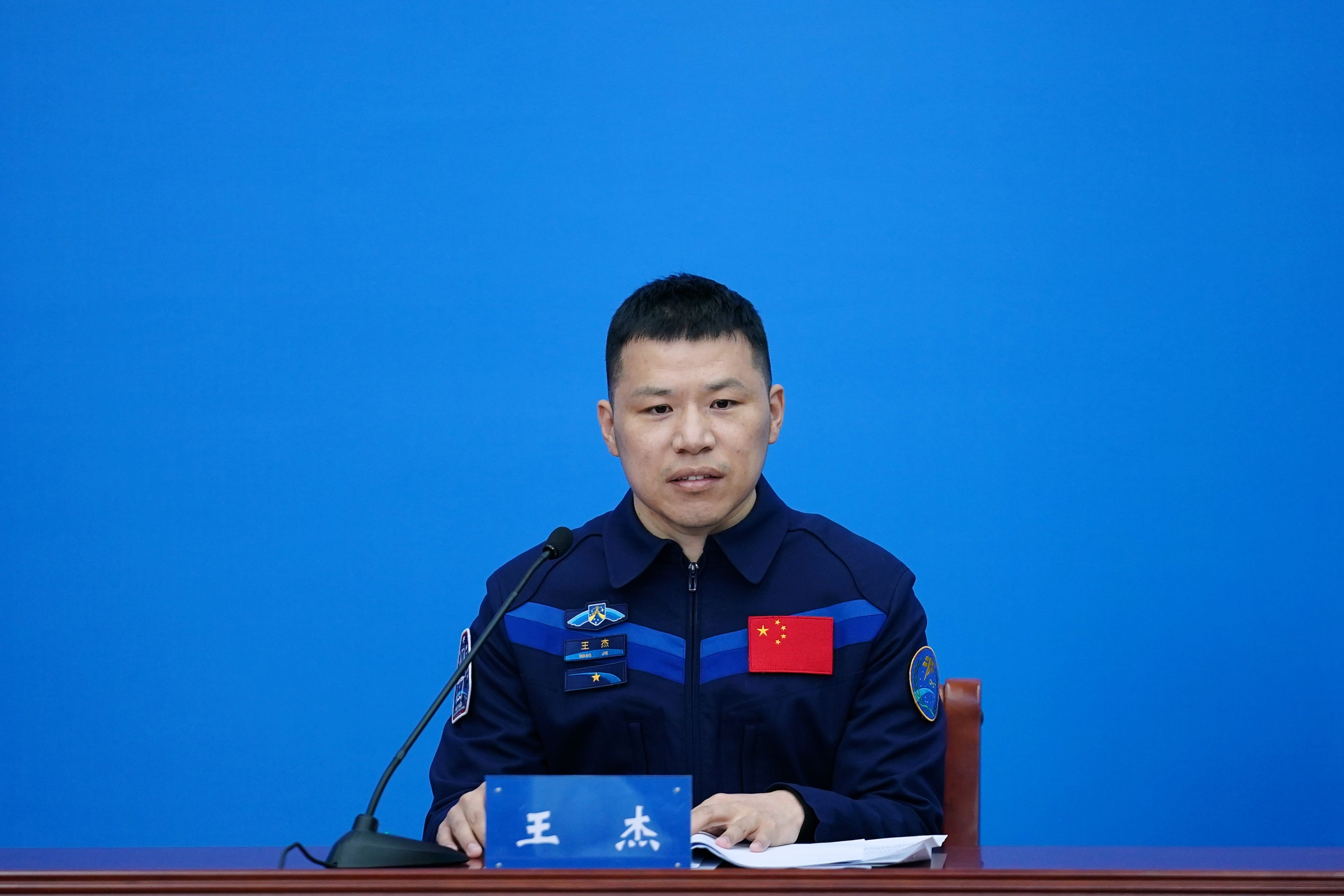
When participating in space station construction on the ground, my work leaned more toward “overall control and meticulous design,” ensuring every link was precise and reliable through scheme design, data analysis, and testing verification. At that time, my understanding of the space station was more based on theory and ground verification.
In space, when personally operating and maintaining, the space station became my “home” for work and life. Every piece of equipment and every interface became concrete and real. When operating and maintaining in space, more refined physical control and more flexible adaptability are needed. This “hands-on touching, personal practice” experience gave me a more intuitive and deeper understanding of the space station’s design philosophy and engineering details.
During ground training, equipment maintenance operations are mostly performed step-by-step according to manual procedures under instructor guidance. But in space, once equipment malfunctions occur, the fundamental knowledge accumulated in the past, design principles, and muscle memory and adaptive thinking formed through multiple simulation trainings immediately come into play. At this moment, I deeply appreciated that “every bit of knowledge learned and every operation practiced in normal times is for being composed at this moment in space”. The sense of achievement when equipment returns to normal operation is the most vivid interpretation of “applying what you’ve learned”.
Therefore, I want to say to young friends: space journeys have never been romantic fairy tales, but journeys that need to be nurtured with sweat and persistence. Every formula you learn now, every piece of knowledge you master, may become the ladder for you to explore the stars and seas in the future. The doors of China’s space station are always open to you who hold dreams. I hope you can maintain your original aspirations toward the unknown, learn skills solidly with your feet on the ground, dare to explore, and dare to pursue dreams. I look forward to seeing you in the ranks of space personnel in the future, working together with us to make the Chinese people’s footsteps reach deeper into space.
During this mission, the “mouse experiment” I participated in left a deep impression on me. In a weightless state, the mice needed to adapt to a completely new survival mode. Initially, the mice appeared “flustered” and uneasy, gripping the fence tightly with their claws, unwilling to move, clearly showing weightlessness stress reactions. Later, the mice gradually adapted to the microgravity environment, able to move freely and feed normally. They would sometimes lower their heads to dig and gnaw on food, sometimes stick their heads out to search and lick floating feed, just as lively as on the ground, demonstrating amazing adaptability. This made me deeply feel life’s resilience.
Overall, from ground to space, from learning to application, at every step I deeply felt the solid strides of China’s space endeavor and appreciated the silent dedication of countless space personnel. In the future, I will complete every mission with the fullest state, living up to the trust of the motherland and people.
Reporters: Chen Dong, as the first taikonaut from the second batch to fly three times to space, you became the first Chinese taikonaut with a cumulative on-orbit stay time exceeding 400 days. Also, your crew stayed in space for 204 days this time. What do you feel were the core challenges and greatest gains? Additionally, from Shenzhou-11 to Shenzhou-14 to Shenzhou-20, what direct impressions have these three space journeys given you about China’s space station development?
Chen Dong: The time records just mentioned in the question are more of a precious testimony for me. I’m very fortunate to be able to personally participate in and witness these special space moments. I firmly believe that records are meant to be broken. As the space station operates stably on orbit, more people will come to witness more meaningful moments of China’s space home and will continuously create new records.
The core challenge across three missions for me has been continuously keeping pace with the space station’s rapid development and achieving precise matching between personal capabilities and mission demands. From the Shenzhou-11 mission entering the Tiangong-2 space laboratory to subsequently entering the space station, the tasks we undertake have undergone major changes, requiring significantly more preparation content and placing higher demands on taikonauts’ comprehensive qualities. Even when executing space station missions, returning to space after a two-and-a-half-year interval, I still didn’t dare to relax at all. For example, the space station’s pressure system has changed, and all pressure emergency procedures need to be relearned and memorized proficiently. The experimental projects and spacewalk activities for each mission are also constantly iterating and upgrading. There are also some new equipment, such as core exercise equipment and the Wukong big data model. The use of this new equipment also requires us to thoroughly learn and practice everything from theoretical study to operational training on the ground, seizing every minute of ground training and continuously improving capabilities to meet the constantly updating demands of the space station.
The greatest gain from the three missions is increasingly strong confidence in completing missions. After multiple actual combat experiences: our taikonauts’ ground training system has become increasingly scientific and complete; during on-orbit work and life, coordination with ground control has become increasingly seamless, and work is completed more efficiently; health protection measures have continuously enriched, and impacts from the space environment such as muscle atrophy and bone loss have gradually decreased; after returning to Earth, diversified rehabilitation methods have made physical recovery increasingly faster.
So across three mission executions, our direct impression of space station development is that the space station is constantly upgrading and evolving, and we taikonauts are also constantly improving and progressing. I believe that with the joint protection and efforts of taikonauts and ground research personnel, our space home will definitely operate more stably, travel farther, and last longer in the vast universe.
Reporters: Chen Zhongrui, the commander praised you for having “good psychological qualities and composure”. During this mission, you performed 3 spacewalks. What was your psychological state and operational focus during your first spacewalk?
Chen Zhongrui: First, I want to say that good psychological qualities and composure are essential capabilities for every taikonaut. All taikonauts, through scientific and systematic training, can meet this standard.
Our first spacewalk was from the Tianhe module, with relatively greater safety pressure. Because the Tianhe module is the core hub of the space station’s three modules, if problems occur, the consequences would be unimaginable. Also, this was the first spacewalk from the node module since the space station was completed. For both the ground team and our crew, this was a completely new attempt, with many unknown risks in coordination, procedure implementation, and other aspects.
To ensure the spacewalk was safe and smooth, we attached great importance ideologically and made thorough preparations. We repeatedly rehearsed the spacewalk procedures, operational details, emergency responses, and other content, ensuring every step and every action was thoroughly memorized.
When I actually climbed out of the cabin, I was still deeply shocked by the scene before my eyes; the universe vast and boundless, Earth colorful and magnificent. My heart was filled with excitement and exhilaration. During this spacewalk, my main tasks were equipment transfer, completing the disassembly of the operation platform and foot restraints, and assisting the 01 crew member in installing protective shields. Working in an EVA suit in the space environment is really quite difficult. The operational guidelines I summarized are “three stables and one slow”: stable mentality, stable operation, stable body, and slow movements. With integrated heaven-earth coordination and close cooperation among the three crew members, after more than eight hours of extravehicular activity, we successfully completed our first spacewalk mission.
Reporters: Wang Jie, during the 9 days after the return postponement was confirmed, as a flight engineer, how did you ensure smooth operation of the environmental control and life support system, allowing the 6 taikonauts on orbit simultaneously to eat well, sleep soundly, and stay healthy? Also, tell us about your space barbecue feast; was it the “universe-level delicacy” netizens said it was? How did that “black technology” that hides the “range hood” inside the oven feel to use?
Wang Jie: During the 9 days after the return postponement was confirmed, with 6 taikonauts simultaneously on the space station, as a flight engineer, ensuring stable operation of the environmental control and life support system was my top priority. This system is the “life hub” of the space station. We carefully monitored and maintained this “oasis of life” as if caring for a living organism.
Every day I conducted multiple inspections of cabin environmental parameters, coordinated the operational matching among systems, and precisely controlled the workload of the electrolysis oxygen generation and water circulation systems, ensuring that under the high demand of 6 people staying simultaneously, every drop of regenerated water and every breath of air in the space station was safe and reliable. To help everyone rest well, we optimized rest zones and the sleep environment, allowing each taikonaut to sleep peacefully surrounded by stars. In terms of diet, we relied on the nutrition support plan coordinated between heaven and earth, reasonably matching various food ingredients, making space meals both scientifically balanced and full of the “taste of home”.
Speaking of the “space barbecue” everyone’s interested in, it was indeed a small highlight of this mission. That heating and roasting integrated thermal roasting device is designed very ingeniously. It cleverly integrates the “range hood” function inside the oven, perfectly resolving the challenges of oil smoke absorption and odor control in space cooking. This equipment is simple, intuitive, and efficient to operate, allowing us to enjoy hot, fragrant roasted food in space.
We grilled steaks and chicken wings; the aroma was overwhelming, the meat tender and juicy. One bite brought complete happiness, absolutely deserving the “universe-level delicacy” evaluation! This deliciousness comes not only from the food itself but also from the benefits brought by our motherland’s technological development. The joyful moment when all 6 of us sat together sharing delicious food. That feeling was incomparable.
Behind all this is inseparable from the round-the-clock protection and dedication of the ground support team. It’s their rigorous data analysis and thoughtful design and development that can transform precious oxygen, water, and food into inexhaustible energy for us to explore the stars and seas. Here, on behalf of the crew, I pay the highest respect and most heartfelt thanks to all space personnel who silently contribute to China’s manned space endeavor!
Reporters: Commander Chen Dong, the Shenzhou-20 crew’s postponed return and safe triumph has been celebrated across the country, especially by people in your hometown. After your second spaceflight return, you shared glory with teachers and students at your hometown alma mater, and many young students were inspired to serve the motherland and dedicate themselves to space, expressing blessings to you in various ways. After returning from your third spaceflight, what would you like to express to your hometown and alma mater?
Chen Dong: I’ve always held deep feelings and attachment to my motherland and hometown. During on-orbit mission execution, the happiest and most exciting thing for me was looking at the motherland through the window and finding my hometown. Every time I saw my hometown, my heart felt something different—more beautiful in daytime, brighter at night. I received all the blessings and invitations from hometown people, asking me to come back to see the peonies and drink soup. Thank you all! I wish my hometown Luoyang increasingly better development and hometown people increasingly happy lives. When I returned to my alma mater last year, being with dear students, I felt their vigorous vitality. The spaceflight dream has taken root in their hearts. During the flight, I often recalled their sincere smiles and their thirst for knowledge. I hope they can continue accumulating the power to pursue dreams. The space station is about 400 kilometers from Earth. Every time I gritted my teeth and persisted, it moved me forward one step; every time I challenged limits, it accelerated my progress. Only by constantly breaking through oneself can one receive wonderful life rewards. I believe students all have the ability to do this; having light in their eyes, dreams in their hearts, and courageously pressing forward. The future is no longer unknown, and dreams will eventually become reality. I hope they can all reach the peaks of their lives and appreciate their own unique scenery.
Reporters: Chen Zhongrui, on your first spaceflight you stayed on orbit for over 200 days and executed 4 spacewalks with your two crew teammates, completing important tasks such as installing space debris protection devices. What kind of dream-pursuing beliefs do you hope to convey to young people in your hometown through your own experiences?
Chen Zhongrui: Since becoming a taikonaut, my greatest dream has been to venture into space for the motherland. After four years of unrelenting effort, I finally flew to space and completed this both arduous and challenging mission; this is my dream-fulfillment journey.
Here, I want to say to young friends in my hometown: First, have dreams in your heart; from childhood establish lofty aspirations to serve the motherland, writing sincerity and responsibility on the youth’s canvas. Second, dare to pursue dreams; the road to realizing dreams is definitely not smooth; you must have the determination to overcome all difficulties. With youthful spirit blaze new trails; with tenacious will meet challenges head-on. Third, strive to fulfill dreams; based in the present, feet on the ground, cherishing every moment. Believe that every effort and endeavor now will become the ladder for realizing dreams in the future.
Reporters: My question is for taikonaut Wang Jie. Years ago, Inner Mongolia had the beautiful story of “the best pastures for space”. In 2025, what impressed us deeply was that Inner Mongolia consecutively produced two taikonauts who reached the heavens from Ejina, and you and Wu Fei even met in space, working and living together for more than ten days. From the initial “best pastures for space” to now “best sons for space” is actually a very inspiring story. Could Wang Jie talk about your thoughts on these two inspiring stories?
Wang Jie: Thank you to the people of Inner Mongolia for their deep affection! “The best pastures for space” is history written with dedication by the people of Inner Mongolia. When Ejina herders resolutely relocated for the space cause, contributing their water-rich and grass-abundant homeland to realize the space dream, this selflessness became our space personnel’s eternal spiritual strength.
And “the best sons for space” represents me and Wu Fei, as sons of the grasslands, continuing to inherit this spirit. We’re both boys who grew up in Inner Mongolia, hearing space stories since childhood. The grasslands gave us the spirit of Mongolian horses; the grasslands also gave us tenacity, simplicity, and feelings for family and country, allowing us to be fearless of hardship and courageously press forward during training. In 2025, we met in space and completed the “space relay”. During those ten-plus days working side by side and talking about our hometown, this bond was both precious and profound, backed by the hometown’s nourishment and the motherland’s cultivation.
From pastures to sons, what remains unchanged is Inner Mongolia’s deep feelings for family and country, shared with the space cause. We know deeply that every spaceflight is not a solo battle. Behind us is the care of the grassland people and the guidance of the predecessors’ spirits. In the future, I will carry this original aspiration and glory, using practical actions to repay the grasslands, letting the grasslands’ space story continue writing new chapters.
What I love most is when flying over our motherland’s northern frontier, quietly watching that familiar land. The Yellow River’s “ji”4 shape winds and twists through the vast grasslands; the Yin Mountains are like the earth’s raised spine embracing the Hetao Plain; Wuliangsuhai is like a sapphire embedded in the boundless wilderness, making people immediately feel the pulse of home. I love this land. No matter how high we fly or how far we go, our hometown will always be the warmest, most solid coordinate in our hearts when we gaze at the universe.
Once again, if you are looking to reference any part of the transcript, please refer to the Chinese-language version posted by the China Manned Space Agency.
Commander of the Shenzhou-20 mission for his third spaceflight, having flown for the Shenzhou-11 and Shenzhou-14 missions, Chen Dong of Luoyang (洛阳市), Henan (河南) province, born December 1978. Chen was selected as a taikonaut in 2010 as part of the second batch.
Prior to his space career, Chen enlisted in the People’s Liberation Army Air Force in 1997 and joined the Communist Party of China in 1999. Following the Shenzhou-11 mission, he was awarded the Spaceflight Merit Medal (Third Class) along with the honorary title of hero taikonaut in 2016.
Operator for the Shenzhou-20 mission for his first spaceflight, Chen Zhongrui of Puyang (濮阳市), Henan (河南) province, born October 1984. Chen was selected as a taikonaut in 2020 as part of the third batch.
Prior to his space career, Chen enlisted in the People’s Liberation Army Air Force in 2003 and joined the Communist Party of China in 2005.
Science Operator of the Shenzhou-20 mission for his first spaceflight, Wang Jie of Bayannur (巴彦淖尔市 / ᠪᠠᠶᠠᠨᠨᠠᠭᠤᠷ ᠬᠣᠲᠠ), in the Inner Mongolia Autonomous Region (内蒙古自治区 / ᠥᠪᠥᠷ ᠮᠣᠩᠭᠣᠯ ᠤᠨ ᠤᠨᠥᠪᠡᠷᠲᠡᠭᠨ ᠵᠠᠰᠠᠬᠤ ᠣᠷᠣᠨ), born September 1989. Wang was selected as a taikonaut in 2020 as part of the third batch.
Prior to his space career, Wang was an engineer from the China Aerospace Science and Technology Corporation and joined the Communist Party of China in 2009.
A Chinese polearm, also known as a halberd or spear.
The calm professionalism after discovering that window crack is unreal. Reading Chen Dong's description of immediatley assessing the outer glass layer while coordinating with ground control shows how critical that training pipeline is. Space debris turning a routine return into a 204-day marathon really underscores why those protective shields mater so much for long-term station operations.