

Shenzhou-21 Taikonauts Conduct Health Related Experiments and Tests
Tiangong TV: February 1st 2026.

Recently, the Shenzhou-21 mission with Zhang Lu (张陆)1, Wu Fei (武飞)2, and Zhang Hongzhang (张洪章)3 passed its halfway point aboard the Tiangong Space Station. In previous weeks, the damaged Shenzhou-20 spacecraft departed with cargo, with activity to load it up shown in an uncommentated episode of ‘Tiangong TV’ last week. Since then, the trio has resumed supporting experiments in the orbiting laboratory, as shown in this week’s episode.
Attached below is a translated transcript of the episode:
What were the Shenzhou-21 crew up to last week on the Chinese space station, about 400 kilometers away? What experiments were relaunched? Let's take a look.
In the field of aerospace medicine experiments, dynamic experiments continue. The biological samples gathered by taikonauts will facilitate research efforts once returned to Earth. The associated data will provide valuable reference for subsequent guidance on in-orbit medication applications.
Using laptops and related experimental software, the three taikonauts completed tests on multiple projects, including human-machine coordination in space, research on space utilization, metacognitive monitoring research, on-orbit emotional state testing, and an emergency decision-making capability assessment.
Additionally, lower-limb force stimulation tests were conducted as planned. Taikonauts wore adhesive abdominal equipment and used corresponding devices to exercise, achieving sufficient force stimulation of the lower limbs during exercise in a weightless environment. Simultaneously, electromyography data and muscle ultrasound data of the lower limb muscle groups were collected for further research.
Last week, experiments in the field of microgravity physics proceeded as scheduled. The crew replaced samples in the fluid physics experiment cabinet and completed the cleaning and replacement of gun barrel4 samples in the containerless cabinet. Maintenance was performed on the motor mechanism, and work was carried out to clean the window cover lenses.
Regarding space station environment monitoring and cabin management, the crew completed multiple tasks including wind speed and temperature measurements, personal noise exposure dose measurements, and station environment organization, continuously safeguarding the habitable environment of their space home.
During the week, the three taikonauts conducted multiple medical examinations as scheduled, including dynamic electrocardiogram and blood pressure monitoring, non-invasive cardiac function tests, abdominal, vascular, and muscular ultrasounds, bone density measurements, and hearing tests to obtain relevant data for closely monitoring their on-orbit health. Simultaneously, they actively engaged in on-orbit training to counteract the physiological effects of weightlessness.
In the blink of an eye, the Shenzhou-21 crew has been in orbit for three months. The three taikonauts remain full of energy in their work and brimming with enthusiasm in their daily lives. The latter half of their space mission holds great promise.
If there are any problems with this translation please reach out and correct me.
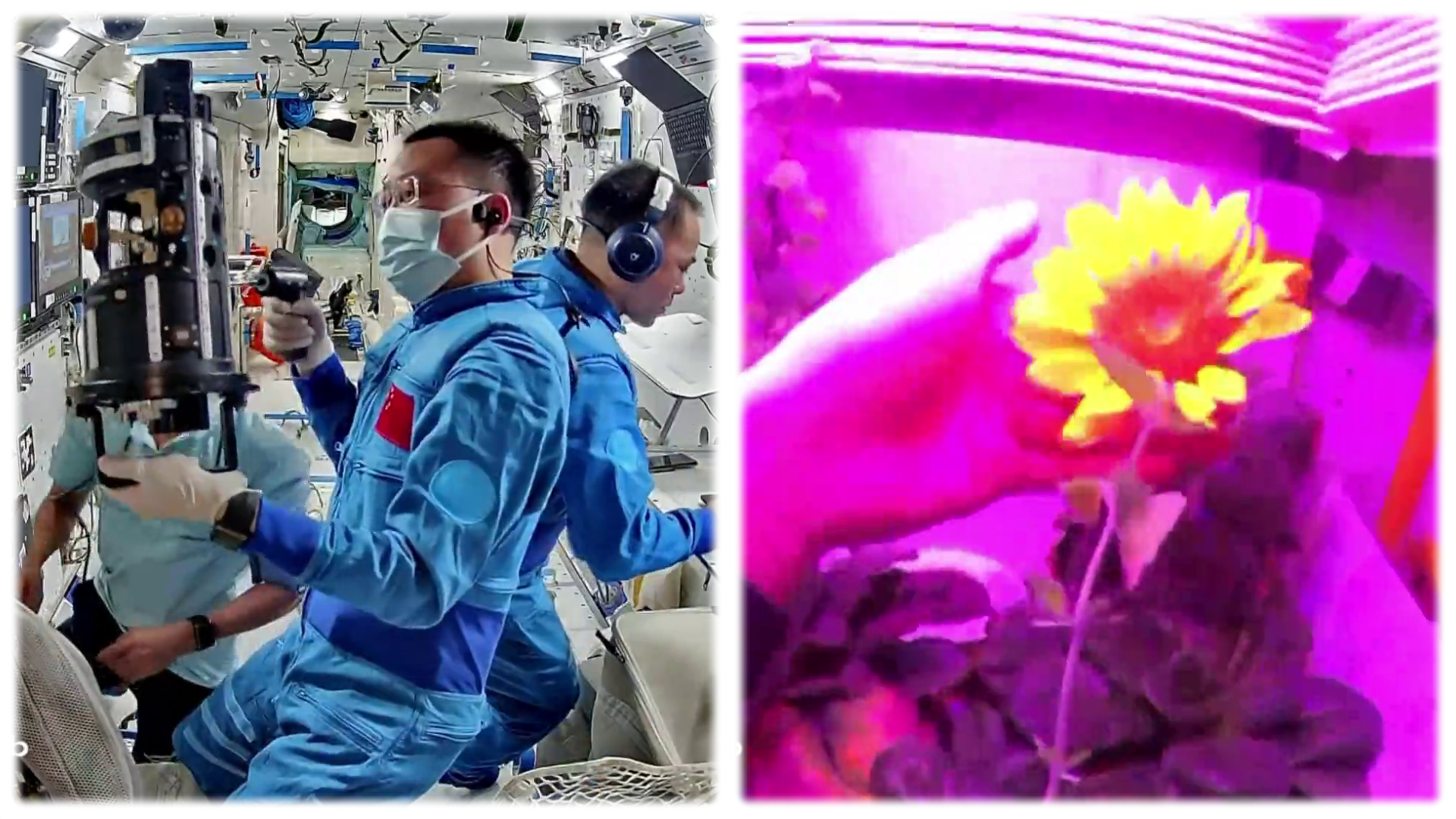
Tiangong TV Episode February 1st 2026 originally from the China Manned Space Agency, cloned to YouTube for archival.

Zhang Lu is the Commander and Pilot of the mission for his second spaceflight, having flown for the Shenzhou-15 mission between November 2022 and June 2023. He is from Hanshou County (汉寿县), Hunan (湖南) province, and was selected as part of China’s second taikonaut group in 2010, also being considered a ‘post-70s’ taikonaut having been born in November 1976.
Before becoming a taikonaut, Zhang served in the People’s Liberation Army Air Force and achieved the rank of Senior Colonel. He also joined the Communist Party of China in April 1999. After the Shenzhou-15 mission, Zhang was awarded the Spaceflight Merit Medal (Third Class) along with the honorary title of hero taikonaut.
Wu Fei is the Flight Engineer for this mission, which will be his first trip into space. He is from Baotou (包头市 / ᠪᠤᠭᠤᠲᠤᠬᠣᠲᠠ), in the Inner Mongolia Autonomous Region (内蒙古自治区 / ᠥᠪᠥᠷ ᠮᠣᠩᠭᠣᠯ ᠤᠨ ᠤᠨᠥᠪᠡᠷᠲᠡᠭᠨ ᠵᠠᠰᠠᠬᠤ ᠣᠷᠣᠨ), and was selected as part of the third taikonaut group in October 2020, while being considered a ‘post-90s’ taikonaut having been born in 1993.
Before his selection as a taikonaut, Wu was an engineer at the China Aerospace Science and Technology Corporation. He also joined the Communist Party of China in 2015.
Zhang Hongzhang is the Payload Expert for this mission, with it being his first trip to space. He is from Binzhou (滨州市), Shandong (山东) province, and was also selected as part of the third taikonaut group in October 2020, while being considered a ‘post-80s’ taikonaut having been born in 1986.
Prior to being selected as a taikonaut, Zhang was a researcher at the Dalian Institute of Chemical Physics, Chinese Academy of Sciences (中国科学院大连化学物理研究所), where he explored new materials and technology for batteries. He also joined the Communist Party of China in 2004.
Not a firearm. Details on the experiment rack are available here.