

Shenzhou-23 Crew Perform First Emergency Drill, Support Experiments
Tiangong TV: June 14th 2026.

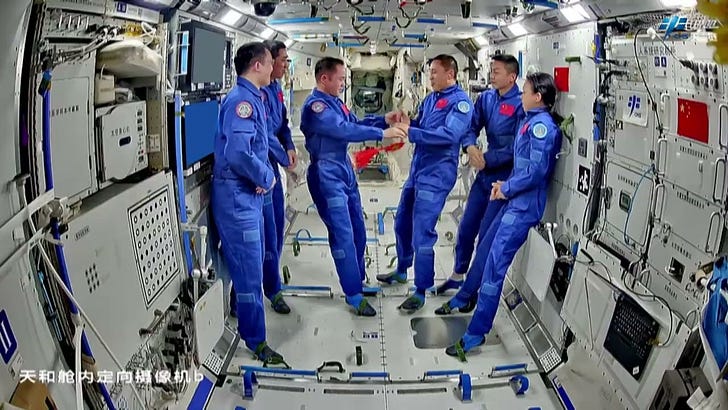
Shenzhou-23’s Zhu Yangzhu (朱杨柱)1, Li Jiaying (黎家盈)2, and Zhang Zhiyuan (张志远)3 have been aboard the Tiangong Space Station for three weeks now and have settled into their expected routine, after being handed responsibilities for the orbiting laboratory. In this week’s episode of ‘Tiangong TV’, the China Manned Space Agency detailed what the three taikonauts have been up to.
Attached below is a translated transcript of the newest episode:
Three weeks have passed since the Shenzhou-23 crew began working and living in orbit. How are they doing? What tasks did they complete last week? Let’s take a look.
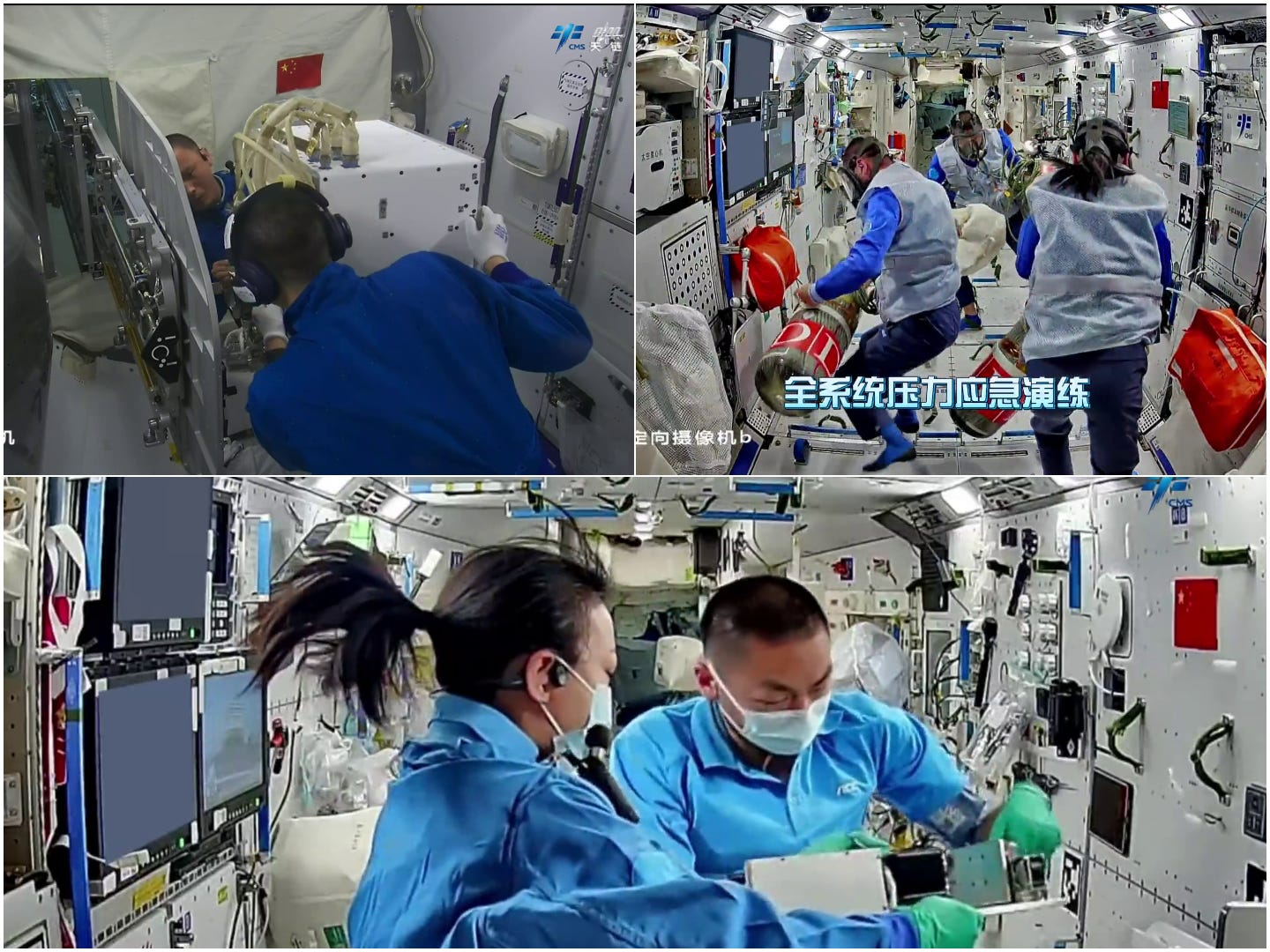
In the fields of space life sciences and human research, multiple experiments are progressing steadily. Last week, the crew conducted sample observation, retrieval, and preservation for a cell biology research project. Previously, China has sent various cell types, including cardiomyocytes, skin stem cells, and osteoblasts, as well as artificial blood vessel chips, into space for experimental research, achieving a series of innovative results in on-orbit experimental techniques, experimental models, and scientific research.
Using a scientific glove box, the crew completed the collection of samples for an experiment examining the effects of fat separation in space on tissue metabolism. This experiment aims to understand the molecular mechanisms by which microgravity affects stem cell tissue metabolism from the perspective of fat separation, providing potential targets for early intervention and prevention strategies for related adipose diseases during long-term space stays.
Last week, with the support and cooperation of ground personnel, the crew completed the fourth extravehicular cargo activity to install the space radiation biology exposure experiment apparatus. This space application system will conduct a five-month in-orbit exposure experiment using three different types of experimental samples: nanocarbon, actinomycetes, and plant seeds. The series of experiments will cover areas such as catalysts for the origin of life, adaptive evolution of microorganisms, and genetic variation in higher plants, systematically revealing the profound effects of space radiation on biological samples.
Additionally, the first emergency pressure drill following the Shenzhou-23 crew’s arrival at the space station was conducted as scheduled. The drill simulated the entire process of emergency response in the event of an internal pressure loss in the space station, consolidating and further enhancing the crew’s emergency response capabilities as well as their coordination with ground control.
As part of their duties maintaining the space station complex, the crew sorted supplies delivered by their spacecraft, conducted an inventory of emergency supplies, and cleaned the modules. In addition, the taikonauts monitored the acoustic environment inside the cabin using a noise meter and personal noise exposure monitors.
Regular medical checkups and moderate physical exercise help taikonauts maintain good health while in orbit. Last week, the taikonauts underwent a series of scheduled medical examinations, including cardiac and vascular ultrasounds and pulmonary function tests. They also used specialized equipment to combat bone loss and engaged in active exercise using devices such as a space treadmill.
Soon, the Shenzhou-23 crew will celebrate the Dragon Boat Festival (端午节)4 in orbit. How will they spend the holiday? Let’s look forward to it together!
If there are any problems with this translation please reach out and correct me.
Tiangong TV Episode June 14th 2026 produced by the China Manned Space Agency, cloned to YouTube for viewing on the Western internet and archival.
Commander of the mission for his second spaceflight, having flown as part of the Shenzhou-16 mission, for 153 days from May 30th 2023 to October 31st 2023. Born in September 1986, he is from Peixian (沛县), in Jiangsu (江苏) province, and was selected as part of China’s third taikonaut group in 2020.
Before becoming a taikonaut, he worked as an Associate Professor of aerospace engineering within the People’s Liberation Army, where he achieved the rank of Colonel. Since December 2006, Zhu Yangzhu has been a member of the Communist Party of China. He has been awarded the title of ‘Heroic Astronaut’ too.
Mission Specialist for the mission, she is flying for the first time following selection as a fourth batch taikonaut in 2024. Born in November 1982, she is from the Hong Kong (香港) Special Administrative Region.
Prior to being selected, she was a Chief Inspector of the Hong Kong Police Force, reaching the rank of Superintendent, and holds a PhD in computational and information science-related subjects.
Spacecraft Pilot of the mission, he is in space for the first time after being selected as part of the third group in 2020. Born in June 1986, he is from Gansu (甘肃) province.
Before being selected as a taikoanut as part of the third group, he served in the People’s Liberation Army Air Force as a pilot, where he achieved the rank of Colonel. He has been a member of the Communist Party of China since 2011.
Occurring on June 19th this year.