

Space Pioneer's Tianlong-3 Fails During Maiden Flight From Jiuquan [Tianlong-3 Y1]
The massive 71-meter-tall launch vehicle attempted to fly into orbit for the first time, but issues in the first minutes of the mission prevented that.

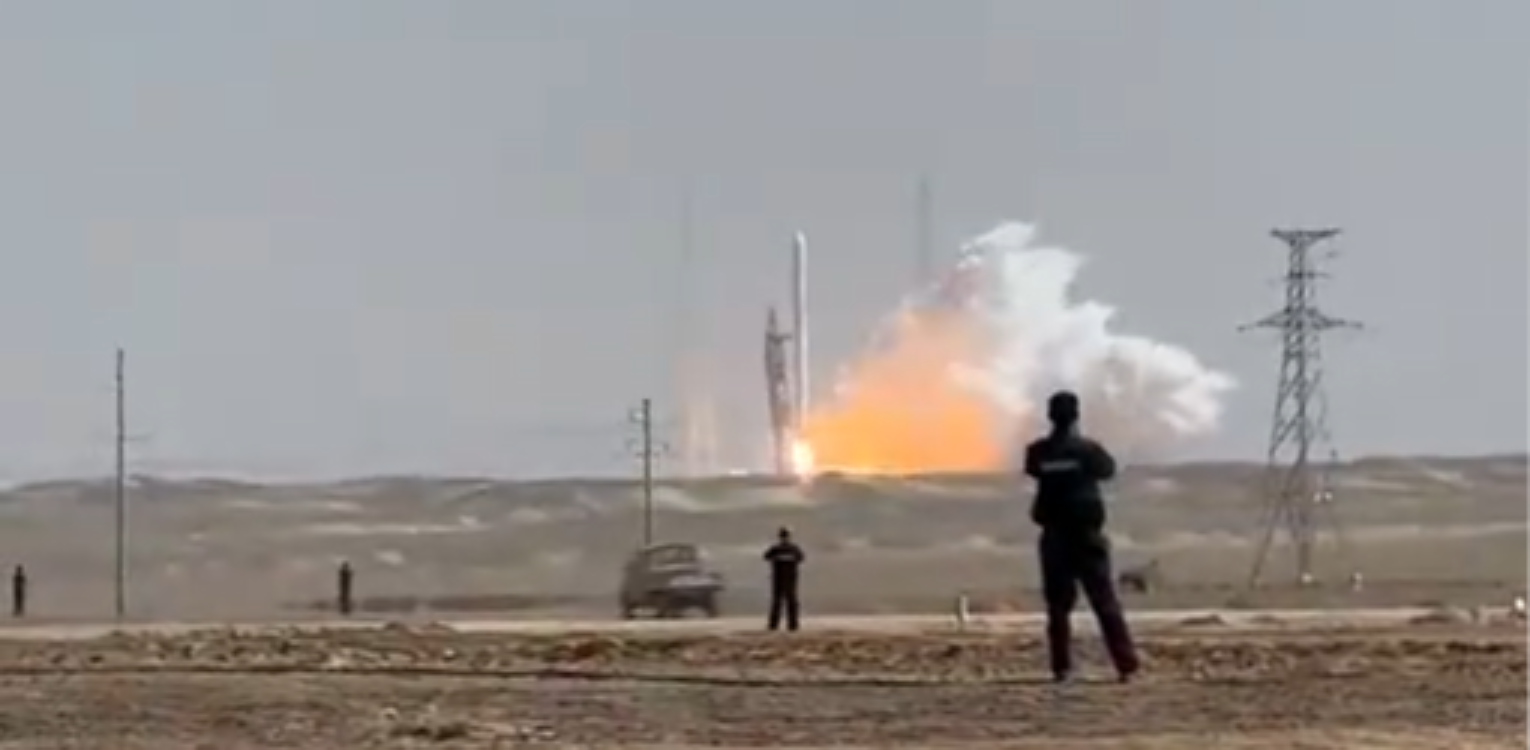
Space Pioneer’s Tianlong-3 launch vehicle, flying in an expendable configuration, lifted off for the first time at 12:17 pm China Standard Time (04:17 am Universal Coordinated Time) on April 3rd from a company-owned launch pad at the Jiuquan Satellite Launch Center, attempting to fly towards sun-synchronous orbit.
For liftoff, Tianlong-3 ascended under the power of its nine TH-12 engines on the first-stage, with those engines sustaining flight for at most two minutes. One engine was observed to have momentarily overexpanded its thrust (exploded the nozzle), but with nine engines total, the vehicle has engine-out capability, so long as damage to other systems is not caused.
However, either late into first-stage flight or around second-stage startup, powered by a single vacuum-optimized TH-12, the launch vehicle diverged from its expected flight state. That resulted in the launch ending prematurely and failing to deliver the payloads onboard into their desired orbit.

As for what payload was atop of Tianlong-3, that was not shared by Space Pioneer1. Several hours after launch, Xiamen Tianwei Technology (厦门天卫科技) stated that they had a onboard with its TW-4 (‘TW-4’卫星) precise remote sensing satellite, made in collaboration with the Xi’an University of Posts and Telecommunications (西安邮电大学).
Ahead of the launch vehicle’s debut flight, the first-stage was fired up on a floating platform near Haiyang (海阳市), in Shandong (山东) province, in September 2025 for about thirty seconds. That firing reperformed June 2024’s not-very-static static fire. In the lead-up to flight, the second-stage was meant to be tested at the same location, but did not to allow for first-stage testing.
Regarding a return to flight mission for Tianlong-3’s second launch, in late January reporters claim to have been shown a second near-complete vehicle. Pending an extensive investigation into that hardware and data collected today, Space Pioneer will likely implement fixes to various systems. Following June 2024’s events, over one hundred and twenty improvements were made to the vehicle.
Coincidentally, Tianlong-3’s first flight came three years to the day after Tianlong-2’s, on April 3rd 2023. So far, Tianlong-2 has flown and delivered payloads to orbit once, and, humorously, mostly utilized externally sourced engines.
Today’s launch was the 1st mission for Tianlong-3, and the 2nd for Space Pioneer’s Tianlong series. This was also the 19th launch attempt from China in 2026.
Check out Tianlong-3’s last pre-flight test
Tianlong-3 Successfully Performs Static Fire

Earlier today, September 15th, Space Pioneer successfully performed a static fire of Tianlong-3’s first-stage booster on a floating platform near Haiyang (海阳市), in Shandong (山东) province.
What is Tianlong-3?
This section is for those less familiar with China’s various commercial launch vehicles.
Space Pioneer’s Tianlong-3 is a partially reusable two-stage launch vehicle. The vehicle burns rocket-grade kerosene and liquid oxygen in both of its stages. Tianlong-3 currently launches from the Jiuquan Satellite Launch Center, with plans to bring it to the Wenchang Commercial Space Launch Site.
Space Pioneer claims that Tianlong-3 will is able to deliver:
22,000 kilograms to low Earth orbit when expended.
17,000 kilograms to low Earth orbit with first-stage reuse.
17,000 kilograms to sun-synchronous orbit when expended.
14,000 kilograms to sun-synchronus orbit with first-stage reuse
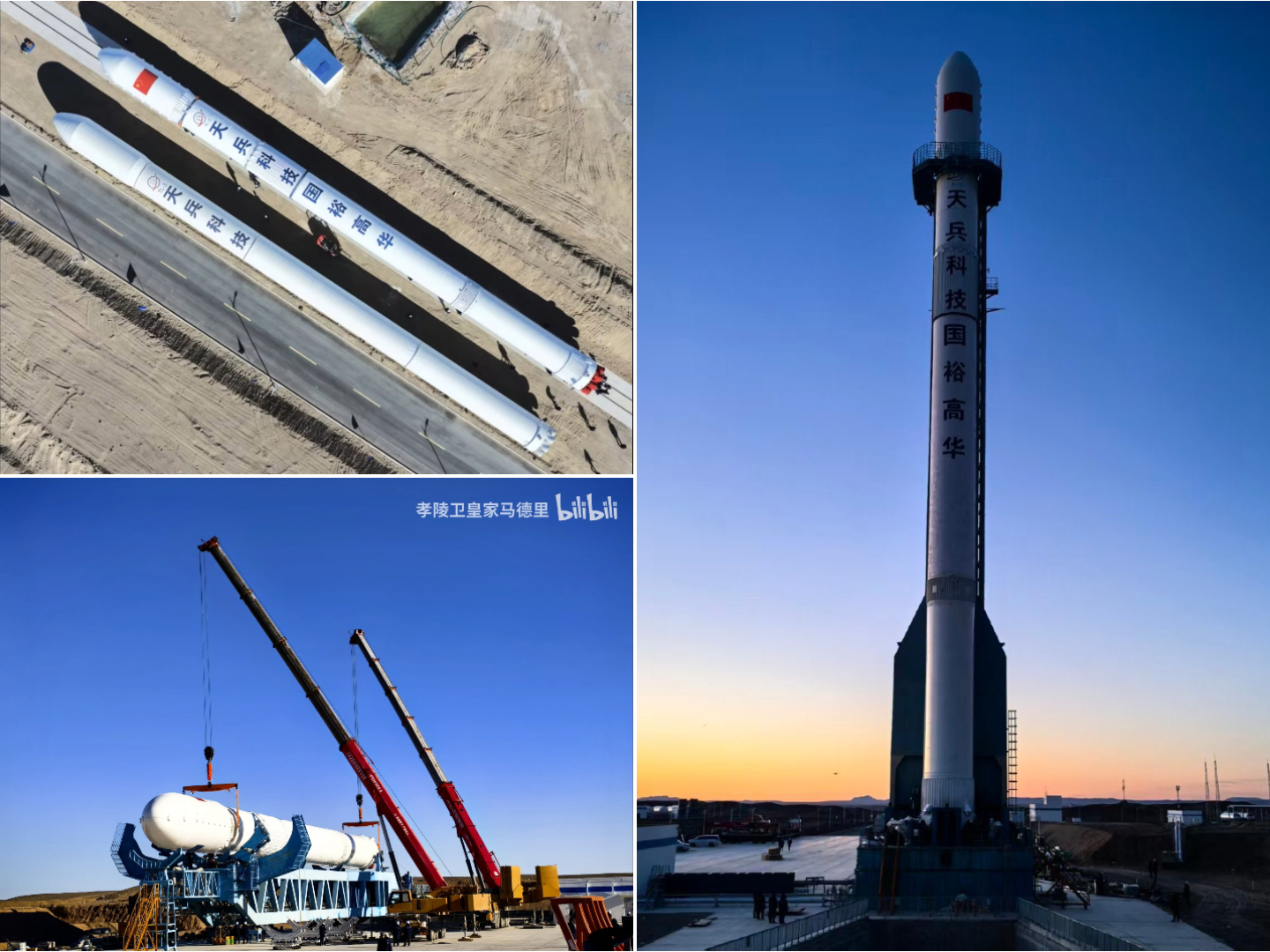
The first-stage of Tianlong-3 is powered by nine TH-12 engines generating a combined thrust of 820 tons while burning rocket-grade kerosene and liquid oxygen. Tianlong-3’s first-stage is currently planned to be reused ten times. The second-stage is powered by a single vacuum-optimized TH-12 engine generating a believed 137 tons of thurst burning rocket-grade kerosene and liquid oxygen.
For reuse of the first-stage, the booster lands vertically on a landing pad or drone ship by relighting between one and three of its engines. Unpowered descent of the first-stage will be guided by four grid fins near the top of the stage.
Tianlong-3’s first and second stages have a diameter of 3.8 meters. The fairing for the launch vehicle is currently planned with a diameter of 4.2 meters and a length of 12 meters. On the launch pad, Tianlong-3 is 71 meters tall and weigh 590,000 kilograms when fully fuelled.


They are also yet to acknowledge a launch attempt today.