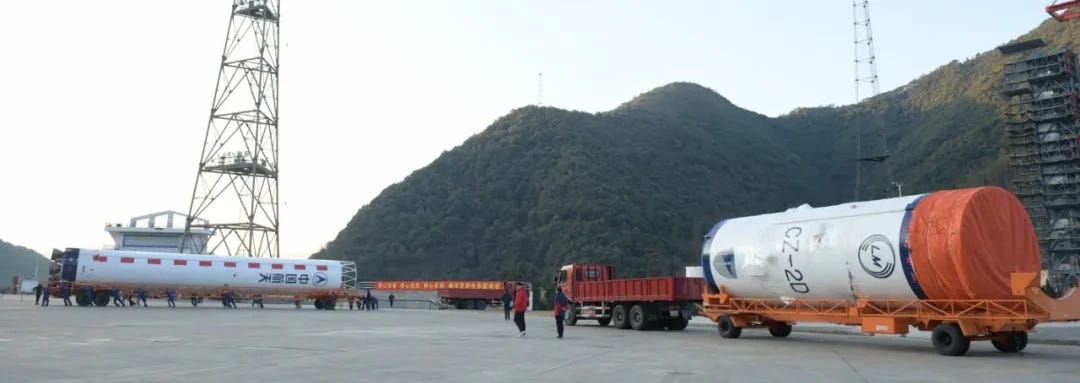
Two Experimental Earth Observation Satellites Delivered From Xichang [Long March 2D Y95]
Shiyan-30 had its second pair of satellites placed into low Earth orbit, with a briefer task description than last time.

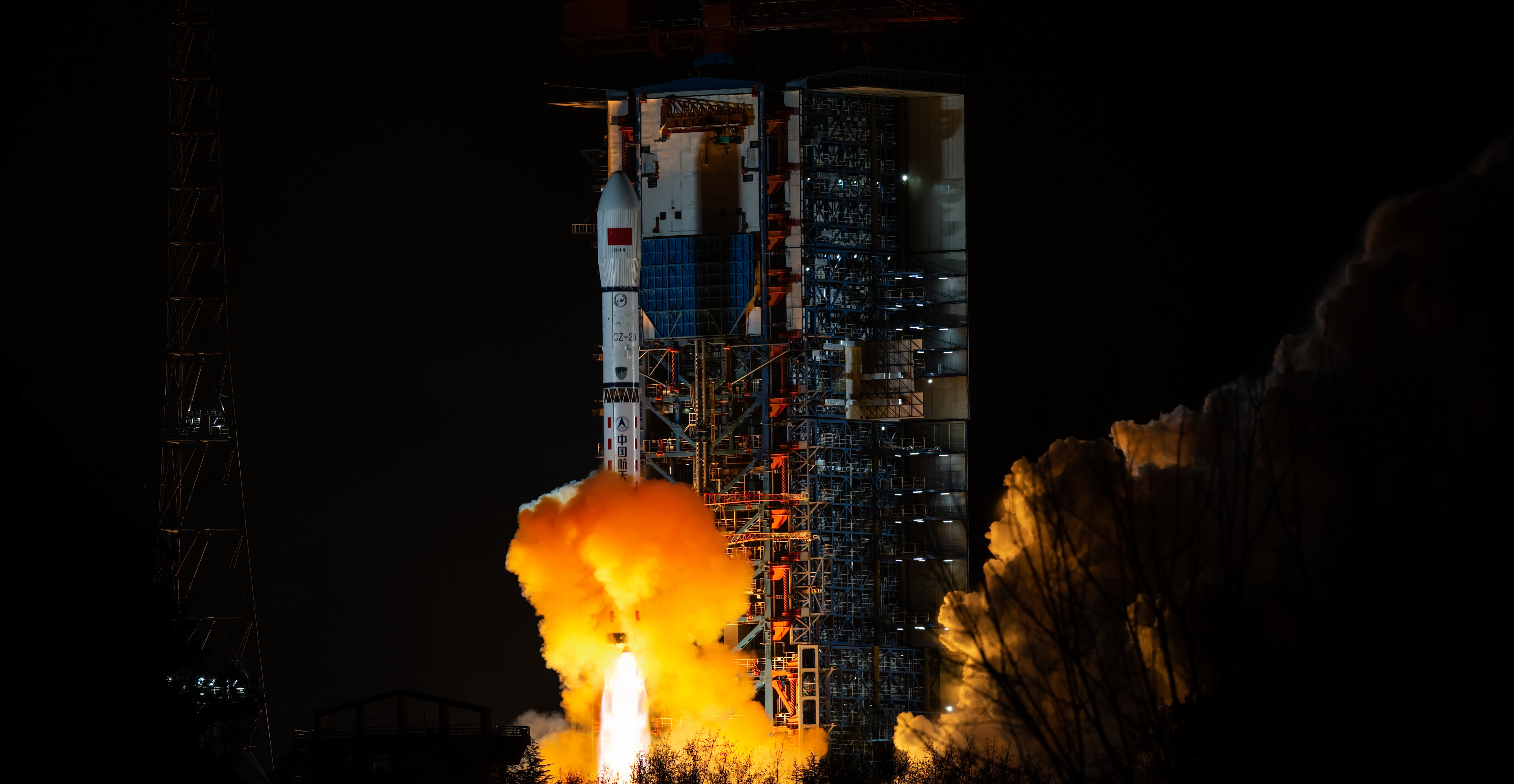
From a pre-dawn Xichang Satellite Launch Center, a Long March 2D blasted off from Launch Complex 3 at 06:33 am China Standard Time on March 13th (22:33 pm Universal Coordinated Time on March 12th) and flew into low Earth orbit, delivering a pair of satellites.
The two satellites being delivered were Shiyan-30-03 and Shiyan-30-04 (试验三十号卫星03, 04), developed by the Shanghai Academy of Spaceflight Technology, following on from the first two in late September 2025. This second pair is reportedly for Earth observation technology testing and verification, while the first pair was said to be for agricultural monitoring, land surveying, environmental protection monitoring, city planning, and maritime security.
The Shiyan (试验) satellite designation is used for technology development spacecraft, and the name literally translates to test or experiment. Shijian (实践), meaning practice, is a similar designation for more mature technology tests.
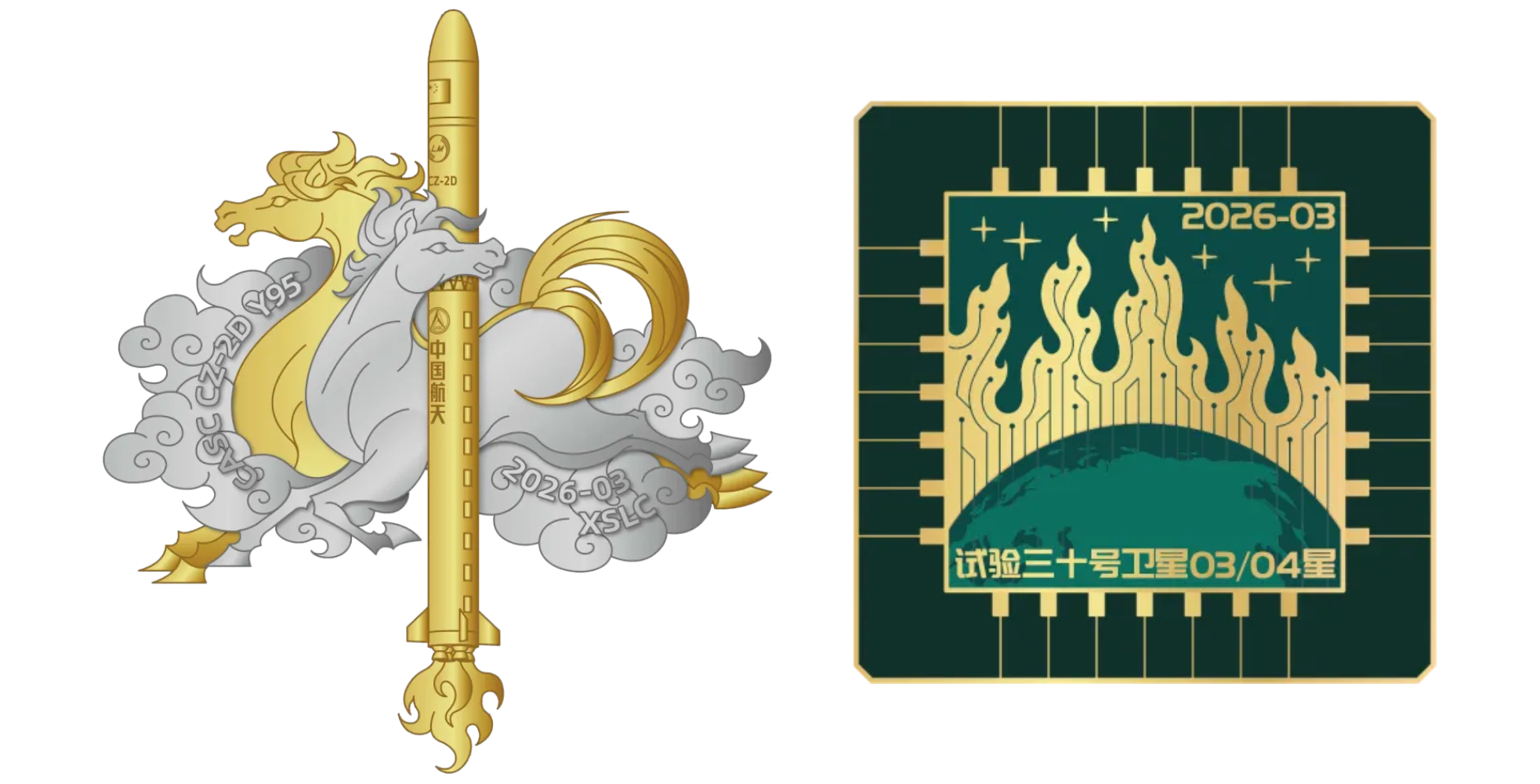
This launch of the Long March 2D was its first this year, having been delayed by a prolonged month-long launch pause while following under three hours behind a Long March 8A on the same day. The Shanghai Academy of Spaceflight Technology spoke of the delays to this mission in its post-mission blog post, writing:
“Spanning the Spring Festival holiday, the project team developed a scientific plan for rocket storage during the holiday and ensured robust logistical support throughout the festive season.”
Despite the delay, when the launch campaign did go ahead, it took place on an improved schedule, with the Shanghai Academy adding:
“[To] enhance the reliability of high-density rocket launches, the project team rigorously implemented all management requirements. By optimizing launch site testing procedures and refining pre-launch inspection items, they improved the comprehensiveness of launch site testing and inspection, thereby precisely controlling the technical status of the product.”
If there are any problems with this translation please reach out and correct me.
Today’s launch was the 102nd mission for the Long March 2D, the 259th Long March vehicle launch from the Shanghai Academy of Spaceflight Technology, and the 632nd launch of the Long March launch vehicle series. This was also the 12th launch from China in 2026.
Liftoff video via 上海航天 on WeChat.
Check out the previous Long March 2D launch
Optical Imaging Test Satellite Launched From Jiuquan [Long March 2D Y92]
![Optical Imaging Test Satellite Launched From Jiuquan [Long March 2D Y92]](https://substackcdn.com/image/fetch/$s_!0Lpt!,w_1300,h_650,c_fill,f_webp,q_auto:good,fl_progressive:steep,g_auto/https%3A%2F%2Fsubstack-post-media.s3.amazonaws.com%2Fpublic%2Fimages%2Fdbfdb569-a1e7-41be-8cae-b92b5cfa8409_2160x1196.webp)
From Launch Area 4 at the Jiuquan Satellite Launch Center, a Long March 2D lifted off at 18:00 pm China Standard Time (10:00 am Universal Coordinated Time) on October 13th, carrying a single satellite into a polar orbit.
What is the Long March 2D?
This section is for those less familiar with China’s Long March series of launch vehicles.
The Long March 2D is also one of the oldest launch vehicles from China, performing missions regularly to low Earth and sun-synchronous orbits by the Shanghai Academy of Spaceflight Technology, as a two-stage version of the Long March 4 vehicles. The two stages of the launch vehicle both burn Dinitrogen Tetroxide and Unsymmetrical Dimethylhydrazine.
The payload capacity of the launch vehicle is currently as follows:
3,500 kilograms to low Earth orbit
1,300 kilograms to a sun-synchronous orbit
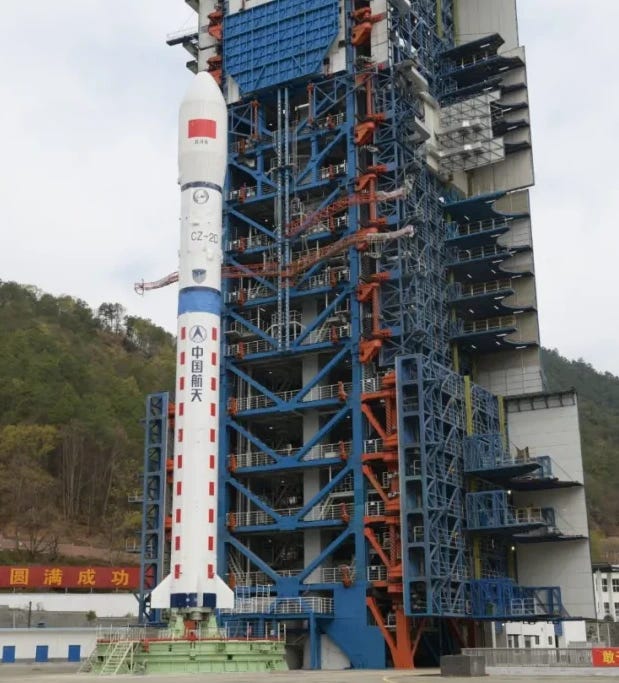
The first-stage is powered by four YF-21C engines, which generate 302 tons of thrust burning Dinitrogen Tetroxide and Unsymmetrical Dimethylhydrazine. The second-stage is powered by a single YF-22C engine and four YF-23C verniers that generate 80 tons of thrust while also burning Dinitrogen Tetroxide and Unsymmetrical Dimethylhydrazine.
On the launch pad, the Long March 2D is 41.05 meters tall and weighs 232,250 kilograms when fully fuelled. The first and second stages have a diameter of 3.35 meters, with the fairing having a diameter of either 3.35, 3.8, or approximately 4 meters.
So far, the Long March 2D has flown from all three inland launch sites, the Jiuquan Satellite Launch Center, the Taiyuan Satellite Launch Center, and the Xichang Satellite Launch Center.