

Vague Shijian Mission Launched out of Wenchang [Long March 7A Y10]
New technologies will have their best operational practices determined above low Earth orbit.

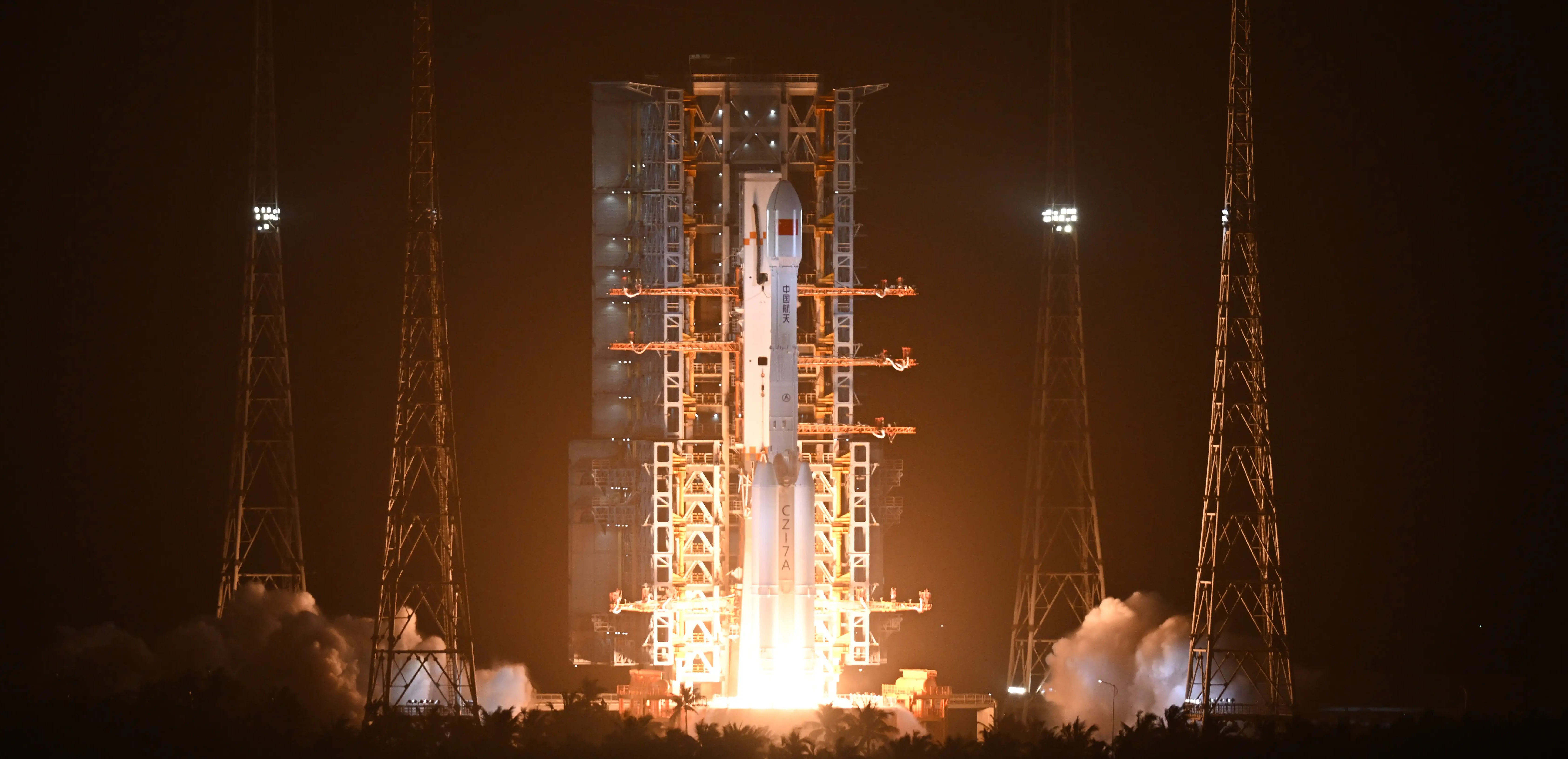
A Long March 7A blasted off at 20:20 pm China Standard Time (12:20 pm Universal Coordinated Time) on November 30th from Launch Complex 201 at the Wenchang Space Launch Site heading for a geosynchronous transfer orbit. A single satellite was onboard for the launch.
That satellite is Shijian-28 (实践二十八号), which has no task reported by its manufacturer, the China Academy of Space Technology, or Chinese media. That is an oddity, as previous Shijian missions have publicly announced operational plans, for example, the Shijian-30 trio for space environment monitoring. Newly verified technology systems, proven via Shiyan missions, may be onboard as the manufacturer noted risk identification methods of ‘Ten New Developments (十新)’ with ‘Four Checks, Three Comparisons, Dual Reflections (四查三比双想)’.
Shijian (实践) designated spacecraft are flown to figure out best operational practices for new technologies, with the name literally translating to Practice in English. Shiyan (实验) is a similar satellite designation used for technology development spacecraft, and the name literally translates to Experiment.
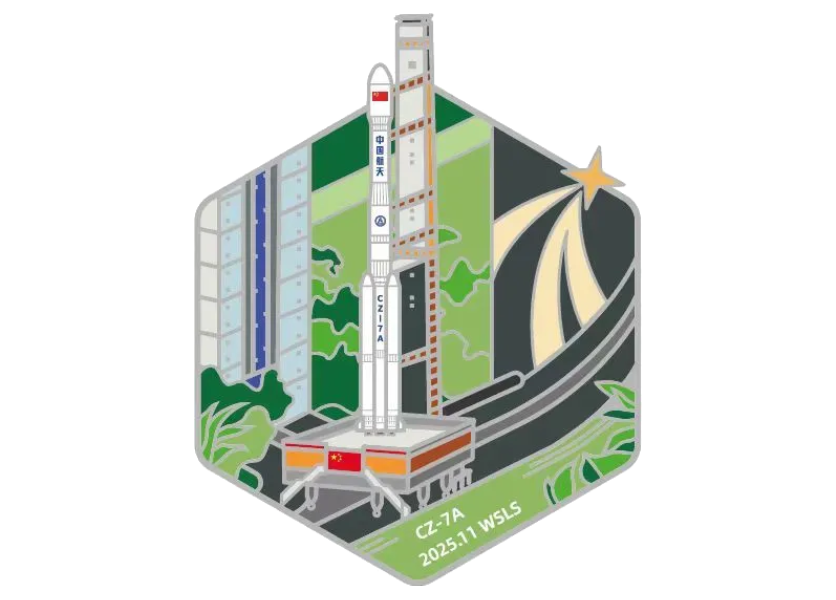
In their post-launch blog post, the China Academy of Launch Vehicle Technology shared that the preparation process has been shortened from thirty-five to nineteen days, with this launch coming twenty-seven days after the last. The shortened time between preparations and launch has been enabled by a new mobile launch platform constructed and commissioned throughout the year.
Mention was made of this being the Long March 7A’s fifth flight of the year, with missions in March, May, September, and earlier in November, along with a single launch for the Long March 7. Flights with the vehicle are expected to increase thanks to the new vehicle assembly building set to be in use in the near future and the mobile launch platform.
Today’s mission was the 13th launch of a Long March 7A vehicle, the 23rd launch of the Long March 7 series, and the 611th launch of the Long March launch vehicle series. This was also the 77th launch from China in 2025.
Liftoff video via ThatSpaceDogeGuy on YouTube, as well as 航天面面观 and China航天 on Weibo.
Livestream replay via ThatSpaceDogeGuy and International Rocket Launches on YouTube.
Check out the previous Long March 7A launch
Third Beyond Low Earth Orbit Yaogan Satellite Launched [Long March 7A Y13]
![Third Beyond Low Earth Orbit Yaogan Satellite Launched [Long March 7A Y13]](https://substackcdn.com/image/fetch/$s_!SwhX!,w_1300,h_650,c_fill,f_webp,q_auto:good,fl_progressive:steep,g_auto/https%3A%2F%2Fsubstack-post-media.s3.amazonaws.com%2Fpublic%2Fimages%2F7686e85f-43c2-49a0-bf31-3f0237c8aa0b_6784x3506.jpeg)
On November 3rd at 11:47 am China Standard Time (03:47 am Universal Coordinated Time), a Long March 7A blasted off from Launch Complex 201 at the Wenchang Space Launch Site, carrying a single spacecraft toward medium Earth orbit.
What is the Long March 7A?
This section is for those less familiar with China’s Long March series of launch vehicles.
The Long March 7A is the new-generation workhorse for beyond low Earth orbit missions, and was developed by the China Academy of Launch Vehicle Technology. This vehicle utilizes a three-and-a-half-stage design and is fuelled by rocket-grade kerosene and liquid oxygen in its boosters, first, and second stages long with liquid hydrogen and liquid oxygen in the third-stage.
The payload capacity of the launch vehicle is currently as follows:
8,000+ kilograms to a medium Earth transfer orbit
7,000 kilograms to geostationary transfer orbit
5,500 kilograms to a 700-kilometer sun-synchronous orbit
5,000 kilograms to a trans-lunar trajectory
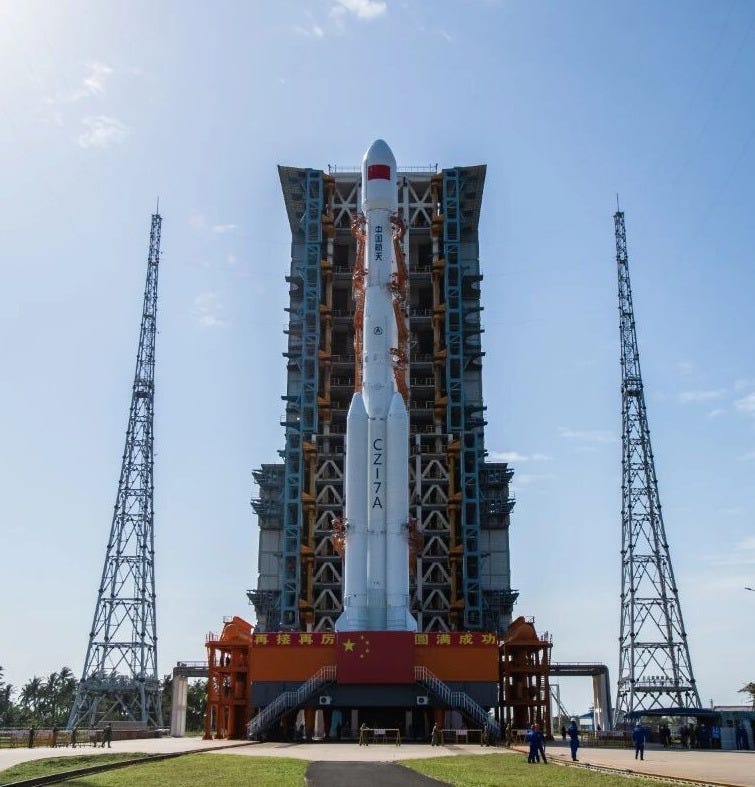
The Long March 7A’s first stage is equipped with two YF-100 engines that produce 245 tons of thrust using rocket-grade kerosene and liquid oxygen, complemented by four boosters, each with a YF-100 engine generating 122 tons of thrust, resulting in a combined thrust of approximately 733 tons. The second stage is powered by four YF-115 engines, which together generate 72 tons of thrust using the same fuel combination. The third stage of the Long March 7A features two YF-75 engines, providing 17 tons of thrust by burning liquid hydrogen and liquid oxygen.
On the launchpad, the Long March 7A stands at 60.13 meters tall and weighs 573,000 kilograms when fully fuelled. The first and second-stage have a diameter of 3.35 meters, the four boosters are 2.25 meters in diameter, and the third-stage has a diameter of 3 meters, while the fairing has a diameter of 4.2 meters.
So far the Long March 7A has only flown from the Wenchang Space Launch Site, on the east coast of Hainan province.