

Wang Xiji, Chief Designer of China's First Launch Vehicle, Passes Away at 105
His work spanned from the Long March 1, recoverable satellites, the human spaceflight program, and future orbital infrastructures.

Wang Xiji (王希季), a pioneer of many areas in China’s space programs, passed away on August 12th at the age of 105. His death has seen the publishing of several touching obituaries, including the one translated below from the China Aerospace Science and Technology Corporation, where he advised projects for many decades. The translation is unofficial and is intended to allow the international space community to reflect on his incredible life in service of space exploration.
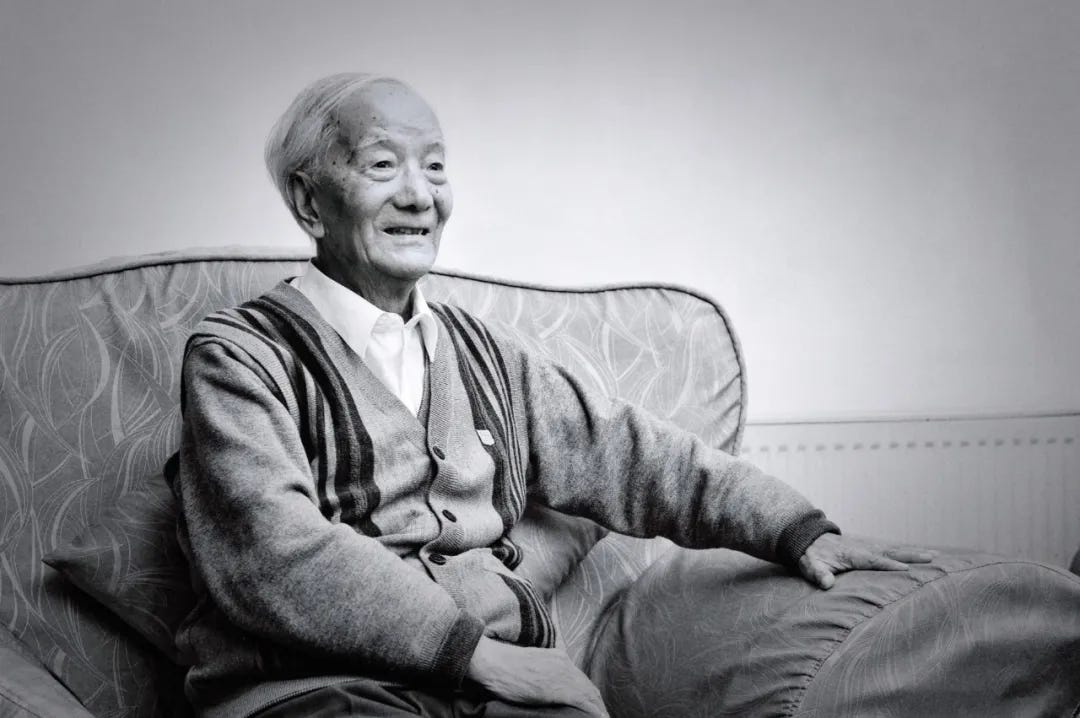
Comrade Wang Xiji, an outstanding member of the Communist Party of China, one of the pioneers of China’s space program, a renowned space technology expert, an academician of the Chinese Academy of Sciences, recipient of the national ‘Two Bombs, One Satellite’ Merit Award and former advisor to the Science and Technology Committee of the China Aerospace Science and Technology Corporation, passed away in Beijing (北京) on August 12th 2026, at the age of 105.
Eighteen days ago, Wang Xiji had just celebrated his 105th birthday. Two years ago, he made two requests to the Party Committee of the China Aerospace Science and Technology Corporation: he hoped to wear a space program uniform with the Five-Star Red Flag pinned to the chest; and he hoped to have a business card printed with only two titles: ‘Academician of the Chinese Academy of Sciences’ and ‘Chief Designer of Satellites’. This business card is much shorter than his entire life’s resume.
He served as the technical lead for China’s first sounding rocket, the chief designer of the overall concept for China’s first satellite launch vehicle, and the chief designer of China’s first recoverable satellite. He was also a key participant in the early feasibility studies for China’s human spaceflight program. People often summarize his career through a series of firsts. These milestones mark the starting points of various stages in China’s space endeavors: how to get a rocket airborne, how to launch a satellite into orbit and bring it back intact, and where China’s human spaceflight program should begin.
Wang Xiji was born in Kunming (昆明), Yunnan (云南) province; his ancestral home is in Dali (大理), and he is of the Bai (白族) ethnic group. The beauty of Cangshan Mountain (苍山) and Erhai Lake (洱海), coupled with the poverty of his hometown, inspired the young Wang to vow to return to Yunnan to build a large-scale power plant. Later, the needs of the nation led him to rockets and satellites, and from that point on, he never left China’s space program.
In 1999, Wang Xiji was awarded the ‘Two Bombs, One Satellite’ Merit Award. Faced with a flurry of interview requests, he remarked: "There is nothing about me personally worth publicizing, but the spirit of the 'Two Bombs, One Satellite' program is incredibly valuable, both for the nation and for the younger generation."
A Career Never Imagined, a Lifelong Bond That Could Not Be Severed
In November 1958, Wang Xiji, who was teaching at Shanghai Jiao Tong University (上海交通大学), received notice to report for duty at the Shanghai Institute of Mechanical & Electrical Engineering Design (上海机电设计院).
At the time, he was on the verge of being promoted to professor, and the university had planned to send him to the German Democratic Republic1 for two years to lecture. Just one month earlier, Wang Xiji had joined the Communist Party of China. He complied with the organization’s arrangements and arrived only to discover that the work awaiting him was the development of launch vehicles and the launch of artificial satellites.
That year, he was 37 years old. This wasn’t the first time Wang Xiji had changed course at a crossroads in his life.
In 1949, while studying at Virginia Tech in the United States, he saw two photographs from China in The New York Times: one showed members of the People’s Liberation Army sleeping rough on the streets of Shanghai (上海) so as not to disturb the local residents, and the other captured scenes from the founding ceremony of the People’s Republic of China.
Wang Xiji grew up amidst the chaos of warlord conflicts and the War of Resistance Against Japanese Aggression2, witnessing firsthand the devastation of a fractured nation where soldiers and bandits were often indistinguishable. Upon seeing such an army and this newly founded nation, he could not hold back tears of emotion.
He had originally planned to continue his studies toward a doctoral degree. He had gone to the United States to study power engineering and fuels specifically to acquire the skills needed to build large-scale power plants, with the goal of returning to Yunnan to transform the power-deprived conditions in his hometown. After the founding of the People’s Republic of China, he was unwilling to wait any longer: since he already possessed the knowledge and ability to construct large-scale power plants, he felt he should return to China as soon as possible.
In March 1950, Wang Xiji boarded the ocean liner President Cleveland. Dozens of Chinese students gathered on the deck, discussing their plans for life back home. Hua Luogeng (华罗庚)3, who was traveling on the same ship, wrote An Open Letter to All Chinese Students in the United States as the voyage neared its end: “Though this place is lovely, it is not a home for a long stay. Return home, my friends!”
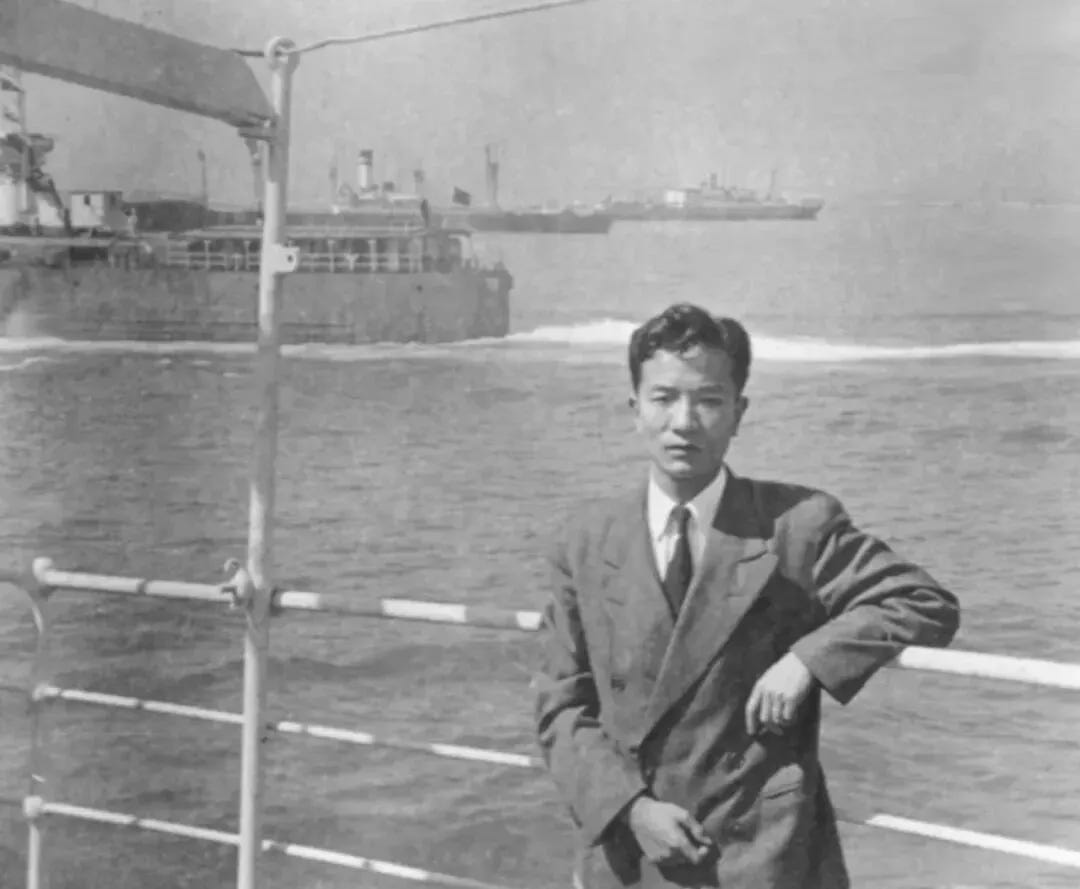
After returning to China, Wang Xiji taught at Dalian University of Technology (大连理工大学) and then Shanghai Jiao Tong University. Although his dream of building a large power plant had not been realized, he brought the knowledge he had gained abroad into the classroom, teaching power engineering, compiling textbooks, and mentoring students. Over the course of eight years, he had advanced from a returning overseas student to an associate professor, and he could well have continued along that familiar career path.
That 1958 notice once again changed the course of his life. Returning to China had been his own choice, but this time, the organization entrusted him with a new mission: to develop rockets and work in the space industry. Faced with a field that was completely unfamiliar to him, he started from scratch once again.
In 1960, he was officially transferred, thus embarking on the space career to which he would dedicate his entire life. "Joining the space workforce and pursuing a career in the field was something I had never imagined”, Wang Xiji recalled years later. "Yet, the space industry has fulfilled me, allowed me to achieve certain successes, and made it an unbreakable bond that has lasted my entire life."
Since then, he never left China’s space program. He began by developing launch vehicles before shifting his focus to overall spacecraft systems; his journey took him into new domains spanning everything from recoverable satellites to human spaceflight, and from the development of specific models to the long-term advancement of China’s space technology. His original area of expertise and the work he had grown accustomed to all changed in accordance with national missions. Space exploration, something he had never imagined, thus became the career he would devote his entire life to.
First, Getting a Rocket to Fly
Wang Xiji’s first assignment was to develop the launch vehicle needed to send satellites into space. While the goal lay in space, the groundwork was virtually nonexistent. Launching a satellite requires the coordinated operation of systems such as rockets, launch sites, and ground tracking and control networks, yet the industrial and technological infrastructure at the time was extremely weak. The vast majority of the technical staff at the design institute were in their twenties, many had just graduated and had never even seen a real rocket or satellite.
Initially, the development team set their sights very high. The T-3 rocket, intended for satellite launches, was to use a liquid fluorine propellant that was still in the laboratory research phase in China at the time. Since factories were unable to produce or supply it, the project stalled at the design stage. The subsequently designed T-5 rocket was fully manufactured and assembled, yet the lack of a cryogenic propellant test stand and facilities for liquid oxygen storage and fueling prevented engine testing, ultimately relegating the rocket to the status of a mere exhibit.
After these two setbacks, Wang Xiji compiled a detailed list of the launch vehicle, launch site, tracking and control network, and supporting facilities required for satellite launch, and reassessed the conditions actually available at the time. He gradually came to realize that while rockets could be designed and built, they also had to be tested and launched. Without an industrial foundation, setting goals as high as possible based solely on enthusiasm would not be enough to actually get them into space.
Wang Xiji and Yang Nansheng (杨南生)4, then Deputy Director of the Shanghai Institute of Mechanical & Electrical Engineering Design, proposed to the government that, based on China’s national conditions, they should proceed from small to large, using uncontrolled sounding rockets, which presented lower technical challenges, as a breakthrough point. Through actual engineering projects, they would learn the necessary skills, master the technology, and build a capable team.
Consequently, before formally developing the T-7 sounding rocket, the team decided to first build a sub-scale model known as the T-7M. Although it was designed to reach an altitude of only eight to ten kilometers, it incorporated all the essential components, including a liquid-fuel engine, in-flight ignition, nose separation, and parachute recovery. For a team with no experience in rocket engineering, this small rocket presented no shortage of challenges to overcome.
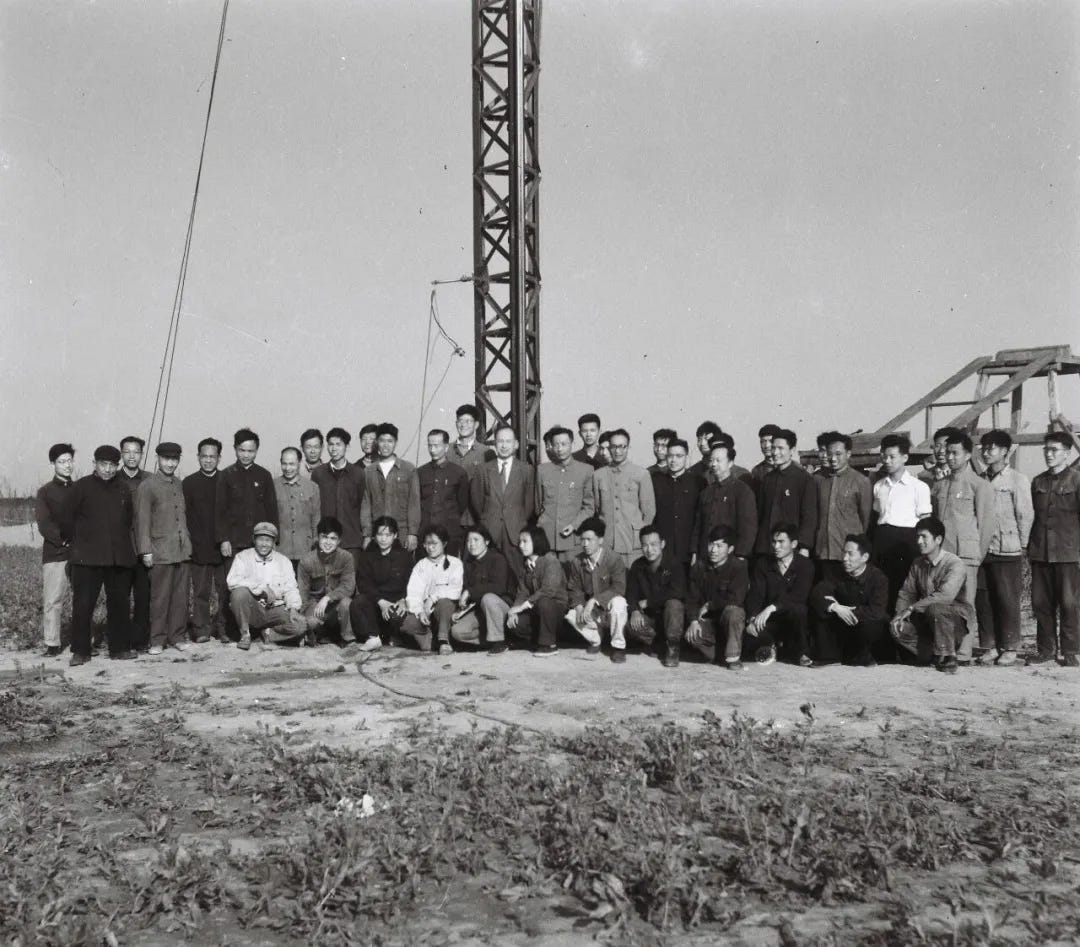
This led to the almost unbelievably resourceful solutions that followed. Decommissioned restrooms were converted into test chambers, and abandoned bunkers were turned into engine test stands. The launch site was chosen on a barren stretch of land in Nanhui (南汇), Shanghai, with the command post housed in a thatched hut beside a field ridge, and communication relying on shouting and hand signals. A small table clock was modified into a timer for nose separation, while a manual pump was used to pressurize the propellant tanks.
At 16:47 on February 19th 1960, the T-7M soared into the sky along a 20-meter-high launch rail, reaching an altitude between four and five kilometers. Wang Xiji and Yang Nansheng rushed out of the command post to join the young team members in celebration. Years later, Wang Xiji would still regard this achievement as the ‘first and most important success’ of his space career.
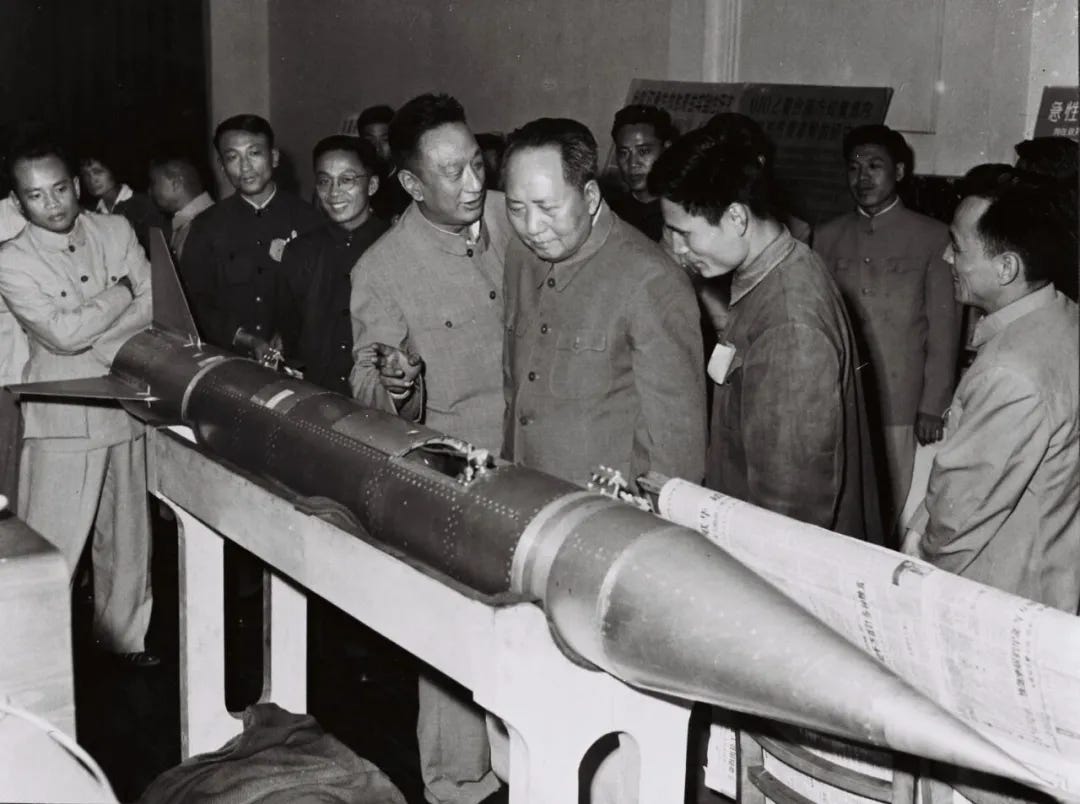
On the evening of May 28th 1960, Chairman Mao Zedong (毛泽东) visited the T-7M sounding rocket on display at an exhibition of new technologies in Shanghai. Upon hearing that the rocket could fly eight kilometers, he remarked, ‘Eight kilometers—that’s truly remarkable!’ He then encouraged the team, saying, “We should aim to increase the range to eight kilometers, twenty kilometers, and two hundred kilometers!”
Less than four months later, the T-7 reached an altitude of 60 kilometers, and the subsequently developed T-7A flew beyond 100 kilometers. They were used to study upper-atmosphere meteorology and the ionosphere, test satellite instruments, and validate the high-altitude ignition of the Long March 1 upper-stage. They also carried rats, mice, and small dogs, named ‘Xiaobao (小豹)’ and ‘Shanshan (珊珊)’, to high altitudes, bringing them back safely via parachute.
After the first artificial satellite project was relaunched, Wang Xiji combined existing missile technology with the experience gained from sounding rockets to propose the overall design for the Long March 1. Using a medium-range liquid-propellant missile5 for the first and second stages, and developing a solid-propellant rocket engine for the upper-stage, in a solution that balanced launch capacity, development costs, and mission schedule.
At that time, reliably igniting a solid-propellant rocket engine at high altitudes remained a major challenge. Wang Xiji once again turned to sounding rockets, presiding over the development of the T-7A Y5 high-altitude test rocket. This allowed for the verification of high-altitude ignition at a relatively low cost, providing the basis for the reliable operation of the Long March 1’s upper-stage.
On April 24th 1970, the Long March 1 launch vehicle carried the Dongfanghong-1 (东方红一号) satellite into space. The following day, the satellite passed over Beijing. To make it visible to observers on the ground, the development team had fitted the rocket's final stage with an observation skirt designed to reflect sunlight. Wang Xiji gazed at that bright spot streaking rapidly across the night sky, overcome with emotion and with tears welling up in his eyes.
Regarding Technical Issues, One Must Not Blindly Follow the Crowd
By the time the Dongfanghong-1 satellite was launched, Wang Xiji had already transitioned to the field of spacecraft systems engineering. His new task required the satellite not only to reach orbit but, crucially, to return safely to Earth. The overall design scheme for the recoverable satellite, which he spearheaded, made full use of the launch capabilities and industrial infrastructure available at the time while leaving room for the development of future models. This design was subsequently used for decades and became the foundation for the development of China’s series of recoverable satellites. For the recovery system alone, the team conducted fifty-eight airdrop tests.
In November 1975, three days after entering orbit, the first recoverable satellite returned as planned, but the reentry capsule could not be located in the designated recovery area. In Beijing, Wang Xiji repeatedly calculated possible landing sites, transmitting the data to the tracking and control center in real time. In the evening, news came from Guizhou (贵州) province, an ‘unidentified flying object’ had been discovered in a forest near a suspension bridge in Guanling (关岭). It was indeed the reentry capsule they had been searching for, and the remote sensing data inside was perfectly preserved. With this success, China became the third nation in the world to master satellite recovery technology.
Mastering this technology required a relentless commitment to verification and a refusal to overlook even the smallest issues. Wang Xiji held others to high standards but was even stricter with himself. On one occasion, after the recovery of a recoverable satellite, the developed Earth-observation film turned out to be completely blurred. Some suspected that the camera cover had not opened properly and proposed holding the installation crew accountable. Wang Xiji disagreed: "I am the chief designer; every step was taken with my approval. If something goes wrong, the responsibility is mine; please do not blame the staff working under me."
He immediately organized a team to analyze and verify every aspect of the mission. They ultimately discovered that the problem stemmed from a last-minute test added to the overall system, which had contaminated the camera's glass window. Faced with demands to write a self-criticism that contradicted the facts, he refused: “The cause of the problem does not lie with me. I should not have to write a self-criticism; we must seek truth from facts and respect science!” Authorities later adopted his recommendation, prohibiting the addition of last-minute tests that could compromise the satellite during launch missions. Such malfunctions never occurred again.
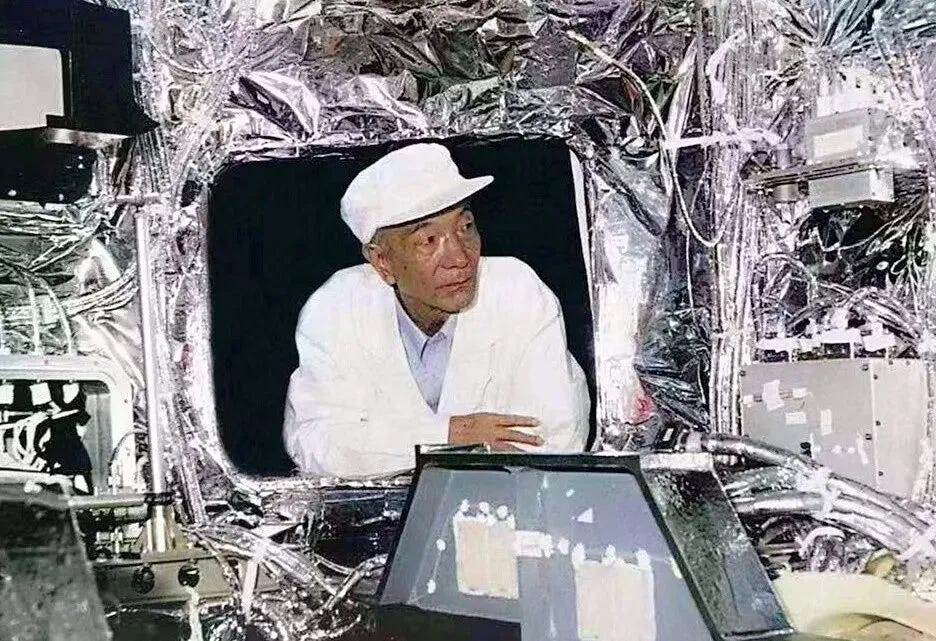
He was open to hearing differing opinions and would engage in heated, face-flushing debates when discussing plans. Yet, once a decision was reached after thorough deliberation, he insisted that everyone strictly implement it. One cadre evaluation form once described him as ‘sometimes rather stubborn, making it difficult for others to discuss work with him’.
Wang Xiji did not agree with this assessment. In the Comments on the Organization’s Evaluation section, he wrote bluntly: “I appreciate that the overall evaluation is higher than my self-assessment, but I do not believe the characterization of me as ‘stubborn’ is entirely appropriate. Sticking to one’s own opinions and views is not stubbornness, because what one upholds may well be correct.”
In the 1980s, as China was debating the development path for its human space program, many proposals favored following international trends by developing a space shuttle. Wang Xiji was one of the few experts who insisted on starting with a ‘simpler’ spacecraft. He studied the costs and operational history of the U.S. space shuttle and wrote that reusability is not always economical6, pointing out that reusability only becomes economically viable after a sufficient number of missions. Given China’s technological capabilities and financial resources at the time, rushing headlong into a space shuttle program could have entailed an unbearable cost.
To him, national funds, derived from the hard-earned money of the people, were precious, and not a single penny should be squandered. These analyses provided crucial guidance for China’s subsequent decision to adopt a development path that began with ‘simple’ spacecraft and aimed for a space station.
Wang Xiji’s insistence on getting things right was always rooted in the national interest. He often said, “Space exploration must adhere to scientific laws and objective facts. Design missteps and development failures all result in losses to the national interest. And what is the nation? It is the millions upon millions of ordinary people.”
Willing to Serve as a Stepping Stone for Space Exploration, With No Regrets in This Life
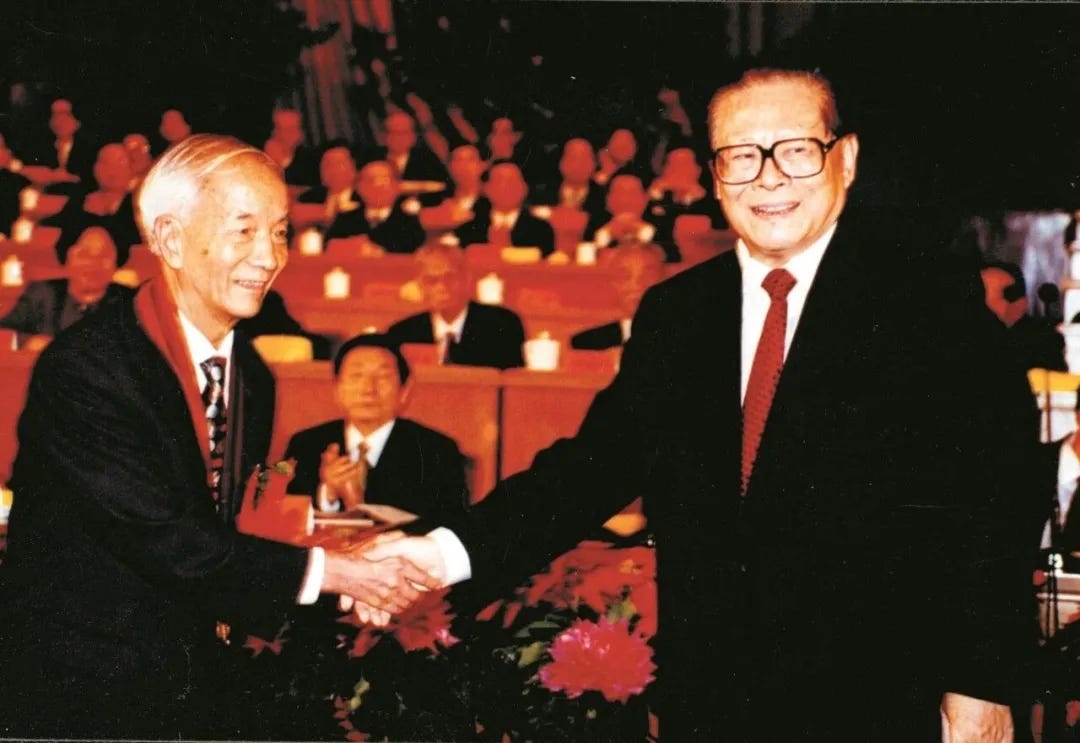
Honors did not cause Wang Xiji to slow down. When he received the ‘Two Bombs, One Satellite’ Merit Award at the Great Hall of the People, the 78-year-old had tears in his eyes: “My motherland has not forgotten me.” He continued to work for many years thereafter: at 80, he served as the chief system designer for the ‘Double Star Program’7; at 90, he was still actively advocating for space-based solar power stations8; and at 95, he was still researching projects related to the ‘Internet + Space’ initiative9.
Following the successful flight of Shenzhou-510, he continued to play a key role in overseeing the technical aspects of China’s subsequent human spaceflight program. For the first extravehicular activity by Chinese taikonauts11, he advocated for the use of space suits developed independently by China. During discussions on rendezvous and docking plans, he recommended developing a dedicated target spacecraft. Regarding the construction of the space station, he proposed that the core module design be considered in conjunction with the space laboratory. All of these recommendations were subsequently adopted.
Wang Xiji believed that the older generation of space professionals had a responsibility to ‘chart the path forward’. He participated in the review and drafting of the implementation plan for the High-Resolution Earth Observation System project, continuously promoted the development of national space infrastructures, took an interest in space-based solar power stations, and was among the first to propose concepts such as ‘space resources’, ‘space infrastructure’, and ‘the celestial frontier’. His thoughts were constantly centered on the future direction of China's space sector and how space technology could better serve national development and the lives of the people.
He has also distilled his decades of experience into works such as ‘Engineering Design (工程设计学)’, ‘Satellite Design (卫星设计学)’, and ‘Space Technology (空间技术)’12. When young people asked seemingly basic questions, he was willing to explain things from the very beginning; when reviewing manuscripts, he scrutinized every detail from technical content and wording to punctuation. His goal was to clearly articulate the principles a chief designer had discovered through practical engineering experience, so that future designers could avoid some of the pitfalls he had encountered.
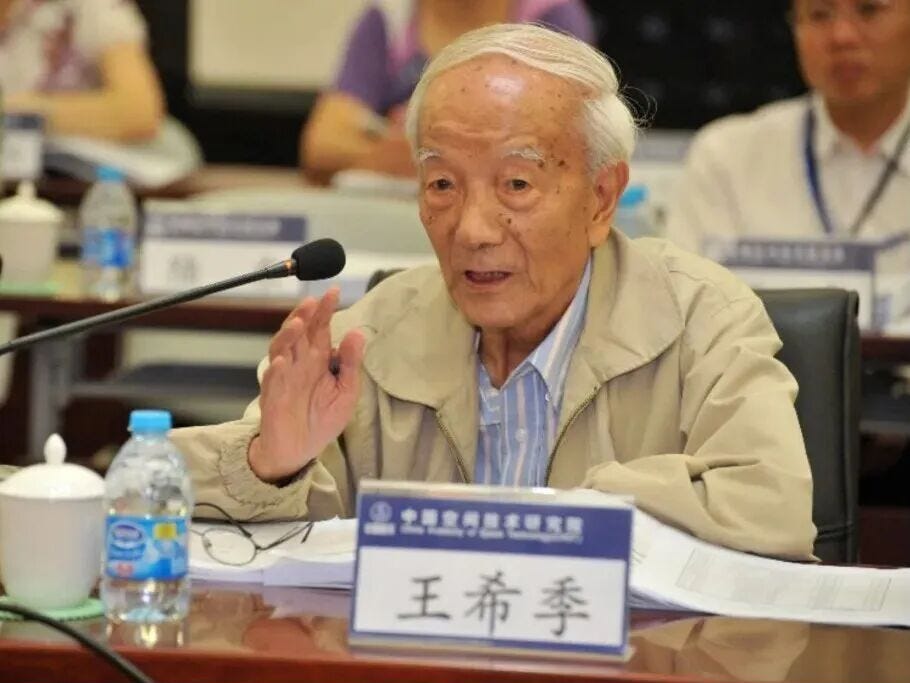
In 2020, on the eve of the 50th anniversary of the launch of Dongfanghong-1, Wang Xiji and other veteran scientists who had participated in the mission wrote a letter to General Secretary Xi Jinping (习近平), reflecting on the journey of China's space program. In his reply, General Secretary Xi Jinping wrote: “As participants in the ‘Dongfanghong-1’ mission, you dedicated your youth to the nation’s space cause, and even in your twilight years, your hearts remain committed to the future of China’s space program. I am deeply moved by this.”
In early 2024, Wang Xiji authorized the display of his ‘Two Bombs, One Satellite’ Merit Award medal and certificate at the exhibition center of the China Academy of Space Technology. He chose to leave these highest personal honors at the very place where he had dedicated his life's work.
Wang Xiji once declared his resolve to serve as ‘I wish to be a stepping stone for space exploration’. He rarely dwelled on accomplishments already made. He was always contemplating the next step and striving to ensure a steadier path for those who would follow.
“I wish to devote my life to advancing China’s space program and cultivating a group of outstanding spacecraft designers.” This was the aspiration Wang Xiji wrote down in his early years. In the decades that followed, he continued to devote his energy to the next mission and the next generation of designers.
Now, one who paved the way has departed. China’s space program continues to soar higher and farther along the path he helped pioneer.
Also known as East Germany.
Lasting from July 7th 1937 to September 2nd 1945, when the Second World War ended in the Pacific.
For more on Hua Luogeng, see his Wikipedia page.
Who also had a long career in the space sector.
The Dongfeng-3.
A joint mission with the European Space Agency consisting of two satellite launches, from the Xichang and Taiyuan Satellite Launch Centers.
Something China is seriously pursuing currently.
Resulting in the nation’s space-based internet mega-constellations being rolled out today.
China’s first mission to send a person into orbit, Yang Liwei (杨利伟), occurring in October 2003.
Performed by Zhai Zhigang (翟志刚) during the Shenzhou-7 mission in September 2008, with Liu Boming (刘伯明) in a supporting role wearing a Russian Orlan suit.
Those are textbooks.