

Xichang Commercial Expansion Cost Projection Increases to 12 Billion Yuan
New facilities should include a launch pad for reusable rockets and supporting technical areas.

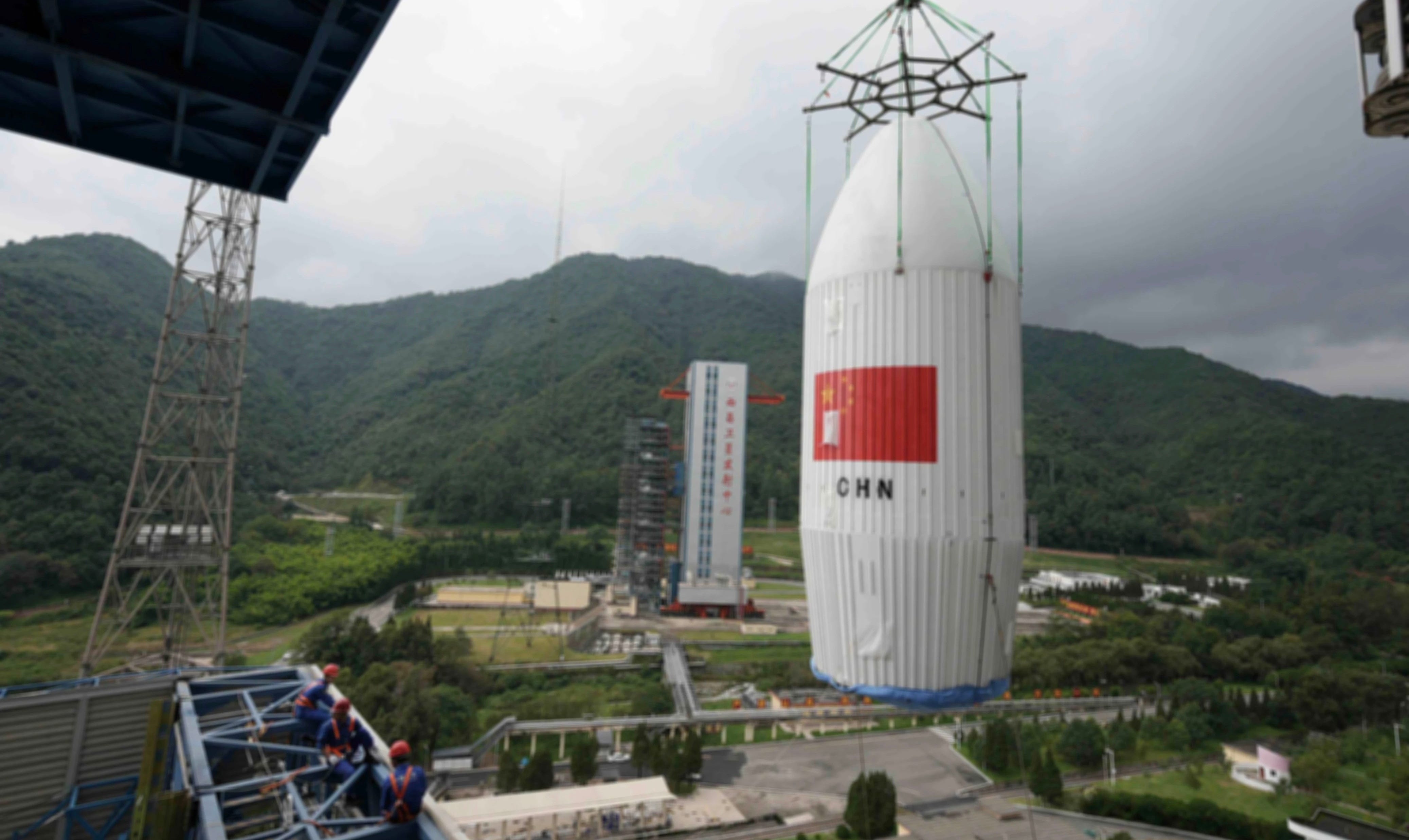
In October 2024, the provincial-owned Sichuan Development International Commercial Spaceport Co Ltd (四川发展国际商业航天港有限) was established to explore commercial expansions to the Xichang Satellite Launch Center. Since then, work to do so has quietly continued, recently appearing in a 100-page government investment opportunity brochure1.
That brochure detailed that the commercially focused addition to the site can consist of a new launch platform, a supporting launch vehicle assembly and technical area, hardware testing facilities, and a tourism center. Those are all planned to be located within the administrative area of Manshuiwan town (漫水湾镇), in Liangshan Yi Autonomous Prefecture (凉山彝族自治州), Sichuan (四川) province. That is where the current launch site is already located.
To attract newly developed liquid propellant launch vehicles, including reusable ones, the local government aims to build a ‘closed-loop’ technical area, able to complete final assembly, integrate customer payloads, and test previously flown boosters locally. Some production capabilities were stated to be wanted too. Those facilities will be placed outside of Xichang’s main gate to its east.
To be located alongside, according to the brochure, is a manufacturing and preparation facility for solid propellant launch vehicles, to enable frequent launch missions with them. That facility, which may be used by a handful of enterprises, is desired to have twenty launch vehicles roll out each year to an already existing small reinforced concrete platform.
As for details on a new launch pad or where it could be located inside the launch site, that was not shared. With a desire for facilitating reusable launch vehicles, a new one has to be built as Xichang’s Launch Complex 2 and 3 can only provide hypergolic propellants2, alongside a small amount of liquid hydrogen and liquid oxygen. All major reusable vehicles under development intend to use substantial amounts of rocket-grade kerosene or liquid methane.
First-stage booster landing pads, which would either be alongside a launch pad for a ‘return-to-launch-site’ trajectory or downrange like those for Zhuque-3, also had no mention. Suitable locations for downrange landing pads will be few in Sichuan province due to its mountainous terrain.
Lastly, further east of launch vehicle technical facilities, an extensive space tourism center is proposed. That may consist of a new launch viewing spot, themed hotel, an educational museum, and a location suitable for international exchanges. An existing viewing site is currently to the north of the two active launch pads, open to tourists and delegations from international collaborators.
If all four parts of the commercial expansion receive investment, the local government projects the total cost to be around 12.21 billion Yuan (1.81 billion United States Dollars, as of August 10th), the grand majority of which is for launch and support facilities, for construction over the course of five years. A total occupiable area has also been stated as up to 5,702 mu, or 3.8 square kilometers, across the four parts.
In previous years, the Xichang Satellite Launch Center has supported a handful of domestic and international commercial launches, with solid propellant launch vehicles flying from the small reinforced concrete platform. Enterprises performing those are Expace, with its Kuaizhou-1A, and the China Academy of Launch Vehicle Technology, when its Long March 11 flew regularly.
On pages 21 to 24.
Dinitrogen Tetroxide and Unsymmetrical Dimethylhydrazine.