

AI Constellation Successfully Tasks Robots on Earth From Orbit
ADA Space’s Three-Body Computing Constellation has reportedly bagged a new first for AI computing satellites.

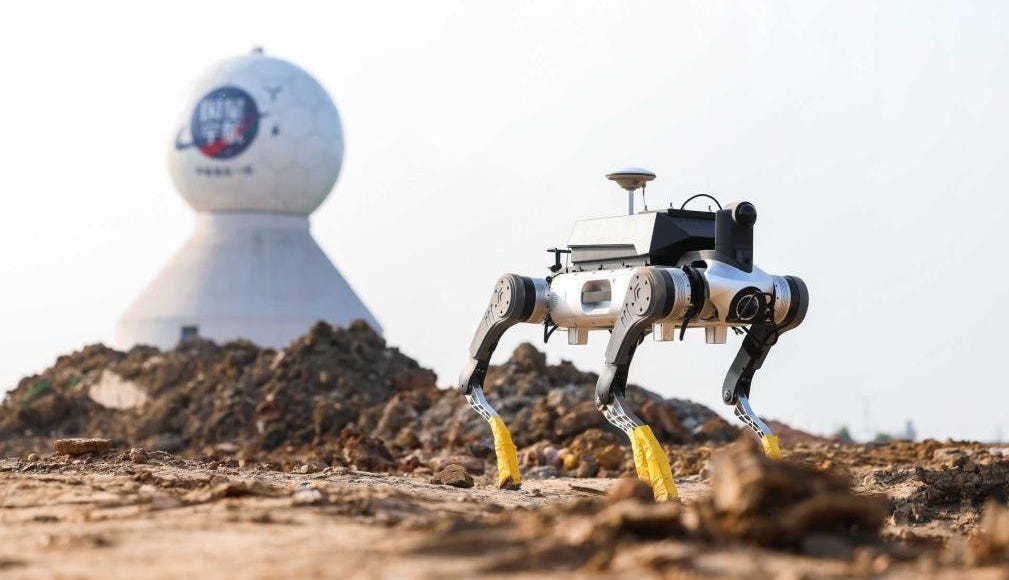
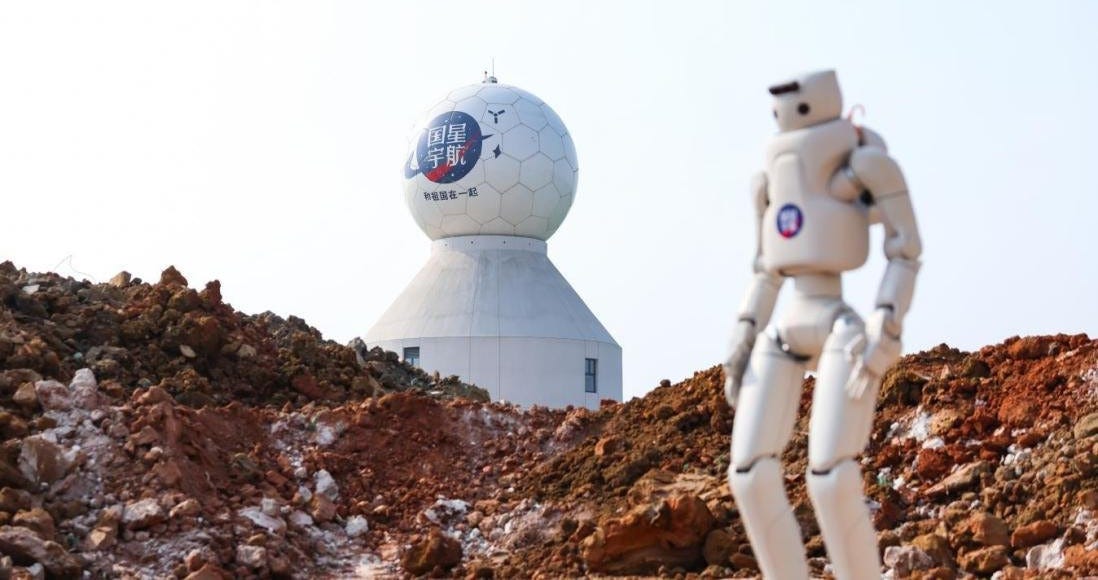
ADA Space (国星宇航), arguably the world-leader in space-based AI computing, has recently used the twelve orbiting satellites making up its Three-Body Computing Constellation as part of a trial to control two robots back on Earth, as part of a collaboration with Shanghai Jiao Tong University (上海交通大学).
Reported by IT Home (IT之家) on March 16th1, the open-source AI agent OpenClaw2 was utilized by the constellation and two robots, one bipedal humanoid and a four-legged one, with voice commands issued by a person to the agent. Once those commands were spoken, they were sent up to the constellation’s satellites for processing and inference, then beaming down completed decisions for tasking back to the two robots on Earth. The robots on Earth were modified with more powerful antennas to be able to receive satellite signals from orbit.
IT Home stated that the tasking of two robots on Earth from the orbiting Three-Body Computing Constellation was the first time that this feat had occurred worldwide. Two days later, on March 18th, Xinhua added:
“This task pioneers the deployment of AI Token-calling services in space, validating the feasibility of space computing for powering silicon-based intelligent agents.”
Advantages of using space-based AI computing for Earth-based robots, both with and without legs, were claimed to be an advantage of connectivity when terrestrial systems are unavailable or offline.
Within the past year, ADA Space’s AI-computing constellation has run domestic large language models as well, like Alibaba Cloud’s (阿里云) Qwen3 operationally. Since deploying its first satellites to orbit, the Three-Body Computing Constellation has run at least ten AI models.
Later this year, the Three-Body Computing Constellation is planned to be expanded with the launches of its second and third satellite groups, boosting combined processing power and the number of models that can be deployed concurrently. A second launch is believed to be under preparation, while ADA Space recently requested proposals to launch the third group. That third group, consisting of fourteen satellites, requires the launch vehicle to place 3,000 kilograms into a 525-kilometer sun-synchronous orbit3 within the fourth quarter of 2026 (October, November, December).
In the long-term, ADA Space plans to deploy 2,800 satellites around 2035 for both running and training AI models in space. Up to 1,000 satellites are desired to be in orbit by 2030.
Citing an exclusive brief from the STAR Market Daily (科创板日报).
Which has gained quick popularity in China and several China-made versions.
That would be most Long March vehicles, apart from the Long March 6 and Long March 11, as well as LandSpace’s Zhuque-2E and OrienSpace’s Gravity-1, limited to launch vehicles that would not be massively overkill or too new.