

BRICS Space Agency Heads Consider a 'Space Council', Expanding Cooperation
Ten agencies gathered in Bengaluru, with China sending the Chief Engineer of the China National Space Administration.

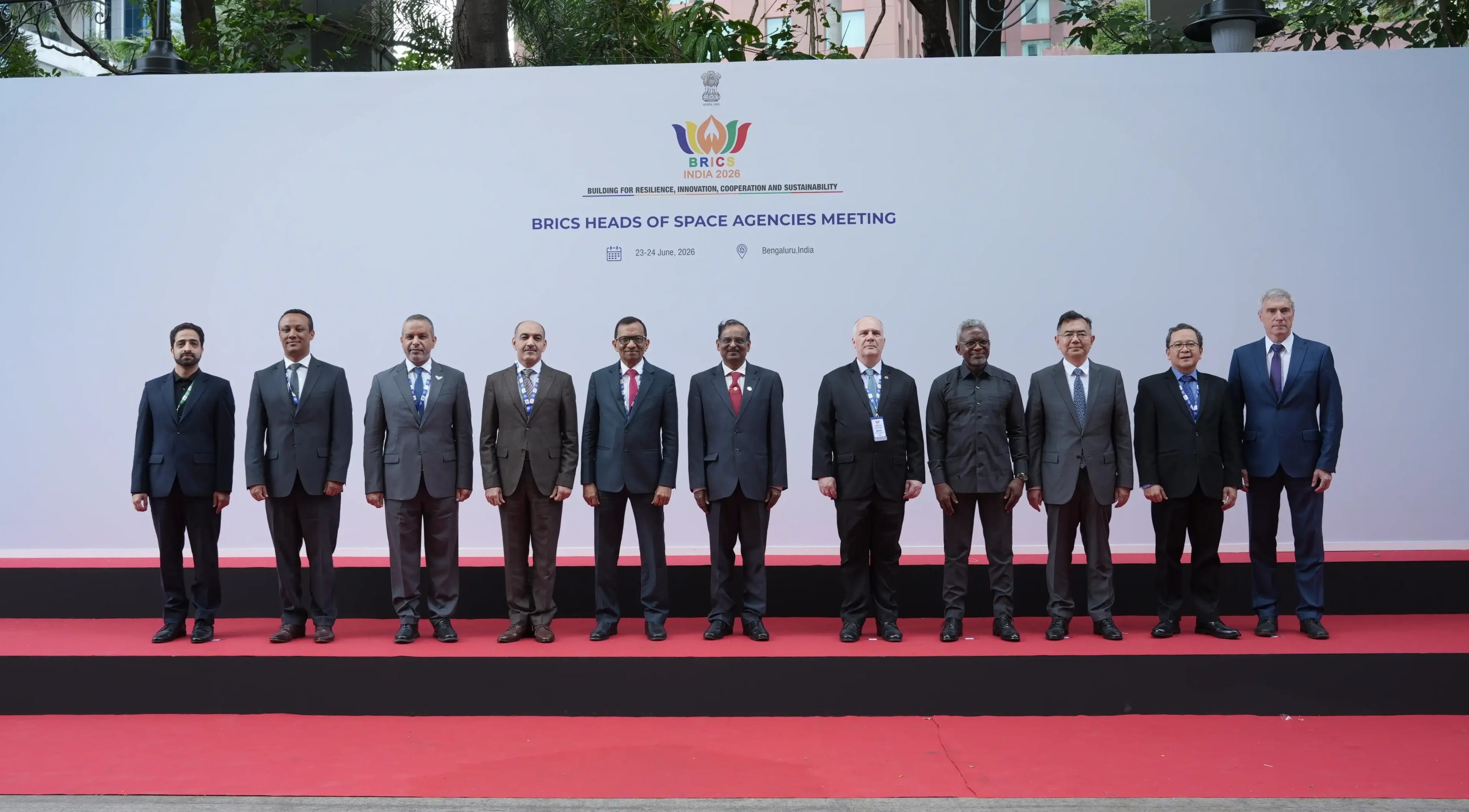
On June 23rd and 24th, space agency heads and senior officials from the ten BRICS1 nations gathered in Bengaluru, India, to attend their latest high-level discussions on outer space. The nations at the meeting, with India as the host2, were Brazil, Egypt, Ethiopia, Indonesia, Iran, Russia, South Africa, the United Arab Emirates, and China, which was represented by Chief Engineer Li Guoping (李国平) of the China National Space Administration.
Discussions over the two days considered ways to ensure a sustainable use of Earth’s orbits, such as performing missions without adding debris, and stressed the need for utilizing space in a peaceful manner, while deliberating ways to leverage space technologies regarding climate change and natural disasters. Those areas are ones that China is actively working on internationally.
Within the BRICS group, other items of consideration were proposals for a space council and the existing Remote Sensing Satellite Constellation Cooperation Initiative. The idea of a space council has been primarily advocated for by Russia since 2024 as an entity that can facilitate more complex and costly cooperation between the member states. According to Russia’s Roscosmos, as reported in Russian-language media, if established, the ‘BRICS Space Council’ would take over the implementation of the group's current collaborations and be collectively governed by it to follow space industry trends. Without disclosing who, some nations are reportedly in support and others oppose the idea3.
Meanwhile, the group has been supportive of a joint remote sensing satellite constellation since 2015 and has been operating it for several years. The constellation currently consists of spacecraft and instruments from China, Russia, Brazil, and India, with nations part of it able to access data from each other. At the recent meeting, the BRICS members contemplated allowing new member Indonesia4 and ‘prospective’ member Saudi Arabia5 to contribute to and access the data.
The outcome of both considerations will be confirmed at this year’s BRICS summit, being held in New Delhi, in September by appearing in its declaration.
This year’s discussions build on those held in Brazil last year, which outlined that technical asymmetries between BRICS nations should be addressed for equitable participation in cooperative initiatives, either by the training of personnel or technology sharing. A few months later, that was followed by Indonesia contracting a hyperspectral remote sensing satellite from a Chinese commercial space company in addition to nineteen on order from a state-owned enterprise. It should also be noted that Iran’s space program has been effectively wiped out since that last meeting due to U.S. and Israeli actions, allegedly becoming reliant on a Chinese-made satellite.
Some cooperation talks at a state-to-state level did take place on the sidelines of the meeting of the space agency heads and senior officials. Only Russia and India have confirmed they held some discussions.
An international group whose members coordinate economic policy and lobby for reforming organizations like the United Nations. Chairmanship of the group rotates annually between member states.
India is the BRICS Chairman for 2026.
South Africa is the only known nation to declare support for the space council.
It has been a member since January 2025.
Saudi Arabia was meant to formally join the group at the start of 2024 but has delayed doing so a few times. Official BRICS sites list it as a member.