

CAS Space Launches Handful of International, Chinese Satellites [Kinetica-1 Y11]
Nine customer satellites have been delivered into orbit by the commercial space company.

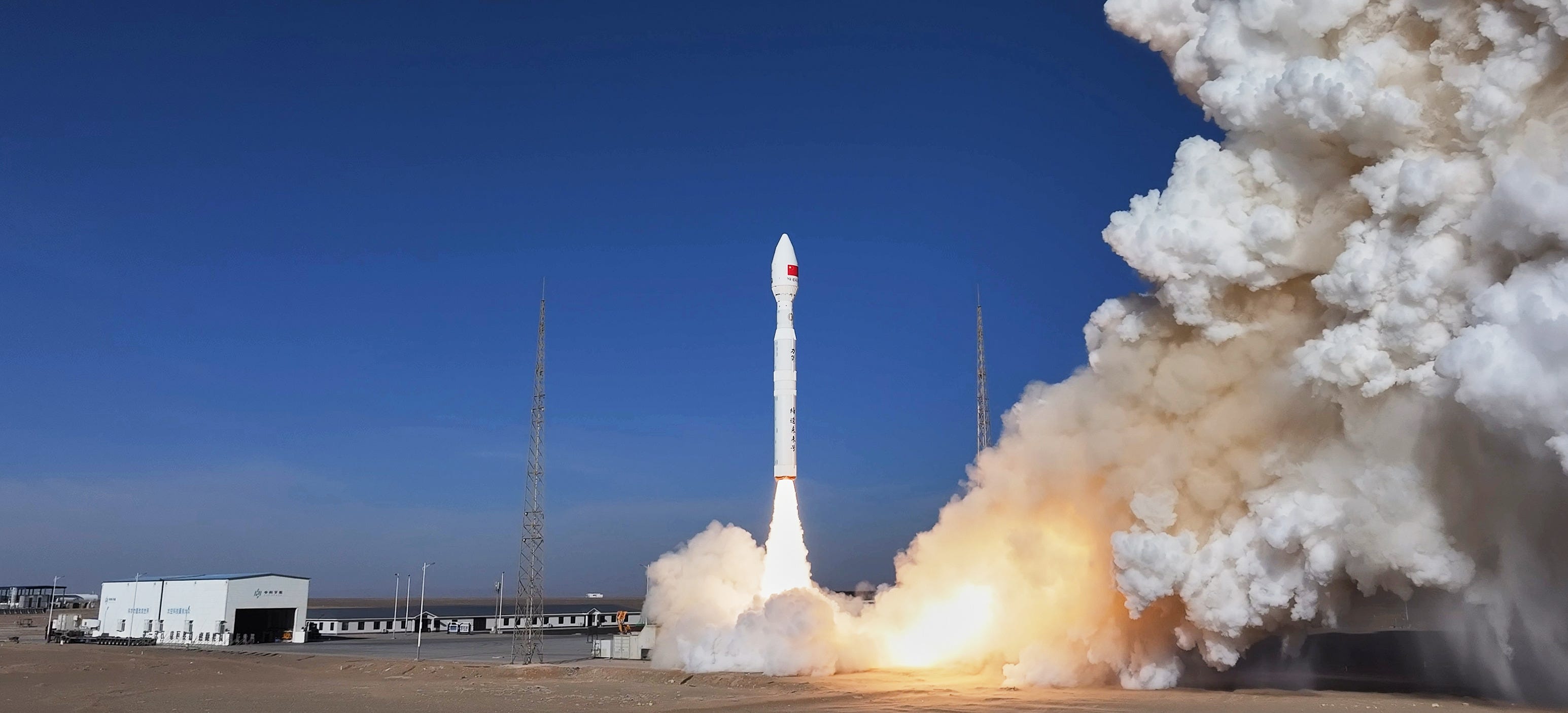
CAS Space’s Kinetica-1 rocket blasted off from Launch Area 130 at the Jiuquan Satellite Launch Center at 12:03 pm China Standard Time (04:03 am Universal Coordinated Time) on December 10th, carrying a handful of satellites into sun-synchronous orbit.
Being carried into orbit were nine satellites for Chinese enterprises and a few international customers, for CAS Space’s fourth foreign-payload-carrying mission.
Egypt had a satellite onboard with its Space Plasma Nano-satellite Experiment (SPNEX) 6U spacecraft for studying the negative effects of climate change and changes to the ionosphere. To do that, SPNEX has Langmuir probes for plasma measurements, a high-resolution optical camera with a resolution of 7.5 meters, and a static random-access memory experiment for monitoring radiation.
From the United Arab Emirates, with contributions from the Innovation Academy for Microsatellites, Chinese Academy of Sciences (中国科学院微小卫星创新研究院), was the UAE-813 Satellite with its hyperspectral camera, panchromatic camera, and atmospheric polarization corrector payloads. The satellite is planned to acquire data for crop conditions, environmental mapping and monitoring, and to look for future natural gas sites.
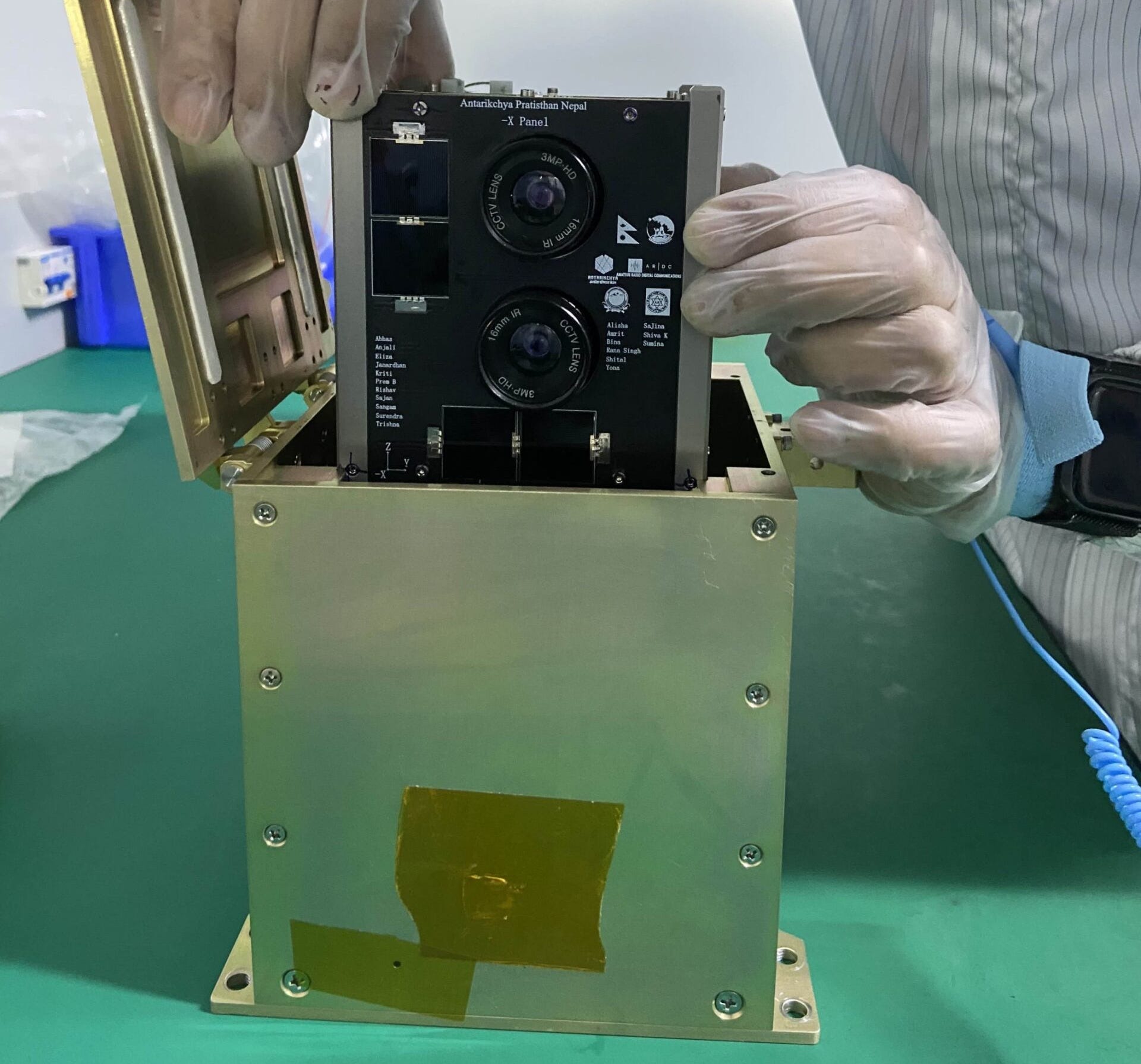
One of the international satellites was a student project as part of Nepal’s ‘Slippers to Satellite’ program1 for high-tech education, funded by the Amateur Radio Digital Communications foundation and supported by the Nepal Space Research Institute. For the program today, a single 10 by 10 by 10 centimeter nanosatellite was launched for amateur radio uses and basic space-based imaging.
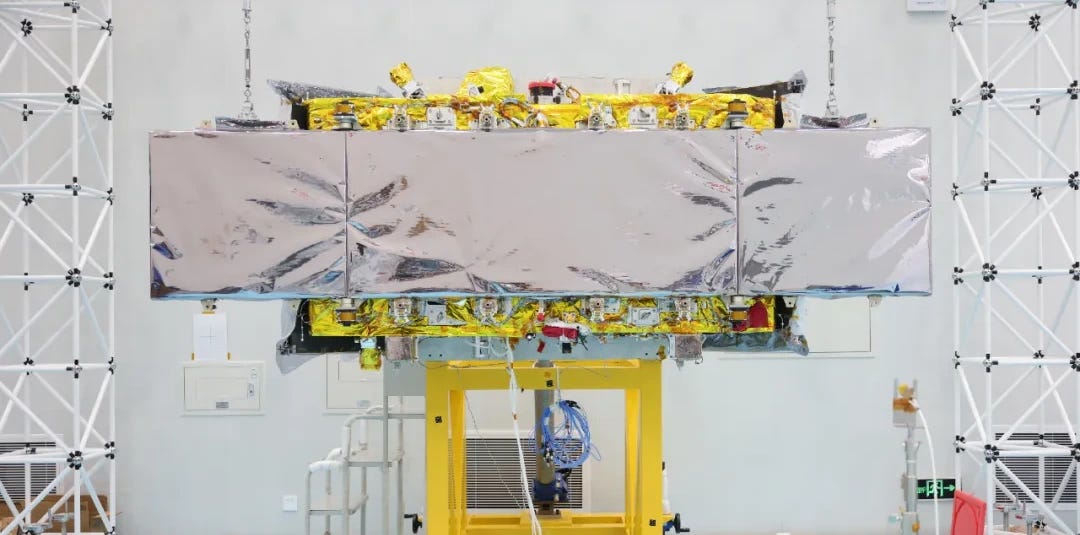
For the first of the Chinese payloads, MinoSpace (微纳星空) deployed an X-band radar imaging satellite, Dongpo-15 (东坡15号卫星), with a stated resolution of below a meter and an imaging area of approximately 150 kilometers. MinoSpace says that the satellite will be focused on Sichuan (四川) province for geological monitoring, to support resource extraction and alert potential hazards.
Meanwhile, Yixing-2 09 (驭星二号09星) is from Xinghuo Chuanming (Beijing) Technology Co Ltd (星火传明(北京)技术有限公司) with high-resolution infrared cameras and an AI computing payload. The satellite’s task is to provide space-based infrared videos for meteorology, emergency response, power grid disaster prevention, and national security.
From Sun Yat-sen University (中山大学) was the cubesat Yixian-A (逸仙-A星). The cubesat is planned to conduct science experiments, technology verification, and be used as a teaching asset. Yixian-A’s outer panels are made of wood and its software is built on the Raspberry Pi platform, used to operate a selfie camera on the outside.
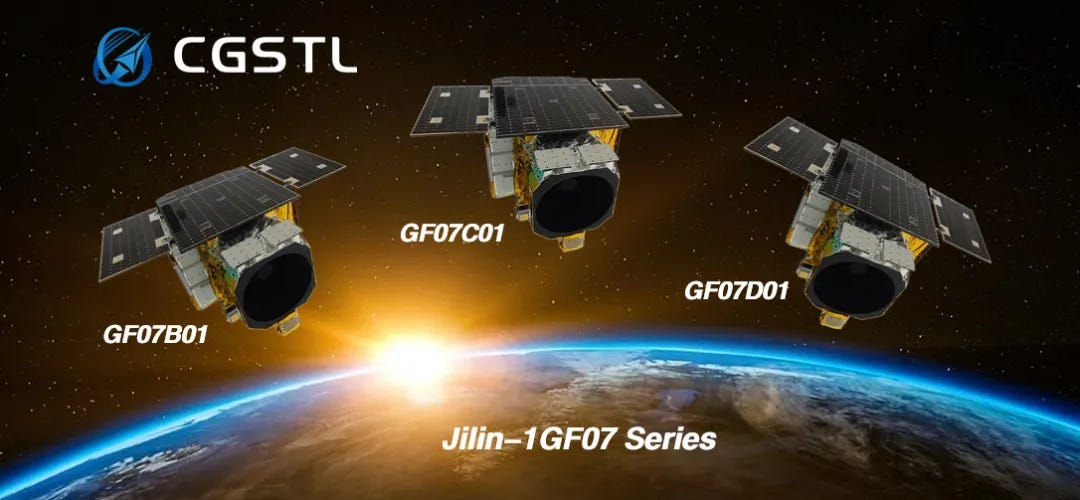
Lastly, Changguang Satellite Technology Co Ltd (长光卫星技术股份有限公司) had three satellites onboard with Jilin Gaofen 07B01 (吉星高分07B01星), Jilin Gaofen 07C01 (吉星高分07C01星), and Jilin Gaofen 07D01 (吉星高分07D01星). All three satellites are dedicated to Earth imaging with a resolution of about 0.5 meters alongside onboard AI-assisted processing. Jilin Gaofen 07B01 was developed on behalf of China’s Ministry of Water Resources (中华人民共和国水利部) to monitor conservation efforts and create digital twins; Jilin Gaofen 07C01 was made in cooperation with Xinhe Aerospace Remote Sensing Information Technology (Anhui) Co Ltd (信和航遥信息技术(安徽)有限责任公司) for improved urban management in Anhui (安徽) province; and Jilin Gaofen 07D01 was produced for China’s State Grid Electric Power Research Institute Co Ltd (国网电力工程研究院有限公司) for monitoring the country’s electrical grid and to assist in planning new additions.
In a post-launch blog post, CAS Space shared that this mission was in partnership with the China Soong Ching Ling Foundation (中国宋庆龄基金会). For that, Kinetica-1 featured the foundations logo and the phrase ‘Creating the Future’ (缔造未来), also the mission’s name, which is a concept drawn from Soong Ching Ling’s (宋庆龄)2 1963 article emphasizing that children’s work is the work of creating the future. Through the partnership, CAS Space and the foundation aim to encourage China’s youth to pursue careers in science and space.
Today’s launch was the 11th launch for Kinetica-1 and for CAS Space. This was also the 84th launch from China in 2025.
Mission recap via 中科宇航 on Weibo, liftoff video via 大漠问天 on WeChat.
Check out the previous launch from CAS Space
CAS Space Delivers Test Satellites for Remote Sensing Constellation [Kinetica-1 Y9]
![CAS Space Delivers Test Satellites for Remote Sensing Constellation [Kinetica-1 Y9]](https://substackcdn.com/image/fetch/$s_!HL0e!,w_1300,h_650,c_fill,f_webp,q_auto:good,fl_progressive:steep,g_auto/https%3A%2F%2Fsubstack-post-media.s3.amazonaws.com%2Fpublic%2Fimages%2F7f11d19d-349b-4dab-83c2-50b415e550f2_7955x5002.jpeg)
From Launch Area 130 at the Jiuquan Satellite Launch Center at 11:32 am China Standard Time (03:32 Universal Coordinated Time) on November 9th, CAS Space’s Kinetica-1 lifted off and headed into sun-synchronous orbit carrying two satellites.
What is Kinetica-1?
This section is for those less familiar with China’s various commercial launch vehicles.
Kinetica-1 is CAS Space’s first launch vehicle and consists of four stages, all burning solid fuel. CAS Space offers the ability to launch a single satellite to utilize all of the rocket’s payload capacity, however more ‘rideshare’ missions occur for multiple satellites to be delivered in one launch.
The payload capacity of the launch vehicle is currently as follows:
2,000 kilograms to low Earth orbit
1,500 kilograms to a 500-kilometer sun-synchronous orbit
The first-stage is powered by a solid rocket booster that burns an unspecified solid fuel, generating 200 tons of thrust. The second-stage is also powered by a solid rocket booster, producing 110 tons of thrust with the same unidentified propellant. The-third stage, also using the undisclosed propellant, generates 45 tons of thrust. Finally, the fourth-stage is powered by another solid rocket booster, providing 8 tons of thrust with the same solid propellant.
On its launch pad, Kinetica-1 stands at 30 meters tall. The first two stages have a diameter of 2.65 meters, the fairing has a diameter of either 2.65 or 3.35 meters. When prepared for launch Kinetica-1 weighs a believed 135,000 kilograms.
So far, Kinetica-1 has flown all of its missions from CAS Space’s launch facility at the Jiuquan Satellite Launch Center.
Further details can be found on the program’s website.
Soong Ching Ling was a partner to Sun Yat-sen, founder of the Republic of China, until his death. Following the establishment of the People’s Republic of China in 1949, Soong held several important positions in government up until her passing in 1981.