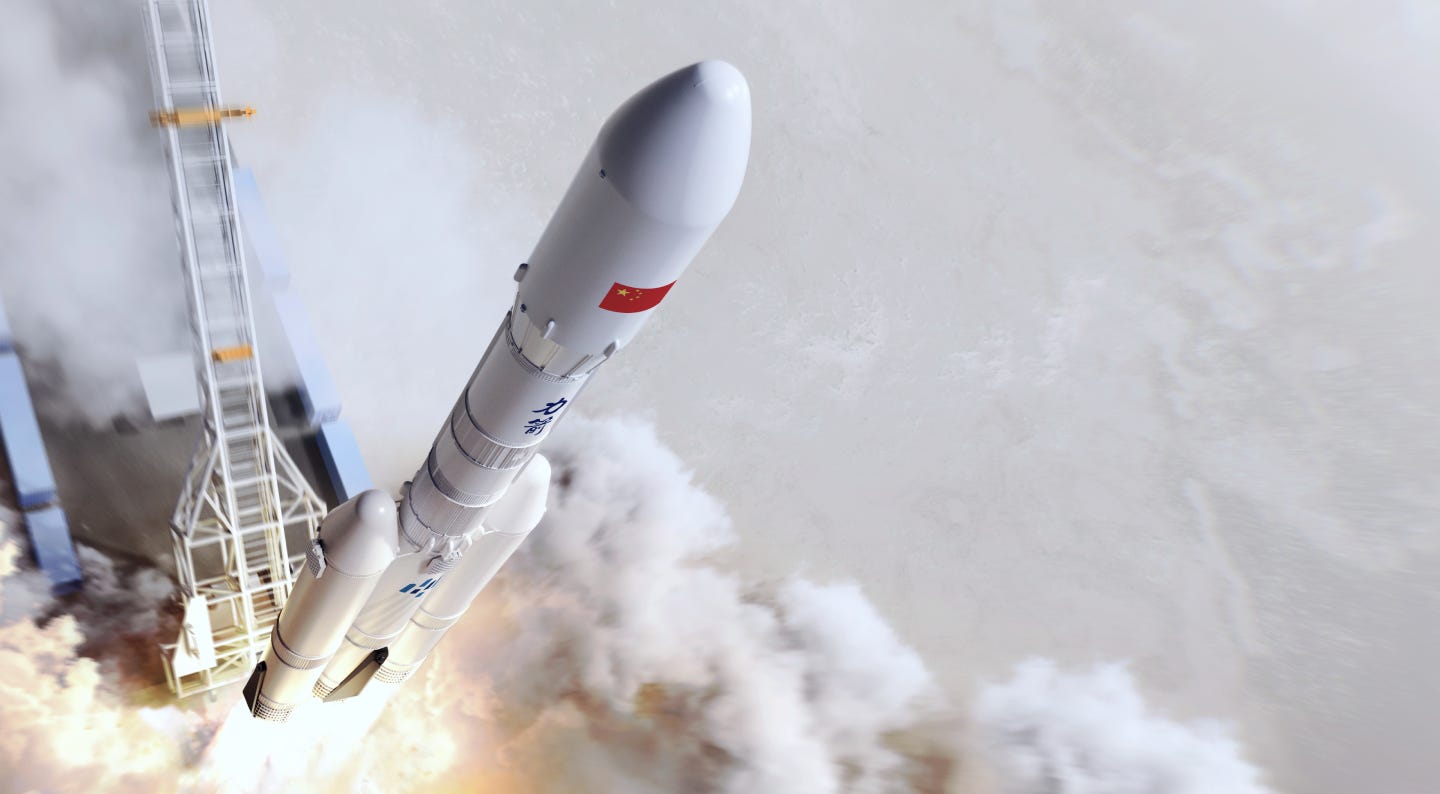
A render of CAS Space’s Kinetica-2 launch vehicle blasting off under the power of nine engines installed on three first-stage cores.
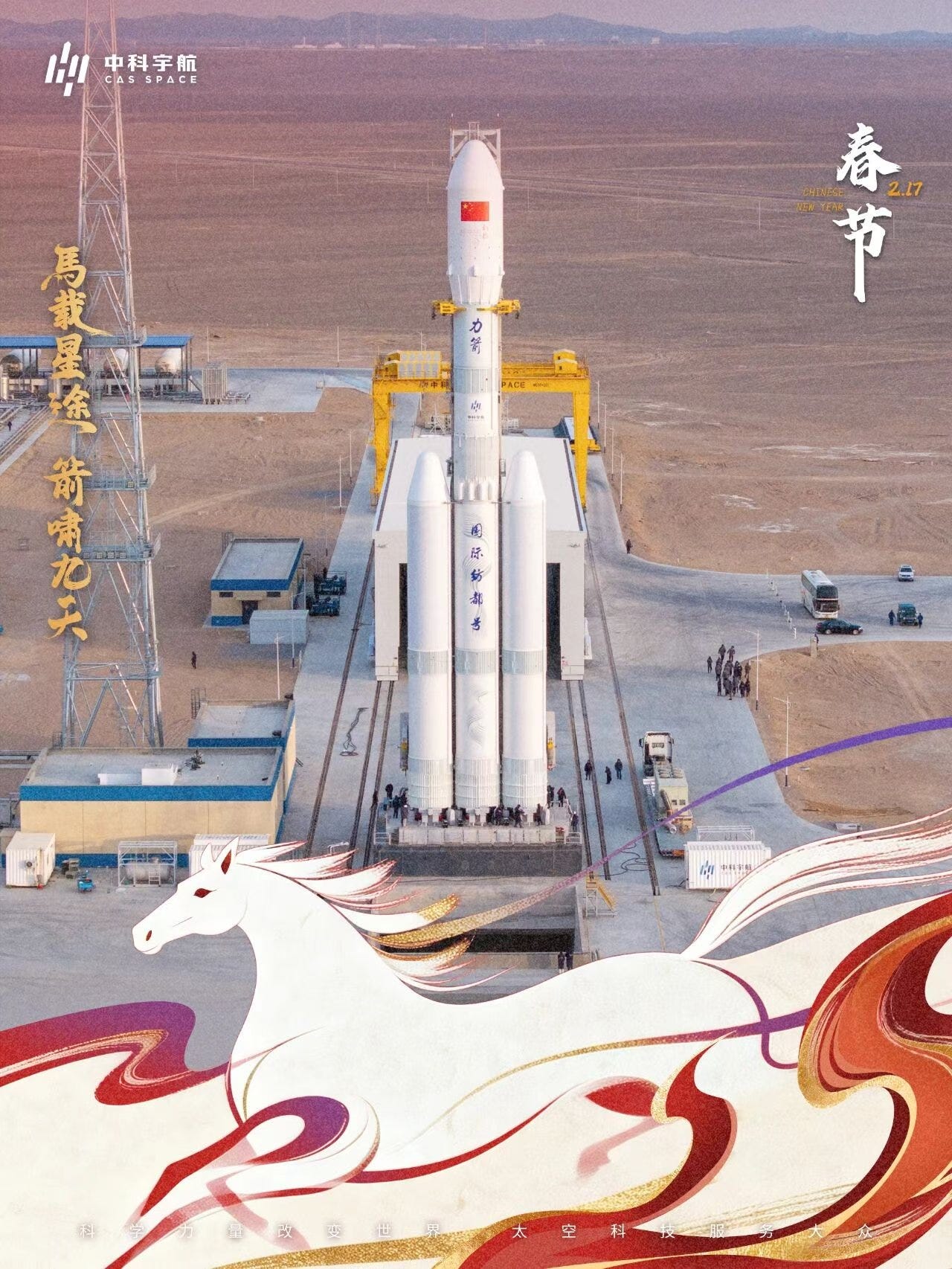
Not too long from today, CAS Space will fly its tri-core Kinetica-2 launch vehicle for the first time. The vehicle, able to carry up to 12,000 kilograms into low Earth orbit, powered by nine YF-102 engines, with three on each of its three 3.35-meter first-stage booster cores, currently stands 53-meters tall at the Jiuquan Satellite Launch Center, as a payload sits inside a 4.2-meter-wide fairing.
Ahead of the debut flight, China in Space reached out to CAS Space to confirm reports that Kinetica-2 will fly this month, and to inquire about plans with it, the newly introduced Lihong-1, and the regularly flying Kinetica-1. Listed below are the company’s answers to questions sent over, whom I thank for answering quite quickly.
There are reports that March is the target month for Kinetica-2’s first flight. Is that correct?
Yes. Our current launch window is mid-late March. The launcher has been ready for some time and we are thrilled for an open launch window.
The Kinetica-2 Y1 vehicle at Launch Area 140 at the Jiuquan Satellite Launch Center in February 2026, as part of a poster celebrating the Year of the Horse.
What are the goals and criteria for Kinetica-2’s first flight?
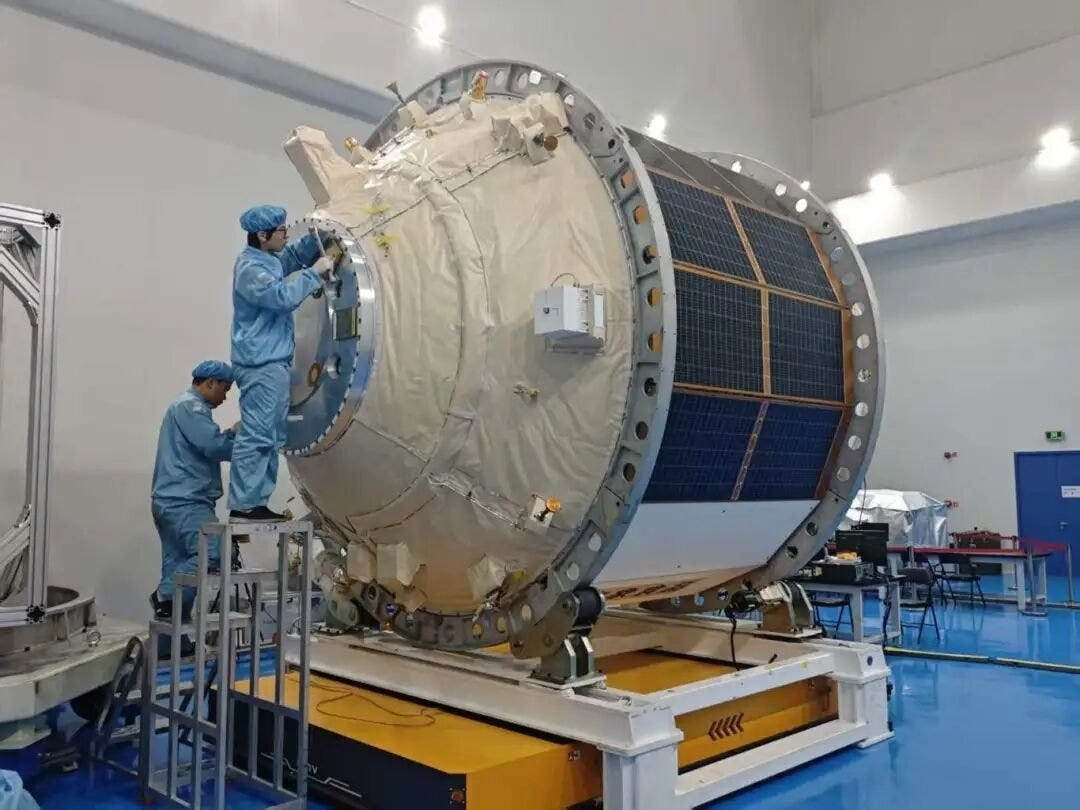
The first flight will be an actual mission carrying a prototype Qingzhou-1 model from IAMCAS1 to the designed orbit. The Qingzhou-1 + Kinetica-2 combo was the first successful commercial bid for the low-cost cargo supply mission to Chinese space stations.
The first Qingzhou cargo spacecraft in a cleanroom in early 2026.
Are more Kinetica-2 flights planned for the remainder of 2026?
Yes. We have another planned mission to carry 18 Qianfan satellites as part of their constellation.2
CAS Space is currently using YF-102 engines on Kinetica-2, what is the rationale for doing so?
YF-102 is a proven, off-the-shelf solution for Kinetica-2 class launchers. It is a strategic decision to offer the most proven and trusted propulsion system in anticipation of the launch demands in recent years. We have developed a detailed progression milestone for future iterations of Kinetica-2. Future versions will also utilize our in-house Kinecore engines.
Yes. Our in-house Kinecore series has been very successful with the hot fire tests lately. We will soon see them in action in Lihong-2, and not long after, in Kinetica-2.
CAS Space launched Lihong-1 two months ago for the first time, what is the market for the suborbital rocket?
We believe there is a growing market for suborbital science and space tourism. More importantly, CAS Space has an interdisciplinary team working actively in cultivating the market to unlock the full potential of the suborbital market.
How does Lihong-1 support the development of reusable launch vehicles?
With the maiden flight of Lihong-1, we gathered crucial experimental data to validate and improve our re-entry model. In 2026, you will increasingly see our progress in reusability!
Since 2022, you have been flying the Kinetica-1 launch vehicle out of Jiuquan for many customers, is it planned to launch from elsewhere?
Yes. The first sea launch is expected within this year. CAS Space’s founding team kick-started the first-ever Chinese sea launch3 in another chapter of their career. Sea launches will enable much greater autonomy and orbital possibilities.
How frequently can we expect Kinetica-1 to keep flying in the future?
Kinetica-1 has exceeded expectations and will soon enter the phase of mass production. Our current launch pool allows monthly launches throughout this year and beyond. Considering scheduling issues and delays, it is safe to assume a bi-monthly launch cadence, including a quarterly ridesharing launch.
Again, thank you to CAS Space for responding to the questions ahead of Kinetica-2’s debut mission, I wish them the best of luck! I encourage you all to check out CAS Space’s site, which I’m told has been recently renovated.
Thanks for reading China in Space! This post is public so feel free to share it.