

China Concludes Global Launches in 2025 With New Shijian Duo [Long March 7A Y7]
Two more space environment monitoring satellites are heading for geostationary space.

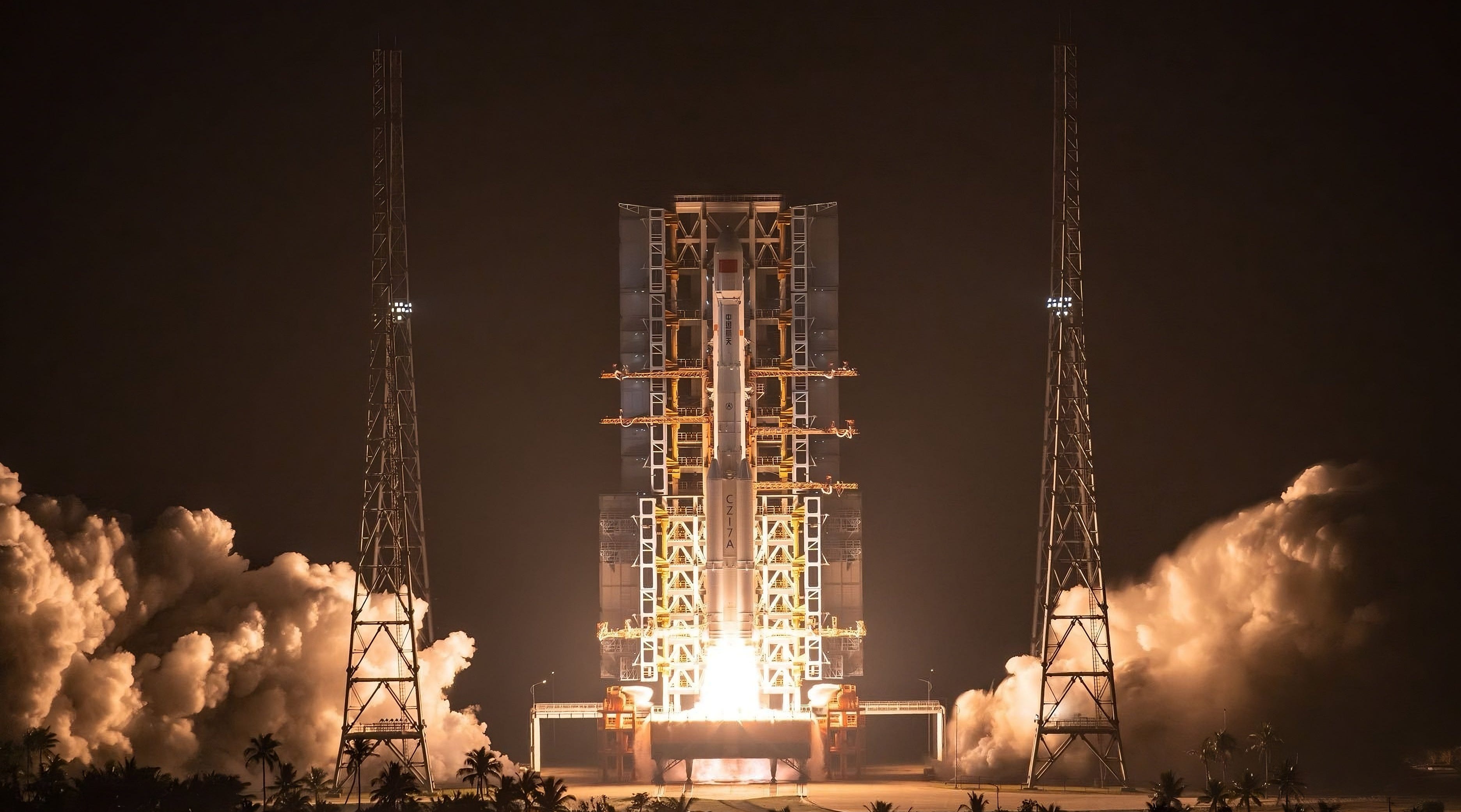
For the final launch in 2025 worldwide, a Long March 7A lifted off from Launch Complex 201 at the Wenchang Space Launch Site on December 31st at 06:40 am China Standard Time (December 30th at 22:40 pm Universal Coordinated Time), heading for geostationary space with two spacecraft.
Riding atop of the rocket were the Shanghai Academy of Spaceflight Technology‘s and the Innovation Academy for Microsatellites, Chinese Academy of Sciences (中国科学院微小卫星创新研究院) Shijian-29A and Shijian-29B (实践二十九号卫星A星/B星) satellites, weighing around 3,500 kilograms each1. Shijian-29 is tasked with space environment monitoring (what the U.S. calls space situational awareness) and related technology tests. This will see the satellite detect, track, and predict the movements of orbiting objects, like other satellites, rocket stages, and debris.
The new space environment monitoring duo is the latest in a small fleet of identically tasked spacecraft to be launched this year. In April, six Shiyan-27 satellites were put into sun-synchronous orbit, followed by Shiyan-28B-01 into low Earth orbit in July, matched by August’s Shiyan-28B-02, then in September the geostationary Shijian-29 was launched, with the low Earth orbit residing Shijian-30A, 30B, and 30C being the final addition before today.
Shijian (实践) designated spacecraft are flown to figure out best operational practices for new technologies, with the name literally translating to Practice in English. Shiyan (实验) is a similar satellite designation used for technology development spacecraft, and the name literally translates to Experiment.
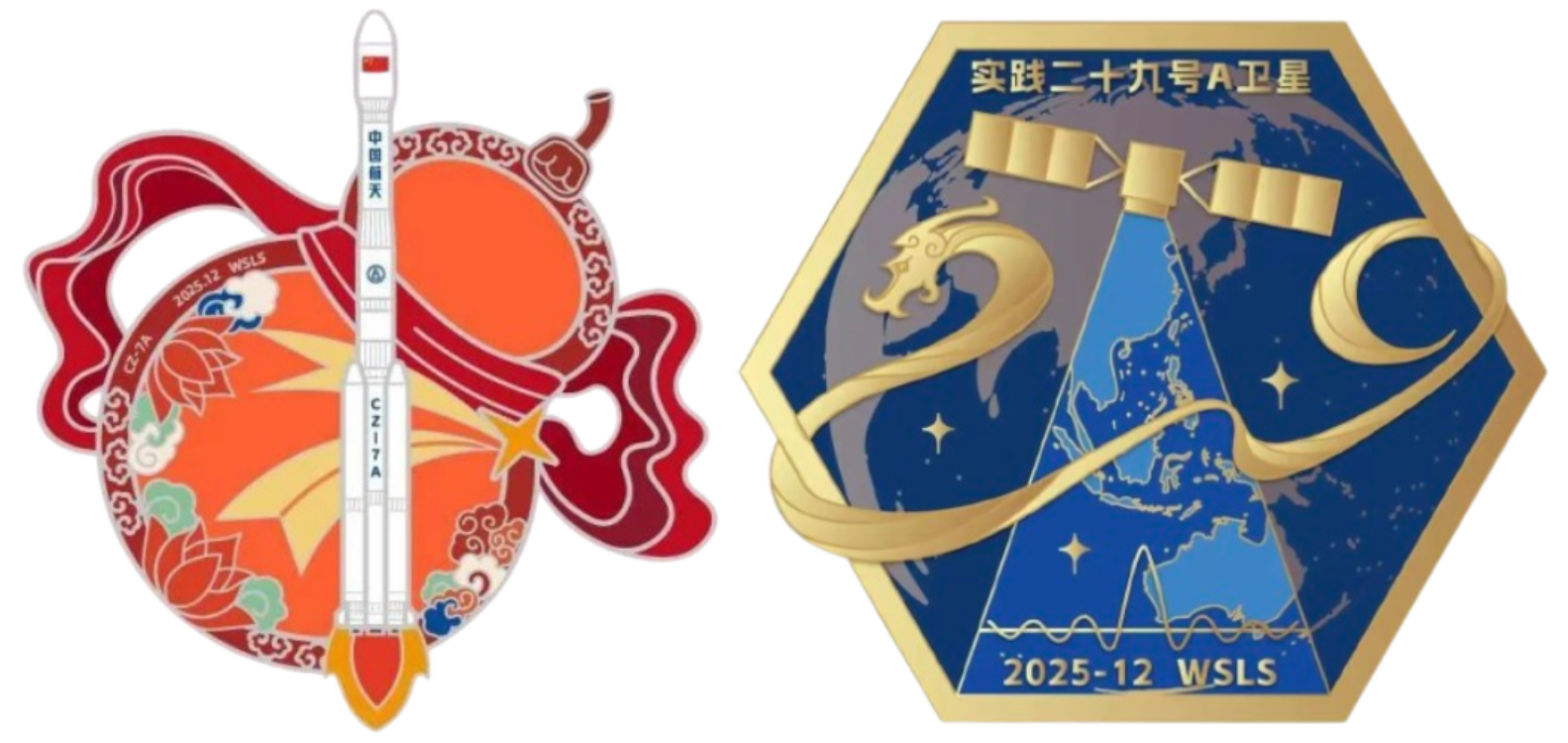
Following today’s launch, the China Academy of Launch Vehicle Technology shared that this flight had the shortest launch campaign for a Long March 7A mission, being optimized down to nineteen days thanks to process improvements and new hardware (like a new mobile launch platform) introduced throughout the year. This was also the sixth and final flight of the three-and-a-half-stage rocket this year, following its missions in March, May, September, and November (twice), for its busiest year since its 2020 debut. A single Long March 7 rocket flew too, for the Tianzhou-9 cargo resupply mission.
In 2026, the Launch Vehicle Academy plans to surpass this year's flight rate with the Long March 7 series (Long March 7 and 7A). Specific details were not shared, but with the shortened launch process, the rocket series could be flying once a month, if not more.
As this was China’s final mission of 2025, the China Aerospace Science and Technology Corporation noted that its subsidiaries (including the China Academy of Launch Vehicle Technology and the Shanghai Academy of Spaceflight Technology, and their subsidiaries) had completed seventy-three launches this year, with the China Academy of Launch Vehicle Technology performing forty-four.
Today’s mission was the 14th launch of a Long March 7A vehicle, the 24th launch of the Long March 7 series, and the 623rd launch of the Long March launch vehicle series. This was also the 93rd launch from China in 2025.
Liftoff video via Vony7 and PhilLeafSpace on Weibo.
Check out the previous Long March 7A launch
Vague Shijian Mission Launched out of Wenchang [Long March 7A Y10]
![Vague Shijian Mission Launched out of Wenchang [Long March 7A Y10]](https://substackcdn.com/image/fetch/$s_!nZZ-!,w_1300,h_650,c_fill,f_webp,q_auto:good,fl_progressive:steep,g_auto/https%3A%2F%2Fsubstack-post-media.s3.amazonaws.com%2Fpublic%2Fimages%2F0ed1ae23-aaff-4d46-beb2-54eec1589ea0_6739x3263.jpeg)
A Long March 7A blasted off at 20:20 pm China Standard Time (12:20 pm Universal Coordinated Time) on November 30th from Launch Complex 201 at the Wenchang Space Launch Site heading for a geosynchronous transfer orbit. A single satell…
What is the Long March 7A?
This section is for those less familiar with China’s Long March series of launch vehicles.
The Long March 7A is the new-generation workhorse for beyond low Earth orbit missions, and was developed by the China Academy of Launch Vehicle Technology. This vehicle utilizes a three-and-a-half-stage design and is fuelled by rocket-grade kerosene and liquid oxygen in its boosters, first, and second stages long with liquid hydrogen and liquid oxygen in the third-stage.
The payload capacity of the launch vehicle is currently as follows:
8,000+ kilograms to a medium Earth transfer orbit
7,000 kilograms to geostationary transfer orbit
5,500 kilograms to a 700-kilometer sun-synchronous orbit
5,000 kilograms to a trans-lunar trajectory
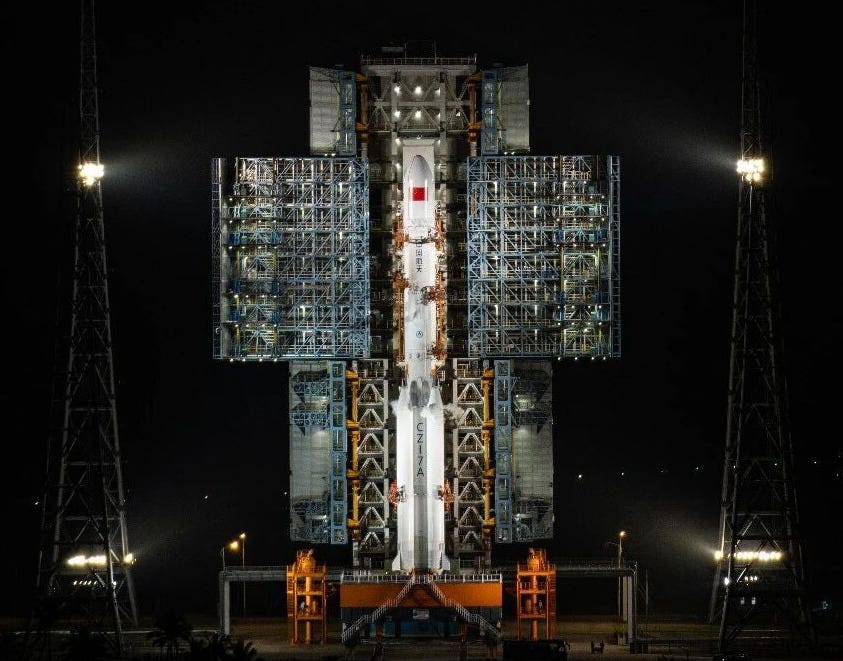
The Long March 7A’s first stage is equipped with two YF-100 engines that produce 245 tons of thrust using rocket-grade kerosene and liquid oxygen, complemented by four boosters, each with a YF-100 engine generating 122 tons of thrust, resulting in a combined thrust of approximately 733 tons. The second stage is powered by four YF-115 engines, which together generate 72 tons of thrust using the same fuel combination. The third stage of the Long March 7A features two YF-75 engines, providing 17 tons of thrust by burning liquid hydrogen and liquid oxygen.
On the launchpad, the Long March 7A stands at 60.13 meters tall and weighs 573,000 kilograms when fully fuelled. The first and second-stage have a diameter of 3.35 meters, the four boosters are 2.25 meters in diameter, and the third-stage has a diameter of 3 meters, while the fairing has a diameter of 4.2 meters.
So far the Long March 7A has only flown from the Wenchang Space Launch Site, on the east coast of Hainan province.
The China Academy of Launch Vehicle Technology’s post-mission notice says that this Long March 7A carried 7,000 kilograms of payload, for the rocket’s heaviest payload to date.
“The satellite launched this time weighs 7 tons, marking the heaviest high-orbit payload ever launched by the Long March 7A rocket.”
”本次发射的卫星重7吨,是长七A火箭迄今发射的重量最重的高轨载荷。”