

China Successfully Conducts Mengzhou in-Flight Abort Test with Booster Splashdown!
The new crew capsule is another step closer to visiting Tiangong and flying to the Moon.

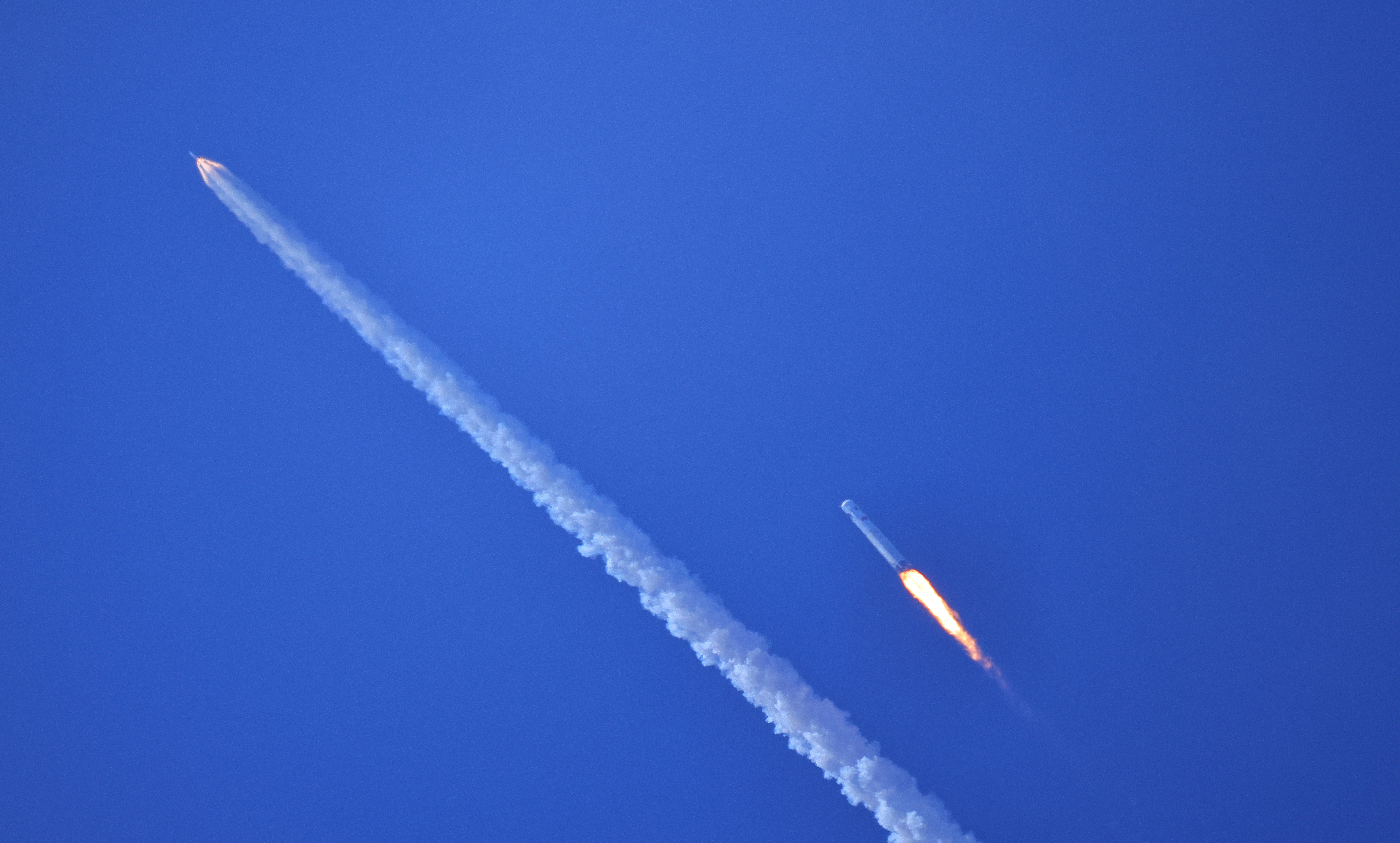
China’s next-generation crew capsule, Mengzhou (梦舟), has successfully performed its final major test ahead of a debut mission later this year.
On February 11th at 11:00 am China Standard Time (03:00 am Universal Coordinated Time), the Long March 10A test booster with the Mengzhou capsule atop it lifted off from Launch Complex 301 at the Wenchang Space Launch Site under the power of five YF-100K engines1. After lifting off and reaching supersonic speeds, Mengzhou’s abort system safely pulled the capsule from the test booster while its engines remained running.
Following separation from the test booster, Mengzhou’s abort system oriented the capsule correctly to continue descent before being jettisoned. With the capsule descending alone, the drogue and main parachutes were deployed to slow descent, resulting in a soft splashdown minutes later.
While the capsule was aborting, the Long March 10A was still being propelled by its YF-100K engines. Those engines burned rocket-grade kerosene and liquid oxygen for a little bit longer, swapping down from five engines to three, to carry the booster onto a trajectory just short of the Kármán line.
Once past the peak of its trajectory, the test booster deployed its four grid fins to start guiding its unpowered descent. Around the same time, a few YF-100K engines reignited for a pseudo-entry burn in the upper-atmosphere, before continuing unpowered descent toward the South China Sea. Minutes later, the same engines ignited to slow the Long March 10A test booster, then shutting down all but one to safely splashdown, albeit with the boilerplate upper-half2 falling off upon contact with the sea’s surface. A short distance away, the autonomous Long March 10 series booster catching ship ‘Linghangzhe (领航者)’ tested its systems simultaneously for simulated recovery of the test booster.
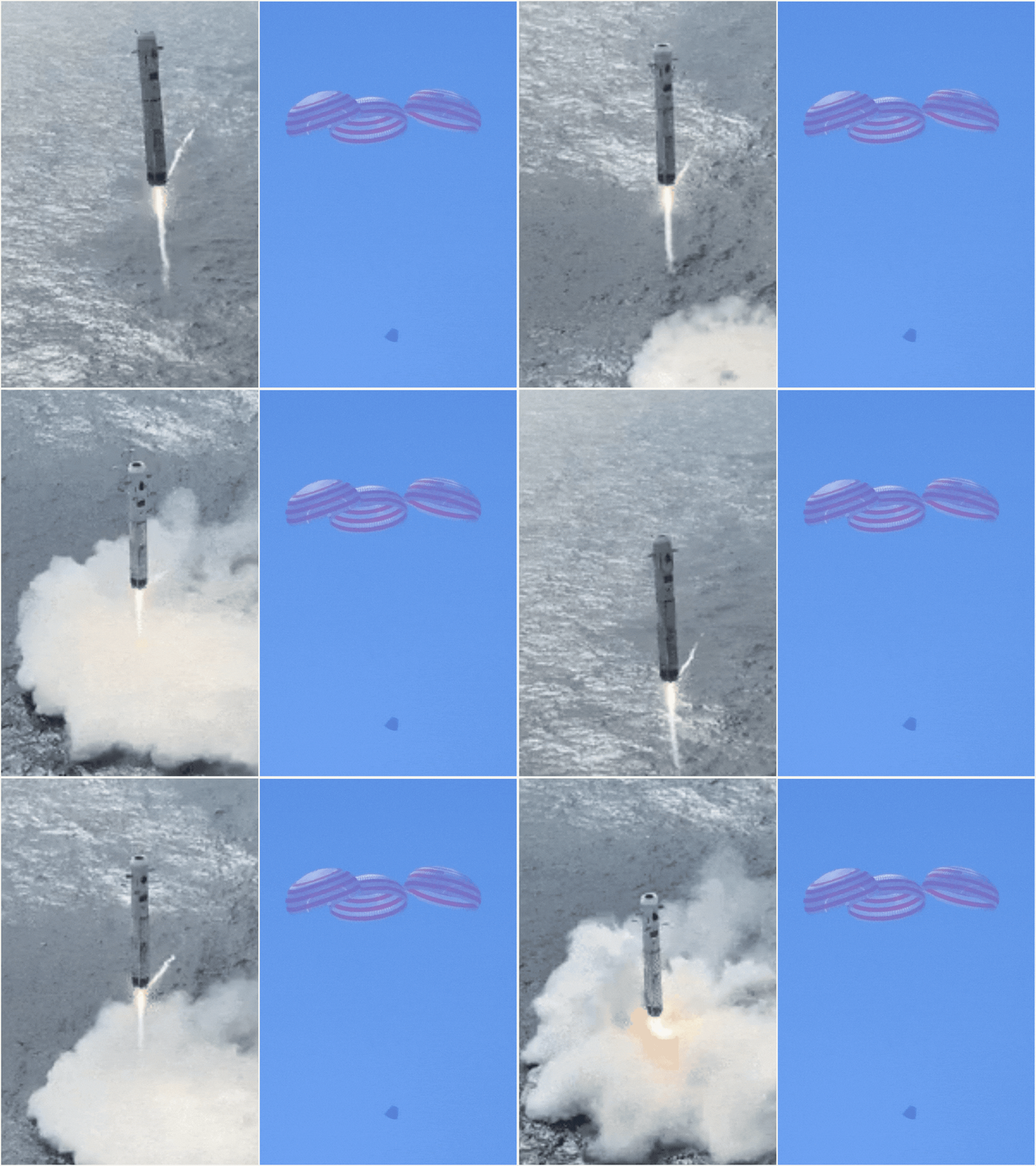
With the safe splashdown of both the Mengzhou capsule and the Long March 10A test booster, a small fleet of recovery ships moved in to collect both of them for study. Mengzhou was reportedly retrieved from the ocean eighty minutes after liftoff. A report from Xinhua shortly after the test highlighted that both taikonaut safety systems and reusable launch vehicle technologies were comprehensively demonstrated in one flight.
Not long after the conclusion of the in-flight abort test, the China Manned Space Agency announced its success, stating:
“Upon reaching the spacecraft’s maximum dynamic pressure escape threshold, the spacecraft received the escape command transmitted by the rocket and successfully executed separation and escape. The first-stage rocket body and the spacecraft’s reentry module both splashed down safely in the designated sea areas according to predefined procedures.”
The China Academy of Launch Vehicle Technology shared a similar post-test statement as well, with some more focus on the Long March 10A test booster, where the following was shared:
“This test successfully validated the functional performance of the rocket’s first-stage ascent and recovery segments, as well as the spacecraft’s maximum dynamic pressure escape and recovery capabilities. It confirmed the compatibility of relevant interfaces across all engineering systems, accumulating valuable flight data and engineering experience for future crewed lunar exploration missions.”
If there are any problems with these translations please reach out and correct me.
This test was critical to prove that Mengzhou can protect taikonauts in the event of a launch vehicle failure during flight. Now having completed both a launch pad escape and an in-flight abort test, the Mengzhou capsule is likely cleared for an uncrewed demonstration mission to the Tiangong Space Station later this year.
A bit later into the near future, the capsule will head around the Moon to test systems in cislunar space before a crewed lunar landing in 2028 or 2029. Progress on other spacecraft and hardware for the landing is reportedly progressing smoothly.
Collectively generating at most 637 tons of thrust.
An extension placed atop of the Long March 10 series static fire article (fired twice) to install four grid fins and catch hooks, making it the Long March 10A test booster.
Thats an amazing achievement , so Long March 10 should be improved further so that booster could precisely land on the sea based landing pad where using the wires the booster will be controlled. Very good job by guys at CALT as I believed from day one that anybody who could master this reusable booster technology in China , is the CALT.