

Eighth TJSW Satellite Delivered to Geostationary Space [Long March 3B/E Y119]
Yet another communications experiment spacecraft has been launched from the Xichang Satellite Launch Center for the site’s penultimate 2025 mission.

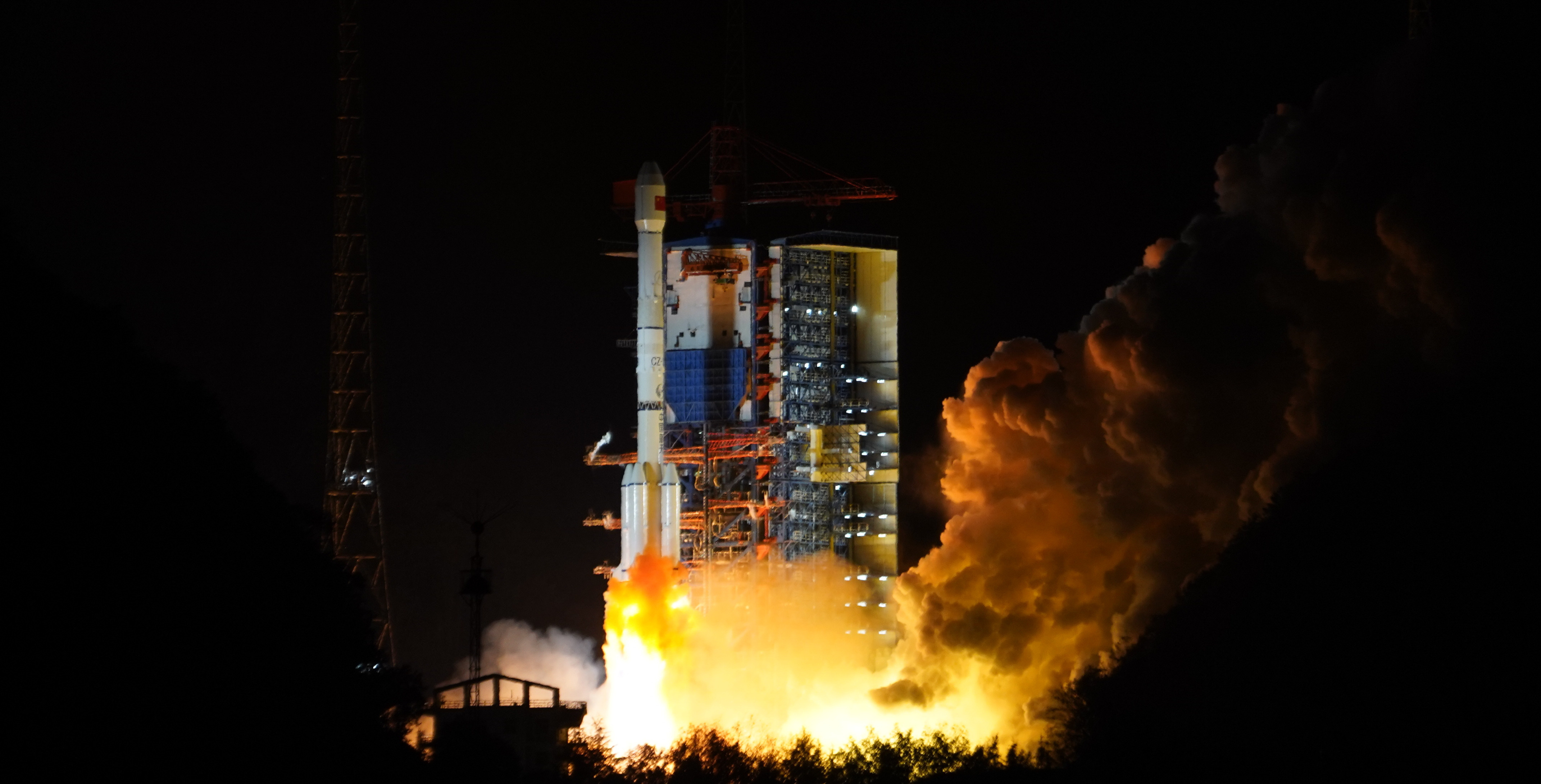
From Launch Complex 3 at the Xichang Satellite Launch Center, a Long March 3B/E blasted off at 23:08 pm China Standard Time (15:08 pm Universal Coordinated Time) on December 9th, carrying a single payload toward geostationary space.
The sole spacecraft was TJSW-22 (通信技术试验卫星二十二号), known as Communication Technology Experimental Satellite-22 in English. The Shanghai Academy of Spaceflight Technology produced this satellite on a shortened development cycle.
Like other TJSW satellites delivered toward geostationary space this year, tasks are reported to relate to communications, radio, television, and data transmission. Other uses are said to be for technology verification of multi-band high-speed throughput communications.
TJSW-22 is the eighth of its line to be carried into orbit this year. Starting in January, TJSW-14 was delivered by a Long March 3B/E, then in March, TJSW-15 rode atop another Long March 3B/E while TJSW-16 hitched a ride on a Long March 7A, which was then followed by TJSW-17 on a Long March 3B/E, and TJSW-19 flew on another Long March 3B/E, next TJSW-20 launched atop of a Long March 5 in October. Lastly in November, TJSW-21 was carried by a Long March 3B/E.
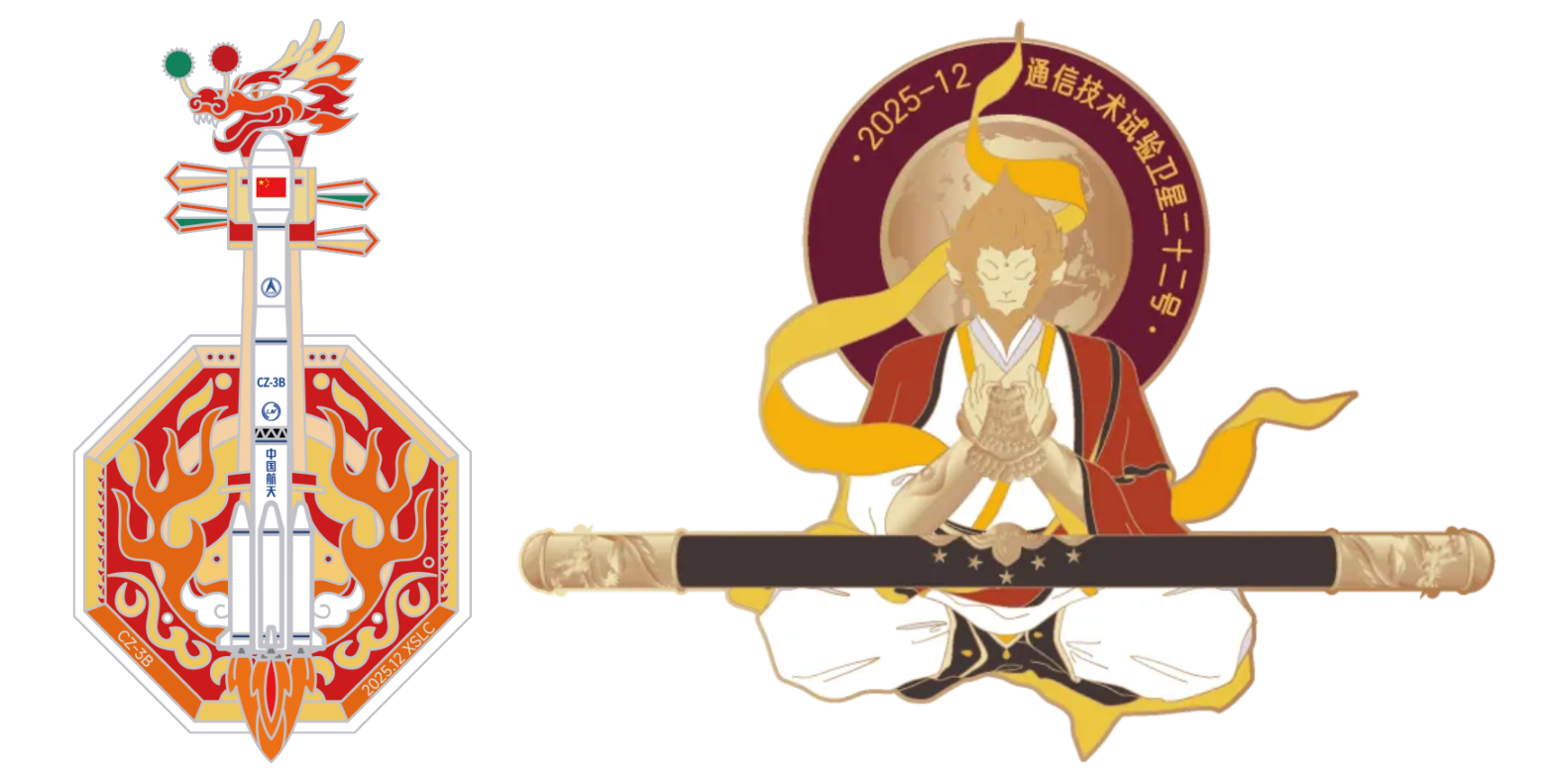
For their post-launch blog post today, the China Academy of Launch Vehicle Technology shared that Long March 3A series vehicles (the Long March 3A, 3B/E, and 3C/E) are now always being prepared in parallel. To maintain expected quality, responsibilities have been divided between Beijing for production and Xichang for launch, with teams at both sites working in shifts to meet high-density launch needs.
Twelve Long March 3B/E’s have flown this year with today’s launch, along with two Long March 3C/E’s in May and September, all successfully delivering payloads. Late last year, the China Academy of Launch Vehicle Technology stated that they were aiming to launch the Long March 3B/E over a dozen times. At least one more Long March 3A series vehicle is planned to fly in 2025.
With the successful conclusion of today’s Long March 3B/E mission, China has set a new national launch record with three flights into orbit within eighteen hours. The two other launches participating in that record were a Long March 6A with five GuoWang satellites and a Long March 4B with the Yaogan-47 spacecraft.
Today’s mission was the 113th launch of a Long March 3B vehicle, and the 615th launch of the Long March launch vehicle series. This was also the 83rd launch from China in 2025.
Liftoff video via 央视新闻 on Weibo.
Livestream replay via ThatSpaceDogeGuy on YouTube.
Check out the previous Long March 3B/E launch
Seventh TJSW Spacecraft of 2025 Launched via Xichang Mission [Long March 3B/E]
![Seventh TJSW Spacecraft of 2025 Launched via Xichang Mission [Long March 3B/E]](https://substackcdn.com/image/fetch/$s_!UCDX!,w_1300,h_650,c_fill,f_webp,q_auto:good,fl_progressive:steep,g_auto/https%3A%2F%2Fsubstack-post-media.s3.amazonaws.com%2Fpublic%2Fimages%2Fc0508c29-0666-4551-b97f-6bfb01dbc012_5576x2838.jpeg)
At 18:55 pm China Standard Time (10:55 am Universal Coordinated Time) on November 21st, a Long March 3B/E lifted off from Launch Complex 2 at the Xichang Satellite Launch Center, heading for beyond low Earth orbit on a southe…
What is the Long March 3B/E?
This section is for those less familiar with China’s Long March series of launch vehicles.
The Long March 3B is an older-generation geostationary orbit workhorse of the China Academy of Launch Vehicle Technology. The first two stages and four boosters of the rocket burn Dinitrogen Tetroxide and Unsymmetrical Dimethylhydrazine, with liquid hydrogen and liquid oxygen in the third-stage.
Over the rocket’s almost twenty-eight-year launch history, two versions of the vehicle have flown, the 3B and 3B/E. Since 2012, only the 3B/E variant has flown due to its increased payload capacity. The payload capacity of the launch vehicle is currently as follows:
11,500 kilograms to low Earth orbit
7,100 kilograms to a sun-synchronous orbit
5,500 kilograms into a geostationary transfer orbit
2,000 kilograms into geostationary orbit
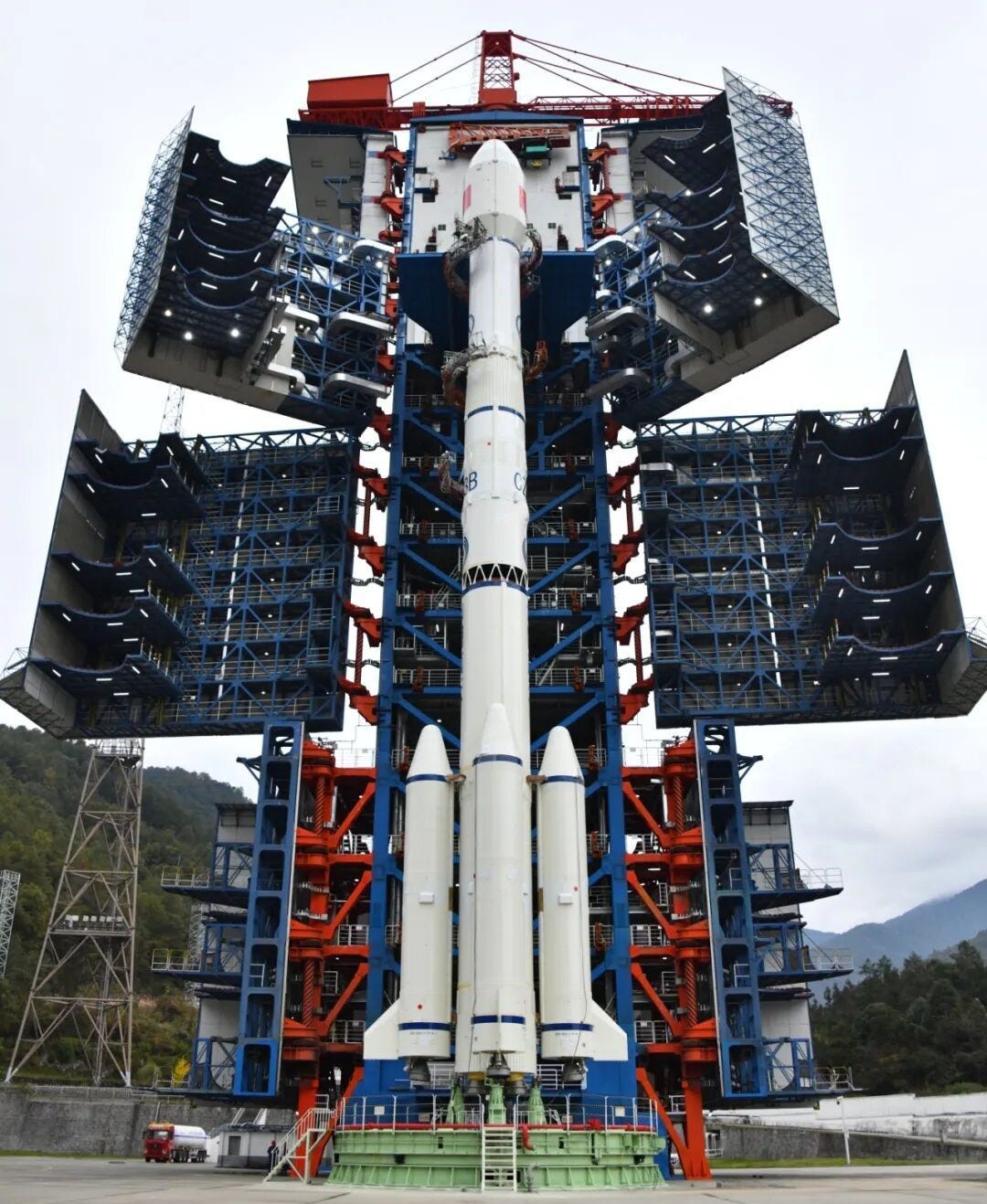
The first-stage is powered by four YF-21C engines that burn Dinitrogen Tetroxide and Unsymmetrical Dimethylhydrazine to generate 302 tons of thrust, while the boosters are powered by one YF-25 engine burning the same fuel to generate 72 tons of thrust each. Combined the four boosters and first stage generate a thrust of 590 tons. The second stage is powered by one YF-22E and four YF-23F vernier engines that also burn Dinitrogen Tetroxide and Unsymmetrical Dimethylhydrazine to generate 81 tons of thrust. The third-stage is powered by two YF-75 engines that burn liquid hydrogen and liquid oxygen to generate 17 tons of thrust.
On the launch pad, the Long March 3B/E is 56.3 meters tall and weighs 458,970 kilograms when fully fuelled. The first and second-stage have a diameter of 3.35 meters, while the third-stage has a diameter of 3 meters, along with the four boosters diameter of 2.25 meters, and the fairing has a diameter of 4.2 meters.
So far, every Long March 3B launch has occurred from the Xichang Satellite Launch Center, in the south of Sichuan province.

