

Latest Taiyuan Launch Expands GuoWang Mega-Constellation [Long March 6A Y15]
Five more spacecraft are in orbit to bring the space-based connectivity network closer to regular operation.

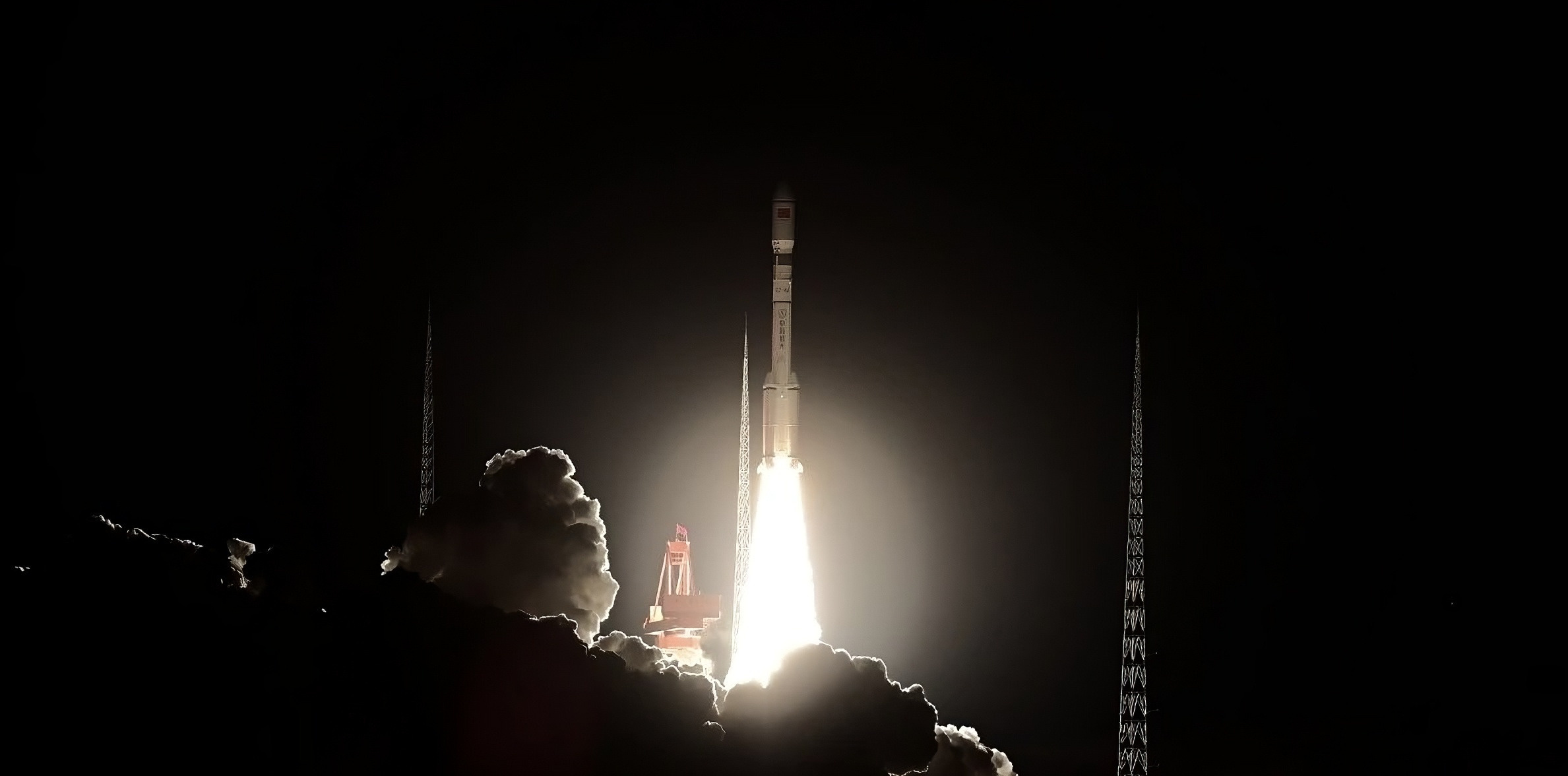
A Long March 6A roared from Launch Complex 9A at the Taiyuan Satellite Launch Center at 06:11 am China Standard Time on December 9th (22:11 pm Universal Coordinated Time on December 8th), carrying a group of satellites into polar orbit.
Heading into orbit via the Long March 6A was the fifteenth group of GuoWang satellites to establish the connectivity mega-constellation. Five spacecraft are expected1 to have been onboard, being manufactured by the China Academy of Space Technology.
The GuoWang (国网) constellation is operated by China Satellite Network Group, a state-owned enterprise, and wholly backed by the Chinese government. By the 2030s, up to 13,000 satellites could be in orbit, providing worldwide internet services; however, China-focused services will be the immediate priority. With today’s deployment, GuoWang has 118 satellites in space, moving further ahead of the Shanghai-backed Qianfan (千帆) mega-constellation, with its 108 satellites in orbit.
Two different satellite variants are believed to be in use for the GuoWang constellation, a larger version used on vehicles like the Long March 5B, while smaller ones are used when launched atop rockets such as the Long March 8A or Long March 12. An electric propulsion system is likely in use due to a planned operational orbit above 1000 kilometers, as it would be the most efficient means of deorbiting each spacecraft once they reach the end of their operational lives after several years.
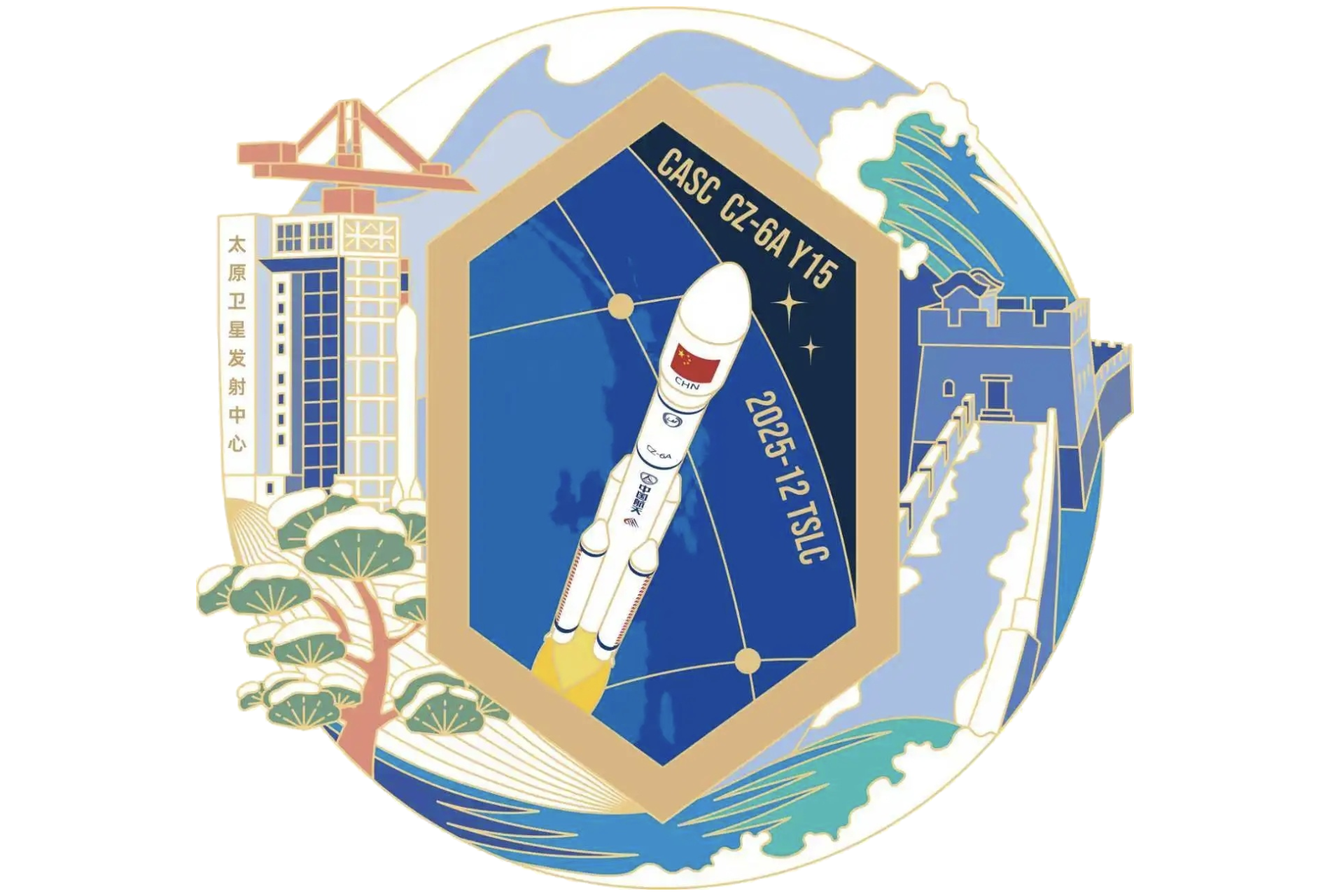
Following the successful conclusion of the mission, the Shanghai Academy of Spaceflight Technology shared that today’s Long March 6A had to be properly adapted to the low-temperature environment at Taiyuan, with temperatures as low as minus thirty degrees Celsius. To ensure mission success, additional protective devices were installed in at-risk areas (insulative materials or heaters) along with extra checks on hardware to ensure mission readiness for launch. Before hardware was placed onto the launch pad, comprehensive inspections of ground-side support equipment were performed to guarantee that launch efforts could proceed.
Today’s launch was the 19th mission for the Long March 6A, the 251st Long March vehicle launch from the Shanghai Academy of Spaceflight Technology, and the 613th launch of the Long March launch vehicle series. This was also the 81st launch from China in 2025.
Liftoff video via 航天五线谱 on Weibo.
Livestream replay via ThatSpaceDogeGuy on YouTube.
Check out the previous Long March 6A launch
Qianfan Returns With Taiyuan Launch [Long March 6A Y24]
![Qianfan Returns With Taiyuan Launch [Long March 6A Y24]](https://substackcdn.com/image/fetch/$s_!tmu6!,w_1300,h_650,c_fill,f_webp,q_auto:good,fl_progressive:steep,g_auto/https%3A%2F%2Fsubstack-post-media.s3.amazonaws.com%2Fpublic%2Fimages%2F4c4497d6-7944-466e-98eb-8cd625772f24_3840x1744.jpeg)
On October 17th at 15:08 pm China Standard Time (07:08 am Universal Coordinated Time), a Long March 6A blasted off from Launch Complex 9A at the Taiyuan Satellite Launch Center, carrying a group of satellites into polar orbit.
What is the Long March 6A?
This section is for those less familiar with China’s Long March series of launch vehicles.
The Long March 6A is the first new-generation launch vehicle in China to utilize a combination of solid and liquid propellants. This vehicle was developed by the Shanghai Academy of Spaceflight Technology and utilizes a two-and-a-half-stage design, the boosters burn an unspecified solid propellant with the first and second stages burning rocket-grade kerosene and liquid oxygen.
The payload capacity of the launch vehicle is currently as follows:
8,000 kilograms to low Earth orbit
4,500 kilograms to a 700-kilometer sun-synchronous orbit
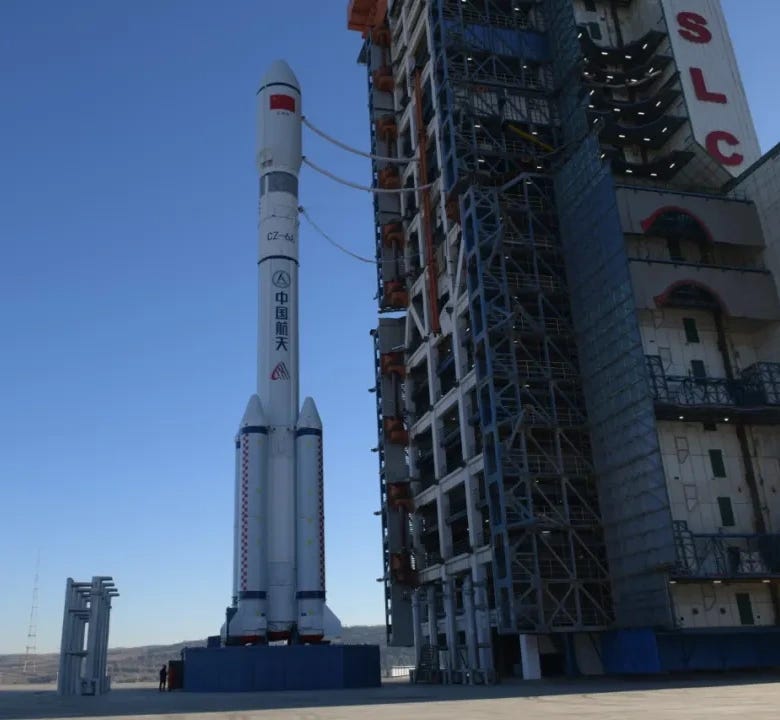
The first-stage is powered by two YF-100 engines, generating a combined thrust of approximately 244 tons using rocket-grade kerosene and liquid oxygen. The first-stage is augmented by four solid rocket boosters, each producing 124 tons of thrust from an unspecified solid propellant, resulting in a combined booster thrust of 492 tons. Together, the first-stage and boosters generate a total thrust of 736 tons. The second stage is powered by a single YF-115 engine, producing 18 tons of thrust using also burning rocket-grade kerosene and liquid oxygen.
On the launchpad, the Long March 6A is believed to be up to 52 meters tall, a handful of fairings are available, and weighs 530,000 kilograms when fully fuelled. The first and second stages of the vehicle have a diameter of 3.35 meters while the solid-fuelled boosters have a diameter of 2 meters, the fairing has a diameter of 4.2 meters.
So far, every Long March 6A has launched from the Taiyuan Satellite Launch Center, in the north of Shanxi province.


All four previous missions with the Long March 6A for GuoWang deployments have carried five satellites.