

Following America's Artemis-2 Moon Mission Through China
Humans flew around the Moon for the first time in over fifty years, reports from the other side of the Pacific followed the mission’s major milestones.

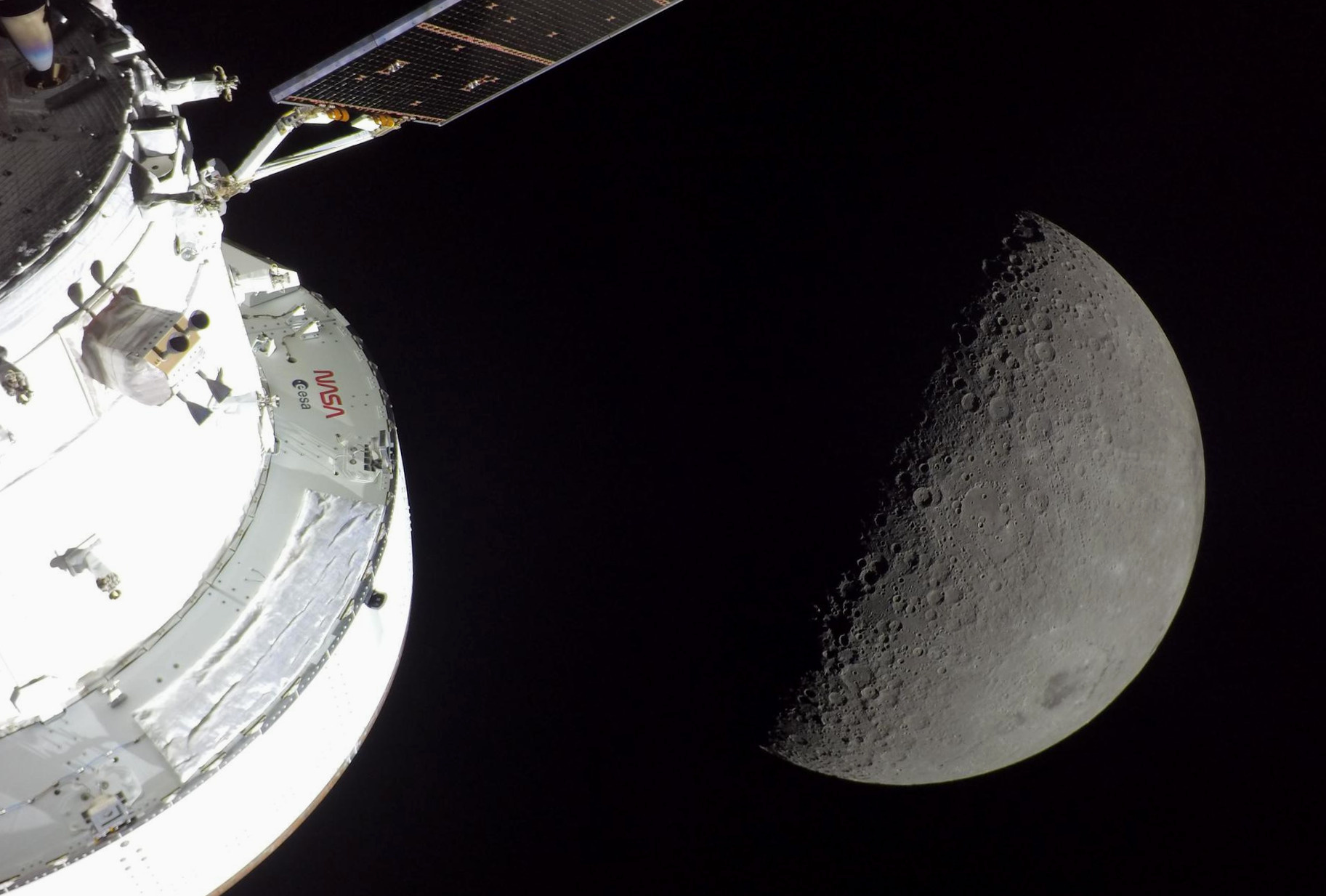
At the start of this month, between April 1st and 10th, the U.S. space agency, NASA, flew its Artemis-2 mission around the Moon, carrying four astronauts to lunar space for the first time since Apollo-17 in 1972.
The mission drew global attention while it took place, including from China, which was to be expected, as it was a kind of once-in-a-lifetime event. Of interest for global lunar efforts of the near future is how the mission was reported on in China, as the country is aiming to put taikonauts on the Moon before 2030.
To begin, the mission had a crew, with its four astronauts announced in 2023, being Commander Reid Wiseman, Pilot Victor Glover, and Mission Specialists Christina Koch and Jeremy Hansen. In writing about the crew, China News Service (中国新闻社) and Guancha (观察者网) were quick to highlight Artemis-2’s diversity and the firsts it will set (first woman in lunar space, via Koch; first person of colour in lunar space, via Glover; and first non-American in lunar space, via Hansen) alongside their previous spaceflight qualifications to be onboard1.
For those who remember, Artemis-2 did not target April as its launch target2 in the months leading up to launch. In September 2025 NASA pulled forward the mission to start in February. Xinhua (新华), in its reporting at the time, shared the agency’s rationale for doing so, while relaying some criticisms of the Orion spacecraft, the Space Launch System rocket, and other systems that are frequently raised in the West3, writing:
“In addition to technical design flaws in the Orion spacecraft, such as its heat shield, life support system4, and escape systems, the Space Launch System, tasked with launching it into orbit, has also been heavily criticized for its delayed development schedule and high costs, and is likely to be replaced by Starship5 in the future.”
Then a series of technical issues began to arise, ultimately delaying the mission to April. In speaking on that, Phoenix TV (凤凰卫视) added that those technical issues were the same ones that postponed Artemis-1 in 2022.
Eventually, on April 1st (April 2nd China Standard Time), the Artemis-2 mission began on the first day of its launch window, putting the Orion spacecraft into its staging orbit for the first day of the mission. Under an hour after liftoff, and not long after Orion was in Earth orbit, Xinhua put out a short piece to announce that, and later in the day had a dedicated feature discussing the importance of Artemis-2 in testing 21st-century American human lunar spaceflight systems ahead of later missions, with additional focus on present astronaut safety systems. Beijing News (新京报), meanwhile, explained why Artemis-2 is just a lunar flyby mission, and how its trajectory differs from Apollo-13’s, instead of landing on the Moon despite the U.S. proving it could do so via the Apollo missions:
“Production lines have disappeared, technological systems have evolved, and a new generation of engineers has taken the reins; the hardware and safety standards of that era can no longer meet today’s requirements. … Conducting unmanned test flights first, followed by crewed lunar orbits, and finally a lunar landing is the accepted, prudent approach in modern spaceflight. This gap of more than fifty years [since Apollo] has effectively brought all nations back to the same starting line.”
The days post launch had a news lull, as the Orion spacecraft was slowly flying out to the Moon. Reports picked up again once in lunar space, primarily around the mission’s distance record of 406,778 kilometers and first-seen views of the illuminated far side with the human eye. Xinhua’s report was published with a handful of incredible images taken by the four astronauts on board. Another piece a day after the record repeated much of what Beijing News said about the mission’s choice to fly around.

Another slowing of news occurred when Orion was en route towards Earth, with the Moon behind it, to conclude the Artemis-2 mission. Reporting of the mission’s conclusion waited until Wiseman, Glover, Koch, and Hansen were outside of their spacecraft and confirmed to be onboard recovery vessels in the Pacific Ocean off the coast of California. Xinhua again had its reporting accompanied by wonderful images, this time via NASA’s media teams.
A detailed report after Artemis-2’s conclusion was also published by Xinhua, outlining what the mission achieved. Some notable excerpts are:
“During the flight, the astronauts evaluated key equipment, including the spacecraft’s life support system, radiation sensors, and a new spacesuit. The mission also validated communication systems in deep space, utilizing laser links to transmit data.”
“The astronauts onboard directly observed certain regions of the Moon’s far side. Since the human eye’s ability to discern the Moon’s surface topography and textural features can compensate for the limitations of instrumental observations, offering a completely new perspective for lunar research.”
“Although this mission successfully validated several deep-space technologies and conducted scientific exploration … Clive Neale, a planetary geologist at the University of Notre Dame, commented that ‘the mission’s greatest value lies in public relations’, adding that ‘science is merely an afterthought’ and that political considerations outweigh scientific value.”6
It was also noted before and after the mission in Xinhua reports that future Artemis missions, which aim to land on the lunar surface, are behind schedule due to delays and issues with contracted lunar landers and spacesuits, which were spoken of in passing despite being in a precarious state. Recently, Blue Origin’s New Glenn managed to fly into the complete wrong orbit7 ahead of the delivery of its first lunar landing system, which will build expertise for a crewed system, later this year. SpaceX’s Starship launch vehicle, which will have a lunar lander variant, has yet to reach orbit and spent most of 2025 exploding during test flights. On the spacesuit side, one of two providers dropped out, and the other is reportedly in financial difficulty.
Notably, mention of China’s lunar exploration programs, robotic and crewed, were minimal8, with items like the Queqiao-2 relay satellite brought up briefly in reference to a communications blackout during the lunar flyby. No reports recognized the U.S.’ perception of a so-called new space race, which China doesn’t care about.
If there are any problems with this pieces’ translations please reach out and correct me.
Note: Artemis-2 was Jeremy Hansen’s first spaceflight.
It did, however, expect the mission to fly that month back in December 2024 following an investigation into heat shield anomalies after the Artemis-1 mission.
SpaceX’s fully reusable launch vehicle, currently in development.
For more related to this please see: ‘Did NASA’s Artemis II mission really do lunar science or go to the Moon for all humanity?’
New Glenn was aiming to fly into a 49.4-degree orbit, it ended up in a 36.1-degree orbit before an expensive manoeuvre to place it somewhat near a usable orbit, but that was still too low.
The most significant mention came via The Paper (澎湃新闻) on April 3rd.