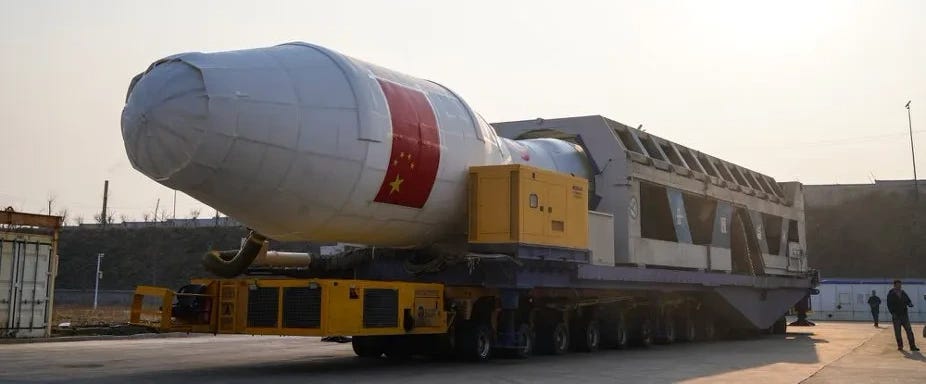
GuoWang Test Satellite Launched by High-Flying South China Sea Mission [Jielong-3]
One satellite was lofted into space by the four-stage solid-propellant Jielong-3, said to have achieved its highest altitude orbit to date.

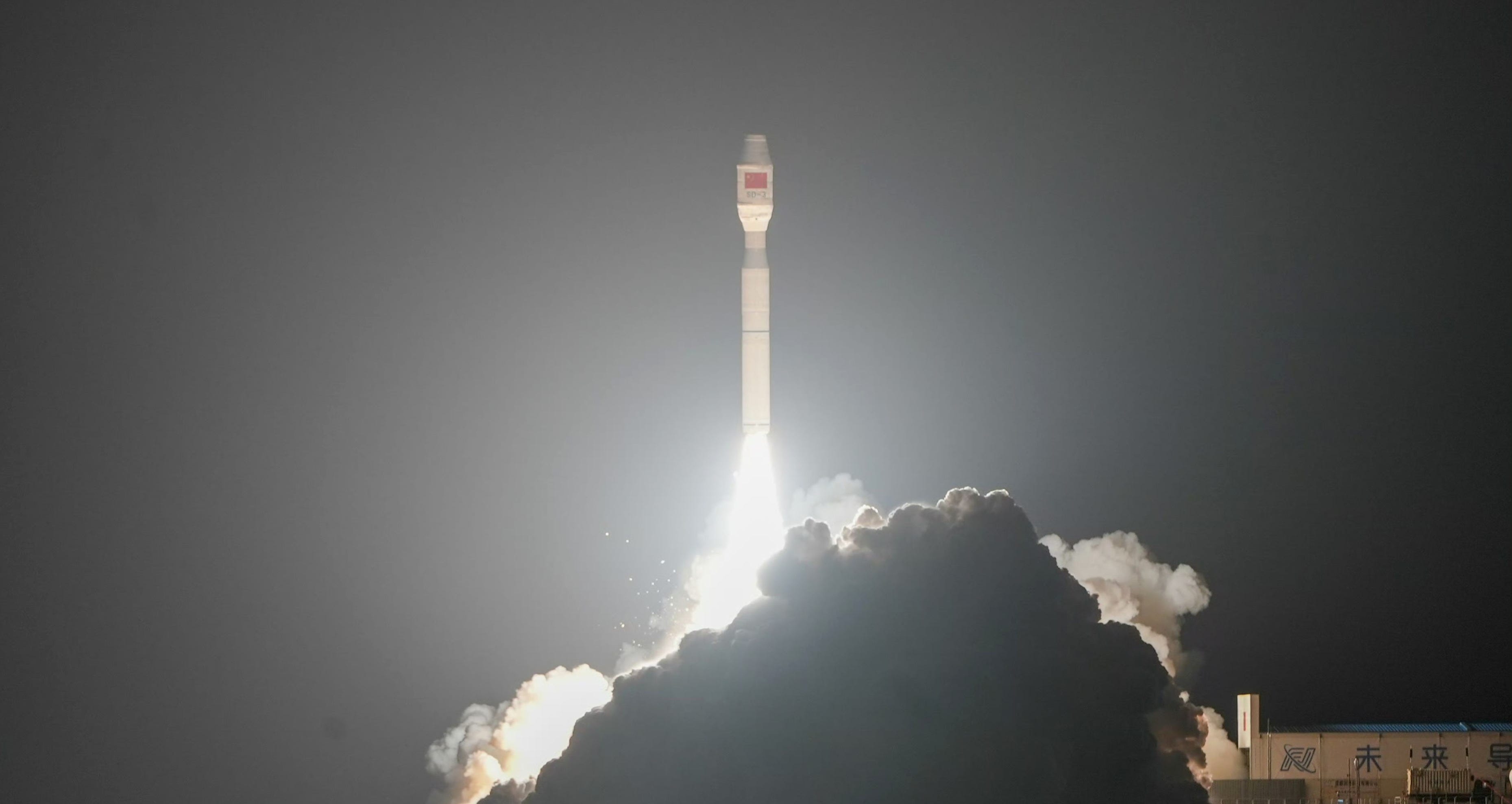
Near Yangjiang (阳江市), Guangdong (广东) province, a Jielong-3 blasted off from a dedicated launch ship from the South China Sea at 19:32 pm China Standard Time (11:32 am Universal Coordinated Time) on April 11th, flying towards sun-synchronous orbit with a single payload.
Atop of the vehicle was just one Weixing Hulianwang Jishu Shiyan (卫星互联网技术试验卫星), translating to Satellite Internet Technology Experimental Satellite, for testing upgrades to China’s space-based connectivity mega-constellations. Development of the test satellite was handled by the China Academy of Space Technology.
Any breakthroughs made with the satellite will primarily be applied to the Central Government-supported GuoWang (国网) mega-constellation. With today’s launch, twenty-five test satellites have been launched since 2021.
Designs of recent test satellites are not known, but they are likely similar to operational GuoWang spacecraft, which has limited details confirmed.
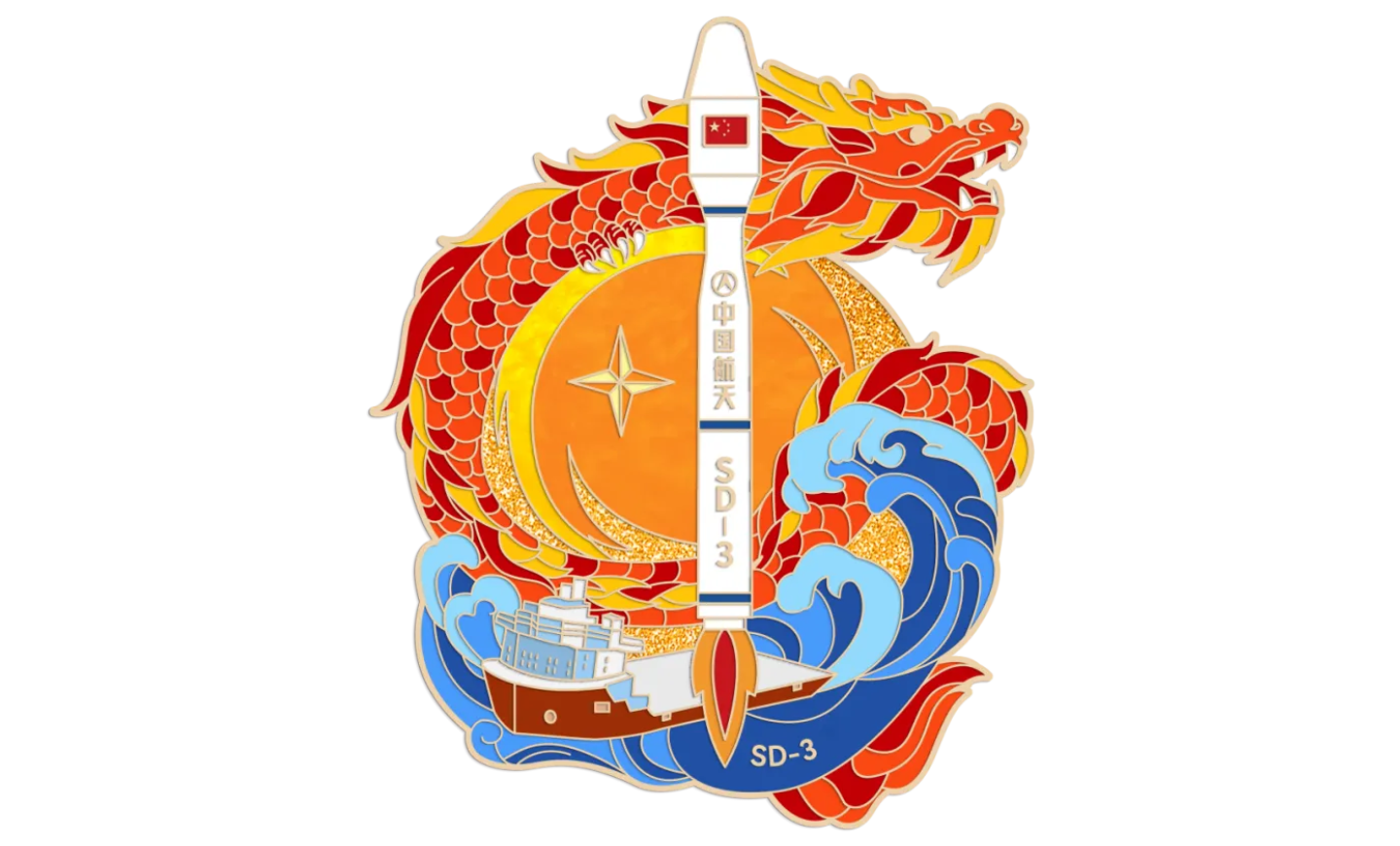
In their post-launch blog post, the China Academy of Launch Vehicle Technology was keen to highlight that this Jielong-3 mission came within twenty days of the last, flying from the Yellow Sea on March 22nd. That fast turnaround was said to have been enabled by parallel launch campaigns being run out of preparation facilities at the Haiyang Oriental Spaceport (海阳东方航天港), in Shandong (山东) province.
Upgrades and new capabilities were noted by the Launch Vehicle Academy too, revealing that they plan to improve Jielong-3’s first-stage and fourth-stage to improve the vehicle’s capabilities, likely to carry up to 2,000 kilograms. Today’s launch was claimed to have flown Jielong-3 into its highest orbital altitude to date, with the Launch Vehicle Academy writing:
“This mission marks the highest orbital altitude and the most challenging deorbit maneuver in the history of Jielong-3 rocket launches. To address this, the development team meticulously designed control parameters and optimized the deorbiting attitude to ensure a reliable departure.”
If there are any problems with this translation please reach out and correct me.
A day after launch, Jielong-3’s fourth stage was tracked and catalogued in an orbit peaking at 1,002 kilometers. Before that, the highest point for a launch mission the launch vehicle had reached was 656 kilometers.
Today’s launch was the 11th mission for the Jielong-3 launch vehicle. This was also the 22nd launch from China in 2026.
Liftoff footage via 我们的太空 on WeChat.
Check out the previous Jielong-3 launch
What is Jielong-3?
This section is for those less familiar with China’s various commercial launch vehicles.
Jielong-3, also referred to as Smart Dragon-3, is a four-stage solid-fueled launch vehicle manufactured by the China Academy of Launch Vehicle Technology. The vehicle is operated commercially via a wholly-owned subsidiary of the China Academy of Launch Vehicle Technology called China Rocket. All four stages are believed to burn an unspecified solid propellant, with the first-stage generating 200 tons of thrust.
The payload capacity of the launch vehicle is currently as follows:
1,600 kilograms to a 500-kilometer sun-synchronus orbit.
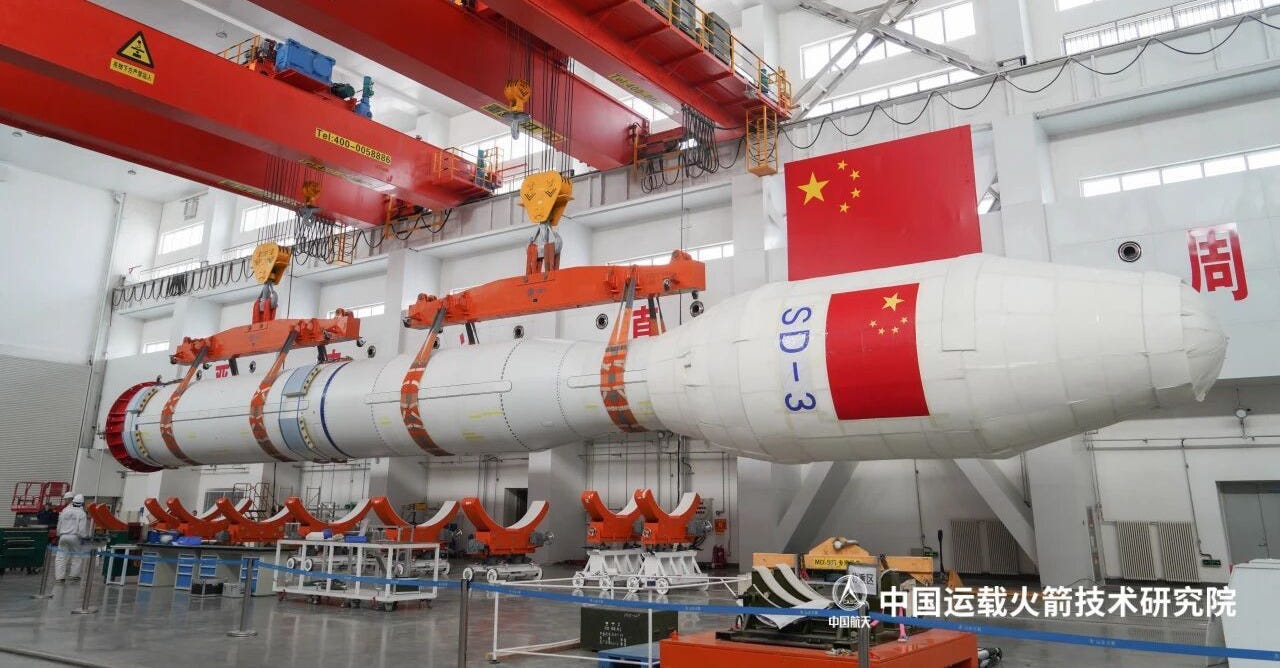
On a launch platform, Jielong-3 is believed to be 31 meters tall. Details about the four stages of the vehicle are scarce but the first two stages have a diameter of 2.64 meters, with the fairing having a diameter of 3.35 meters. When prepared for launch Jielong-3 weighs a believed 145,000 kilograms.
So far Jielong-3 has flown from sea launch platforms in the East China Sea, South China Sea, and Yellow Sea.