

Handful of CGSTL-Built Satellites Delivered by CAS Space [Kinetica-1 Y14]
Eight new remote sensing satellites are now in Earth orbit, for imaging a variety of targets on behalf of provincial and municipal operators.

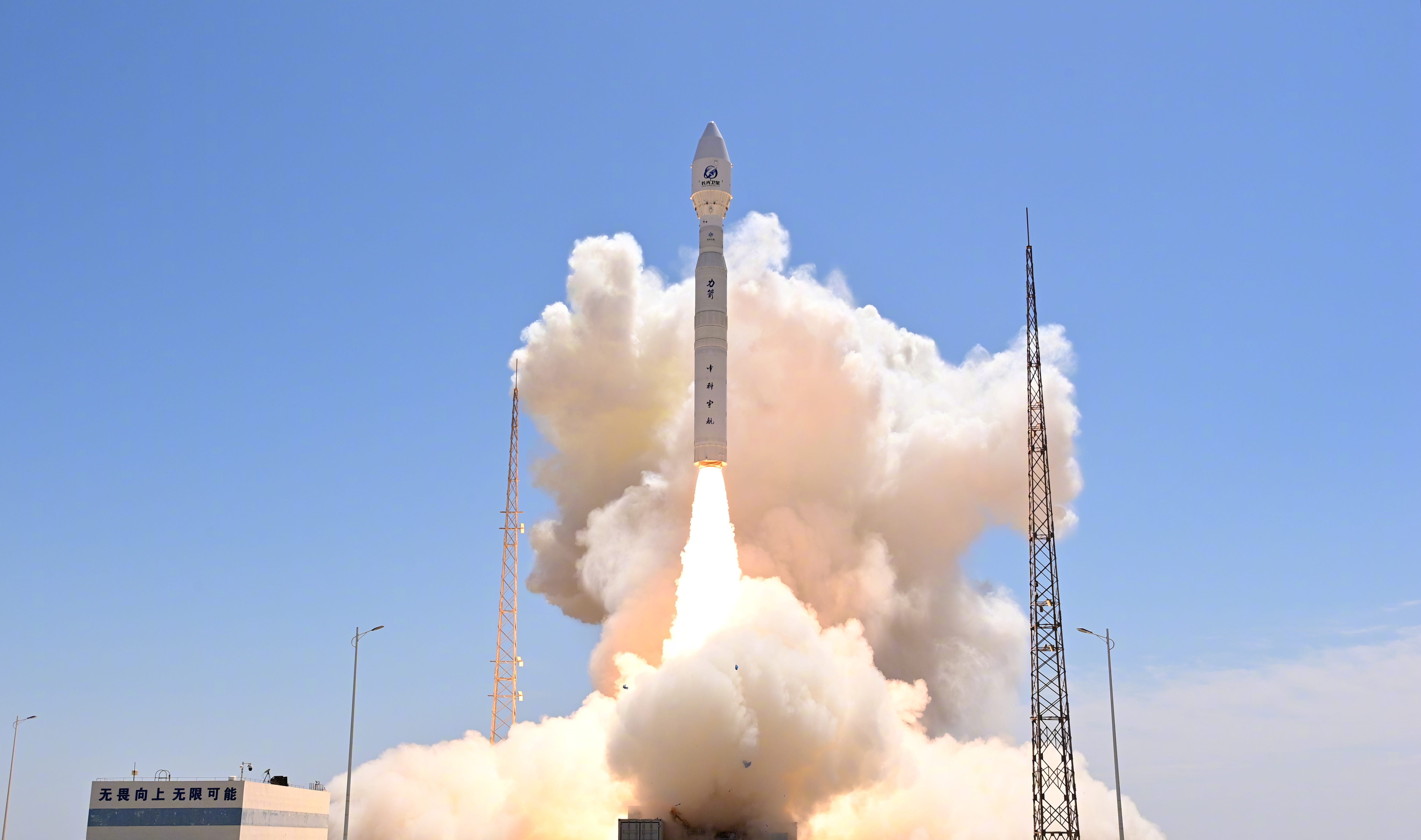
At 11:44 am China Standard Time (03:44 am Universal Coordinated Time) on June 15th from Launch Area 130 at the Jiuquan Satellite Launch Center, CAS Space’s Kinetica-1 launch vehicle flew towards a sun-synchronous orbit with a handful of rideshare payloads for a few operators.
Changguang Satellite Technology Co Ltd (长光卫星技术股份有限公司), often shortened to CGSTL, had several satellites it manufactured launched via this mission, starting with its own Jilin Gaofen-07C04 (吉星高分07C04星), for an expansion of its Jilin-1 (吉林一号) Earth imaging constellation. Details were few about this satellite, beyond its remote sensing purpose, but it likely has an imaging resolution of about 0.5 meters alongside non-Earth target imaging capabilities.
Other satellites worked on by CGSTL atop of today’s launch, and given greater focus, were:
Caiyun Opitcal-01 (彩云光学01星), a high-resolution optical remote sensing satellite dedicated to Yunnan (云南) province for geological disaster prevention and monitoring of natural resources, jointly backed by the Yunnan Provincial Bureau of Geology and Mineral Resources (云南省地矿局) and the Yunnan Geological and Mining Group (云南地矿集团).
Antie-03 (安铁03星), also a high-resolution optical remote sensing satellite for Quanzhou Zhongke Xingqiao Aerospace Technology Co Ltd (泉州中科星桥空天技术有限公司), supported by Anxi County People’s Government (安溪县人民政府), but for ‘smart’ crop monitoring and management for Fujian (福建) province’s tea industry as part of its digital upgrading.
‘Lichuan Red (利川红)’, another a high-resolution optical remote sensing satellite that is for the city of Lichuan (利川市), in Hubei (湖北) province, to monitor its ecological situation and resources, while supporting its tea industry, backed by Lichuan Municipal People's Government (利川市人民政府), who have technical support from Hubei Lirui Technology Co Ltd (湖北利瑞科技有限公司).
Cultural Relics-01 (文物01星), tasked with monitoring cultural heritage sites from space by the National Cultural Heritage Administration (国家文物局), via its high-resolution optical remote sensing capabilities.
Three other satellites launched were not named by CAS Space and are yet to be claimed by the enterprises that contracted or own them. Based on prior statements, they appear to have been developed by CGSTL, where the same five satellites are named with an unknown three.
Emposat (航天驭星), a spacecraft tracking, telemetry, and control enterprise, says they provided communications support for the satellites onboard today’s Kinetica-1.
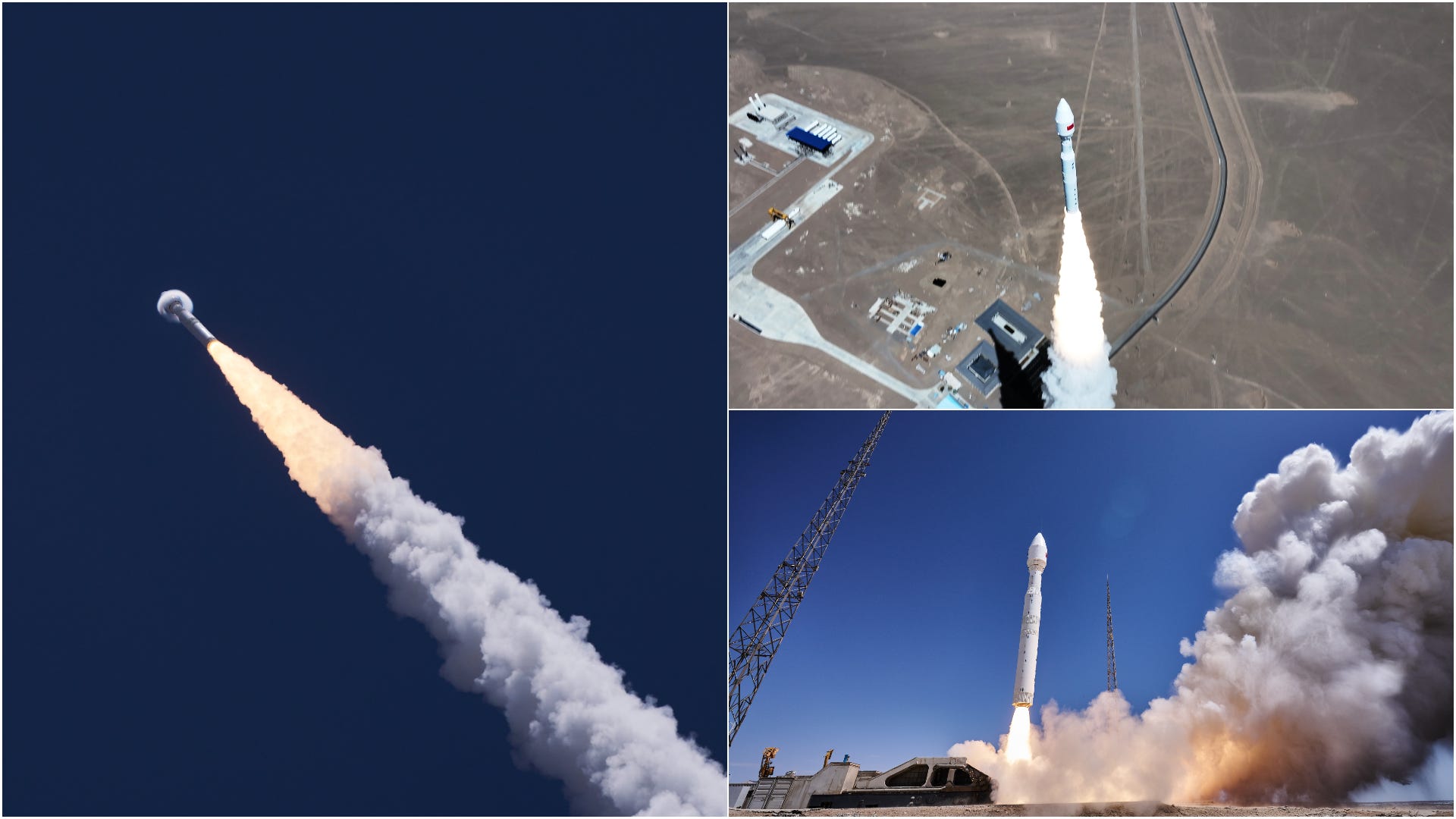
In the lead-up to this launch mission, CAS Space shared that its factory in Guangzhou (广州), Guangdong (广东) province, has continued to prove mature and stable delivery of completed Kinetica-1 launch vehicles at a rapid rate, meeting expected internal low-cost, mass-production aims. In the future, the company believes they may be able to continually fly on a monthly cadence, as has been shown by missions in April and May, supported by other launches from floating platforms at sea.
Today’s launch was the 14th launch for Kinetica-1, and the 15th for CAS Space through its Kinetica family of launch vehicles. This was also the 40th launch from China in 2026.
Liftoff video via 我们的太空 on WeChat.
Check out the previous Kinetica-1 launch
What is Kinetica-1?
This section is for those less familiar with China’s various commercial launch vehicles.
Kinetica-1 is CAS Space’s first launch vehicle and consists of four stages, all burning solid fuel. CAS Space offers the ability to launch a single satellite to utilize all of the rocket’s payload capacity, however more ‘rideshare’ missions occur for multiple satellites to be delivered in one launch.
The payload capacity of the launch vehicle is currently as follows:
2,000 kilograms to low Earth orbit
1,500 kilograms to a 500-kilometer sun-synchronous orbit
The first-stage is powered by a solid rocket booster that burns an unspecified solid fuel, generating 200 tons of thrust. The second-stage is also powered by a solid rocket booster, producing 110 tons of thrust with the same unidentified propellant. The-third stage, also using the undisclosed propellant, generates 45 tons of thrust. Finally, the fourth-stage is powered by another solid rocket booster, providing 8 tons of thrust with the same solid propellant.
On its launch pad, Kinetica-1 stands at 30 meters tall. The first two stages have a diameter of 2.65 meters, the fairing has a diameter of either 2.65 or 3.35 meters. When prepared for launch Kinetica-1 weighs a believed 135,000 kilograms.
So far, Kinetica-1 has flown all of its missions from CAS Space’s launch facility at the Jiuquan Satellite Launch Center.

