

CAS Space Delivers City-Backed Earth Imaging Satellites From Jiuquan [Kinetica-1 Y13]
For the company's fourteenth trek towards orbit, over one hundred total satellites have now been delivered for customers.

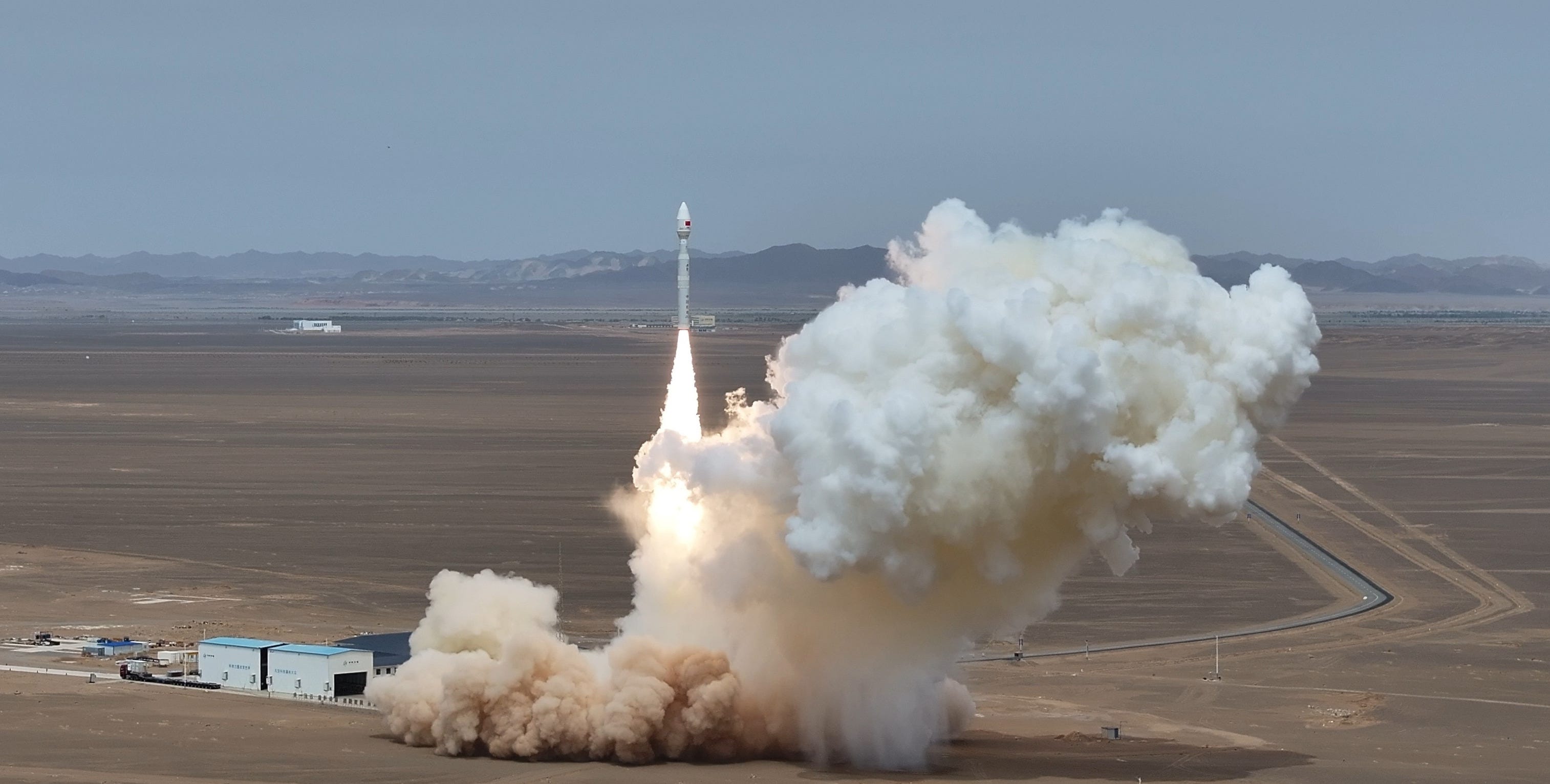
CAS Space’s Kinetica-1 launch vehicle soared from Launch Area 130 at the Jiuquan Satellite Launch Center at 12:33 pm China Standard Time (04:33 am Universal Coordinated Time) on May 15th, heading towards sun-synchronous orbit with a handful of customer payloads, enough to bring the company’s cumulative total over one hundred.
The primary satellites atop of the vehicle today were Taijing-3-05A (泰景三号05A星) and Taijing-3-05B (泰景三号05B星), also known as Rongcheng-1-01 (蓉城一号01星) and Rongcheng-1-02 (蓉城一号02星), produced by Minospace (微纳星空) on behalf of the city of Chengdu (成都市), in Sichuan (四川) province. Those satellites will primarily perform high-resolution remote sensing imaging of the city and surrounding regions to improve planning efforts, for new developments and emergency preparation, and to support the local agricultural industry.
Another city-backed spacecraft, this one by Hubei (湖北) province’s Wuhan (武汉市), is Tianyi-50 (天仪50), alternatively dubbed Dianjian-1 (电建一号), and developed by SpaceTY (天仪研究院), a X-band synthetic aperture radar satellite that is designed to monitor hydroelectric power plants, for understanding risks and hazards from them with great detail. For that task, the satellite will revisit and image the same sites every eleven days.
An experimental satellite known as Tianyan-27 (天雁27), or Youxi (有戏号), from Shanghai Xuntian Qianhe Space Technology Co Ltd (上海巡天千河空间技术有限公司), was also onboard. The Tianyan series has been used to test new space technologies by partnering with various research and scientific institutions since the first satellite deployment in December 2019. It is additionally what CAS Space mentioned as a ‘cultural communication satellite’ that will stream live views of Earth below1, with support from the China National Space Administration and the Cultural Communication Center of the China Foreign Languages Publishing Administration (中国外文局文化传播中心). This satellite will reportedly test onboard AI processing of ‘ultra-high resolution’ remote sensing data, powered by experimental flexible heterogeneous crystalline silicon solar cells.
Lastly, there was Jilin-1 Gaofen-05D55 (吉林一号高分03D55) from Changguang Satellite Technology Co Ltd (长光卫星技术股份有限公司)2, as part of its Jilin-1 (吉林一号) Earth imaging constellation. Last month another Kinetica-1 delivered eight such satellites, with the new stated capability to capture images of other spacecraft in orbit.
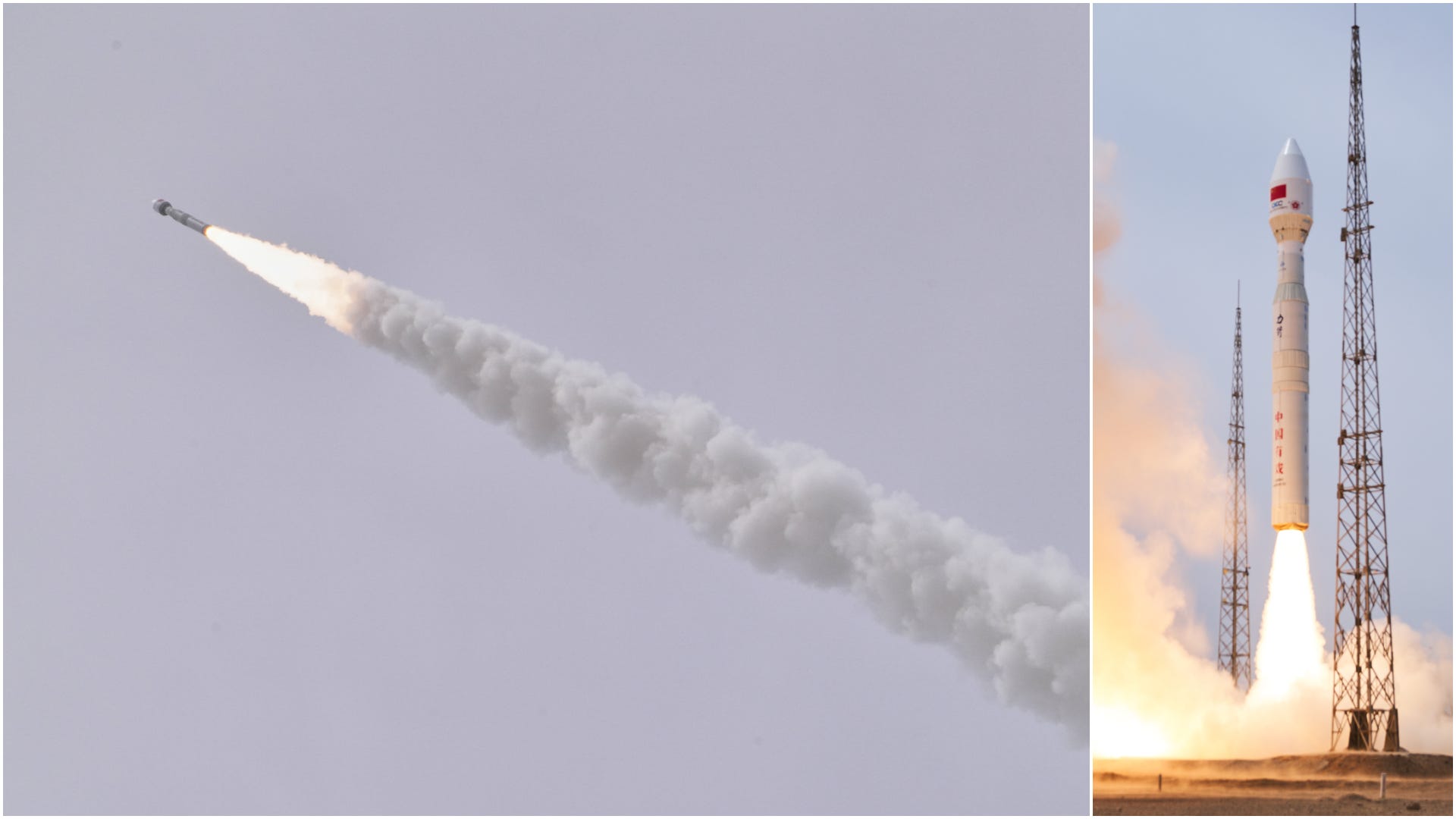
This launch of Kinetica-1 comes just over a month after its last, resuming high-frequency flights, delayed for Kinetica-2’s debut, that CAS Space spoke of in their post-mission blog post. Last year, the launch vehicle flew four times between August and December.
Sometime this year, Kinetica-1 will perform its first launch from a floating platform, providing an alternative set of launch locations. Rehearsals with a mockup of the launch vehicle are currently underway.
Today’s launch was the 13th launch for Kinetica-1, and the 14th for CAS Space through its Kinetica family of launch vehicles. This was also the 30th launch from China in 2026.
Litfoff video via 大漠问天 on WeChat.
Check out the previous Kinetica-1 launch
CGSTL Deploys Eight Imaging Satellite With Non-Earth Target Capabilites [Kinetica-1 Y12]
![CGSTL Deploys Eight Imaging Satellite With Non-Earth Target Capabilites [Kinetica-1 Y12]](https://substackcdn.com/image/fetch/$s_!xPv1!,w_1300,h_650,c_fill,f_webp,q_auto:good,fl_progressive:steep,g_auto/https%3A%2F%2Fsubstack-post-media.s3.amazonaws.com%2Fpublic%2Fimages%2F35bfc5cc-a2cd-4728-90a9-5b1230d14cf8_4233x2162.jpeg)
At 12:03 pm China Standard Time (04:03 Universal Coordinated Time) on April 14th, CAS Space’s Kinetica-1 launch vehicle blasted off from Launch Area 130 at the Jiuquan Satellite Launch Center, heading towards …
What is Kinetica-1?
This section is for those less familiar with China’s various commercial launch vehicles.
Kinetica-1 is CAS Space’s first launch vehicle and consists of four stages, all burning solid fuel. CAS Space offers the ability to launch a single satellite to utilize all of the rocket’s payload capacity, however more ‘rideshare’ missions occur for multiple satellites to be delivered in one launch.
The payload capacity of the launch vehicle is currently as follows:
2,000 kilograms to low Earth orbit
1,500 kilograms to a 500-kilometer sun-synchronous orbit
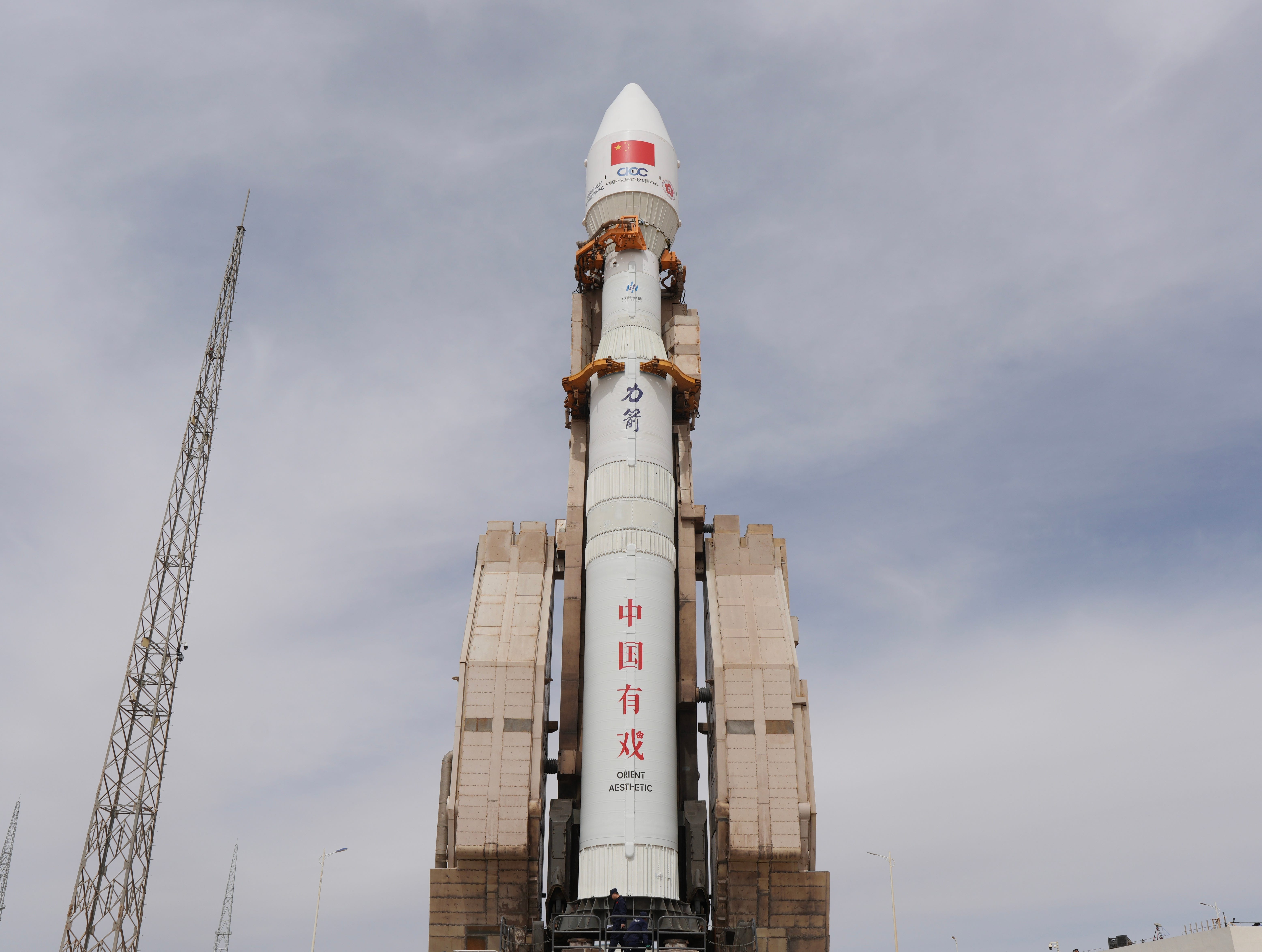
The first-stage is powered by a solid rocket booster that burns an unspecified solid fuel, generating 200 tons of thrust. The second-stage is also powered by a solid rocket booster, producing 110 tons of thrust with the same unidentified propellant. The-third stage, also using the undisclosed propellant, generates 45 tons of thrust. Finally, the fourth-stage is powered by another solid rocket booster, providing 8 tons of thrust with the same solid propellant.
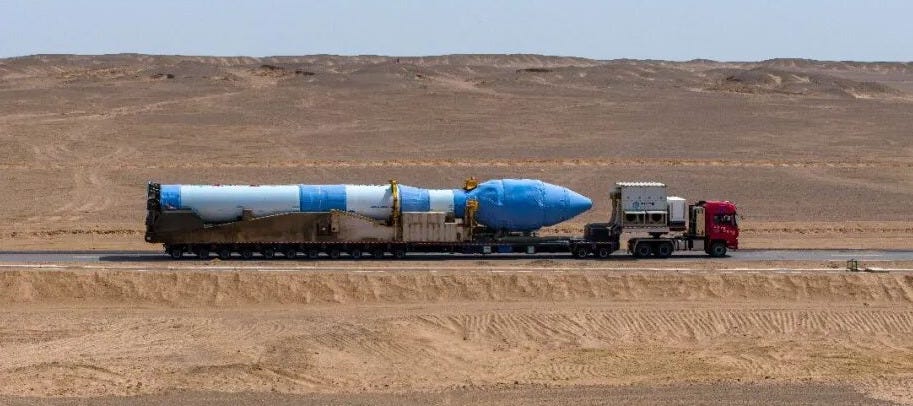
On its launch pad, Kinetica-1 stands at 30 meters tall. The first two stages have a diameter of 2.65 meters, the fairing has a diameter of either 2.65 or 3.35 meters. When prepared for launch Kinetica-1 weighs a believed 135,000 kilograms.
So far, Kinetica-1 has flown all of its missions from CAS Space’s launch facility at the Jiuquan Satellite Launch Center.
Supposedly via Chinese social media as well as TikTok, Facebook, and ‘X’ (Twitter).