Kinetica-2 Preparing for September Second Flight, Testing Engine Upgrades
New systems are being tested for use in a few years, while developed hardware is being prepared to fly again.

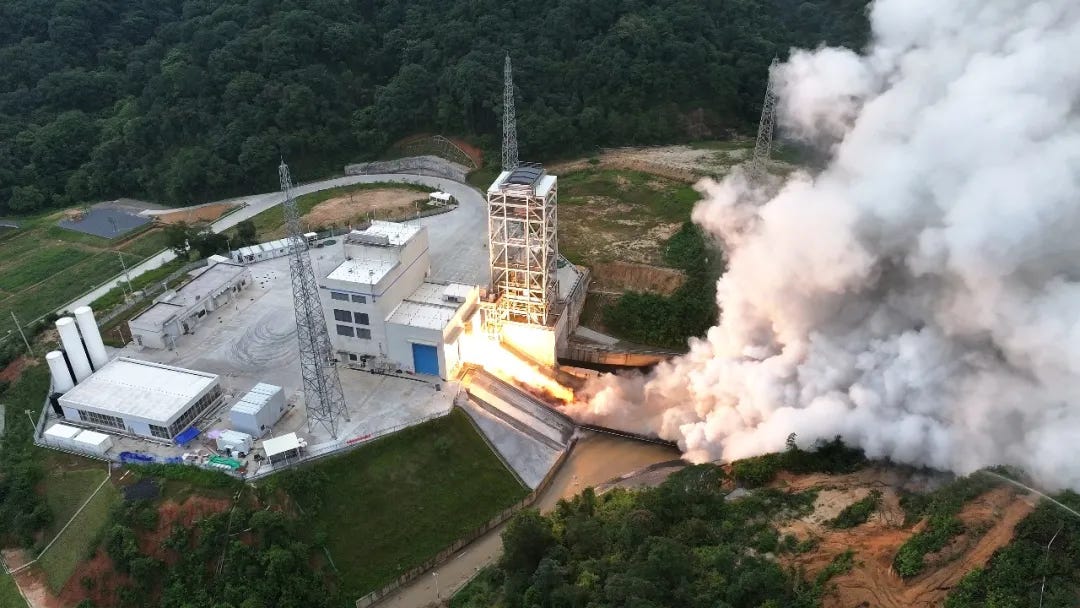
Building on earlier tests from the first months of this year, CAS Space has continued to perform development firings of its Kinecore-2 (力擎二号) engine, at its firing center in Conghua (从化区) within Guangzhou (广州市), Guangdong (广东) province, ahead of its introduction on the tri-core Kinetica-2 launch vehicle. The engine burns rocket-grade kerosene and liquid oxygen to generate 110 tons of thrust.
In recent weeks, the engine performed two test firings in quick succession, starting without the help of engineers, to confirm its ability to routinely start up, shut down, and operate stably when firing for longer than designed, as detailed on June 30th. Those firings were 220 seconds (3 minutes, 40 seconds) and 400 seconds (6 minutes, 40 seconds) long respectively, for a cumulative firing time of 620 seconds (10 minutes, 20 seconds). Those firings with a single engine had it operate for three and a half times longer than needed with Kinetica-2.
The specific Kinecore-2 unit used for the firing has now fired for over 2,000 seconds (33 minutes, 20 seconds) while remaining in operational condition, according to CAS Space.
By firing for that long, CAS Space says it validates its engine teams’ mastery of Kinecore-2’s design and its production of the turbopumps and injectors to be able to possess the technology needed for reusable rocket engines.

Through development efforts so far, Kinecore-2 has performed over 5,000 seconds (83 minutes, 20 seconds) of test firings through a handful of development units. The engine is designed and produced internally at CAS Space.
Once Kinecore-2 development sufficiently meets space sector standards, CAS Space plans to introduce the engine to Kinetica-2 in several missions from now, replacing the externally sourced YF-102 from the state-owned Academy of Aerospace Liquid Propulsion Technology (航天推进技术研究院), to make the tri-core first-stage reusable. That is set to happen by 2028.
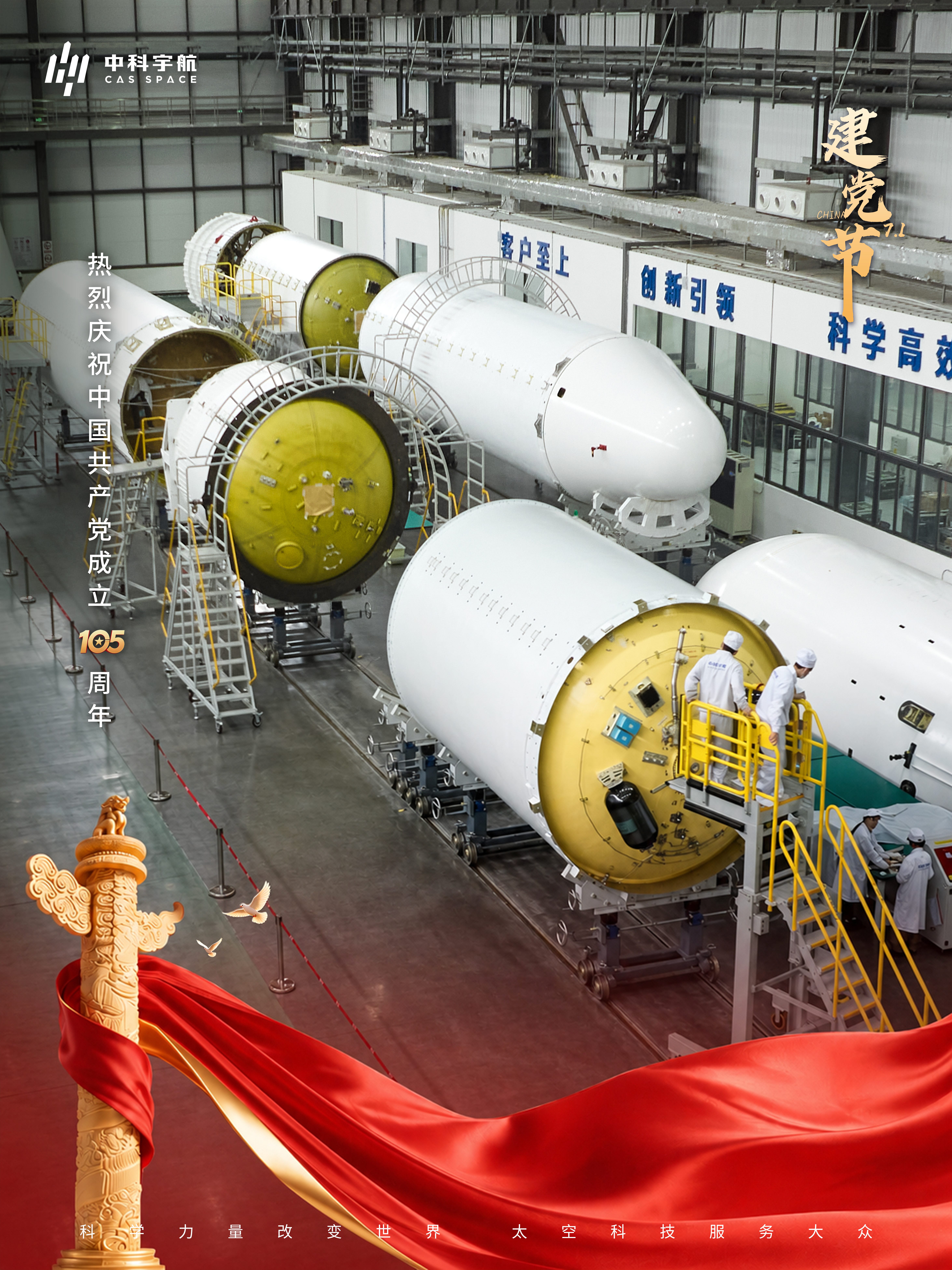
Meanwhile, in indirect news for the launch vehicle, a poster marking the 105th anniversary of the founding of the Communist Party of China, shared by CAS Space on July 1st, features propellant tanks, structures, and a complete fairing for a Kinetica-2 in production. That hardware is likely for the second flight, as an interview from mid-June has the same hardware in a less equipped state.
That interview, citing CAS Space Founder and Chairman Yang Yiqiang (杨毅强), also shared that Kinetica-2’s second flight is being targeted for September, several weeks in the future. Another interview published on July 5th repeated the target too. If the flight occurs as planned, it will be just six months after the launch vehicle’s debut.
Ahead of that flight, the launch vehicle’s three first-stage cores and second-stage may need to undergo qualification firings at the Conghua site. Firings of the debut flights stages took place without publicity, with only development ones known to have occurred in June 2025.
Before Kinetica-2 flew for the first time, China in Space learned directly from CAS Space that they were looking to fly their new launch vehicle twice in 2026. The second mission is expected to carry eighteen Qianfan (千帆) space-based connectivity constellation satellites, which may begin consumer services this year.