

Ningbo City Looks to Partially Revive Earlier Launch Site Plans
Recent requests for bids from the city’s government point towards a change in plans for the originally 20 billion Yuan coastal launch center.

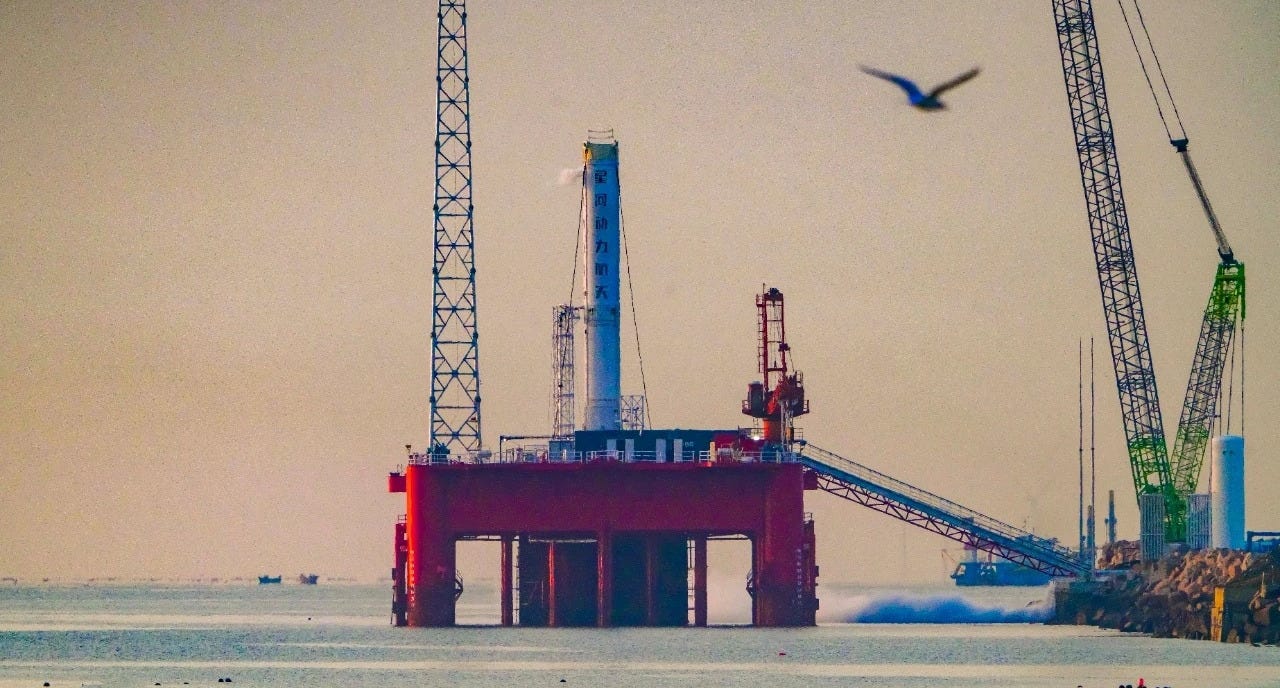
Ningbo (宁波市), a city on the coast of the East China Sea in Zhejiang (浙江) province, has recently had its government open the bidding process for a space industrial base, with a stated valuation of 8.66 billion Yuan (1.25 billion United States Dollars, as of March 28th).
According to the details listed, activities bidding enterprises will be required to perform if they win are geological surveying of mainland, sea, and island areas within Ningbo’s administration to inform the possible development of several space industry sites. Those sites are briefly detailed as follows:
“The project plans to construct a technical zone and a test firing zone, as well as supporting facilities such as the bridge connecting the two zones and a wharf.”
In November 2025, a tender for an environmental review process was announced as well. Both the environmental review and surveying process will have to be completed before any construction begins. Both processes appear to signal a revival of a previously halted launch site project.
Back in 2021, plans for what was then called the ‘Ningbo International Commercial Space Launch Center Project (宁波国际商业航天发射中心项目)’, to be based around Xiangshan county’s (象山县) Pingfeng (屏风) island1, were revealed via Ningbo’s major construction projects for the 14th Five-Year Plan period (2021-2025). That stated that up to 20 billion Yuan (2.89 billion United States Dollars) would be allocated to establish the launch site, which would have a 35-square-kilometer spaceport, with launch pads and command facilities, and a 32-square-kilometer industrial support area, home to satellite manufacturers and launch vehicle assembly buildings.
Initial progress towards the site reportedly saw agreements signed with enterprises under the China Aerospace Science and Technology Corporation and the acquisition of land by Ningbo government-linked entities. The city government also established Ningbo Commercial Space Development Co Ltd (宁波商业航天开发有限公司), with a billion Yuan (144.7 million United States Dollars) of capital, to manage the project.
Since the early progress, little has happened. Indirect reporting suggests that city officials were aligning the project with national plans while continuing its ‘steady development’.
As for what that means, involved officials may have realised the site has few advantages compared to the flexibility of now-regular sea-based launches and those from the continually expanding Wenchang Commercial Space Launch Site, neighbouring the existing Wenchang Space Launch Site and able to utilize some of its existing infrastructure2, therefore choosing to shift the project from launching rockets to testing them3 like Haiyang (海阳市) does with liquid propellant vehicles. President Xi Jinping (习近平) has also warned in recent years that not all of China’s provinces need to duplicate the same capital-intensive high-tech capabilities.
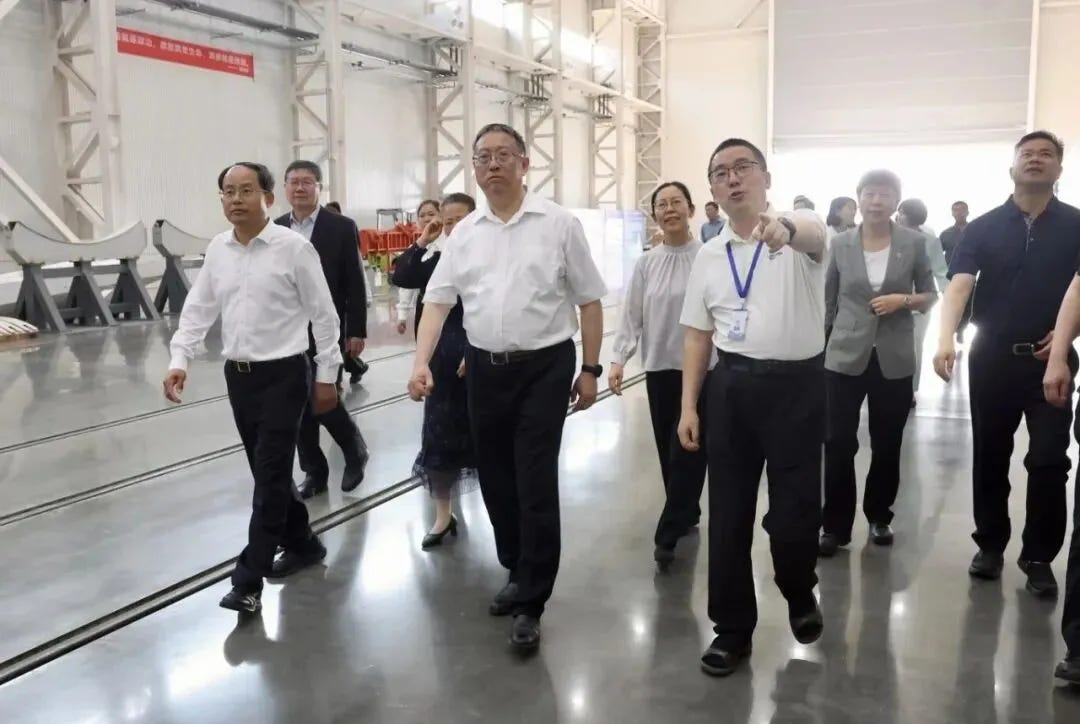
Some confidence for officials to continue plans for a space industrial base has, however, come in recent weeks. First was via the 15th Five-Year Plan, in which space was a key area for breakthroughs and development. Secondly, Shan Zhongde (单忠德), Administrator of China National Space Administration, and Zheng Jianbang (郑建邦), Vice Chairman of the Standing Committee of the National People’s Congress (中华人民共和国全国人民代表大会) and the Chairman of the Revolutionary Committee of the Chinese Kuomintang (中国国民党革命委员会), called for high-quality support of the space industry between March 17th to 19th, with Zheng quoted as saying:
“We are currently at a historic juncture of rapid development in the commercial space sector, with clear national strategic guidance and well-defined industry demands. Local governments and industry professionals must seize this once-in-a-lifetime opportunity, act with a strong sense of historical and political responsibility, and strive to drive the high-quality development of the commercial space sector.”
If there are any problems with this article’s translations please reach out and correct me.
Its coordinates are: 29.29725503094545, 122.00358833038338. The nearest structure is a sizeable hotel about three kilometers away.
Specifically regarding shipping launch vehicles down to Hainan (海南) province and spacecraft testing facilities. Space industry employees are also already familiar with Hainan.
Launch missions from Pingfeng island, or nearby, would have required extensive pre-flight evacuations of populated areas, which are quite dense on China’s coast. Xiangshan is also near major shipping routes, which would be interrupted by launch exclusion zones. Testing of rockets requires smaller evacuation and exclusion zones due to the very small chance that something ends up in flight.