

Orbital Refueling Being Pursued by China a Second Time, Now Commercially
State-owned enterprises proved it was possible, and Sustain Space is looking to follow.

In-space refueling of satellites is an emerging technology, able to prolong the life of high-cost critical space infrastructure if proven. Over the past year, the Shanghai Academy of Spaceflight Technology, a state-owned enterprise, has concluded a world-leading test of the technology between Shijian-25 (实践二十五号)1 and Shijian-21 (实践二十一号)2 in geostationary space, topping up storeable propellants on Shijian-21.
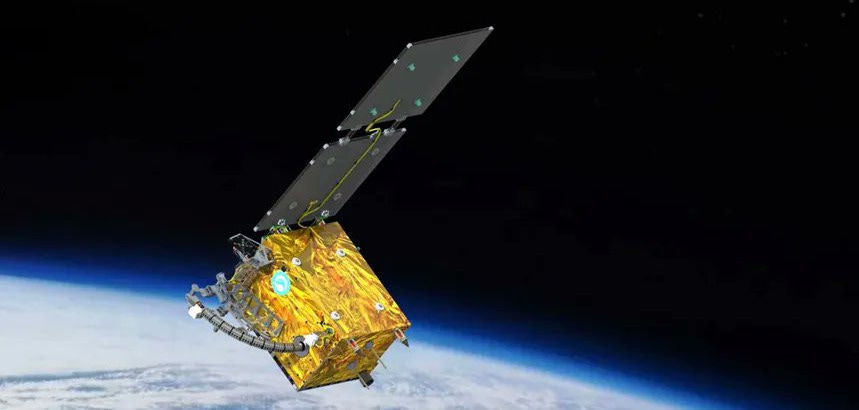
A few days ago, another spacecraft to prove out the early steps of the technology was placed into sun-synchronous orbit. That satellite is known as Xiyuan-0 (西垣0号), also designated Yuxing-3-06 (驭星三号06星) or Hunan University of Science and Technology-2 (湖科大二号卫星), and was made by Suzhou Sanyuan Aerospace Technology Co Ltd (苏州三垣航天科技有限公司), known as Sustain Space (三垣航天) for short, a subsidiary of commercial satellite communication and space monitoring enterprise Emposat (航天驭星).
With a design finalized in November 2024 and shipped to Jiuquan in October 2025, Xiyuan-0’s primary task is to test its flexible robotic arm, claimed to be the first developed outside of a state-owned enterprise, in microgravity with targets for manipulating toward and docking with present on the same panel as it (see the black rectangle and port in the top left of image two3). Regarding the design of the arm, Sustain Space shared:
“It was designed and developed based on the concept of a ‘hollow arm in a flexible continuum combined with a rear-driven cable transmission system’ to enable the robot to perform in-orbit refueling operations with a high degree of autonomy, interactivity, safety, compliance, and reliability, thereby meeting future practical requirements for in-orbit propellant refueling operations.”
If there are any problems with this translation please reach out and correct me.
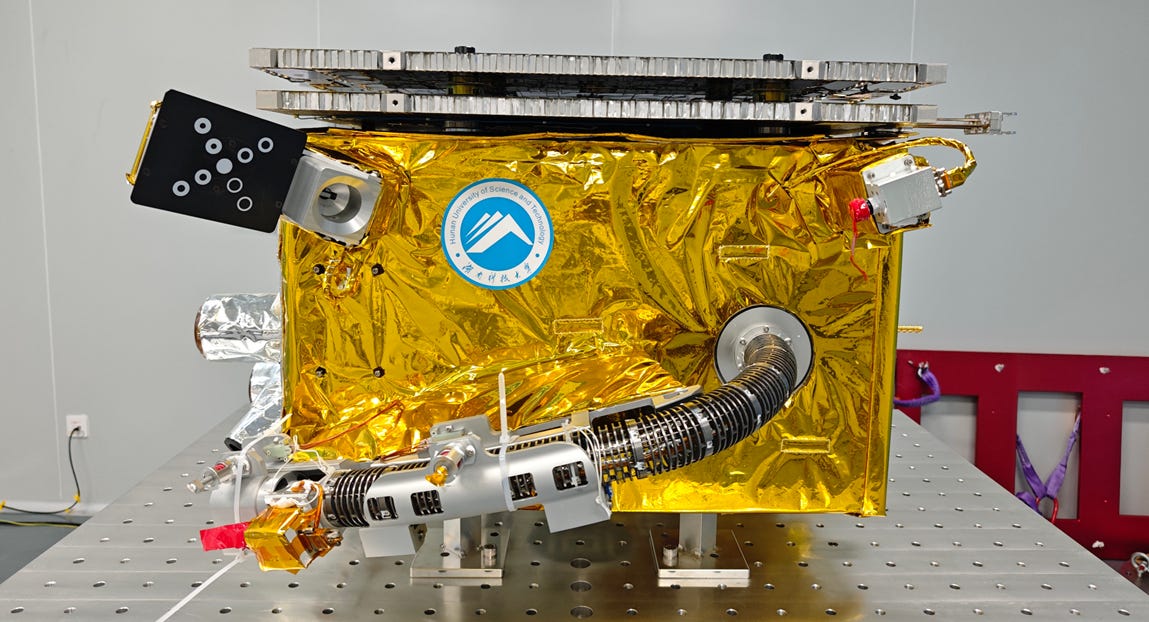
As stated above, the robotic arm tested on Xiyuan-0 is planned to be evolved into a refueling arm on future spacecraft from Sustain Space, to offer services to prolong the use of existing space infrastructure. Plans for a refueling demonstration mission are yet to be announced.
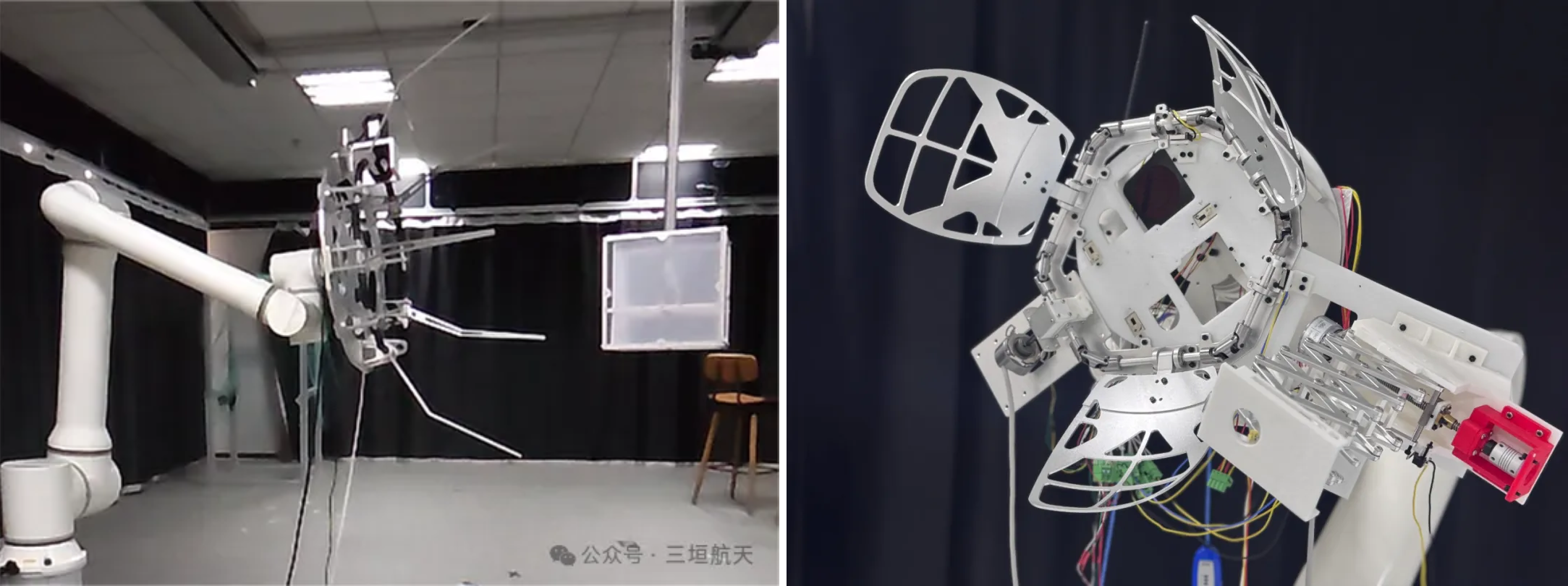
Alongside demonstrating its robotic arm, Sustain Space partnered with the Hunan University of Science and Technology (湖南科技大学) to perform an experiment with a deployable 2.5-meter-wide drag sphere to accelerate Xiyuan-0’s orbital decay into the atmosphere after its technology demonstration concludes.
As Sustain Space’s name suggests, the company was founded to guarantee the future use of space by using existing satellites for longer, via refueling, moving4 or deorbiting space debris, and providing orbital maintenance to satellites in need. As of early 2024, those services would be offered to Chinese and international customers.
To provide those services, the company is developing spacecraft refueling arms, like that being tested on Xiyuan-0, and servicing arms that can grapple a customer satellite or piece of debris. Service arms will require a grappling mechanism that is still being developed by Sustain Space on Earth.
Dedicated to proving in-space refueling technology demonstration.
Launched to prove space debris mitigation technologies by taking a dead BeiDou satellite away from geostationary space.
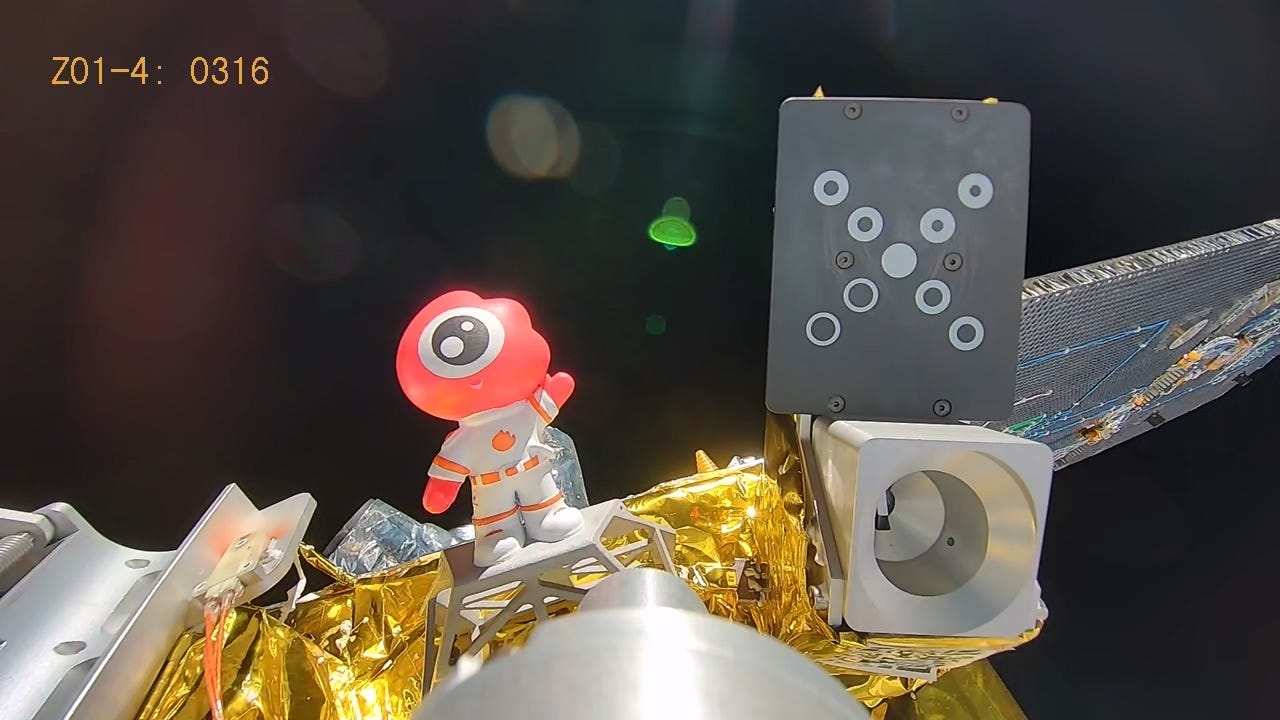
Here is a closer view of the port from the robotic arm, with the mascot of social media platform Weibo next to it:
To regions of space like the geostationary graveyard.