

Pakistani, Hong Kong Satellites Deployed via Launch From South China Sea [Jielong-3 Y9]
New spacecraft for monitoring Earth, orbit, and and proccessing data with DeepSeek have been successfully placed into space.

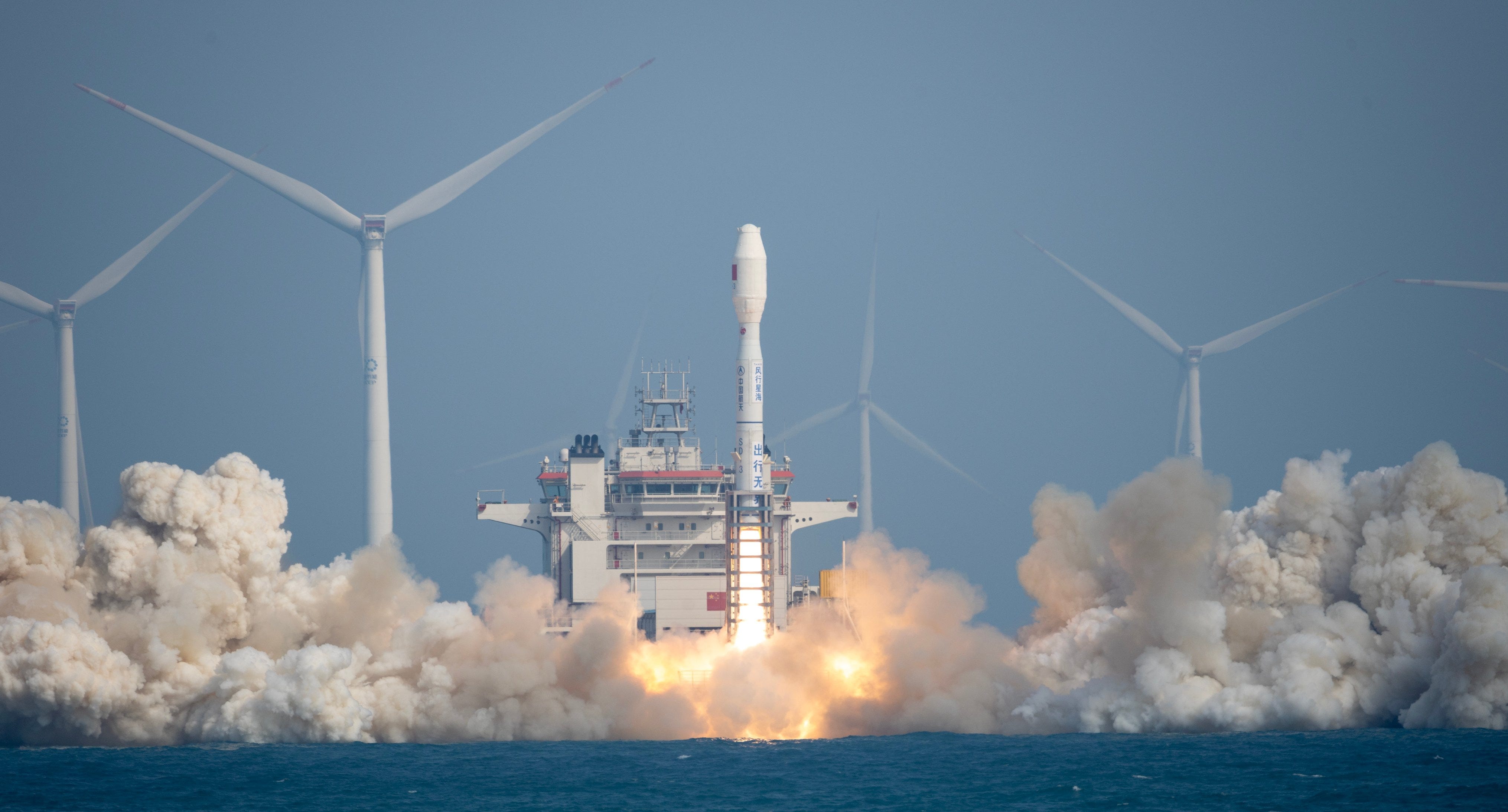
Off of a dedicated launch ship near Yangjiang (阳江市), Guangdong (广东) province, in the South China Sea, a Jielong-3 blasted off at 14:37 pm China Standard Time (06:37 am Universal Coordinated Time) on February 12th, heading toward sun-synchronous orbit with a handful of payloads.
Pakistan’s PRSC-EO2 optical remote sensing spacecraft was the primary payload onboard, having its development led by the Space & Upper Atmosphere Research Commission and supported by the China Academy of Space Technology with a propulsion system from the Beijing Institute of Control Engineering (北京控制工程研究所), with its orbital delivery organized by China Great Wall Industry Corporation. Once commissioned, PRSC-EO2 is planned to be used for land mapping, development planning, environmental monitoring, natural resource surveying, agricultural support, as well as disaster monitoring and response.
The deployment of PRSC-EO2, hailed as an example of continued space collaboration, is China’s third launch for an international customer so far this year, following two Algerian remote sensing spacecraft delivered from Jiuquan in January. It also comes after two launches with Pakistan as a main customer in January, with PRSC-EO1, and in October 2025, with PRSC-HS1. Later this year, a Pakistani astronaut is also expected to visit the Tiangong Space Station.
Also onboard was Chinese University of Hong Kong-1 (港中大一号卫星), from the university of the same name in the Hong Kong (香港) Special Administrative Region. After its systems are confirmed to be operational, the satellite will connect with other Hong Kong-made spacecraft and run the DeepSeek large language model (on orbit for the first time, though not the first Chinese-made AI working in space) to process data collected1 in real time, sending down the finished processed product. It will also act as an Earth observation spacecraft with a resolution of one meter, supporting urban design and development.
Changguang Satellite Technology Co Ltd (长光卫星技术股份有限公司) had its Power Infrared Satellite-A (电力红外卫星A星) deployed alongside the other payloads. Developed with the State Grid Electric Power Research Institute Co Ltd (国网电力科学研究院有限公司), the satellite is planned to be used to frequently monitor remote parts of China’s power grid via two and three-dimensional imaging.
From the China Academy of Space Technology, the bluntly named Space Environment Monitoring Satellite (空间环境监测卫星) was the final single spacecraft, built off of commercially available platforms from the academy. The satellite is expected to provide real-time processing of detected data gathered about the environment in orbit, monitoring debris and other spacecraft.
A trio of satellites from Geespace was placed into orbit as well, with Shutianyu-03, Shutianyu-04, and Shutianyu-05 (数天宇星03星/04星/05星), following the first two’s October 2025 launch. Working together, the five satellites are expected to detect, monitor, and image orbital debris.
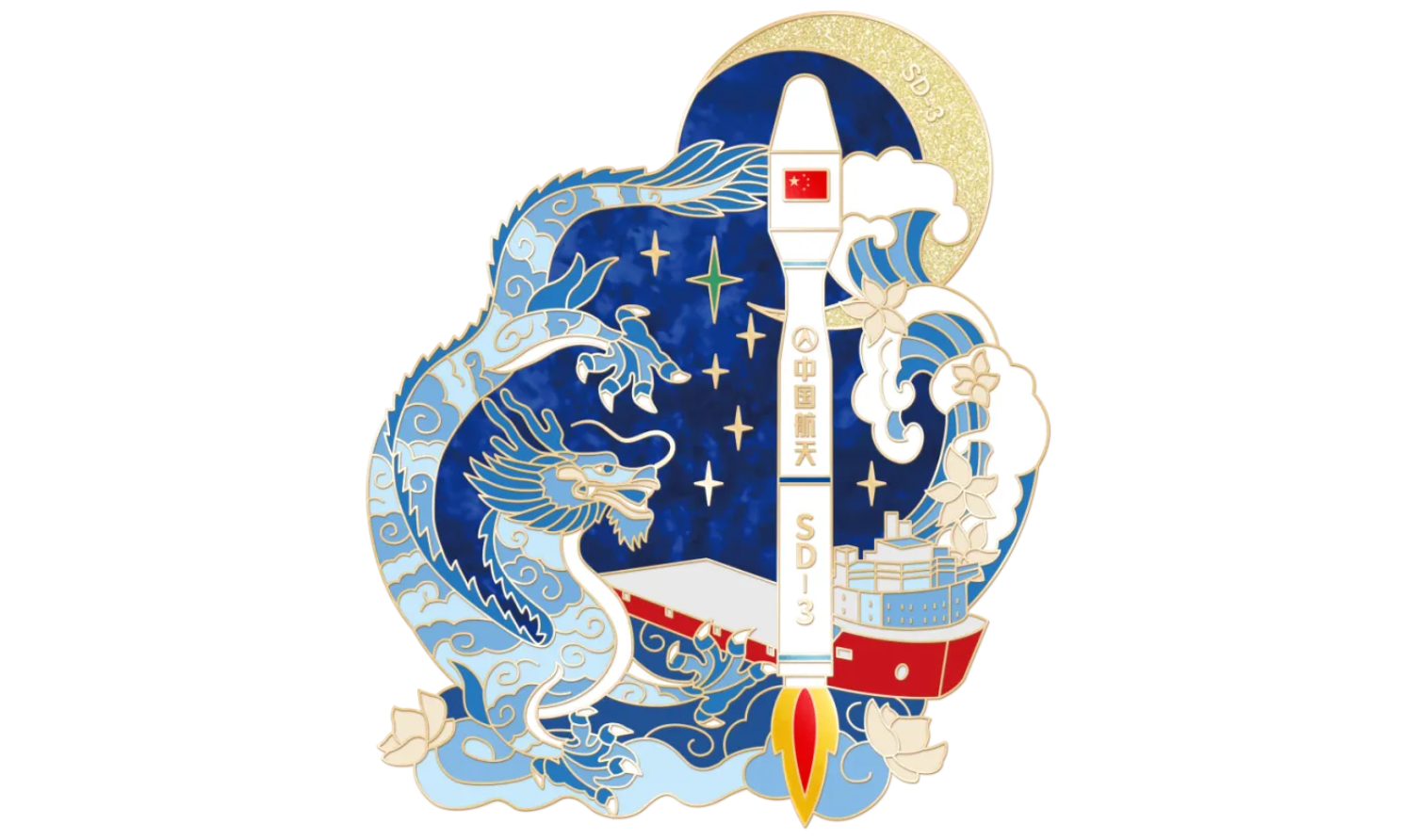
In their post-launch blog posts, the China Aerospace Science and Technology Corporation and the China Academy of Launch Vehicle Technology highlighted that this was Jielong-3’s second mission with an international payload and the fourth rideshare flight with multiple customers. That was said to have been enabled by the adaptability of the launch vehicle and its teams. Adaptability likely allowed for today’s successful flight, following delays from late December and late January launch attempts.
This launch was the 9th mission for the Jielong-3 launch vehicle. This was also the 10th launch from China in 2026.
Liftoff footage via 我们的太空 on WeChat.
Check out the previous Jielong-3 launch
Geespace Launches Largest Future Mobility Group [Jielong-3 Y8]
![Geespace Launches Largest Future Mobility Group [Jielong-3 Y8]](https://substackcdn.com/image/fetch/$s_!fZSU!,w_1300,h_650,c_fill,f_webp,q_auto:good,fl_progressive:steep,g_auto/https%3A%2F%2Fsubstack-post-media.s3.amazonaws.com%2Fpublic%2Fimages%2F19b1041d-da91-4877-953e-fed1239ec4c5_5177x2697.jpeg)
At 15:56 pm China Standard Time (07:56 am Universal Coordinated Time) on September 24th, a Jielong-3 blasted off from a sea-launch platform in waters near Rizhao (日照市), in Shandong province (山东), heading for low Earth orbit with a group of satellites.
What is Jielong-3?
This section is for those less familiar with China’s various commercial launch vehicles.
Jielong-3, also referred to as Smart Dragon-3, is a four-stage solid-fueled launch vehicle manufactured by the China Academy of Launch Vehicle Technology. The vehicle is operated commercially via a wholly-owned subsidiary of the China Academy of Launch Vehicle Technology called China Rocket. All four stages are believed to burn an unspecified solid propellant, with the first-stage generating 200 tons of thrust.
The payload capacity of the launch vehicle is currently as follows:
1,600 kilograms to a 500-kilometer sun-synchronus orbit.
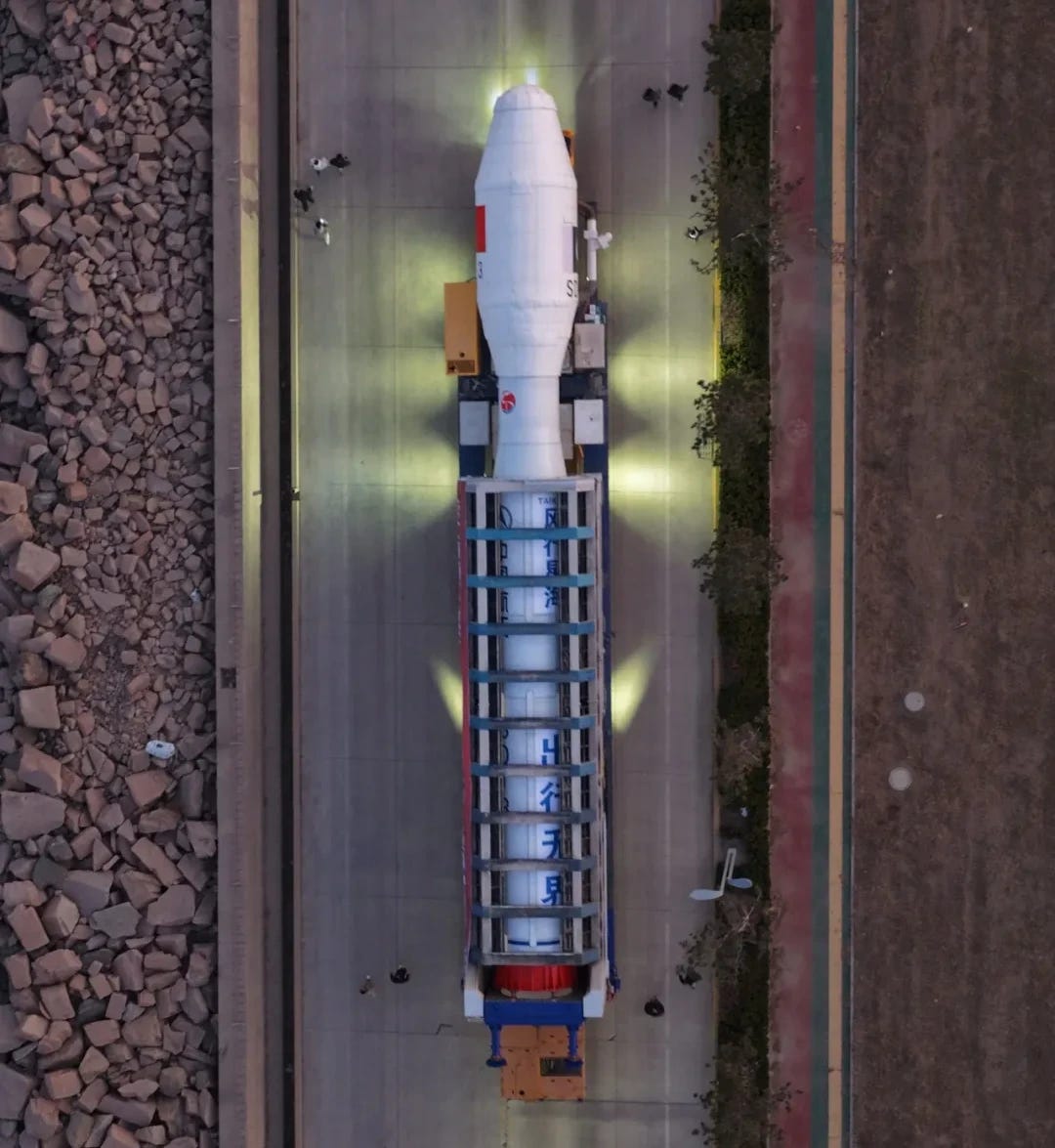
On a launch platform, Jielong-3 is believed to be 31 meters tall. Details about the four stages of the vehicle are scarce but the first two stages have a diameter of 2.64 meters, with the fairing having a diameter of 3.35 meters. When prepared for launch Jielong-3 weighs a believed 145,000 kilograms.
So far Jielong-3 has flown from sea launch platforms in the East China Sea, South China Sea, and Yellow Sea.


According to Professor Ma Peifeng (马培峰), Chief Designer of the satellite, the process of adapting DeepSeek was explained as:
“Addressing engineering challenges such as limited onboard computing power and the need for high stability during in-orbit operations, our team has for the first time performed lightweight adaptation and workflow restructuring of the DeepSeek large model at the satellite level. This enables the satellite to perform target identification and feature extraction from multispectral data onboard, achieving a shift from ‘data acquisition’ to ‘information acquisition’.”
If there are any problems with this translation please reach out and correct me.