

Qianfan Grows Again With Thirteenth Deployment Via Taiyuan [Long March 6A]
Eighteen more space-based connectivity satellites were placed into a near-polar orbit to expand the constellation ahead of the start of consumer services.

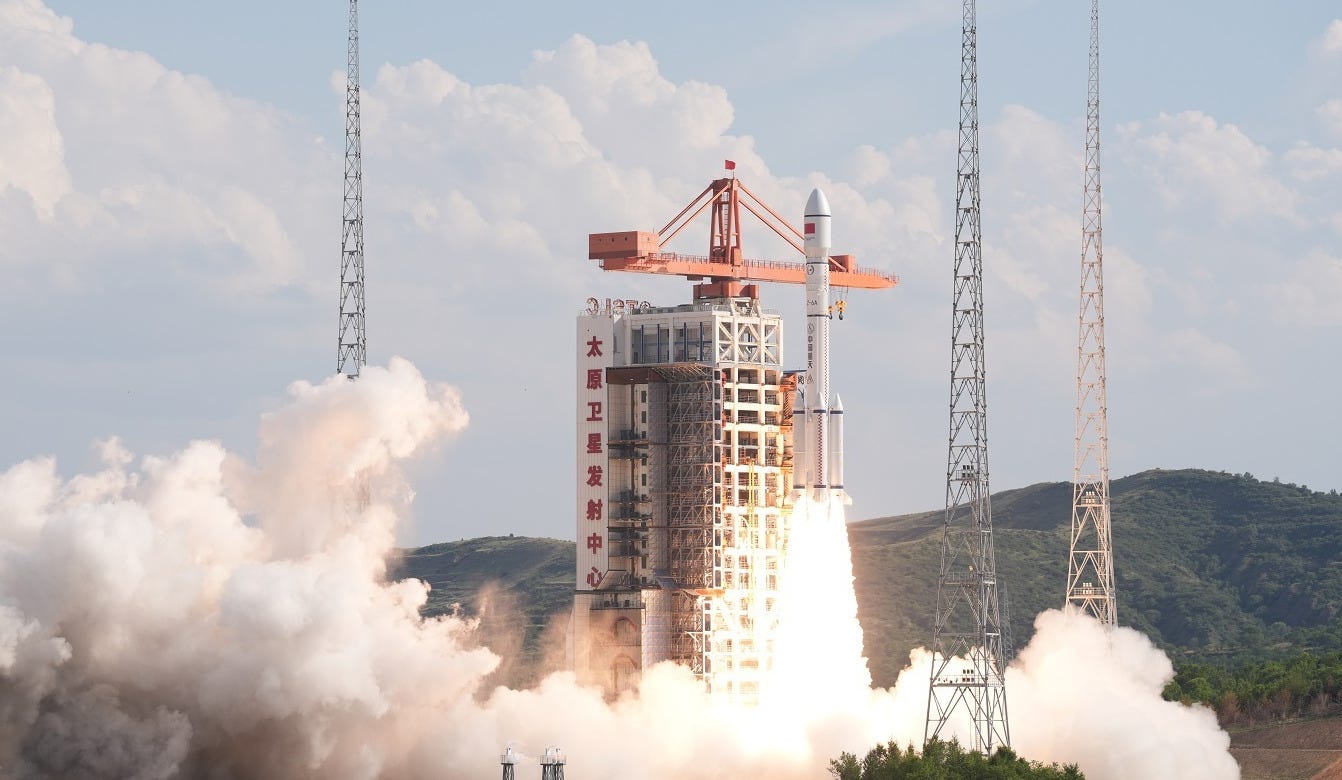
A Long March 6A blasted off from Launch Complex 9A at the Taiyuan Satellite Launch Center at 17:30 pm China Standard Time (09:30 am Universal Coordinated Time) on July 4th, heading for a near-polar orbit with a group of connectivity satellites.
Those were the thirteenth overall group of the Qianfan constellation, consisting of eighteen satellites manufactured by Genesat (格思航天) for the fifth contract with the commercial space firm. With this deployment, Qianfan has seen 218 satellites delivered into orbit.
The Qianfan (千帆) mega-constellation, sometimes referred to as SpaceSail, is operated by Shanghai Spacesail Technologies Co Ltd (上海垣信卫星科技有限公司), aiming to provide space-based internet connectivity services in China and abroad in places including Brazil, Malaysia, Kazakhstan, Türkiye, and via airlines, around the fourth quarter of this year. As of December 2025, the deployment aims to have 324 satellites launched in 20261, while contracted manufacturers have been encouraged to hasten production.
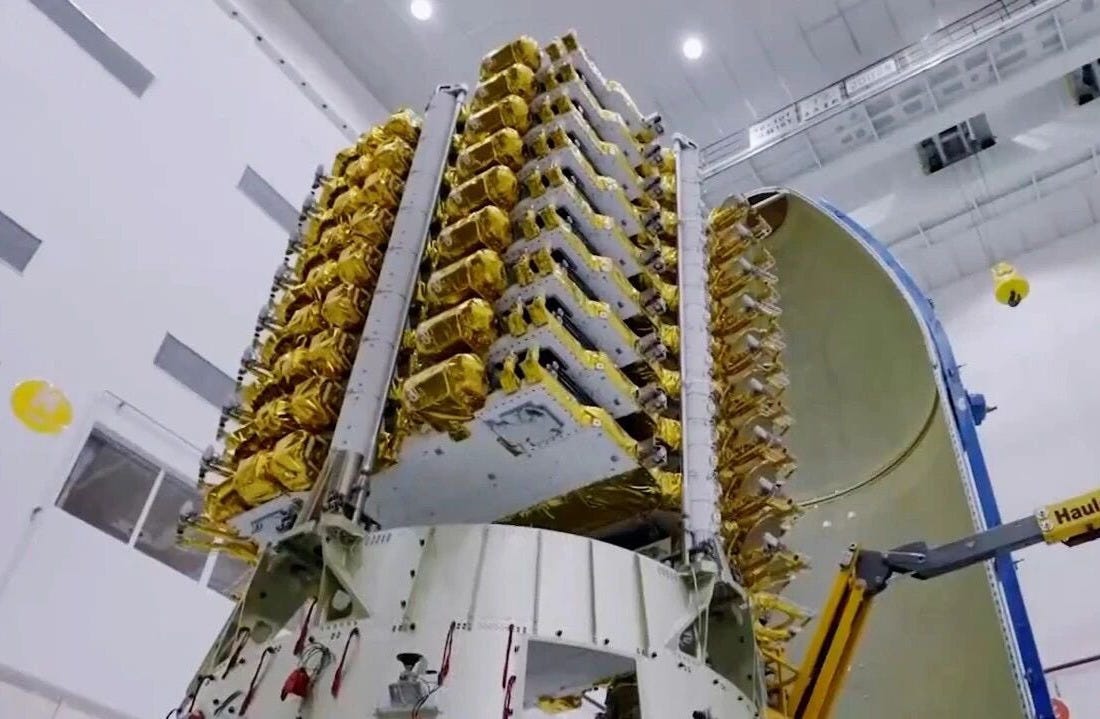
Costing under 10 million Yuan (1.47 million United States Dollars, as of July 4th), each Qianfan satellite weighs 300 kilograms with a ‘flat pack’ design, with a single solar array, to fit as many satellites as possible inside the rocket fairing in two parallel stacks. For maneuvering in orbit, each satellite has an electric hall-effect thruster burning krypton to generate 20 millinewtons of thrust, with a specific impulse of 1,385 seconds.
According to the China Aerospace Science and Technology Corporation, today’s Long March 6A’s second-stage underwent new pre-flight protection measures, allowing for a shorter preparation time as the launch vehicle solidifies its cadence of once per month, supported by an expansion of parallel work too. The Shanghai Academy of Spaceflight Technology added that its Taiyuan personnel have continued to improve hardware inspections and tests during a launch campaign.
Today’s launch was the 25th mission for the Long March 6A, the 271st Long March vehicle from the Shanghai Academy of Spaceflight Technology, and the 655th launch of the Long March launch vehicle series. This was also the 46th launch from China in 2026.
Liftoff video via 我们的太空 on WeChat.
Check out the previous Long March 6A launch
Qianfan Jumps Back Ahead of Guowang in Satellite Count [Long March 6A Y25]
![Qianfan Jumps Back Ahead of Guowang in Satellite Count [Long March 6A Y25]](https://substackcdn.com/image/fetch/$s_!f-mJ!,w_1300,h_650,c_fill,f_webp,q_auto:good,fl_progressive:steep,g_auto/https%3A%2F%2Fsubstack-post-media.s3.amazonaws.com%2Fpublic%2Fimages%2F61f7f1a6-f39f-48c9-bead-a3471d1e3d71_7305x3980.jpeg)
Heading skyward on June 4th at 19:39 pm China Standard Time (11:39 am Universal Coordinated Time) from Launch Complex 9A at the Taiyuan Satellite Laun…
What is the Long March 6A?
This section is for those less familiar with China’s Long March series of launch vehicles.
The Long March 6A is the first new-generation launch vehicle in China to utilize a combination of solid and liquid propellants. This vehicle was developed by the Shanghai Academy of Spaceflight Technology and utilizes a two-and-a-half-stage design, the boosters burn an unspecified solid propellant with the first and second stages burning rocket-grade kerosene and liquid oxygen.
The payload capacity of the launch vehicle is currently as follows:
8,000 kilograms to low Earth orbit
4,500 kilograms to a 700-kilometer sun-synchronous orbit
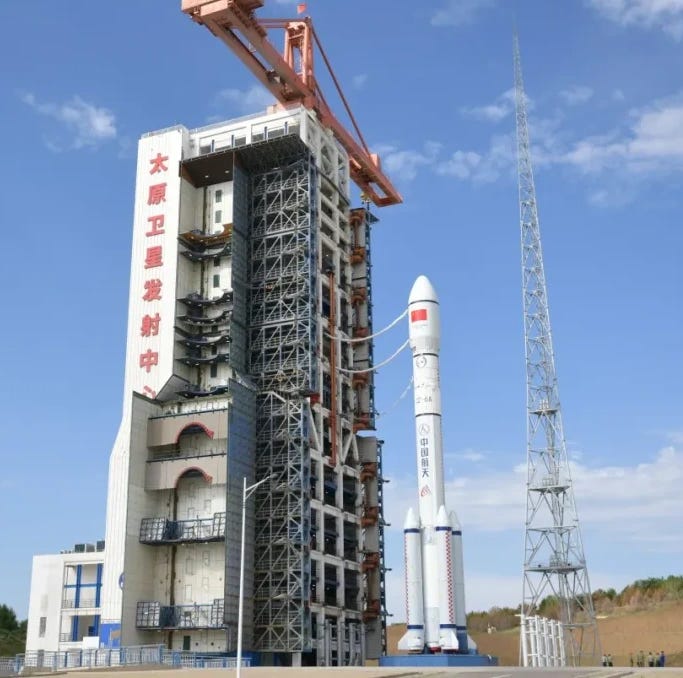
The first-stage is powered by two YF-100 engines, generating a combined thrust of approximately 244 tons using rocket-grade kerosene and liquid oxygen. The first-stage is augmented by four solid rocket boosters, each producing 124 tons of thrust from an unspecified solid propellant, resulting in a combined booster thrust of 492 tons. Together, the first-stage and boosters generate a total thrust of 736 tons. The second stage is powered by a single YF-115 engine, producing 18 tons of thrust also burning rocket-grade kerosene and liquid oxygen.
On the launchpad, the Long March 6A is believed to be up to 52 meters tall, a handful of fairings are available, and weighs 530,000 kilograms when fully fuelled. The first and second stages of the vehicle have a diameter of 3.35 meters while the solid-fuelled boosters have a diameter of 2 meters, the fairing has a diameter of 4.2 meters.
So far, every Long March 6A has launched from the Taiyuan Satellite Launch Center, in the north of Shanxi province.


So far, 110 out of 324.