

Qianfan Reaches 200 Satellites Following Wenchang Mission [Long March 8 Y9]
With customer connectivity services expected before the year’s end, Shanghai Spacesail Technologies’ constellation has recently enabled maritime support systems.

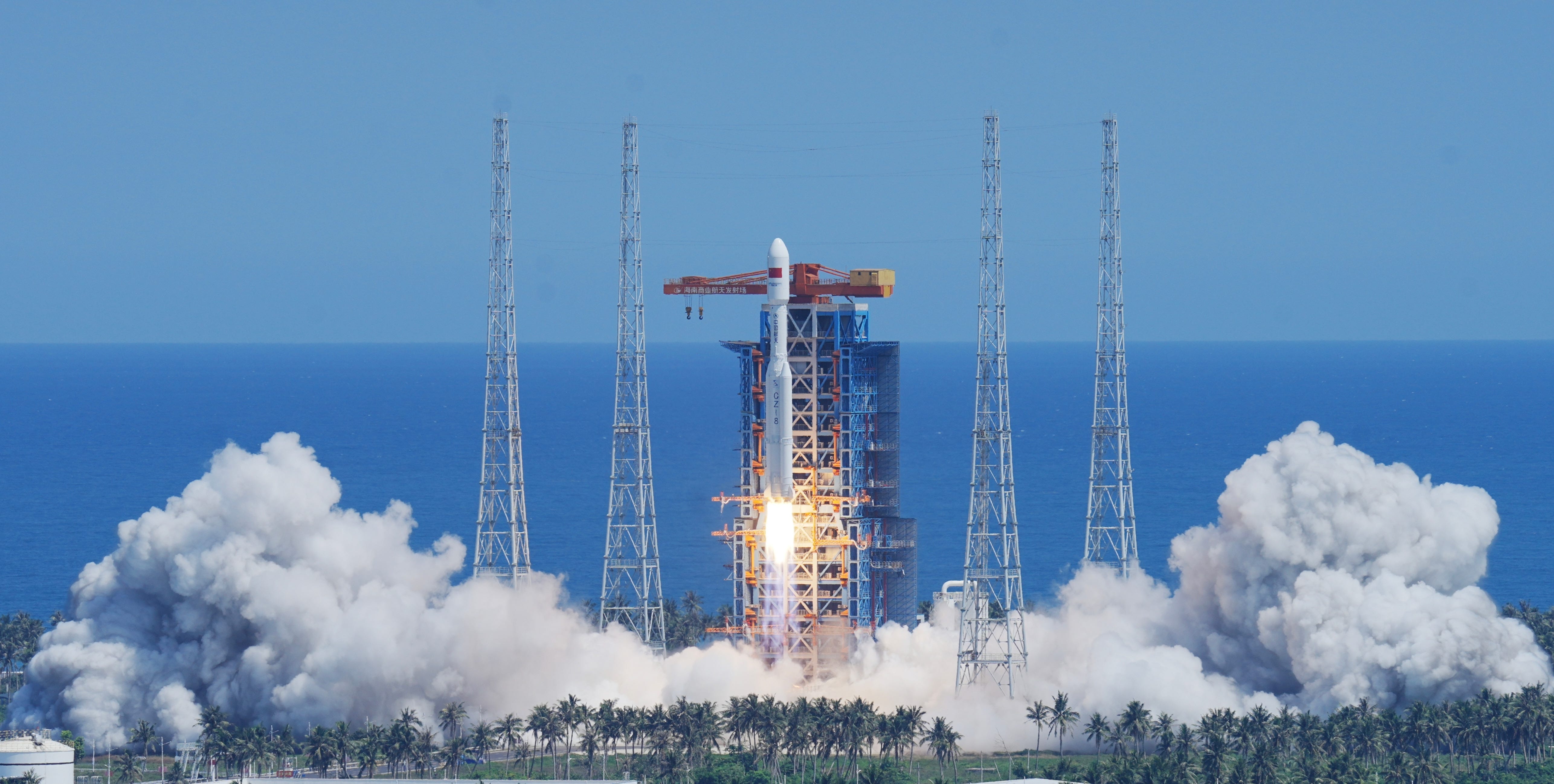
A Long March 8 lifted off from Commercial Launch Pad 1 at the Wenchang Commercial Space Launch Site at 14:34 pm China Standard Time (06:34 am Universal Coordinated Time) on June 5th, carrying a new group of connectivity spacecraft towards a polar orbit.
Spacecraft being launched by the launch vehicle today were for the twelfth overall group of the Qianfan constellation, with these eighteen satellites being produced by the Innovation Academy for Microsatellites, Chinese Academy of Sciences (中国科学院微小卫星创新研究院). This launch brings Qianfan’s total launched satellite count to 200!
The Qianfan (千帆) mega-constellation, sometimes referred to as SpaceSail, is operated by Shanghai Spacesail Technologies Co Ltd (上海垣信卫星科技有限公司), aiming to provide space-based internet connectivity services in China and abroad in places including Brazil, Malaysia, Kazakhstan, Türkiye, and via airlines, as soon as the end of this year. As of December 2025, the deployment aims should have 324 satellites launched in 20261, another 324 in 2027, and 4,000 in 2028 and 2029, followed by 5,000 in 2030, with 15,000 total satellites approved to operate.
Today’s launch of Qianfan satellites is the fifth to take place in the last month, coming after a return of routine deployments. The constellation restarted proper orbital deployments almost two months ago too, after several satellites failed in orbit in 2025.
With the number of satellites in orbit, Shanghai Spacesail Technologies says they have completed the necessary networking for Qianfan to begin supporting automatic identification systems to assist in connecting maritime vessels at sea.
Each Qianfan satellite is believed to weigh 300 kilograms with a ‘flat pack’ design, with a single solar array, to fit as many satellites as possible inside the rocket fairing in two parallel stacks. For maneuvering in orbit, each satellite has an electric hall-effect thruster burning krypton to generate 20 millinewtons of thrust, with a specific impulse of 1,385 seconds.
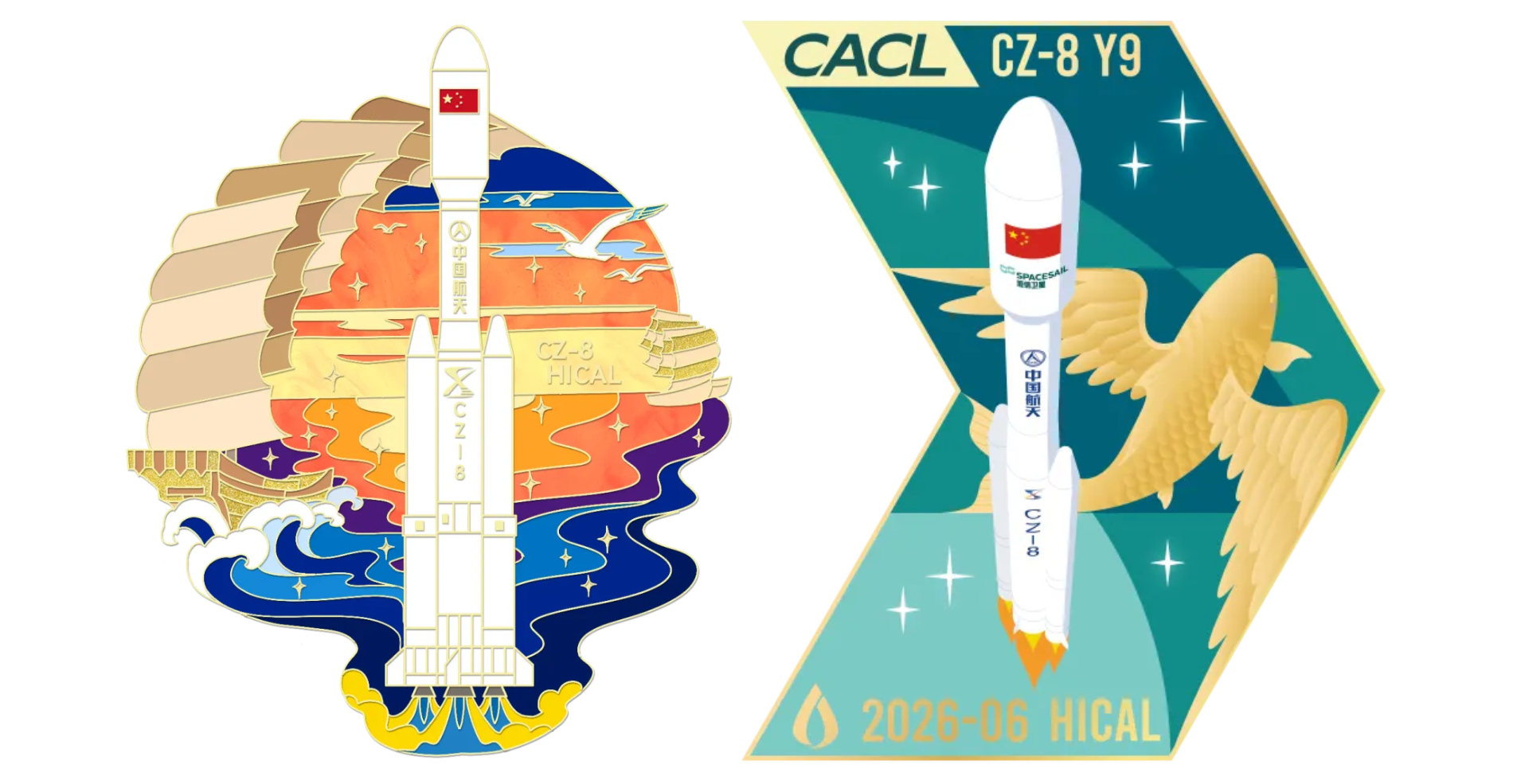
Upon the successful completion of the launch mission, the China Academy of Launch Vehicle Technology boasted that today’s flight took place just eighteen days after the previous, on May 17th, also with a group of Qianfan satellites. Launch mission preparation processes have been continuously improved and optimized to meet that cadence ahead of a busy year. In March, China Central Television (中国中央电视台) shared that the Long March 8 series of launch vehicles, including the Long March 8 and 8A, is set to fly fifteen times in total this year, for ten more flights over the next six months.
This launch was also managed by the China Aerospace Science and Technology Commercial Launch Vehicle Group (中国航天科技集团商业火箭有限公司) on behalf of Shanghai Spacesail Technologies, procuring a suitable launch vehicle for their constellation for the third time.
Today’s launch was the 7th launch of the Long March 8, the 15th launch of the Long March 8 series, and the 649th launch of the Long March launch vehicle series. This was also the 37th launch from China in 2026.
Liftoff video via 垣信卫星 on WeChat.
Launch livestream via ThatSpaceDogeGuy on YouTube.
Check out the previous Long March 8 series launch
Ninth Overall Qianfan Group Delivered Into Orbit From Wenchang [Long March 8 Y8]
![Ninth Overall Qianfan Group Delivered Into Orbit From Wenchang [Long March 8 Y8]](https://substackcdn.com/image/fetch/$s_!TiK-!,w_1300,h_650,c_fill,f_webp,q_auto:good,fl_progressive:steep,g_auto/https%3A%2F%2Fsubstack-post-media.s3.amazonaws.com%2Fpublic%2Fimages%2F16472420-6278-47b0-b57e-4687b572f069_5921x3068.jpeg)
Departing from the Commercial Launch Pad 1 at the Wenchang Commercial Space Launch Site at 22:42 pm China Standard Time (14:42 pm Universal Coordinated Time) on May 17th, a Long March 8 flew …
What is the Long March 8?
This section is for those less familiar with China’s Long March series of launch vehicles.
The Long March 8 is poised to be a low Earth orbit workhorse for missions flying from Wenchang, with it being developed by the China Academy of Launch Vehicle Technology. This vehicle utilizes a two-and-a-half-stage design and is fueled by rocket-grade kerosene and liquid oxygen in its first-stage and boosters along with liquid hydrogen and liquid oxygen in the second-stage.
The payload capacity of the launch vehicle is currently as follows:
8,100 kilograms to low Earth orbit
5,000 kilograms to a 700-kilometer sun-synchronous orbit
2,800 kilograms to geostationary transfer orbit
1,500 kilograms to a trans-lunar trajectory
The Long March 8’s boosters and first-stage are powered by YF-100 engines, with two engines on the first stage and one on each of the two boosters, generating a combined thrust of 490 tons at liftoff. The second-stage is equipped with two YF-75 engines which produce 17 tons of thrust.
On the launchpad, the Long March 8 stands at 50.34 meters tall and weighs 356,000 kilograms when fully fuelled. The first-stage has a diameter of 3.35 meters, the two boosters have a diameter of 2.25 meters, while the second-stage has a diameter of 3 meters, and the fairing has a believed diameter of 4.2 meters.
So far the Long March 8 has only flown from the Wenchang Space Launch Site and the Wenchang Commercial Space Launch Site, on the east coast of Hainan province.


So far, 92 out of 324.