

Shanghai’s Long March 12 Has a Unique Propellant Mixture
The first-stage has cost savings, while the second-stage has a new performance-improving solution.

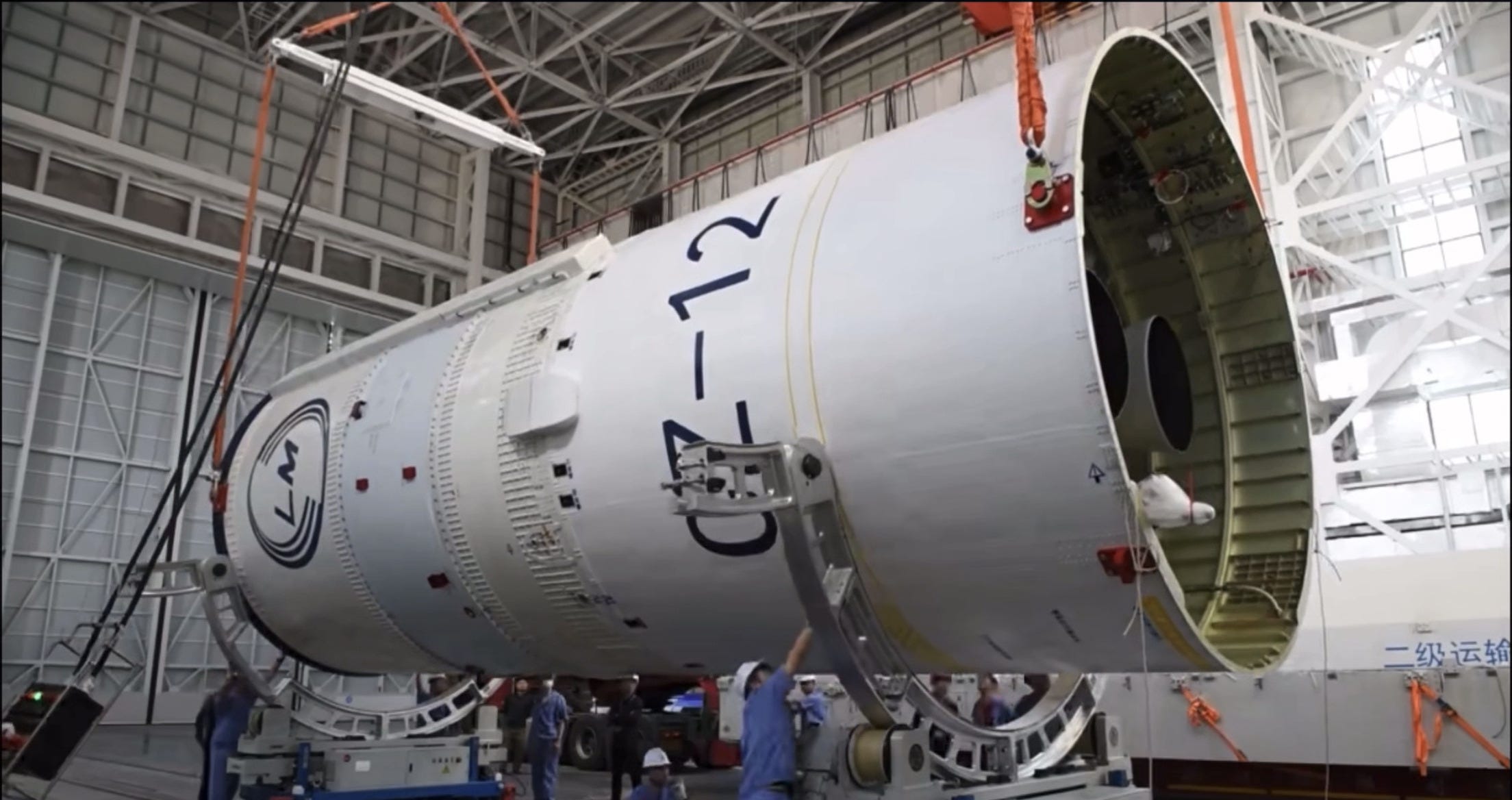
Having debuted toward the end of 2024, the Shanghai Academy of Spaceflight Technology’s Long March 12 has been a peculiar fixture in China’s launch vehicle lineup. So far it has flown six times, every few months with new optimizations to its design, and has had two reusable distant cousins appear.
One of the unique parts of the Long March 12 since its debut has been its use of coal-based rocket-grade kerosene as a propellant, burned alongside liquid oxygen, in four YF-100K first-stage engines1 and two YF-115 second-stage engines2. Advantages of the coal-based fuel are said to be easier handling inside commodity systems and storage, higher frequency of deliveries, as well as lower costs due to historic investments into the necessary technology. Additionally, the launch pad from where the launch vehicle flies is sponsored by Jiangxi Jovo Energy Co Ltd (江西九丰能源股份有限公司), which has made significant investments in producing it at scale.
To make its propellant stranger, starting with June’s Long March 12, the vehicle’s second-stage is burning a new high-energy rocket-grade kerosene inside the two YF-115’s. I initially believed that to be an optimization of the coal-based formula, but after being shown some papers by ‘TheKutKu’3, a prolific wanderer of the Chinese web, the kerosene is actually something more complex.
Having been under a form of research since 2013 at the state-owned Beijing Institute of Aerospace Testing Technology (北京航天试验技术研究所), technical details on the high-energy propellants’ burning characteristics appeared in papers published in 2021 and 20224. The 2021 paper outlines that it is more dense and less viscous than kerosene, while being easier to ignite and gaining several seconds of specific impulse5, but with the downsides of being more dangerous to handle due to a lower ignition temperature6. Those characteristics were extensively verified by the 2022 paper, with its researchers burning it and standard rocket-grade kerosene for comparison. Both papers compare the propellant to Soviet Sintin, in terms of performance and some characteristics, while calling it high-energy kerosene, abbreviated as GN-1 based on its Chinese characters7.
Starting in 2020, the Beijing Institute has been conducting a series of gradually larger and larger firings, in custom hardware or mass-produced engines, with the propellant. Those engines include 18-ton8 and 120-class engines9. Total firing times before the Long March 12’s first use of it were stated to amount to over 5,000 seconds for the Sintin-like GN-1.
Details about performance gains to the YF-115 with GN-1 are said to have been an 8.5-second gain to its specific impulse, boosting the Long March 12’s payload capacity by an undisclosed amount. The gain makes the engine’s specific impulse 350 seconds, about on par with other engines using its oxidizer-rich staged combustion cycle while staying weaker on chamber pressure10.
Despite advantages gained through their use, Sintin and Sintin-like propellants have had limited use, primarily in the former Soviet Union. That had it fuel seventy-two Soyuz-U2 rockets, Blok DM-2M upper-stages, and the orbital maneuvering system of the once-flown Buran shuttle. Usage of Sintin stopped after the collapse of the Union due to its related production costs.
Production costs appear to be a lesser issue for Chinese launch vehicles that would like to use GN-1, as the Beijing institute says 400 tons of it is currently being produced annually. Expansions to its production are already said to be ongoing to add a further 2000 tons, enough to fuel about six whole Long March 12’s or several dozen second-stages each year.
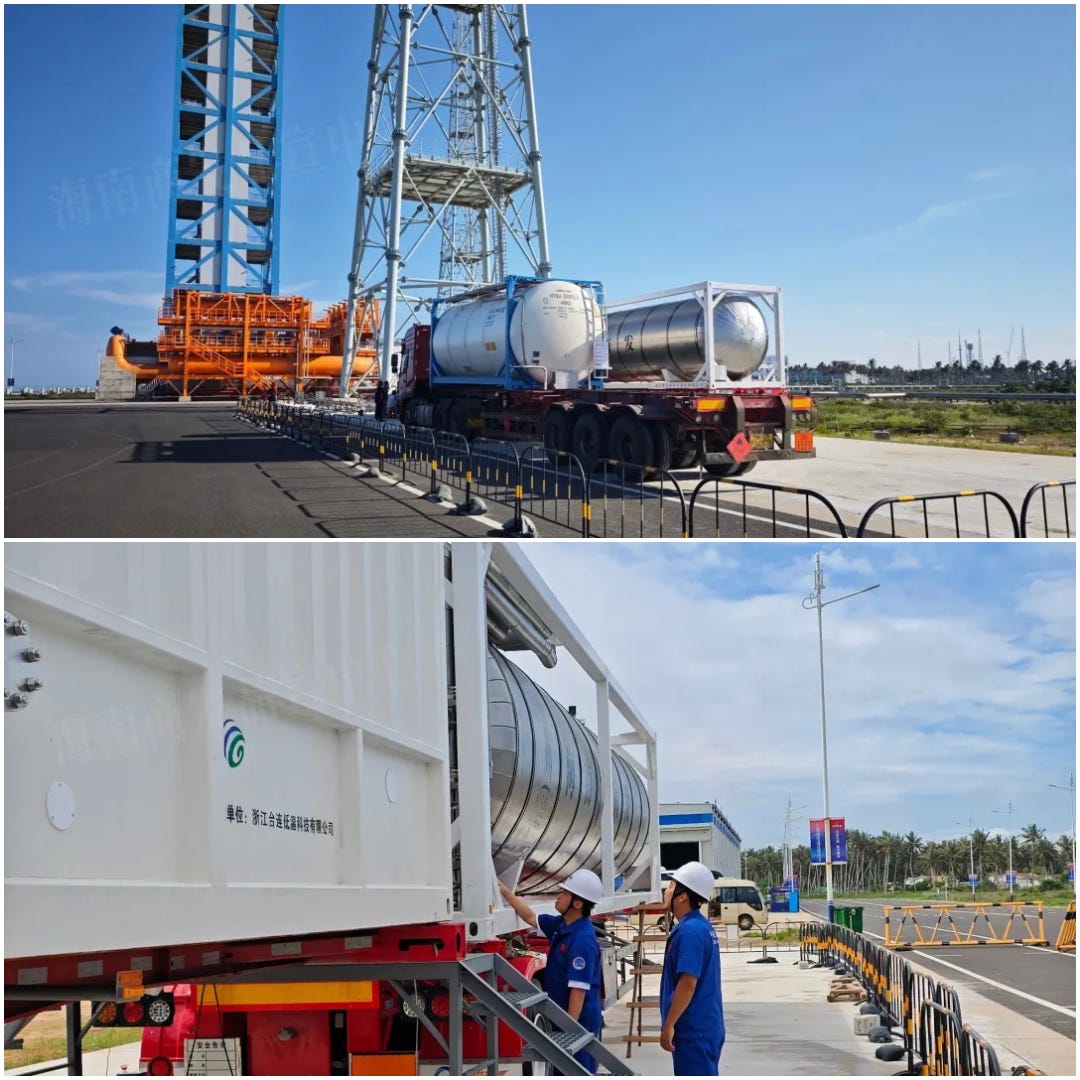
Getting GN-1 into the Long March 12’s second-stage has not been as simple as topping up the existing propellant farm, as other users of Commercial Launch Pad 2 wish to remain with the usual kerosenes. Working around that, Hainan International Commercial Aerospace Launch Co Ltd (海南国际商业航天发射有限公司), operator of the Wenchang Commercial Space Launch Site, opted for a mobile system that can be taken away and refilled whenever it is not needed. Contracts for the system were awarded in late April, with it being ready by the end of May, taking advantage of downtime caused by a need to fix other systems.
Generating a combined thrust of 510 tons.
Generating a combined thrust of 36 tons.
These are not the years they were written, just when they appeared in academic journals.
How efficently a rocket engine converts propellant into thrust, higher is better for in-space stages usually.
Its autoignition temperature is higher however, but it is still a non-toxic propellant.
Which is 高能. G comes from 高, for high, and N comes from 能, for energy.
Which would be the YF-115, used for second-stages.
That would be the YF-100 series, used for the first-stages and boosters.