

GuoWang Adds Nine More Satellites to Earth Orbit Constellation [Long March 12 Y7]
Satellites for the state-backed connectivity constellation were secured inside a new carbon fiber fairing for their launch from Wenchang.

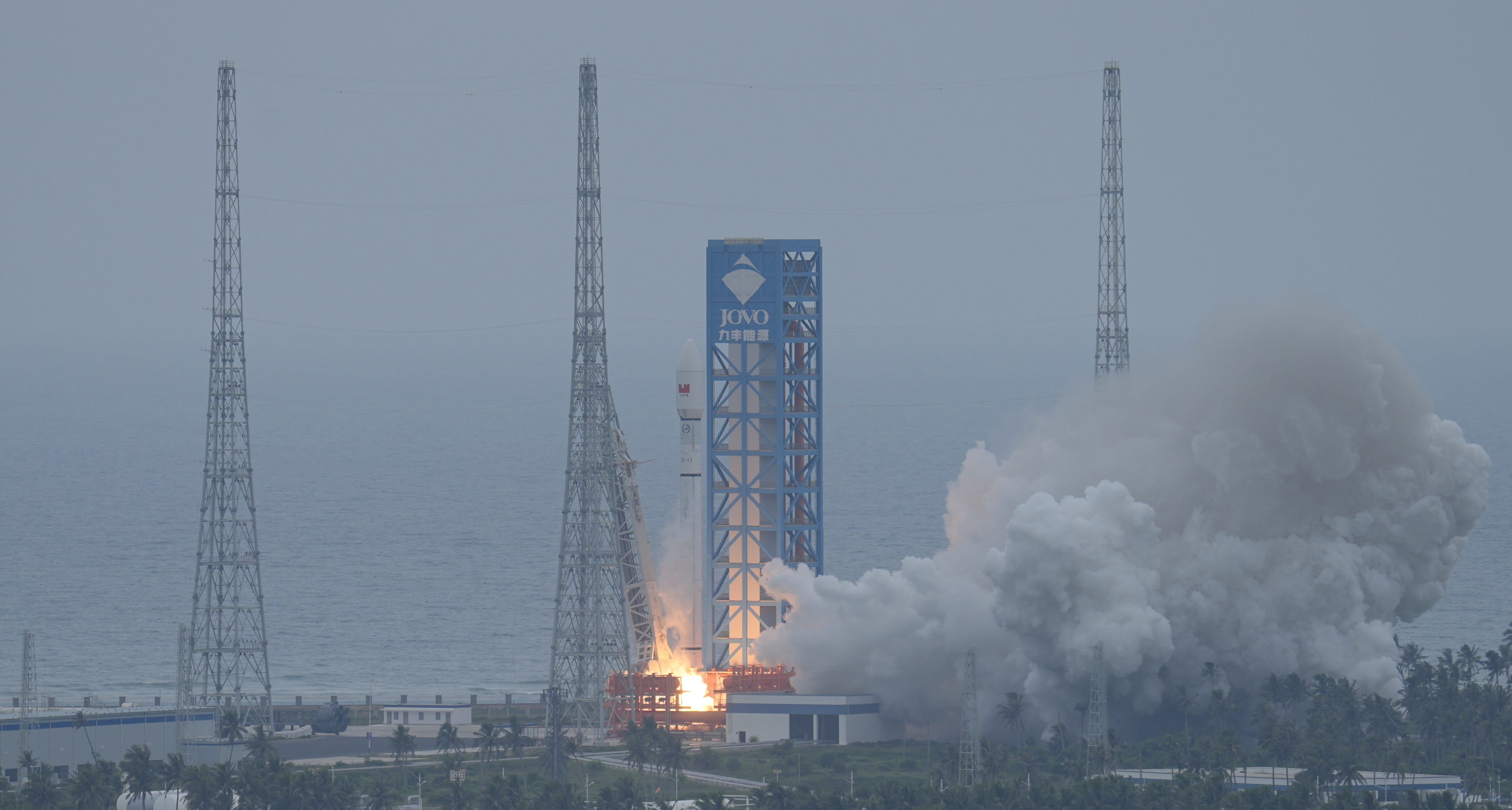
A Long March 12 lifted off from Commercial Launch Pad 2 at an overcast Wenchang Commercial Space Launch Site at 10:44 am China Standard Time (02:44 Universal Coordinated Time) on June 17th, flying into low Earth orbit with a group of connectivity satellites.
Those satellites were announced to be the twenty-second group for the GuoWang constellation, with nine satellites atop of the launch vehicle. This satellite group was produced by the China Academy of Spaceflight Technology.
The GuoWang (国网) constellation is operated by China Satellite Network Group, a state-owned enterprise and wholly backed by the Chinese government. China Satellite Network Group plans to provide worldwide internet services; for now, China-focused services are the immediate priority.
After today’s launch, 177 GuoWang spacecraft are in orbit, functioning in and heading up to their operational orbits. This year, it is planned that 310 satellites1 will be deployed, followed by 900 in 2027, and 3,600 every year beginning in 2028 to sustain and grow the constellation. In the 2030s, up to 13,000 satellites could be in operational orbit.
GuoWang satellites launched atop of the Long March 12 and the Long March 8A use the mega-constellations’ small satellite platform, weighing about 695 kilograms each. A large satellite platform, around thirty percent bigger and weighing up to 1,000 kilograms, is launched via the Long March 5B and Long March 6A. Both platforms utilize electric propulsion systems to maneuver in orbit, powered by two solar panels.
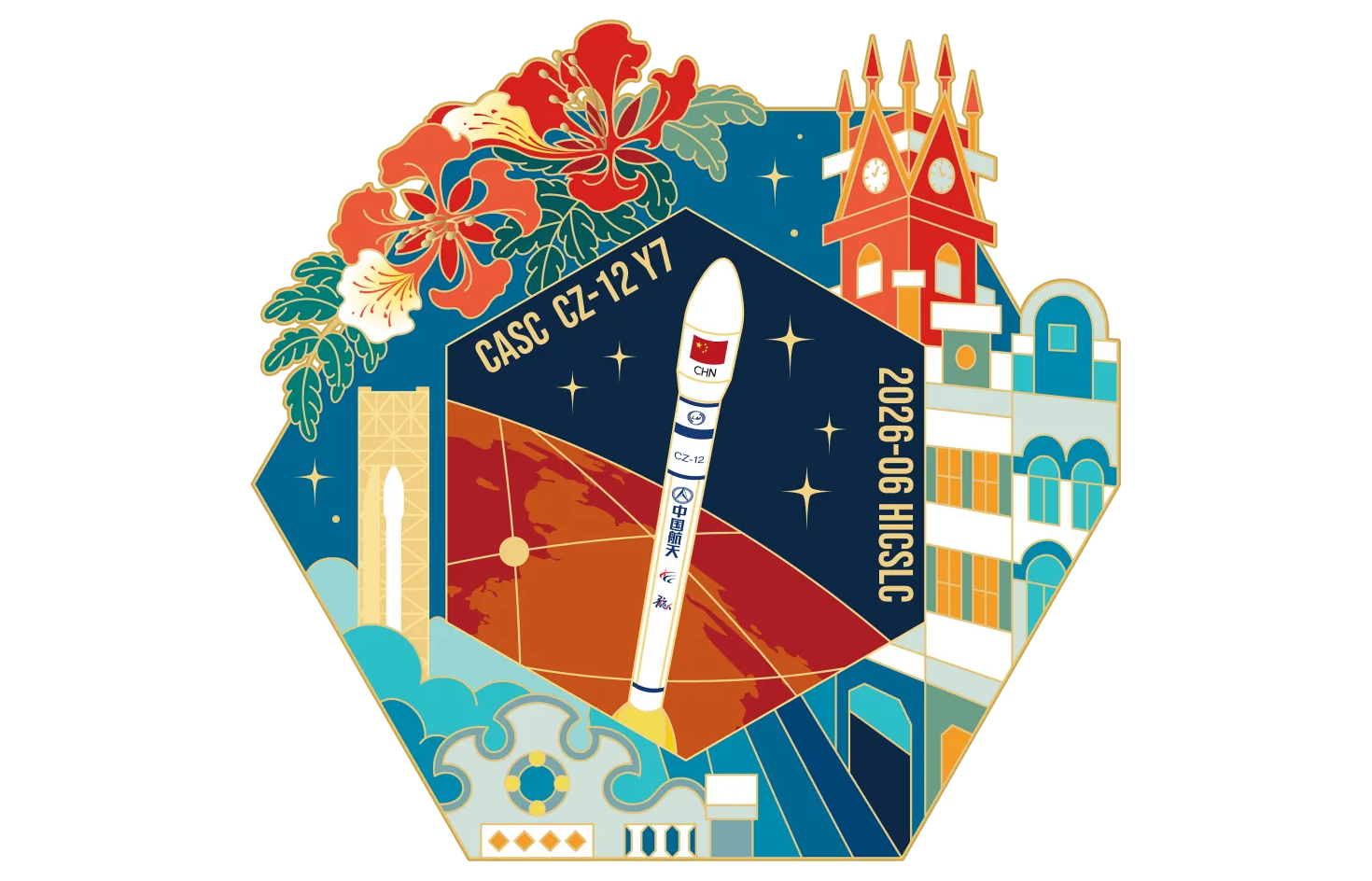
Starting with today’s mission, the Long March 12’s 5.2-meter-diameter fairing has been switched to a lighter carbon fiber composite material, according to the Shanghai Academy of Spaceflight Technology. Improvements stated during previous flights have said that the launch vehicle has shed unnecessary weight as part of cost-optimization efforts while maintaining expected quality too.
Another change implemented was the use of ‘high-energy’ kerosene in the second-stage and its two YF-115 engines. Details about that weren’t shared, but it may simply be an optimization to the Commercial Launch Site’s coal-based rocket-grade kerosene.
This mission was the 6th launch of a Long March 12 vehicle, the 8th launch of the Shanghai Academy of Spaceflight Technology-supported Long March 12 series, and the 652nd launch of the Long March launch vehicle series. This was also the 42nd launch from China in 2026.
Liftoff video via 我们的太空 on WeChat.
Launch livestream via International Rocket Launches on YouTube.
Check out the previous Long March 12 launch
Second Commercially Made GuoWang Group Reaches Orbit [Long March 12 Y5]
![Second Commercially Made GuoWang Group Reaches Orbit [Long March 12 Y5]](https://substackcdn.com/image/fetch/$s_!Kaw_!,w_1300,h_650,c_fill,f_webp,q_auto:good,fl_progressive:steep,g_auto/https%3A%2F%2Fsubstack-post-media.s3.amazonaws.com%2Fpublic%2Fimages%2Fc58ab320-c315-4f85-ab19-76da6790042a_4681x3036.jpeg)
Into a clear mid-day sky, a Long March 12 lifted off from Commercial Launch Pad 2 at the Wenchang Commercial Space Launch Site at 15:48 pm China Standard Time (07:48 am Universal Coordinated Time) on January 19th, headi…
What is the Long March 12?
This section is for those less familiar with China’s Long March series of launch vehicles.
The Long March 12 is a two-stage launch vehicle from the Shanghai Academy of Spaceflight Technology. Both stages of the launch vehicle burn rocket-grade kerosene and liquid oxygen.
The payload capacity of the launch vehicle is currently as follows:
12,000 kilograms to a low Earth orbit
6,000 kilograms to a 700-kilometer sun-synchronous orbit
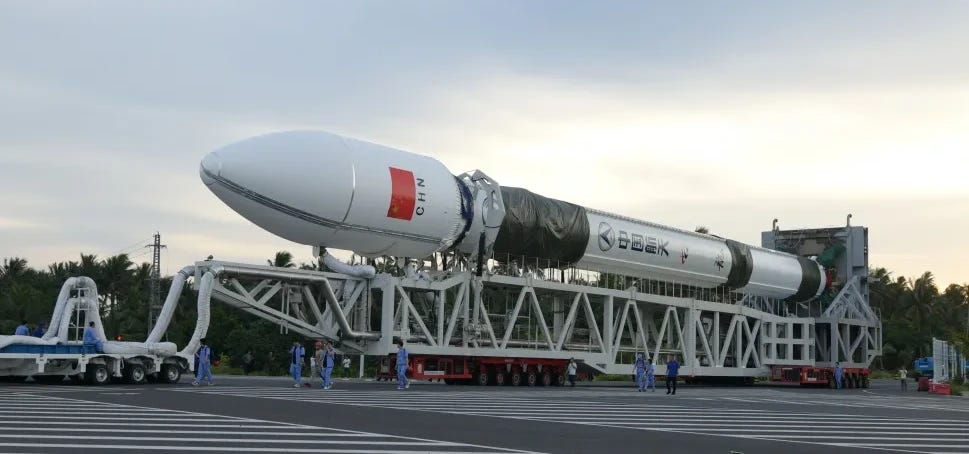
Four YF-100K engines power the first stage, generating a combined thrust of 510 tons while burning liquid oxygen and rocket-grade kerosene. Two YF-115 engines power the second stage, generating 36 tons of thrust while also burning liquid oxygen and rocket-grade kerosene.
On the launchpad, the rocket stands at 62.6 meters in height, while having a first and second stage diameter of 3.8 meters. Fully fuelled the Long March 12 is believed to weigh 433,000 kilograms. The fairing of the Long March 12 is also believed to have options for either a 3.8, 4.2, or 5.2-meter diameter, depending on the needs of the mission.
Currently, the Long March 12 has only flown from the Wenchang Commercial Space Launch Site, on the east coast of Hainan province.


So far, 41 out of 310.