

Spark Space Raises Nearly 100 Million Yuan, Courts Jiuquan for Launch
Having bet on electrically driven rocket engines for the first time in China, the company behind them has recently doubled its raised capital in its work towards flying next year.

Announced on June 1st, Spark Space (星火空间) detailed that they have completed a ‘Pre-A’ funding round, raising almost 100 million Yuan (14.78 million United States Dollars, as of June 1st), bringing total capital raised by the launch startup to around 200 million Yuan (29.5 million United States Dollars).
Capital for the round came from two entities, Yunze Capital (云泽资本), a private equity firm, and Orbital Chenguang (轨道辰光), an incubator for the space-based data center focused Beijing Astro-Future Institute of Space Technology (北京星辰未来空间技术研究院), which has about 57 billion Yuan (8.4 billion United States Dollars) available in strategic credit. The latter rationalized their investment by citing the uniqueness of Spark Space’s launch vehicle technologies and the long-term potential enabled by them, possibly as a preferred customer.
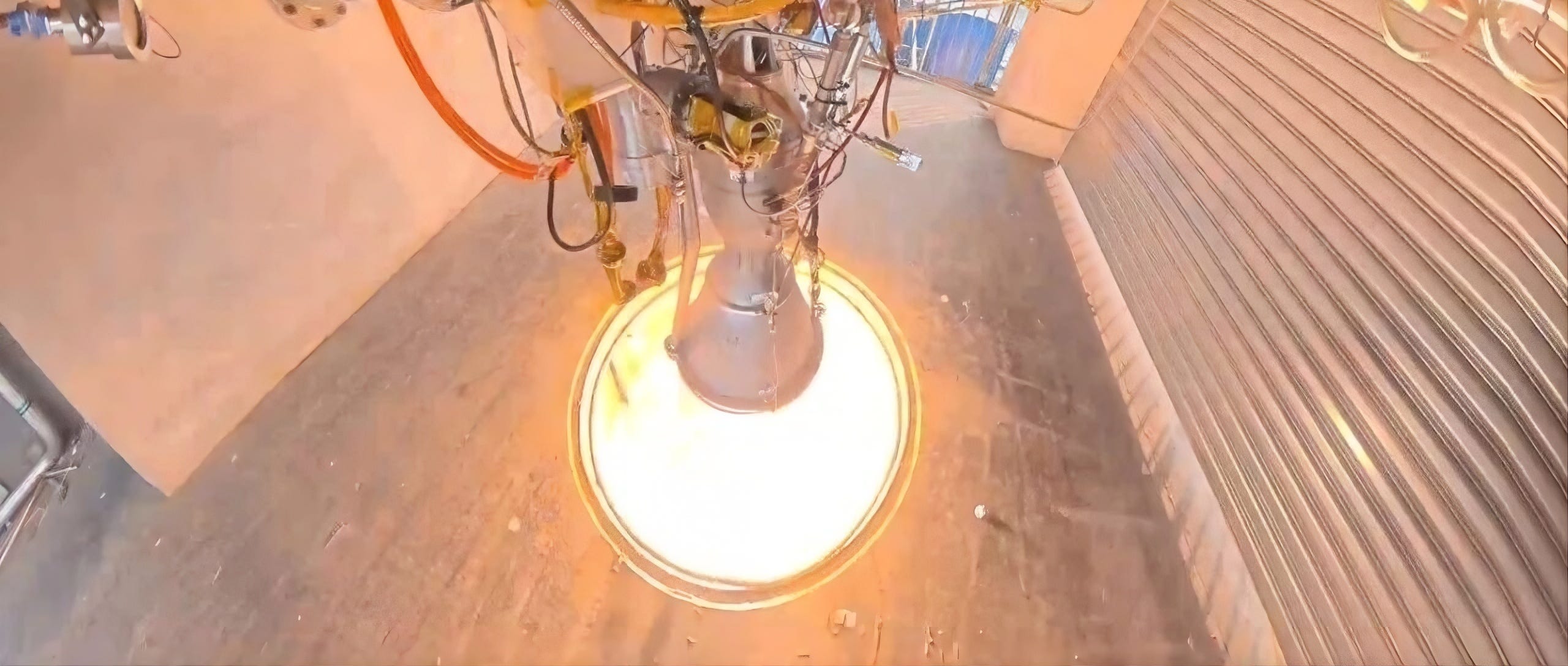
Speaking of that technology, the capital raised will be used to support the iterative development of the electric-pump-fed cycle Lieyan-2 (烈焰二号) engine, which burns rocket-grade kerosene and liquid oxygen to generate 10 tons of thrust. Production efforts for the Jinhua-1 (进化一号) launch vehicle will also be supported.
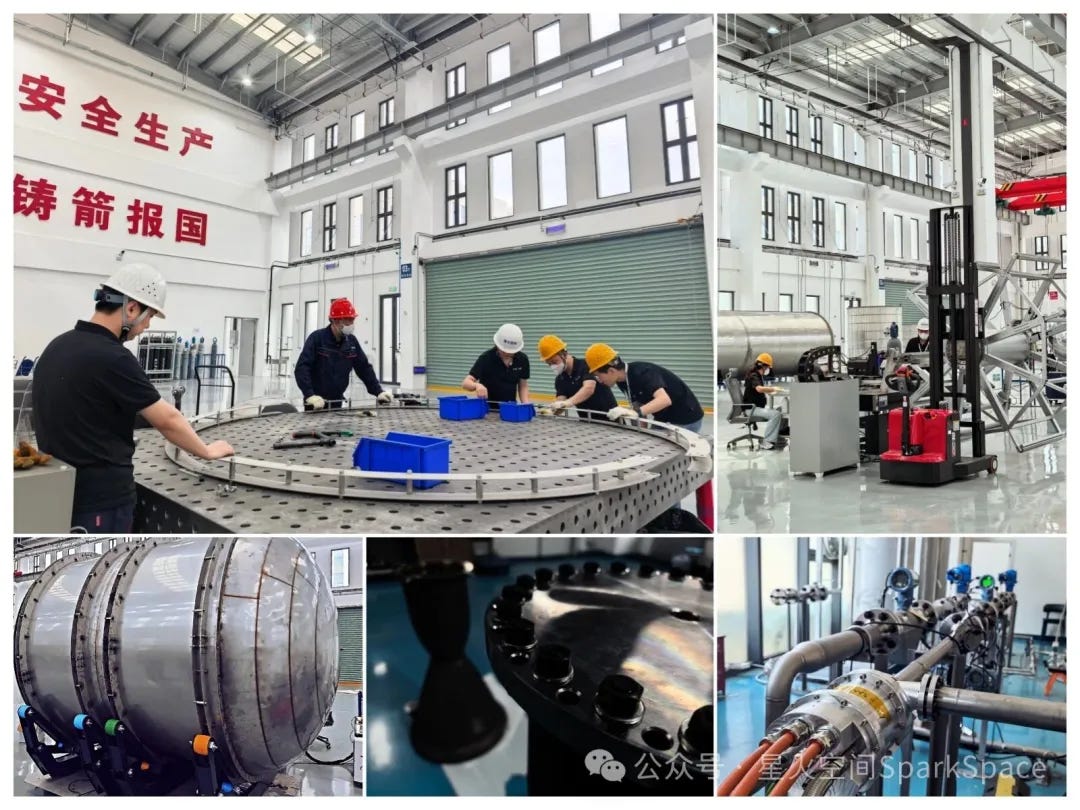
In addition, the money will be utilized to fully move into and set up needed equipment within the company’s manufacturing facility in Hefei National High-Tech Industry Development Zone (合肥市新站高新区), which is 10,000 square meters of space. During the year, Spark Space plans to move into neighbouring buildings, expanding its footprint by 20,000 square meters.
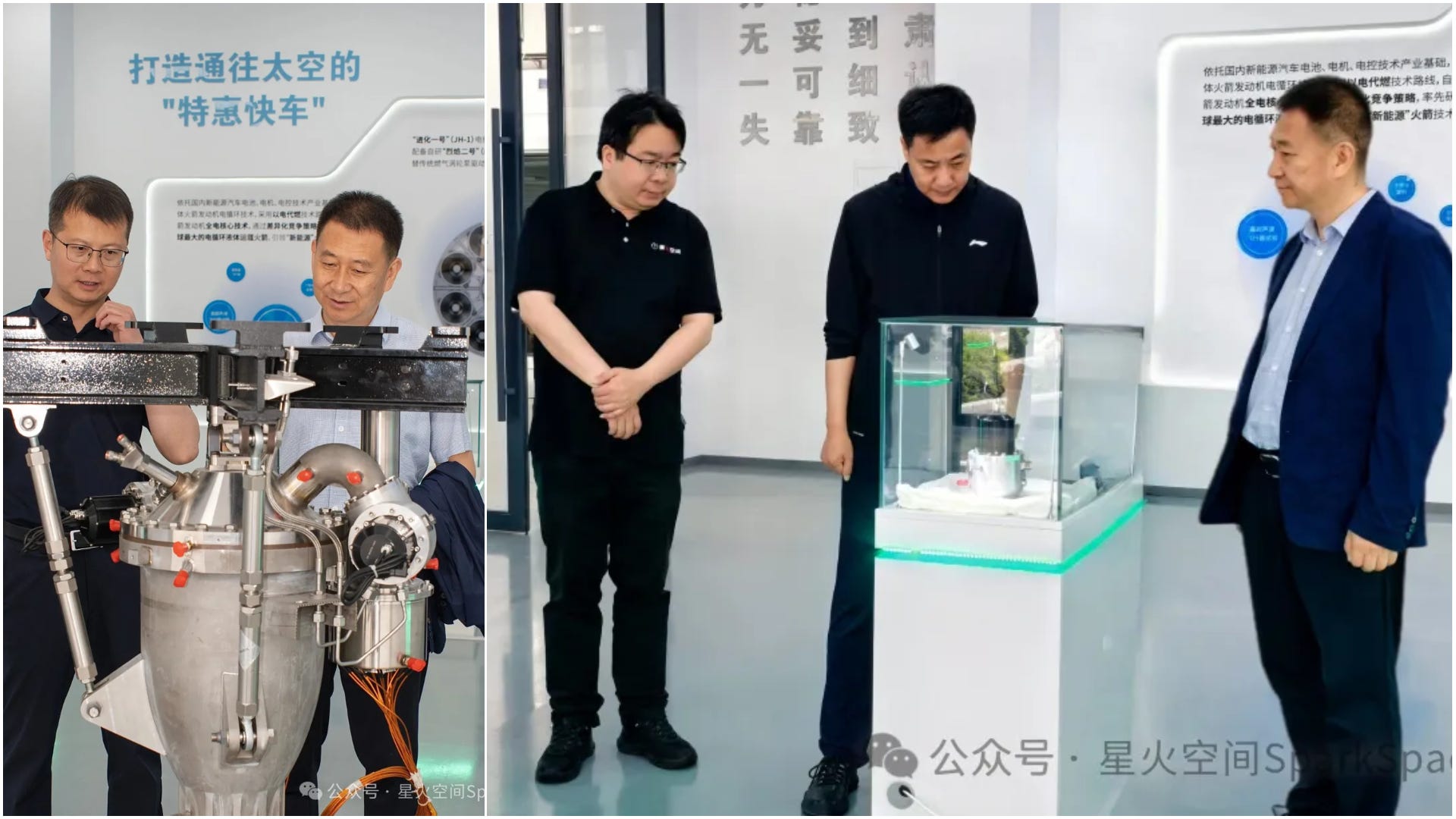
The day before announcing a new capital raise, Spark Space shared that they had hosted a delegation led by Zhao Zhenghong (赵正红), Communist Party Secretary of the Working Committee of the Jiuquan Aerospace Industrial Park (酒泉航天产业园), and it’s Executive Deputy Secretary Li Runyuan (李润元). Other members of the delegation were from Jiuquan Commercial Aerospace Development Co Ltd (酒泉商业航天发展有限公司), among more not important enough to be named by the company. Those Jiuquan entities exist to encourage commercial space enterprises to set up operations at the Jiuquan Satellite Launch Center, including using existing launch sites or establishing dedicated facilities.
In their post about the visit, Spark Space said that the Party officials affirmed the development prospects of the electric-pump-fed cycle engines and were ready to support the company to make necessary breakthroughs in flying the engines. The company also stated it is ready to align with Jiuquan’s local space industry to make it a key driver of future growth, hinting at follow-up cooperation for financing and development, possibly meaning they intend to set up launch facilities.
Efforts so far in bringing Jinhua-1 towards flight have seen test firings of the Lieyan-2 engines, first to verify its ignition and shutdown systems, then to begin thorough performance characterization firings. Assisting in accelerating development, Spark Space used fellow launch startup Deep Blue Aerospace’s test stands, allowing those firings to peak near 10 tons of thrust and dethroning a record for the electric-pump-fed cycle previously held by Rocket Lab’s Rutherford. Manufacturing of test propellant tanks and structures has also taken place.
When Jinhua-1 is placed on a launch pad for the first time, set to be in 2027, it is expected to stand 27.5 meters tall, with two stages that are 2.25 meters in diameter. Customers will have the option to place their payloads, up to 1,500 kilograms for low Earth orbit or 1,000 kilograms for sun-synchronous orbit, within either a 2.25-meter or 3.35-meter diameter fairing. At liftoff, the launch vehicle will weigh 72,500 kilograms with nine Lieyan-2 engines on its first-stage producing a combined 90 tons of thrust, while a second-stage will be propelled by a single vacuum-optimized Lieyan-2.
Jinhua-1 is being marketed as a solution for providing low-cost, high-reliability, and rapid response launches, alongside deploying smaller constellation satellites and performing hypersonic testing, in a way similar to Rocket Lab’s Electron.