


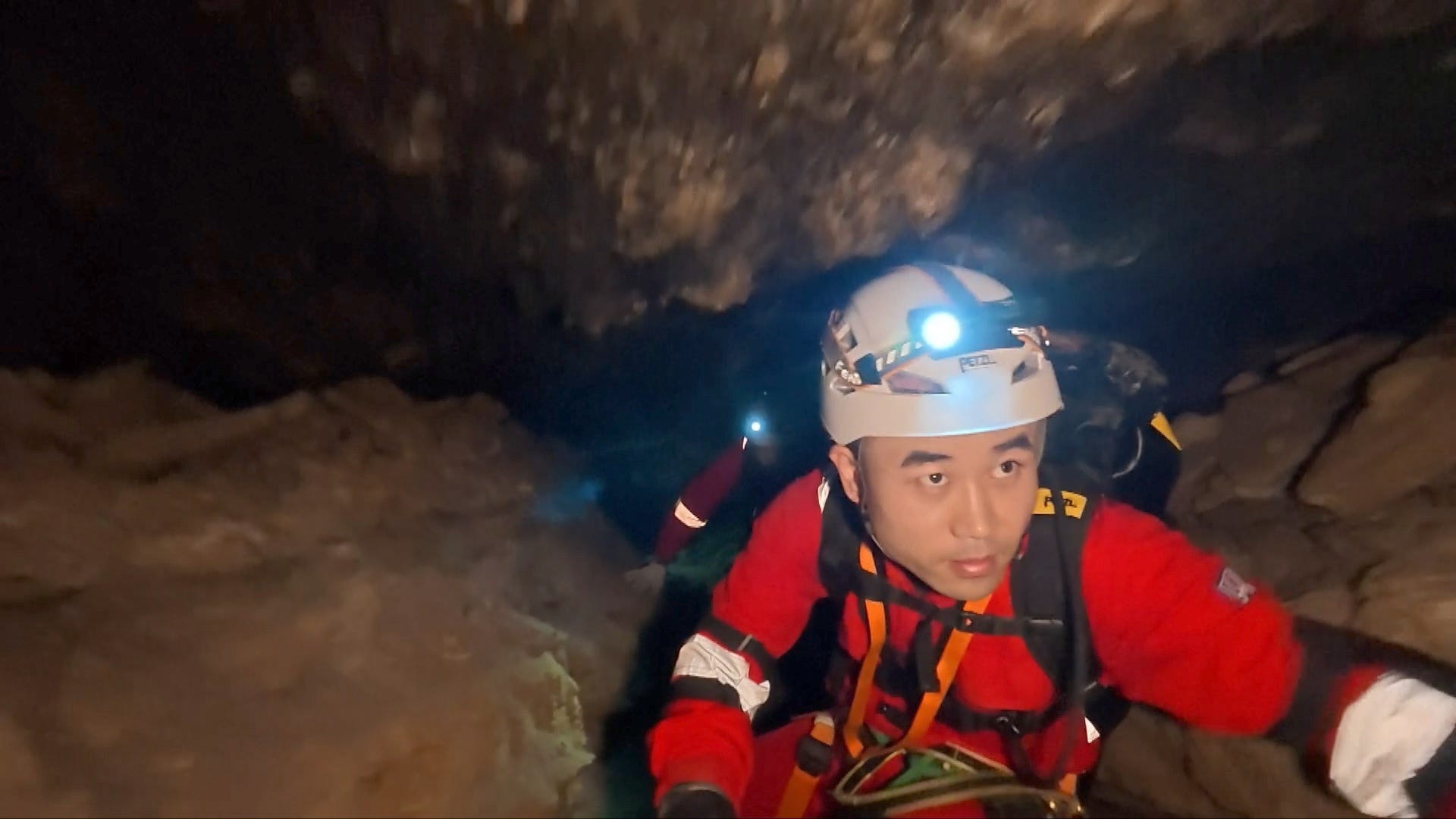
In December 2025, the China Manned Space Agency saw twenty-eight of its taikonauts participating in cave training exercises in Wulong (武隆区), Chongqing (重庆) municipality, ahead of exploration missions to the lunar surface, which will occur in a few years.
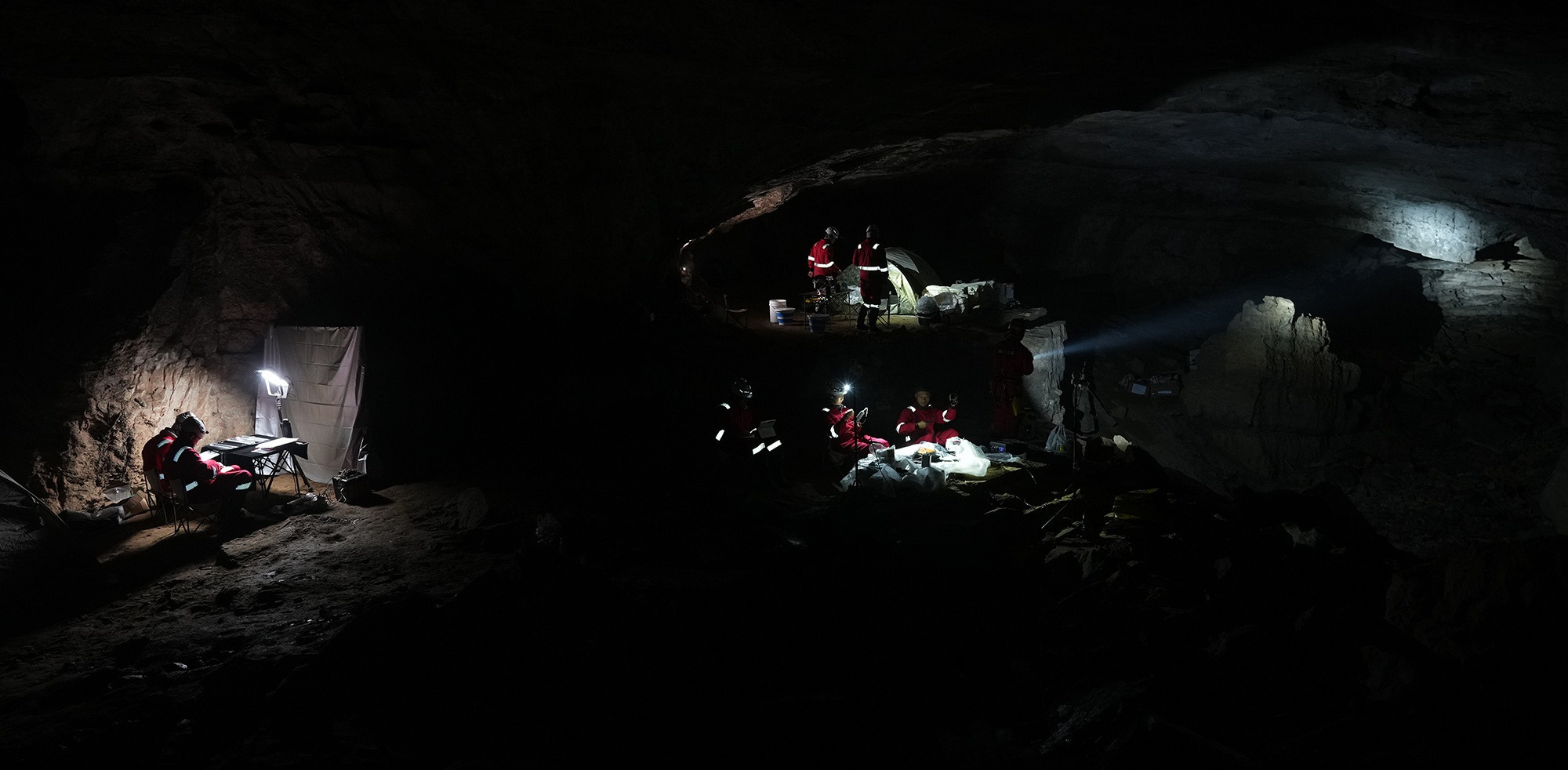
Being divided into four groups of various sizes, the participants spent six days and five nights underground, one group at a time, to mentally train the taikonauts in a similar environment and situation (group isolation, claustrophobia, and a high-risk scenario) that will be experienced for prolonged times in space. The cave for the exercise had challenging conditions for them, with an average temperature of eight degrees Celsius and about ninety-nine percent humidity, requiring them to wear insulating clothing while needing to carry their own equipment and supplies. It was dark too, of course.
Over their six days underground, the groups had to navigate through the cave, entering at one point and exiting at another. That included squeezing through narrow points, with their backpacks being dragged behind or passed through by a teammate, along with climbing up or descending steep points in the cave. As they headed through the cave, several secondary tasks were required of the groups, including mapping of their route, gathering data on the environment around them, and collecting samples. Once at the exit point, the groups participated in a brief period of jungle survival training where they were tasked with signaling for a rescue to end the exercise.
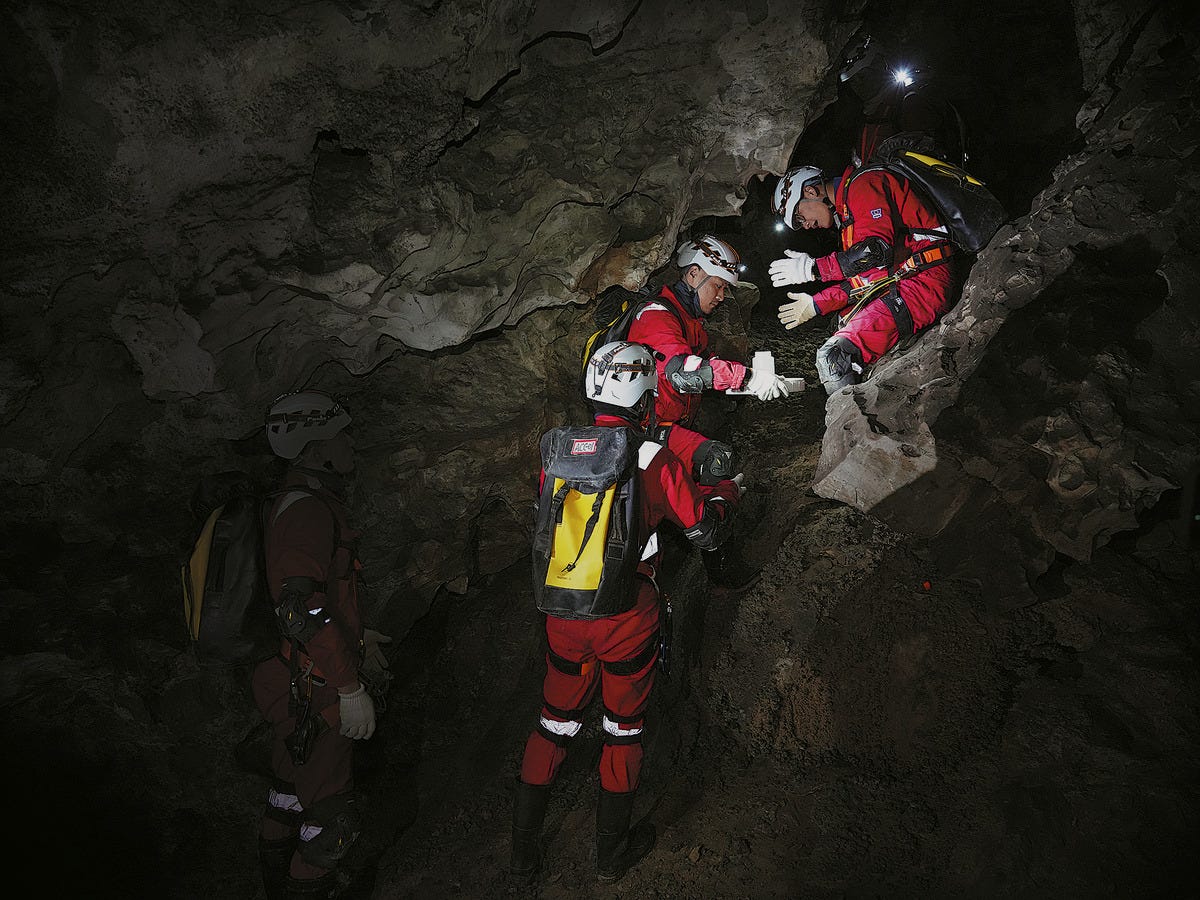
As for the rationale on why the exercise was conducted, Wu Bin (吴斌) from the China Astronautic Scientific Research and Training Center (中国航天员科研训练中心) explained:
“We organized the cave training mainly based on the needs of the country’s manned space missions. We use the natural cave environment to improve the ability to cope with danger, the ability of teamwork, the ability to respond to danger, teamwork, scientific literacy and scientific research capabilities, emergency decision-making ability, physical endurance, and psychological resilience in the face of extreme environments.”
Taikonaut and participant Zhu Yangzhu added onto that, sharing:
“Cave training hones one’s qualities and capabilities, particularly teamwork skills. This offers valuable insights for our future spaceflight missions, especially in leading teams effectively during operations aboard the space station.”
In addition on the psychological front, taikonaut instructor Jiang Yuan (江源) stated:
“[We obtained] data on the development and changes in the psychological state of the human body in [the cave’s] extreme environment. This data will provide crucial support for establishing the psychological support system for taikonauts undertaking long-term space station missions and crewed lunar missions in the future.”
To ensure the safety of the taikonauts in the cave, the China Astronautic Scientific Research and Training Center surveyed many caves across the country to find one suitable for their training needs, while being naturally safe to be in for several days. In the event of an emergency and for monitoring progress, communication lines were laid throughout the cave alongside a video surveillance system. Those safety systems are expected to support further training exercises in the future.
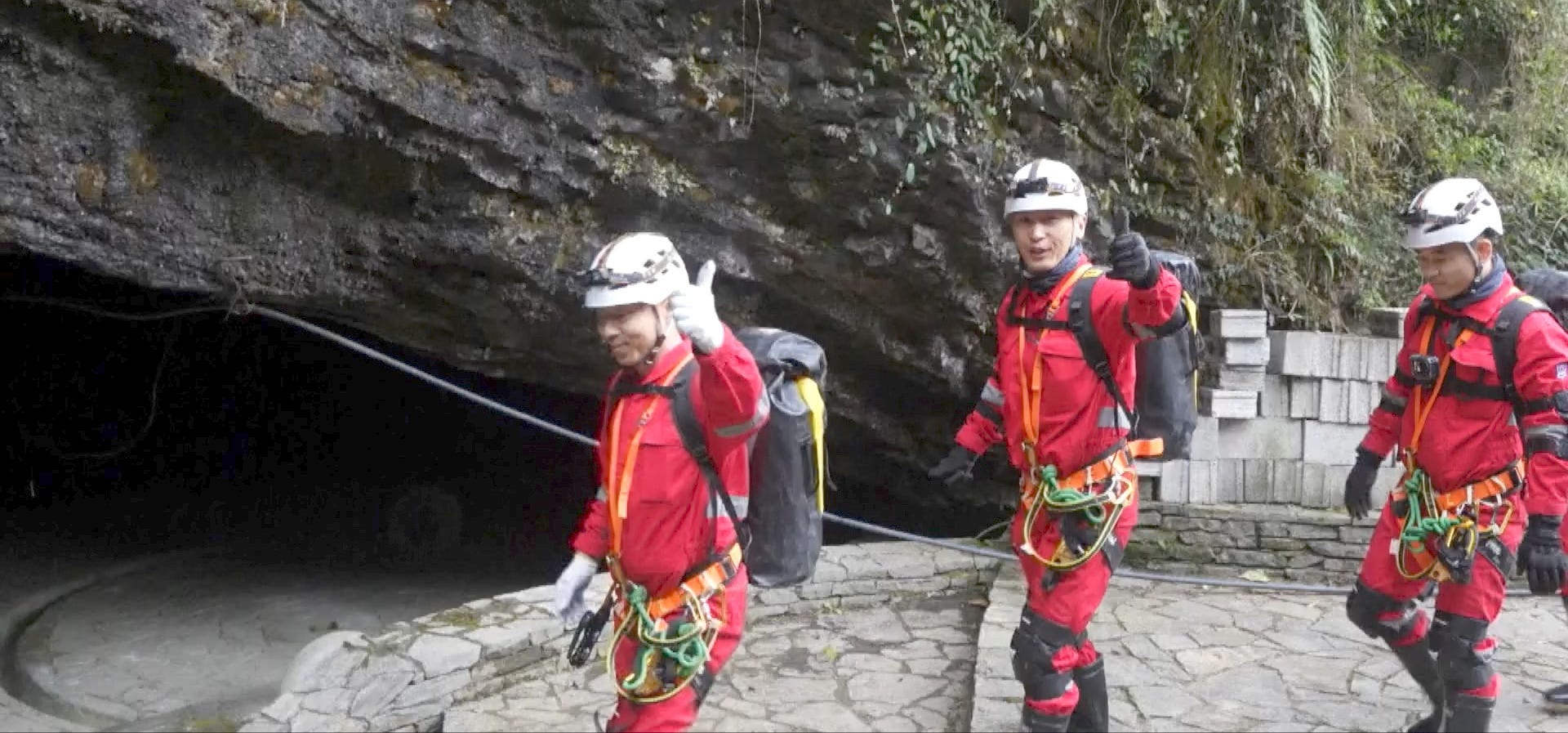
Regarding who participated, veteran taikoanuts Ye Guangfu (叶光富) and Zhai Zhigang (翟志刚) monitored the condition of and looked after their colleagues. Commanders of the four groups were Wang Yaping (王亚平), Liu Yang (刘洋), Cai Xuzhe (蔡旭哲), and Tang Hongbo (汤洪波), for a fifty-fifty split of group leadership between men and women. Members of the various groups were Zhu Yangzhu (朱杨柱), Tang Shengjie (唐胜杰), Song Lingdong (宋令东), Gui Haichao (桂海潮), and Li Guangsu (李广苏), alongside others who were not shown, either for keeping the news segments short or because they are yet to fly to space.
As twenty-eight taikonauts took part in the exercise, most of China’s spacefarers are now partially trained for the country’s crewed missions to the Moon. As of the selection of the country’s fourth selection batch in mid-2024, forty-four people are ready to perform space missions within China’s taikonaut corps.
With hardware like the Lanyue (揽月) lunar lander, Mengzhou (梦舟) crew capsule, Wangyu (望宇) lunar spacesuit, and Tansuo (探索) rover all under intensive development, potential crews that will use them are being actively trained with and providing feedback on how they would like to interface with them.
The exercises in December 2025 was not the first time that a taikonaut has spent time underground preparing for a mission. In June 2016, Ye Guangfu took part in an astronaut caving course 800 meters beneath Sardinia, Italy, for seven days and six nights. His teammates for the course were from the United States, Spain, Japan, and Russia. That course was enabled by cooperation efforts between the European Space Agency and the China Manned Space Agency to explore sending a European astronaut to Tiangong, which was sadly canceled by 2023 due to a lack of relevant funding and missing political will.
New Year onboard Tiangong
While groups of their colleagues were undergoing new training on Earth, Zhang Lu (张陆)1, Wu Fei (武飞)2, and Zhang Hongzhang (张洪章 )3 were busy onboard the Tiangong Space Station for the Shenzhou-21 mission.
Just before the new year in orbit, the crew sent a recorded New Year’s message from inside the Wentian experiment module, with two of their Feitian (飞天航天服) spacesuits behind them. Commander Zhang encouraged those on Earth to follow their dreams; Wu spoke of their first spacewalk along with how taking care of the space station is a commitment to the nation and people; while Zhang talked about the unique privilege of being able to conduct experiments onboard Tiangong. Over the New Year, the three taikonauts gathered to watch President Xi Jinping’s (习近平) New Year address, sharing that, after having watched it, they are committed to exploring space, looking after Tiangong, and helping build China into a space power.
For the first activity update of 2026, ‘Tiangong TV’ had a new episode released by the China Manned Space Agency, detailing the trio’s support of science experiments and the continued operation of the space station.
Attached below is a translated transcript of the episode:
In the areas of space science experiments, space station platform maintenance, and life and health support, multiple tasks have been systematically carried out. Let's take a look at what missions the three taikonauts completed last week.
In the field of space medicine experiments, ongoing research into the long-term kinematic characteristics of taikonauts in orbit is being conducted. By capturing three-dimensional structured light video footage of taikonauts in specific work scenarios, kinematic data and its variations during in-orbit operations and activities are obtained. This provides data support for the design and evaluation of public school programs, as well as the optimization of in-orbit mission planning.
In the footage, taikonauts are conducting research on the forces involved in movement, using equipment such as muscle structure and function measurements, plantar4 pressure data acquisition, and slice ultrasound to collect plantar pressure, joint kinematic data, and motion images during running and resistance exercises under different adhesion states during flight. Relevant muscle parameters are also being obtained, along with the mapping relationship between different exercise states and plantar pressure, as well as the interaction and change characteristics of muscles and tendons.
The brain pad testing research projects proceeded as scheduled. Using the brain pad equipment, the crew completed experimental testing for multiple projects, including upper and lower limb rehabilitation studies, executive function training, and exploratory utilization research. Utilizing functional infrared brain imaging equipment, future experiments on spatial brain networks and their dynamic properties will be conducted. By collecting relevant data, this study investigates the effects of long-term spaceflight environments on taikonauts’ brain functional networks, as well as the brain’s spontaneous adjustment and adaptation mechanisms in response to external environmental changes.
In the research on taikonauts' psychological and behavioral capabilities, emergency decision-making abilities were assessed using computers and testing software. Work related to projects such as on-orbit emotional state testing was also conducted. Additionally, the crew conducted experiments on intuitive physical behavior under microgravity conditions to investigate the effects of long-term spaceflight on intuitive physical representations and the underlying recovery mechanisms.
In the field of critical gravity physics, the team completed the replacement of relevant samples within the universal experimental unit of the fluid physics experiment cabinet according to the experimental schedule, as well as the cleaning and replacement of samples in the containerless experimental gun body5, according to the experimental plan.
Motor mechanism maintenance and window cover lens replacement work occurred6.
Additionally, ongoing in-situ electrochemical and optical studies of Li-ion batteries for space applications continue.
The crew completed regular inspections and maintenance of the space treadmill and life support equipment, and conducted regular cleaning of the cabin. Furthermore, they carried out environmental monitoring tasks including habitat condition checks, wind speed measurements, and temperature readings.
Regarding health maintenance and safeguarding, the crew underwent routine medical examinations without innovative functional assessments. This included hearing tests, comprehensive functional measurements, and the collection of taikonaut data through traditional Chinese medicine’s four diagnostic methods7. These efforts provide a foundation for ongoing health monitoring of researchers during extended orbital missions.
As the Shenzhou-21 crew embarks on their space journey into the new year, stay tuned to discover what additional tasks they will accomplish in orbit.
If there are any problems with these translations please reach out and correct me.
Tiangong TV Episode January 4th 2026 originally from the China Manned Space Agency, cloned to YouTube for archival.
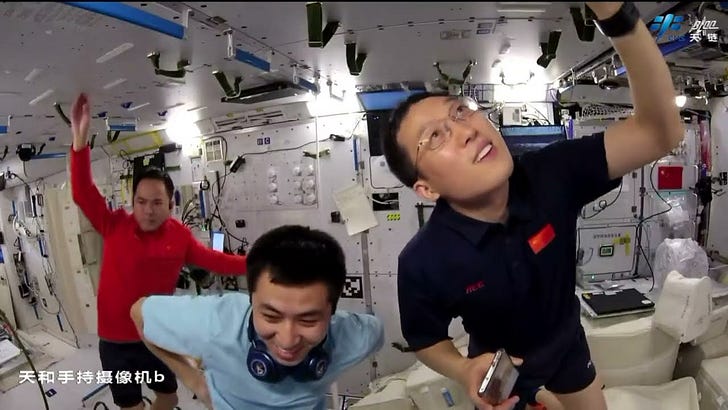
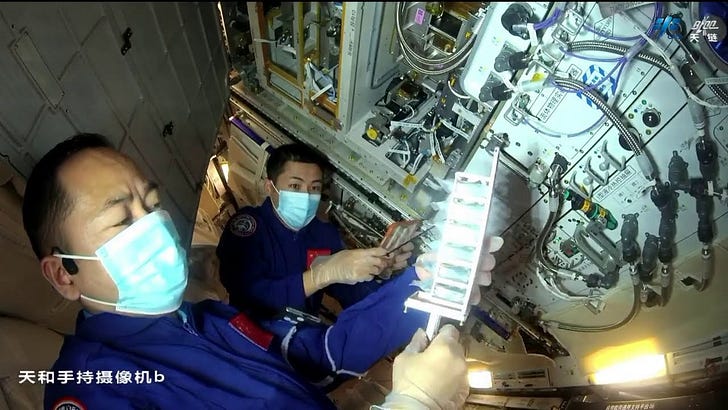
Zhang Lu is the Commander and Pilot of the mission for his second spaceflight, having flown for the Shenzhou-15 mission between November 2022 and June 2023. He is from Hanshou County (汉寿县), Hunan (湖南) province, and was selected as part of China’s second taikonaut group in 2010, also being considered a ‘post-70s’ taikonaut having been born in November 1976.
Before becoming a taikonaut, Zhang served in the People’s Liberation Army Air Force and achieved the rank of Senior Colonel. He also joined the Communist Party of China in April 1999. After the Shenzhou-15 mission, Zhang was awarded the Spaceflight Merit Medal (Third Class) along with the honorary title of hero taikonaut.
Wu Fei is the Flight Engineer for this mission, which will be his first trip into space. He is from Baotou (包头市 / ᠪᠤᠭᠤᠲᠤᠬᠣᠲᠠ), in the Inner Mongolia Autonomous Region (内蒙古自治区 / ᠥᠪᠥᠷ ᠮᠣᠩᠭᠣᠯ ᠤᠨ ᠤᠨᠥᠪᠡᠷᠲᠡᠭᠨ ᠵᠠᠰᠠᠬᠤ ᠣᠷᠣᠨ), and was selected as part of the third taikonaut group in October 2020, while being considered a ‘post-90s’ taikonaut having been born in 1993.
Before his selection as a taikonaut, Wu was an engineer at the China Aerospace Science and Technology Corporation. He also joined the Communist Party of China in 2015.
Zhang Hongzhang is the Payload Expert for this mission, with it being his first trip to space. He is from Binzhou (滨州市), Shandong (山东) province, and was also selected as part of the third taikonaut group in October 2020, while being considered a ‘post-80s’ taikonaut having been born in 1986.
Prior to being selected as a taikonaut, Zhang was a researcher at the Dalian Institute of Chemical Physics, Chinese Academy of Sciences (中国科学院大连化学物理研究所), where he explored new materials and technology for batteries. He also joined the Communist Party of China in 2004.
Plantar fasciitis, more details can be found here.
Not a firearm. Details on the experiment rack are available here.
This could relate to hardware to repair the Shenzhou-20 spacecraft debris-struck window, delivered by the Shenzhou-22 mission, but images from the spacecraft were not broadcast.